
BuddhistCatholicContemplativeEvangelicalGeneral ChristianHinduJewishLatter-day SaintMuslimNew VisionsProgressive Christian
Beliefs
- Buddhist
- Catholic
- Contemplative
- Evangelical
- General Christian
- Hindu
- Jewish
- Latter-day Saint
- More Voices
- Muslim
- New Visions
- Pagan
- Progressive Christian
Topics
- Religion News
- Food and Religion
- Sports and Religion
- Religious Art
- Religious Music and Entertainment
- Religious Events
- History and Religion
- Style and Religion
- Politics and Religion
- Women in Religion
- Recreation Outdoors and Religion
- Business Finance and Religion
- Careers Workplace and Religion
- Education and Religion
- Family Parenting and Religion
- Health Fitness and Religion
- Home and Religion
- Relationships and Religion
- Technology and Religion
- Travel and Religion
Columnists
- Buddhist Columnists
- Business Finance and Religion Columnists
- Careers Workplace and Religion Columnists
- Catholic Columnists
- Contemplative Columnists
- Education and Religion Columnists
- Evangelists Columnists
- Family Parenting and Religion Columnists
- General Christian Columnists
- Health Fitness and Religion Columnists
- Hindu Columnists
- History and Religion Columnists
- Home and Religion Columnists
- Jewish Columnists
- More Voices Columnists
- Latter Day Columnists
- Muslim Columnists
- New Visions Columnists
- Nonreligious Columnists
- Pagan Columnists
- Politics and Religion Columnists
- Progressive Columnists
- Recreation Outdoors and Religion Columnists
- Relationships and Religion Columnists
- Religion News Columnists
- Religious Art Columnists
- Religious Events Columnists
- Religious Music and Entertainment Columnists
- Sports and Religion Columnists
- Style and Religion Columnists
- Technology and Religion Columnists
- Travel and Religion Columnists
- Women in Religion Columnists
Resource Library
- 2026 Calendar
- Library of World Religions
- The 100 Most Holy Places on Earth
- Patheos Answers
- Podcasts
- Videos
- Faith Leaders Database
- Anglican Episcopalian
- Bahai
- Baptist
- Buddhism
- Christianity
- Confucianism
- Eastern Orthodoxy
- Hinduism
- Holiness and Pentecostal
- ISKCON
- Islam
- Judaism
- Lutheran
- Methodist
- The Church of Jesus Christ of Latter-day Saints
- New Age
- Paganism
- Presbytarian and Reformed
- Protestantism
- Religion Behind the Scenes
- Roman Catholic
- Scientology
- Shia Islam
- Sikhism
- Sufism
- Sunni Islam
- Taoism
- Zen
- See all religions
Research Tools
 Ad-Free & Subscriber Log-In Subscription Support
Ad-Free & Subscriber Log-In Subscription Support
Follow Patheos 

- Trending:
- Forgiveness
- |
- Marriage
- |
- Consciousness
- |
- Death Penalty
- |
- Election
- |
- Halloween

- Home
- Contemplative
- Everyone is Called to Union with God
Everyone is Called to Union with God
Last updated on: December 20, 2018 at 7:13 pm by Carl "Skye" McColman
Everyone is Called to Union with God 2018-12-20T19:13:41-04:00 Carl "Skye" McColman
Patheos Explore the world's faith through different perspectives on religion and spirituality! Patheos has the views of the prevalent religions and spiritualities of the world.

“Each moment is the universe.” — Dainin Katagiri
About ten years ago I had a conversation with an elderly Trappist monk about the book I was writing — a book on Christian mysticism. Hearing that it was intended to introduce mysticism to the general public, he scoffed. “Not everyone is called to be a mystic,” he objected.
“But doesn’t God want us to be in union with him?” I replied. “Well, yes,” he admitted, “we are all called to holiness but not all to mysticism.”
I disagreed with him, and I’m happy to say that no less an authority than the Catechism of the Catholic Church backs me up. In its section on Christian Holiness (#2012-2016), the Catechism has this to say:
Spiritual progress tends toward ever more intimate union with Christ. This union is called “mystical” because it participates in the mystery of Christ through the sacraments—“the holy mysteries”—and, in him, in the mystery of the Holy Trinity. God calls us all to this intimate union with him, even if the special graces or extraordinary signs of this mystical life are granted only to some for the sake of manifesting the gratuitous gift given to all.
My friend the monk thought only someone with “special graces or extraordinary signs,” could be a mystic — which is to say, a spiritual genius along the lines of St. John of the Cross or St. Teresa of Ávila. Certainly such singular mystics are the gold standard by which we all understand mysticism: in other words, intimate union with Christ which is embodied in a deeply contemplative life.
But as the Catechism points out, “God calls us all to this intimate union with him” — which means we are all called to be mystics, just as we are all called to be saints. Not all of us are called to be extraordinary mystics, but that’s like saying not every guitarist enjoys the genius of Andrés Segovia or Eric Clapton.
Most people with ordinary musical ability who make the effort to learn and practice the guitar can be good, perhaps great, certainly accomplished. But only a few will be geniuses.
Likewise, we are all called to be mystics, and those who immerse themselves in the life of prayer, contemplation, scripture and the sacraments, may enjoy profound union with God — even if they never approach the spiritual genius of one of the “great” mystics.
What makes a mystic, well, “mystical”?
Mystic and related words come from Greek — from the same word which gives us “mystery” and even “sacraments” (In the Eastern Orthodox Churches, sacraments are referred to as mysteries). But the Greek root word, mueo, also gives us the English word “mute.” So a mystic is not only someone who enters the mystery of God, but also someone whose spirituality is profoundly silent — and even cannot be put into words.
Incidentally, the glossary of the Catechism notes that contemplation is “wordless prayer” — another indication of the mystical relationship between silence and spirituality. A mystic, therefore, in the broadest sense of the word is simply a contemplative: someone who prays, and who prays silently, opening the heart to the presence of God which cannot ever be fully put into words. Thomas Aquinas is said to have dismissed his writing as “straw” after a moment of mystical beholding. Such is the splendor of mysticism.
Of course, mystics of nearly every generation have tried nevertheless to commit the story of their encounter with God in written form, which is why we have spiritual classics from the hand of St. John of the Cross, St. Teresa of Ávila, St. Catherine of Siena, St. Bernard of Clairvaux, Julian of Norwich, Thomas Merton, and countless other contemplative guides.
When we read the writings of the mystics, we discover that there is tremendous variety and beautiful diversity in how people receive union with God into their lives. In other words, our job — in our time — is not merely to try to replicate the spirituality of the great mystics of the past, but to immerse ourselves in their wisdom to find inspiration for God to lead us into our unique expression of intimate union with Him.
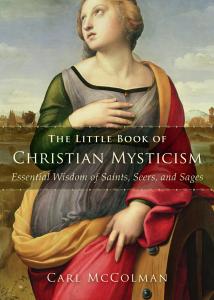
The Little Book of Christian Mysticism
For further reading:
If you want an overview of great mystical writings, see Bernard McGinn’s The Essential Writings of Christian Mysticism. Three of greatest classics of the mystical tradition include Teresa of Ávila’s Interior Castle, John of the Cross’s Dark Night of the Soul, and Julian of Norwich’s Revelations of Divine Love. Finally, I hope you’ll take a look at my “mysticism trilogy” including The Big Book of Christian Mysticism, The Little Book of Christian Mysticism, and Christian Mystics: 108 Seers, Saints and Sages.
Enjoy reading this blog?
Click here to become a patron.

Catechism of the Catholic Church
Previous Post
January 8, 2018
Contemplating the Trinity
Next Post

January 18, 2018 How to Pray Every Day — Without Confusing Prayer with God
Browse Our Archives
Select a Category Activism Announcements Art Books Catholicism Celtic Christianity Christian mysticism Christianity Contemplation Current events Etc. Family humor interfaith dialogue Interfaith Wisdom Interspirituality Lay Cistercians Living the Faith Meditation movies Mysticism Mystics nature Poetry Reviews Scripture silence Spirituality Uncategorized Writing
Select a Month February 2025 January 2025 November 2024 September 2024 August 2024 July 2024 June 2024 May 2024 March 2024 January 2024 December 2023 November 2023 August 2023 June 2023 April 2023 March 2023 February 2023 January 2023 December 2022 November 2022 October 2022 September 2022 August 2022 July 2022 June 2022 May 2022 April 2022 February 2022 January 2022 December 2021 November 2021 October 2021 September 2021 August 2021 July 2021 June 2021 May 2021 April 2021 March 2021 February 2021 January 2021 December 2020 November 2020 October 2020 September 2020 August 2020 July 2020 June 2020 May 2020 April 2020 March 2020 February 2020 January 2020 December 2019 November 2019 October 2019 September 2019 August 2019 July 2019 June 2019 May 2019 April 2019 March 2019 February 2019 January 2019 December 2018 November 2018 October 2018 September 2018 August 2018 July 2018 June 2018 May 2018 April 2018 March 2018 February 2018 January 2018 December 2017 November 2017 October 2017 September 2017 August 2017 July 2017 June 2017 May 2017 April 2017 March 2017 February 2017 January 2017 December 2016 November 2016 October 2016 September 2016 August 2016 July 2016 June 2016 May 2016 March 2016 February 2016 January 2016 December 2015 November 2015 October 2015 September 2015 August 2015 July 2015 June 2015 May 2015 April 2015 March 2015 February 2015 January 2015 December 2014 November 2014 October 2014 September 2014 August 2014 July 2014 June 2014 May 2014 April 2014 March 2014 February 2014 January 2014 December 2013 October 2013 September 2013 July 2013 May 2013 January 2013 December 2012 November 2012 August 2012 July 2012 June 2012 March 2012 December 2011 September 2011 October 2010 August 2010 March 2010 September 2009 July 2008 January 2008 December 2007 September 2007 February 2007 January 2007 December 2004
Follow Us!
TAKE THE
Religious Wisdom Quiz
Who was promised descendants as numerous as the stars?
Select your answer to see how you score.
Moses Abraham Jacob David
Support this
Column


Related posts from Carl McColman

I Believe Prayer Changes Things. Here's a Few...

You don't have to become a monk to...

LSD, Anxiety, and Contemplation: Can Psychedelic Therapy Support...

Mysticism, Faith, and "Knowing" God's Will
TRENDING AT PATHEOS Contemplative

Handy Contemplative Practices for Political Spaces
A Spiritually Grounded Presence In order to bring a spiritually grounded presence...

Halloween: The Holiday of Loving Your Neighbor
All Hallows Eve Is Halloween the least Christian holiday in America, or...

Can Love Be Saved? Some Thoughts on the...
Happy Valentine's Day! I recently published a post on Patreon called Can...

"This Loving, Uniting Embrace": the Holy Ordinary
Today's guest post is by Mark Longhurst, author of The Holy Ordinary:...

How Are We Called to Live?: More About...
How Are We Called to Live? Many of us struggle with discerning...

A Spiritual Practice of Reading: Join Us Online
A Spiritual Practice of Reading A healthy spiritual practice of reading is...
view all Contemplative blogs
Ad-Free & Subscriber Log-In Subscription Support
- About Us
- 2026 Calendar
- Videos
- Podcasts
- Library of World Religions
- Faith In Media Tracker
- Advertise With Us
- Write for Us
- Privacy Policy
- Terms of Service
- Do Not Sell My Data
- Contact Us
- Radiant Digital
- Manage Newsletter Subscriptions
- Unsubscribe From Notifications
- Sitemap
Copyright 2008-2026, Patheos. All rights reserved.
Subscription Support Ad-Free & Subscriber Log-In
Follow Patheos