
BuddhistCatholicContemplativeEvangelicalGeneral ChristianHinduJewishLatter-day SaintMuslimNew VisionsProgressive Christian
Beliefs
- Buddhist
- Catholic
- Contemplative
- Evangelical
- General Christian
- Hindu
- Jewish
- Latter-day Saint
- More Voices
- Muslim
- New Visions
- Pagan
- Progressive Christian
Topics
- Religion News
- Food and Religion
- Sports and Religion
- Religious Art
- Religious Music and Entertainment
- Religious Events
- History and Religion
- Style and Religion
- Politics and Religion
- Women in Religion
- Recreation Outdoors and Religion
- Business Finance and Religion
- Careers Workplace and Religion
- Education and Religion
- Family Parenting and Religion
- Health Fitness and Religion
- Home and Religion
- Relationships and Religion
- Technology and Religion
- Travel and Religion
Columnists
- Buddhist Columnists
- Business Finance and Religion Columnists
- Careers Workplace and Religion Columnists
- Catholic Columnists
- Contemplative Columnists
- Education and Religion Columnists
- Evangelists Columnists
- Family Parenting and Religion Columnists
- General Christian Columnists
- Health Fitness and Religion Columnists
- Hindu Columnists
- History and Religion Columnists
- Home and Religion Columnists
- Jewish Columnists
- More Voices Columnists
- Latter Day Columnists
- Muslim Columnists
- New Visions Columnists
- Nonreligious Columnists
- Pagan Columnists
- Politics and Religion Columnists
- Progressive Columnists
- Recreation Outdoors and Religion Columnists
- Relationships and Religion Columnists
- Religion News Columnists
- Religious Art Columnists
- Religious Events Columnists
- Religious Music and Entertainment Columnists
- Sports and Religion Columnists
- Style and Religion Columnists
- Technology and Religion Columnists
- Travel and Religion Columnists
- Women in Religion Columnists
Resource Library
- 2026 Calendar
- Library of World Religions
- The 100 Most Holy Places on Earth
- Patheos Answers
- Podcasts
- Videos
- Faith Leaders Database
- Anglican Episcopalian
- Bahai
- Baptist
- Buddhism
- Christianity
- Confucianism
- Eastern Orthodoxy
- Hinduism
- Holiness and Pentecostal
- ISKCON
- Islam
- Judaism
- Lutheran
- Methodist
- The Church of Jesus Christ of Latter-day Saints
- New Age
- Paganism
- Presbytarian and Reformed
- Protestantism
- Religion Behind the Scenes
- Roman Catholic
- Scientology
- Shia Islam
- Sikhism
- Sufism
- Sunni Islam
- Taoism
- Zen
- See all religions
Research Tools
 Ad-Free & Subscriber Log-In Subscription Support
Ad-Free & Subscriber Log-In Subscription Support
Follow Patheos 

- Trending:
- Forgiveness
- |
- Marriage
- |
- Consciousness
- |
- Death Penalty
- |
- Election
- |
- Halloween

- Home
- Contemplative
- Fundamentalism versus Contemplation
Fundamentalism versus Contemplation
Last updated on: December 20, 2017 at 11:45 am by Carl "Skye" McColman
Fundamentalism versus Contemplation 2017-12-20T11:45:03-04:00 Carl "Skye" McColman
Patheos Explore the world's faith through different perspectives on religion and spirituality! Patheos has the views of the prevalent religions and spiritualities of the world.
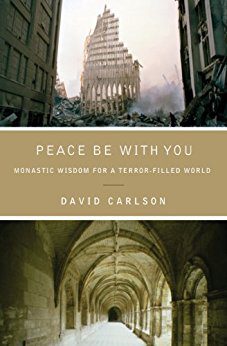
Peace Be With You (cover art courtesy Harper Collins)
In his book Peace Be With You: Monastic Wisdom for a Terror-Filled World, Orthodox Christian author David Carlson explores how contemplative spirituality might offer a way of responding to the ever-present danger of terrorism and war in today’s world. Haunted by the aftermath of the 9/11 attacks, Carlson devoted a sabbatical to visiting a variety of both Orthodox and Catholic monasteries throughout North America, interviewing nuns, monks, and other spiritual seekers about how to discern a truly Christian response to political violence.
Toward the end of the book, he offers a fascinating insight based on a conversation with a monk called Brother Stravros: “the antidote to the absolute certainty fostered by fundamentalism is contemplation. . . . A respect for mystery, not absolute certainty, is the mark of the person who ‘thinks with the heart.'” Carlson goes on to declare that “contemplation is a foreign and suspect spiritual activity in fundamentalist circles. And that means that contemplative Christianity, Judaism and Islam and fundamentalist Christianity, Judaism and Islam lead to two very different attitudes toward violence and vengeance.”
Carlson here is using the word fundamentalist not in its historical sense of a Christian who embraces pre-modern evangelical beliefs, but in its more general, broad sense, referring to any kind of aggressively intolerant religiosity—as Wikipedia puts it, “the demand for a strict adherence to specific theological doctrines . . . combined with a vigorous attack on outside threats to their religious culture.” With this definition in mind, it’s easy to envision this dichotomy: fundamentalism is the quest for (or belief in the attainment of) “absolute certainty” as a religious or theological stance, while contemplation is grounded in a “respect for mystery” which implies faith, rather than certainty, as its defining character.
Clearly, not all terrorists are religious fundamentalists; nor are all fundamentalists violent. But violence with ties to religious belief—from the Israel-Palestine conflict, to the troubles of Northern Ireland, to abortion clinic bombings, to 9/11—all seem to arise from a religiosity anchored in a sense of certainty: “We are right, you are wrong; we are conformed to the will of God, and you are not. Therefore we have a moral obligation to deal with you.”
By contrast, contemplation—the “respect for Mystery”—tends to prefer silence to debate, humility to certainty, and a preference for asking questions over dispensing answers. Because of this, contemplatives ask questions and counsel restraint that fundamentalists—even within the same faith — may well find troubling.
It’s certainly no secret that Christian fundamentalists disavow contemplation. Websites like Lighthouse Trails Research and Apprising Ministries have built their entire mission around attacking Christian contemplation from a theologically conservative (read: fundamentalist) perspective. Carlson comments on “al-Qaeda’s fierce hatred of the mystical tradition of Sufism in Islam,” and I have heard Jewish Kabbalists speak about how their tradition is viewed with suspicion by other segments of the Jewish community. It seems that contemplative Christians, Jews, and Muslims have more in common with each other than with the fundamentalists who share their respective faiths! But where the contemplatives seem eager to embrace interfaith dialogue and understanding, the fundamentalists often harbor overt or veiled hostility toward those whose faith is different from their own.
Fundamentalism may indeed be the enemy of contemplation, but ironically, it is a one-way conflict. This reminds me of the charming poem “Outwitted,” by the American poet Edwin Markham:
He drew a circle that shut me out –
Heretic, rebel, a thing to flout.
But Love and I had the wit to win:
We drew a circle that took him in.
I am not suggesting that contemplatives have no criticism of fundamentalism. Certainly no one likes to be attacked, even verbally. But to contemplatives, fundamentalists are not adversaries but rather persons at a different stage in their spiritual life.
From James Fowler to Clare W. Graves to Ken Wilber, numerous psychologists, theologians and philosophers have theorized on how spirituality appears to evolve over the course of a normal human life span. Such theories often suggest that the need for certainty can unfold into a more nuanced faith that embraces paradox, mystery, and unknowing—often accompanied by a deepening commitment to compassion and tolerance.
Fundamentalism, therefore, represents a kind of spiritual “arrested development” that seems to plague individuals or even entire communities. For contemplatives, this means that fundamentalism is not a threat that must be defeated, but rather an existential malady that needs a cure. This is not to say that boundaries are unimportant—clearly limits are necessary, particularly where violence is concerned. But the wisdom of Jesus’s “turn the other cheek” applies here. Only by meeting the fear and hostility of fundamentalism with the understanding compassion of contemplation, can we ever hope for healing—whether on a personal or planetary level.
Enjoy reading this blog?
Click here to become a patron.

Stay in touch! Connect with Carl McColman on Facebook:
Previous Post
December 8, 2017
The Call to Move "Beyond" What is Safe and Familiar
Next Post

December 15, 2017 Seven Lessons on Prayer I learned from Julian of Norwich
Browse Our Archives
Select a Category Activism Announcements Art Books Catholicism Celtic Christianity Christian mysticism Christianity Contemplation Current events Etc. Family humor interfaith dialogue Interfaith Wisdom Interspirituality Lay Cistercians Living the Faith Meditation movies Mysticism Mystics nature Poetry Reviews Scripture silence Spirituality Uncategorized Writing
Select a Month February 2025 January 2025 November 2024 September 2024 August 2024 July 2024 June 2024 May 2024 March 2024 January 2024 December 2023 November 2023 August 2023 June 2023 April 2023 March 2023 February 2023 January 2023 December 2022 November 2022 October 2022 September 2022 August 2022 July 2022 June 2022 May 2022 April 2022 February 2022 January 2022 December 2021 November 2021 October 2021 September 2021 August 2021 July 2021 June 2021 May 2021 April 2021 March 2021 February 2021 January 2021 December 2020 November 2020 October 2020 September 2020 August 2020 July 2020 June 2020 May 2020 April 2020 March 2020 February 2020 January 2020 December 2019 November 2019 October 2019 September 2019 August 2019 July 2019 June 2019 May 2019 April 2019 March 2019 February 2019 January 2019 December 2018 November 2018 October 2018 September 2018 August 2018 July 2018 June 2018 May 2018 April 2018 March 2018 February 2018 January 2018 December 2017 November 2017 October 2017 September 2017 August 2017 July 2017 June 2017 May 2017 April 2017 March 2017 February 2017 January 2017 December 2016 November 2016 October 2016 September 2016 August 2016 July 2016 June 2016 May 2016 March 2016 February 2016 January 2016 December 2015 November 2015 October 2015 September 2015 August 2015 July 2015 June 2015 May 2015 April 2015 March 2015 February 2015 January 2015 December 2014 November 2014 October 2014 September 2014 August 2014 July 2014 June 2014 May 2014 April 2014 March 2014 February 2014 January 2014 December 2013 October 2013 September 2013 July 2013 May 2013 January 2013 December 2012 November 2012 August 2012 July 2012 June 2012 March 2012 December 2011 September 2011 October 2010 August 2010 March 2010 September 2009 July 2008 January 2008 December 2007 September 2007 February 2007 January 2007 December 2004
Follow Us!
TAKE THE
Religious Wisdom Quiz
Which Psalm contains the phrase, "Be still, and know that I am God"?
Select your answer to see how you score.
Psalm 8 Psalm 100 Psalm 91 Psalm 46
Support this
Column


Related posts from Carl McColman

Contemplative Books to Read and Savor During Advent...

New From Encountering Silence: Exploring the Lost History...
Twelve Mystical Anthologies That Belong in Every Contemplative...

TRENDING AT PATHEOS Contemplative

Handy Contemplative Practices for Political Spaces
A Spiritually Grounded Presence In order to bring a spiritually grounded presence...

Halloween: The Holiday of Loving Your Neighbor
All Hallows Eve Is Halloween the least Christian holiday in America, or...

Can Love Be Saved? Some Thoughts on the...
Happy Valentine's Day! I recently published a post on Patreon called Can...

"This Loving, Uniting Embrace": the Holy Ordinary
Today's guest post is by Mark Longhurst, author of The Holy Ordinary:...

How Are We Called to Live?: More About...
How Are We Called to Live? Many of us struggle with discerning...

A Spiritual Practice of Reading: Join Us Online
A Spiritual Practice of Reading A healthy spiritual practice of reading is...
view all Contemplative blogs
Ad-Free & Subscriber Log-In Subscription Support
- About Us
- 2026 Calendar
- Videos
- Podcasts
- Library of World Religions
- Faith In Media Tracker
- Advertise With Us
- Write for Us
- Privacy Policy
- Terms of Service
- Do Not Sell My Data
- Contact Us
- Radiant Digital
- Manage Newsletter Subscriptions
- Unsubscribe From Notifications
- Sitemap
Copyright 2008-2026, Patheos. All rights reserved.
Subscription Support Ad-Free & Subscriber Log-In
Follow Patheos