
BuddhistCatholicContemplativeEvangelicalGeneral ChristianHinduJewishLatter-day SaintMuslimNew VisionsProgressive Christian
Beliefs
- Buddhist
- Catholic
- Contemplative
- Evangelical
- General Christian
- Hindu
- Jewish
- Latter-day Saint
- More Voices
- Muslim
- New Visions
- Pagan
- Progressive Christian
Topics
- Religion News
- Food and Religion
- Sports and Religion
- Religious Art
- Religious Music and Entertainment
- Religious Events
- History and Religion
- Style and Religion
- Politics and Religion
- Women in Religion
- Recreation Outdoors and Religion
- Business Finance and Religion
- Careers Workplace and Religion
- Education and Religion
- Family Parenting and Religion
- Health Fitness and Religion
- Home and Religion
- Relationships and Religion
- Technology and Religion
- Travel and Religion
Columnists
- Buddhist Columnists
- Business Finance and Religion Columnists
- Careers Workplace and Religion Columnists
- Catholic Columnists
- Contemplative Columnists
- Education and Religion Columnists
- Evangelists Columnists
- Family Parenting and Religion Columnists
- General Christian Columnists
- Health Fitness and Religion Columnists
- Hindu Columnists
- History and Religion Columnists
- Home and Religion Columnists
- Jewish Columnists
- More Voices Columnists
- Latter Day Columnists
- Muslim Columnists
- New Visions Columnists
- Nonreligious Columnists
- Pagan Columnists
- Politics and Religion Columnists
- Progressive Columnists
- Recreation Outdoors and Religion Columnists
- Relationships and Religion Columnists
- Religion News Columnists
- Religious Art Columnists
- Religious Events Columnists
- Religious Music and Entertainment Columnists
- Sports and Religion Columnists
- Style and Religion Columnists
- Technology and Religion Columnists
- Travel and Religion Columnists
- Women in Religion Columnists
Resource Library
- 2026 Calendar
- Library of World Religions
- The 100 Most Holy Places on Earth
- Patheos Answers
- Podcasts
- Videos
- Faith Leaders Database
- Anglican Episcopalian
- Bahai
- Baptist
- Buddhism
- Christianity
- Confucianism
- Eastern Orthodoxy
- Hinduism
- Holiness and Pentecostal
- ISKCON
- Islam
- Judaism
- Lutheran
- Methodist
- The Church of Jesus Christ of Latter-day Saints
- New Age
- Paganism
- Presbytarian and Reformed
- Protestantism
- Religion Behind the Scenes
- Roman Catholic
- Scientology
- Shia Islam
- Sikhism
- Sufism
- Sunni Islam
- Taoism
- Zen
- See all religions
Research Tools
 Ad-Free & Subscriber Log-In Subscription Support
Ad-Free & Subscriber Log-In Subscription Support
Follow Patheos 

- Trending:
- Forgiveness
- |
- Marriage
- |
- Consciousness
- |
- Death Penalty
- |
- Election
- |
- Halloween

- Home
- Contemplative
- Cutting Through Contemplative Materialism
Cutting Through Contemplative Materialism
Last updated on: December 21, 2017 at 5:39 am by Carl "Skye" McColman
Cutting Through Contemplative Materialism 2017-12-20T17:45:06-04:00 Carl "Skye" McColman
Patheos Explore the world's faith through different perspectives on religion and spirituality! Patheos has the views of the prevalent religions and spiritualities of the world.

Let go of the temptation to assess how far down the path you are. God is present every step of the way.
A reader of this blog wrote this question to me recently:
Hi Carl, just wondering if I could pick your brain? My experience of contemplation is that a little success — a “good,” peaceful session — can actually be problematic for future meditations. The problem for me is that I end up trying to repeat the good meditation in the future sittings, not accepting the present moment. I find that a peaceful meditation can thus put me back months in my practice! Have you found this situation in your experience?
Thanks for your note and yes, I am familiar with what you are describing.
Back in the 1970s a Tibetan Buddhist teacher named Chögyam Trungpa wrote a book called Cutting Through Spiritual Materialism, which has now become something of a modern classic. Although written as instruction for the practitioners of Buddhist meditation, the wisdom of this book is universal and applies across religious and spiritual traditions.
The gist of the book is that when we embrace a spiritual practice, often we approach it as a tool for self-improvement — for example, meditating for the purpose of finding inner peace or an improved sense of well-being. Without rejecting the many health-and-wellness related benefits that can accrue from a disciplined spiritual practice, the point behind Cutting Through Spiritual Materialism is that it is a mistake to reduce spirituality to a kind of therapeutic exercise. Chögyam Trungpa would point out that the problem with spirituality as self-improvement is that it ultimately leaves us imprisoned in the self!
As a Buddhist teacher, he advocates for liberation from the self, rather than mere self-improvement. Christians do not regard the self as a problem we must be liberated from, but we do see spirituality as a practice meant for gradually transforming ourselves from being *self-*centered to being God-centered. “I live, now not I, but Christ lives within me,” as Saint Paul put it. So if we make the mistake of reducing spirituality to therapy, we short-circuit the ultimate purpose behind spirituality — at least from a Christian perspective — which is actually quite similar to Buddhism’s quest for self-liberation: we seek liberation from all the ways that the self has usurped God’s throne as the true lord of our lives.
So with those initial thoughts in place, let’s revisit my reader’s question.
It’s very easy to evaluate our experience in meditation and contemplation: after all, we have been trained from childhood to appraise pretty much everything we do. “He’s good at sports.” “I can’t carry a tune in a bucket.” “You’ve got a knack for learning languages.” “She’s hopeless in the kitchen.” Thanks to our highly evaluative educational system, even young children understand the difference between an “A” student and a “C” student and learn quickly to assess what they are (or aren’t) good at — not to mention assessing similar strengths and weaknesses in their peers and pretty much everyone else.
So we discover practices such as lectio divina or centering prayer, and so it seems natural that we would begin to judge whether this or that experience is “good” or “bad,” “peaceful” or “distracted,” “mystical” or merely “ordinary.” Unfortunately, as soon as we begin to assess the quality of our contemplative practice, we have fallen into our own variation of spiritual materialism.
Dear reader, you have identified one of the traps here: have a “good” experience and we subtly try to recreate it or engineer something similar the next time (or the next thousand times) we sit down to pray. In other words, our prayer stops being about consenting to God’s hidden yet real presence, and becomes all about the self — am I having a “worthy experience”?
The corollary to this is the person who, finding silent prayer practices to be boring, or dull, or difficult because of how distracted their mind is, makes the decision to abandon the practice altogether. “I’m just not very good at centering prayer.” Once again, the self, rather than God, is in the driver’s seat.
A corollary to this is when we read a book like Teresa of Ávila’s Interior Castle which lays out a developmental map of how people can progress through the spiritual life — and we get focussed on deciding just how far along the path we are, as if that really made any difference to God!
What, then, should we do about “Contemplative Materialism”?
First, it’s important to be gentle with ourselves. We all fall into this trap, especially when we are beginners in the contemplative journey, and sometimes even veterans get caught up in it. So it’s good to try to have a sense of humor about this: “There I go, trying to decide if my prayer is ‘advanced’ or not!”
Ultimately, the key to cutting through contemplative materialism is simply learning to be non-attached to outcomes. Is my prayer practice fidgety and distracted? Well, then, it’s fidgety and distracted. Do you feel like you are just a blissed-out mystic? Well, then, that’s what you feel like, at least for today. Tomorrow is always another story. Whether we are tempted to appraise our prayer time as “good” or “bad” in whatever form, it’s important to simply acknowledge that tomorrow will be a different day and likely whatever we experience will be different.
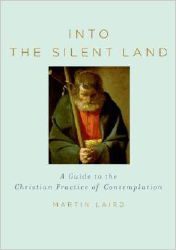
Befriend silence; don’t judge it.
Martin Laird, in his masterful book Into the Silent Land, compares these kinds of self-focused states to weather on a mountain. The point is this: the mountain has sunny days and rainy days, cloudy mornings and windy afternoons. The snow comes, the ice comes, and once in a while there’s a tornado. But the weather is always changing, so no point in getting worked up over it, whether good or bad. We climb the mountain not to experience the weather, but to be present with the mountain.
The mountain represents God, and the weather represents the mecurial nature of human consciousness. When we learn to find our stability in the solid rock of the mountain rather than the ever-shifting dynamics of the sky, we come closer to the real purpose we are there to begin with: to consent to divine love and divine presence in our lives, even when it operates below the threshold of our ordinary consciousness.
To the reader who submitted the question: good for you for noticing this dynamic. That simple noticing can be a helpful step toward gently letting it go. So… let it go! And blessings to you as you stand firmly on the mountain.
Enjoy reading this blog?
Click here to become a patron.

Stay in touch! Connect with Carl McColman on Facebook:
Cutting Through Spiritual Materialism
Previous Post

December 20, 2017
Contemplation and the Bible
Next Post

December 26, 2017 "What is it about paganism that scares Christians?"
Browse Our Archives
Select a Category Activism Announcements Art Books Catholicism Celtic Christianity Christian mysticism Christianity Contemplation Current events Etc. Family humor interfaith dialogue Interfaith Wisdom Interspirituality Lay Cistercians Living the Faith Meditation movies Mysticism Mystics nature Poetry Reviews Scripture silence Spirituality Uncategorized Writing
Select a Month February 2025 January 2025 November 2024 September 2024 August 2024 July 2024 June 2024 May 2024 March 2024 January 2024 December 2023 November 2023 August 2023 June 2023 April 2023 March 2023 February 2023 January 2023 December 2022 November 2022 October 2022 September 2022 August 2022 July 2022 June 2022 May 2022 April 2022 February 2022 January 2022 December 2021 November 2021 October 2021 September 2021 August 2021 July 2021 June 2021 May 2021 April 2021 March 2021 February 2021 January 2021 December 2020 November 2020 October 2020 September 2020 August 2020 July 2020 June 2020 May 2020 April 2020 March 2020 February 2020 January 2020 December 2019 November 2019 October 2019 September 2019 August 2019 July 2019 June 2019 May 2019 April 2019 March 2019 February 2019 January 2019 December 2018 November 2018 October 2018 September 2018 August 2018 July 2018 June 2018 May 2018 April 2018 March 2018 February 2018 January 2018 December 2017 November 2017 October 2017 September 2017 August 2017 July 2017 June 2017 May 2017 April 2017 March 2017 February 2017 January 2017 December 2016 November 2016 October 2016 September 2016 August 2016 July 2016 June 2016 May 2016 March 2016 February 2016 January 2016 December 2015 November 2015 October 2015 September 2015 August 2015 July 2015 June 2015 May 2015 April 2015 March 2015 February 2015 January 2015 December 2014 November 2014 October 2014 September 2014 August 2014 July 2014 June 2014 May 2014 April 2014 March 2014 February 2014 January 2014 December 2013 October 2013 September 2013 July 2013 May 2013 January 2013 December 2012 November 2012 August 2012 July 2012 June 2012 March 2012 December 2011 September 2011 October 2010 August 2010 March 2010 September 2009 July 2008 January 2008 December 2007 September 2007 February 2007 January 2007 December 2004
Follow Us!
TAKE THE
Religious Wisdom Quiz
What does Paul tell Timothy to fan into flame?
Select your answer to see how you score.
The gift of God The Holy Spirit His zeal His faith
Support this
Column


Related posts from Carl McColman

Four Dimensions of Mindfulness and Centering Prayer
A Contemplative Reflection on the Death of Christ

LSD, Anxiety, and Contemplation: Can Psychedelic Therapy Support...

Discover the Three Forms of Contemplation, according to...
TRENDING AT PATHEOS Contemplative

Handy Contemplative Practices for Political Spaces
A Spiritually Grounded Presence In order to bring a spiritually grounded presence...

Halloween: The Holiday of Loving Your Neighbor
All Hallows Eve Is Halloween the least Christian holiday in America, or...

Can Love Be Saved? Some Thoughts on the...
Happy Valentine's Day! I recently published a post on Patreon called Can...

"This Loving, Uniting Embrace": the Holy Ordinary
Today's guest post is by Mark Longhurst, author of The Holy Ordinary:...

How Are We Called to Live?: More About...
How Are We Called to Live? Many of us struggle with discerning...

A Spiritual Practice of Reading: Join Us Online
A Spiritual Practice of Reading A healthy spiritual practice of reading is...
view all Contemplative blogs
Ad-Free & Subscriber Log-In Subscription Support
- About Us
- 2026 Calendar
- Videos
- Podcasts
- Library of World Religions
- Faith In Media Tracker
- Advertise With Us
- Write for Us
- Privacy Policy
- Terms of Service
- Do Not Sell My Data
- Contact Us
- Radiant Digital
- Manage Newsletter Subscriptions
- Unsubscribe From Notifications
- Sitemap
Copyright 2008-2026, Patheos. All rights reserved.
Subscription Support Ad-Free & Subscriber Log-In
Follow Patheos