
BuddhistCatholicContemplativeEvangelicalGeneral ChristianHinduJewishLatter-day SaintMuslimNew VisionsProgressive Christian
Beliefs
- Buddhist
- Catholic
- Contemplative
- Evangelical
- General Christian
- Hindu
- Jewish
- Latter-day Saint
- More Voices
- Muslim
- New Visions
- Pagan
- Progressive Christian
Topics
- Religion News
- Food and Religion
- Sports and Religion
- Religious Art
- Religious Music and Entertainment
- Religious Events
- History and Religion
- Style and Religion
- Politics and Religion
- Women in Religion
- Recreation Outdoors and Religion
- Business Finance and Religion
- Careers Workplace and Religion
- Education and Religion
- Family Parenting and Religion
- Health Fitness and Religion
- Home and Religion
- Relationships and Religion
- Technology and Religion
- Travel and Religion
Columnists
- Buddhist Columnists
- Business Finance and Religion Columnists
- Careers Workplace and Religion Columnists
- Catholic Columnists
- Contemplative Columnists
- Education and Religion Columnists
- Evangelists Columnists
- Family Parenting and Religion Columnists
- General Christian Columnists
- Health Fitness and Religion Columnists
- Hindu Columnists
- History and Religion Columnists
- Home and Religion Columnists
- Jewish Columnists
- More Voices Columnists
- Latter Day Columnists
- Muslim Columnists
- New Visions Columnists
- Nonreligious Columnists
- Pagan Columnists
- Politics and Religion Columnists
- Progressive Columnists
- Recreation Outdoors and Religion Columnists
- Relationships and Religion Columnists
- Religion News Columnists
- Religious Art Columnists
- Religious Events Columnists
- Religious Music and Entertainment Columnists
- Sports and Religion Columnists
- Style and Religion Columnists
- Technology and Religion Columnists
- Travel and Religion Columnists
- Women in Religion Columnists
Resource Library
- 2026 Calendar
- Library of World Religions
- The 100 Most Holy Places on Earth
- Patheos Answers
- Podcasts
- Videos
- Faith Leaders Database
- Anglican Episcopalian
- Bahai
- Baptist
- Buddhism
- Christianity
- Confucianism
- Eastern Orthodoxy
- Hinduism
- Holiness and Pentecostal
- ISKCON
- Islam
- Judaism
- Lutheran
- Methodist
- The Church of Jesus Christ of Latter-day Saints
- New Age
- Paganism
- Presbytarian and Reformed
- Protestantism
- Religion Behind the Scenes
- Roman Catholic
- Scientology
- Shia Islam
- Sikhism
- Sufism
- Sunni Islam
- Taoism
- Zen
- See all religions
Research Tools
 Ad-Free & Subscriber Log-In Subscription Support
Ad-Free & Subscriber Log-In Subscription Support
Follow Patheos 

- Trending:
- Forgiveness
- |
- Marriage
- |
- Consciousness
- |
- Death Penalty
- |
- Election
- |
- Halloween

- Home
- Contemplative
- How to Find a Mystical Teacher, Part Two
How to Find a Mystical Teacher, Part Two
Last updated on: November 7, 2017 at 11:56 am by Carl "Skye" McColman
How to Find a Mystical Teacher, Part Two 2017-11-07T11:56:56-04:00 Carl "Skye" McColman
Patheos Explore the world's faith through different perspectives on religion and spirituality! Patheos has the views of the prevalent religions and spiritualities of the world.
This post is a sequel to my post from last week called How to Find a Mystical Teacher.
The person who originally wrote to me, responding to that post, in which I argued for the importance of embedding our quest for mystical training with engagement in a community of faith. She wrote:
I do attend a local church. After a long search, I have found a church home in the Episcopalian Church (ECUSA). And, I do study the Bible. I grew up in a family where going to church on Sunday was a regular thing. Sunday school is where I acquired my first learning in the Bible; my understanding of the Bible has developed, over the years. I see what you mean by activism. Many of the well known mystics were activists, like Teresa of Avila, Francis of Assisi, and many others that you mention in your book.
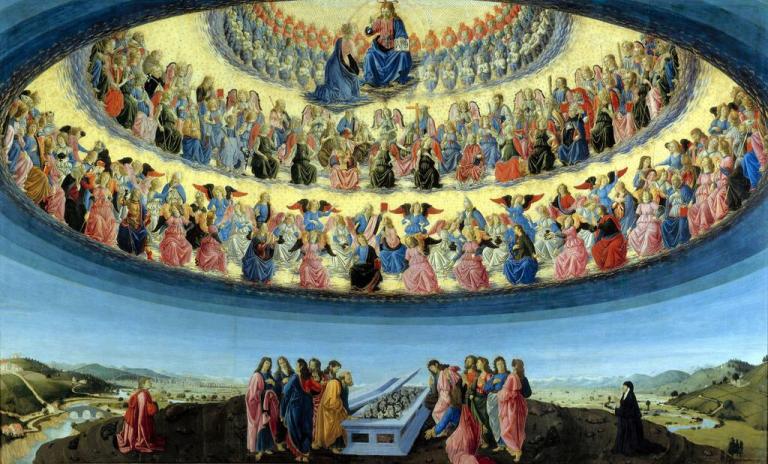
And now, my further thoughts for her (and for anyone else seeking guidance in Christian mysticism)…
As you can imagine, many people who write to me asking for a “mystical teacher” are not at all connected to the tradition, and they don’t want to do the work that is entailed with participating in a faith community (whether it’s a traditional parish or some other configuration). So I’m happy to hear that’s something you already are engaging in.
A common complaint I hear from folks is “but my church doesn’t get mysticism!” Sadly, that’s often the case. Depending on how long ago your priests went to seminary (and which seminary they attended), they could actually have a negative view of mysticism, seeing it as needlessly escapist or narcissistic or anti-rational. At its extremes mysticism can be all those things, but the heart of authentic Christian mysticism is about something else entirely: cultivating a meaningful and conscious relationship with God, that becomes a source of grace and joy and strength in our lives.
I think it is wise to look toward monastics for guidance, but I think approaching well-known monks or nuns, such as authors, is usually a waste of time, not because authors themselves are bad (although authors are human too, which means no one is perfect), but because generally they are simply too busy to provide one-on-one spiritual guidance.
So I think your best bet is to do one or both of these approaches:
First approach: Find a monastery near you where you can make a retreat and do so, and talk to the guestmaster there about spiritual mentoring. I’d recommend visiting a monastery/convent that corresponds to your own gender identity, as some monastics only like to direct people of the same gender. Also, it may be wise to visit monasteries that are in the same church or ecclesial community that you are in; so if you’re Catholic, go to a Catholic monastery; if you’re Episcopalian or the member of a Reformed/Protestant Church, visit an Anglican or ecumenical monastery. This isn’t a hard and fast rule, of course, but I think it’s helpful to make a retreat in a setting where you are in communion with the residents monastics. However, don’t be shy about visiting a Catholic or Orthodox monastery, even if you are Anglican or Protestant. Most monks and nuns are very welcoming to people outside their church, and while they may not be able to invite you to communion, in every other aspect of the monastic life you will probably find that you are welcomed with open arms.
When interviewing a sister or a brother to be your spiritual director, be sure to tell her up front that you are interested in learning about Christian mysticism and you want to cultivate a contemplative relationship with God. Try to avoid saying “I want to be a mystic” or “I want God to make me a mystic.” Frankly, most spiritual directors would see that as a red flag: indicating someone who is more interested in mysticism than in God! And notice how you react to what I’ve just written: if, in your heart, you are more interested in mysticism than in God, that doesn’t make you a bad person, but it’s something to pray about. “Seek first the kingdom of heaven, and all these other things will be added afterward.”
Just because a nun or religious sister is not known as an “authority on mysticism” doesn’t mean you won’t get the best guidance. Because, ultimately, the guide you seek is the Holy Spirit. Your “human” spiritual director, whether a monastic or a layperson, is there to assist the Holy Spirit, who is truly your director into the mysteries. So what’s most important is that your guide be herself a serious and committed person of prayer, a good listener, and someone with a good heart.
Second approach: If finding a monastic director doesn’t work out for you, then once again I refer you to Spiritual Directors International. You’ll find many people listed there who have received formation in the art of spiritual guidance and/or spiritual companionship. This covers all Christian denominations and even non-Christian spiritual guides, so you’ll need to do your homework to make sure the person you end up working with is compatible with you, both in terms of their background but also in terms of their language and their understanding. You might have to interview several persons before you find the guide who clicks with you. See it as an adventure! Once again, be upfront about your interest in the mystics but resist the temptation to call yourself a mystic or saying mysticism is what you want.
Try to keep your yearning and your desire God-centered. That will be a big help both for you and for finding the right director.
I hope all this is helpful! Thank you for reaching out to me.
Enjoy reading this blog?
Click here to become a patron.

Stay in touch! Connect with Carl McColman on Facebook:
Previous Post
November 2, 2017
How to Find a Mystical Teacher
Next Post
November 9, 2017 What do Gene Kelly and St. Francis have in common?
Browse Our Archives
Select a Category Activism Announcements Art Books Catholicism Celtic Christianity Christian mysticism Christianity Contemplation Current events Etc. Family humor interfaith dialogue Interfaith Wisdom Interspirituality Lay Cistercians Living the Faith Meditation movies Mysticism Mystics nature Poetry Reviews Scripture silence Spirituality Uncategorized Writing
Select a Month February 2025 January 2025 November 2024 September 2024 August 2024 July 2024 June 2024 May 2024 March 2024 January 2024 December 2023 November 2023 August 2023 June 2023 April 2023 March 2023 February 2023 January 2023 December 2022 November 2022 October 2022 September 2022 August 2022 July 2022 June 2022 May 2022 April 2022 February 2022 January 2022 December 2021 November 2021 October 2021 September 2021 August 2021 July 2021 June 2021 May 2021 April 2021 March 2021 February 2021 January 2021 December 2020 November 2020 October 2020 September 2020 August 2020 July 2020 June 2020 May 2020 April 2020 March 2020 February 2020 January 2020 December 2019 November 2019 October 2019 September 2019 August 2019 July 2019 June 2019 May 2019 April 2019 March 2019 February 2019 January 2019 December 2018 November 2018 October 2018 September 2018 August 2018 July 2018 June 2018 May 2018 April 2018 March 2018 February 2018 January 2018 December 2017 November 2017 October 2017 September 2017 August 2017 July 2017 June 2017 May 2017 April 2017 March 2017 February 2017 January 2017 December 2016 November 2016 October 2016 September 2016 August 2016 July 2016 June 2016 May 2016 March 2016 February 2016 January 2016 December 2015 November 2015 October 2015 September 2015 August 2015 July 2015 June 2015 May 2015 April 2015 March 2015 February 2015 January 2015 December 2014 November 2014 October 2014 September 2014 August 2014 July 2014 June 2014 May 2014 April 2014 March 2014 February 2014 January 2014 December 2013 October 2013 September 2013 July 2013 May 2013 January 2013 December 2012 November 2012 August 2012 July 2012 June 2012 March 2012 December 2011 September 2011 October 2010 August 2010 March 2010 September 2009 July 2008 January 2008 December 2007 September 2007 February 2007 January 2007 December 2004
Follow Us!
TAKE THE
Religious Wisdom Quiz
Which prophet had a vision of God standing beside a destroyed altar?
Select your answer to see how you score.
Micah Ezekiel Amos Joel
Support this
Column


Related posts from Carl McColman

You don't have to become a monk to...

Mysticism, Faith, and "Knowing" God's Will

Twelve Mystical Anthologies That Belong in Every Contemplative...
TRENDING AT PATHEOS Contemplative

Handy Contemplative Practices for Political Spaces
A Spiritually Grounded Presence In order to bring a spiritually grounded presence...

Halloween: The Holiday of Loving Your Neighbor
All Hallows Eve Is Halloween the least Christian holiday in America, or...

Can Love Be Saved? Some Thoughts on the...
Happy Valentine's Day! I recently published a post on Patreon called Can...

"This Loving, Uniting Embrace": the Holy Ordinary
Today's guest post is by Mark Longhurst, author of The Holy Ordinary:...

How Are We Called to Live?: More About...
How Are We Called to Live? Many of us struggle with discerning...

A Spiritual Practice of Reading: Join Us Online
A Spiritual Practice of Reading A healthy spiritual practice of reading is...
view all Contemplative blogs
Ad-Free & Subscriber Log-In Subscription Support
- About Us
- 2026 Calendar
- Videos
- Podcasts
- Library of World Religions
- Faith In Media Tracker
- Advertise With Us
- Write for Us
- Privacy Policy
- Terms of Service
- Do Not Sell My Data
- Contact Us
- Radiant Digital
- Manage Newsletter Subscriptions
- Unsubscribe From Notifications
- Sitemap
Copyright 2008-2026, Patheos. All rights reserved.
Subscription Support Ad-Free & Subscriber Log-In
Follow Patheos