
BuddhistCatholicContemplativeEvangelicalGeneral ChristianHinduJewishLatter-day SaintMuslimNew VisionsProgressive Christian
Beliefs
- Buddhist
- Catholic
- Contemplative
- Evangelical
- General Christian
- Hindu
- Jewish
- Latter-day Saint
- More Voices
- Muslim
- New Visions
- Pagan
- Progressive Christian
Topics
- Religion News
- Food and Religion
- Sports and Religion
- Religious Art
- Religious Music and Entertainment
- Religious Events
- History and Religion
- Style and Religion
- Politics and Religion
- Women in Religion
- Recreation Outdoors and Religion
- Business Finance and Religion
- Careers Workplace and Religion
- Education and Religion
- Family Parenting and Religion
- Health Fitness and Religion
- Home and Religion
- Relationships and Religion
- Technology and Religion
- Travel and Religion
Columnists
- Buddhist Columnists
- Business Finance and Religion Columnists
- Careers Workplace and Religion Columnists
- Catholic Columnists
- Contemplative Columnists
- Education and Religion Columnists
- Evangelists Columnists
- Family Parenting and Religion Columnists
- General Christian Columnists
- Health Fitness and Religion Columnists
- Hindu Columnists
- History and Religion Columnists
- Home and Religion Columnists
- Jewish Columnists
- More Voices Columnists
- Latter Day Columnists
- Muslim Columnists
- New Visions Columnists
- Nonreligious Columnists
- Pagan Columnists
- Politics and Religion Columnists
- Progressive Columnists
- Recreation Outdoors and Religion Columnists
- Relationships and Religion Columnists
- Religion News Columnists
- Religious Art Columnists
- Religious Events Columnists
- Religious Music and Entertainment Columnists
- Sports and Religion Columnists
- Style and Religion Columnists
- Technology and Religion Columnists
- Travel and Religion Columnists
- Women in Religion Columnists
Resource Library
- 2026 Calendar
- Library of World Religions
- The 100 Most Holy Places on Earth
- Patheos Answers
- Podcasts
- Videos
- Faith Leaders Database
- Anglican Episcopalian
- Bahai
- Baptist
- Buddhism
- Christianity
- Confucianism
- Eastern Orthodoxy
- Hinduism
- Holiness and Pentecostal
- ISKCON
- Islam
- Judaism
- Lutheran
- Methodist
- The Church of Jesus Christ of Latter-day Saints
- New Age
- Paganism
- Presbytarian and Reformed
- Protestantism
- Religion Behind the Scenes
- Roman Catholic
- Scientology
- Shia Islam
- Sikhism
- Sufism
- Sunni Islam
- Taoism
- Zen
- See all religions
Research Tools
 Ad-Free & Subscriber Log-In Subscription Support
Follow Patheos 

- Trending:
- Advent
- |
- Forgiveness
- |
- Thanksgiving
- |
- Election
- |
- Seasonal Holidays
- |
- Marriage

- Home
- Contemplative
- Is It Okay for Catholics to Read Richard Rohr?
Is It Okay for Catholics to Read Richard Rohr?
Last updated on: October 2, 2017 at 10:16 am by Carl "Skye" McColman
Is It Okay for Catholics to Read Richard Rohr? 2017-10-02T10:16:07-04:00 Carl "Skye" McColman
Patheos Explore the world's faith through different perspectives on religion and spirituality! Patheos has the views of the prevalent religions and spiritualities of the world.

The Divine Dance
A reader of this blog, who is currently the member of a Protestant church but is considering becoming a Catholic, asked me to recommend a few books to him. One of the ones I suggested was Richard Rohr’s Why Be Catholic? Apparently, he decided to check out Richard’s online reputation, because he wrote back to me and asked me this:
What’s the Catholic Church’s view on Richard Rohr? When you Google him there’s a lot of controversy.
This is a wonderful question, because it really has two parts. First, the reader is asking me how does the Catholic Church deal with its prominent teachers, especially when their message is controversial. The second part of the question, of course, concerns one particular author, the popular Franciscan contemplative speaker and author, Richard Rohr.
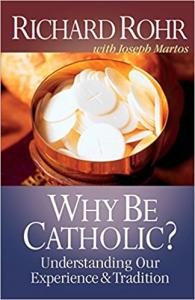
Why Be Catholic?
I’ll talk about Richard Rohr first, and then I’ll say a few general things about Catholicism and controversy.
I don’t know Richard well, but I have met him on a couple of occasions, and have heard him speak a number of times. I’ve read several of his books — my favorites are The Naked Now, Everything Belongs, and Things Hidden.
Even though I am small potatoes compared to him, Richard has been warmly supportive of my work — he has endorsed three of my books, and I’m even quoted in his latest book, The Divine Dance!
For all these reasons, maybe I’m not entirely objective. But I’ll try to be as fair as possible in what I have to say here.
Things Hidden
In person, Richard has always struck me as a truly prayerful and humble man. In the words of a friend of mine, who used to operate a Cathedral bookstore (and is not easily impressed by famous authors), he’s “the real deal.” You can tell when an author doesn’t really live by all the stuff he or she says, my friend pointed out, but with Richard, his integrity was very obvious.
Richard is one of the three most well-known and loved of living Christian contemplative authors, at least among those writing in English (the other two being Cynthia Bourgeault and Thomas Keating). His writing is very accessible and down-to-earth, is grounded in the tradition, and speaks equally well to those inside the church as well as outside. He is very honest and speaks very candidly about the foibles or the shadow side of spirituality in general and Catholicism in particular.
Is it okay for Catholics to read Richard Rohr? Yes! In fact, I would encourage Catholics to read his work. But for the very reasons I find Rohr so appealing, others find his work objectionable. Let me explain.
The Naked Now
There is a segment of people within the Church whose faith is shaped more by nostalgia for the past than a willingness to grapple with the complexities of the present. In my experience, such people often have a very authoritarian image of God — and of the Church. They see God as a stern judge, and so they believe the Church is supposed to be a flawless expression of his judgment and authority here on earth (and by “the Church” such people typically mean the hierarchy — and especially the more conservative elements of the hierarchy — rather than the entire faithful people of God).
Because authoritarianism is so important to these people, they typically wax nostalgic for the Catholic Church of yesteryear — especially before the Second Vatican Council of the 1960s.
Like all nostalgic people, these folks believe that in the past, the Church was more “pure” — it was authoritative and dealt more firmly with controversy and dissent, unlike today when the Church, in the minds of the nostalgists, has been “compromised” by the “liberals.” Nostalgia, however, is not a good foundation for the spiritual life. Nostalgia is based on a fantasy — a romanticized idea of the past. In truth, however, the good old days typically weren’t nearly as good as we fondly remember them! Nor were they so simple. But when the challenges of the present seem overwhelming, it’s tempting to retreat into an idealized image of a “simpler” past.
Everything Belongs
I admire Richard Rohr because he is an honest writer. He is not afraid to talk about the Catholic Church’s failings. He rightly acknowledges that problems like sexism and homophobia are real issues in Catholic culture — matters that the Church often fails to address adequately.
To a nostalgic/authoritarian Catholic, this is the worst kind of heresy — he dares to admit that the Church isn’t perfect!
So over the years, there has been a small but vocal number of Catholics, especially online, who do not merely criticize Richard and his ideas — they attack him.
And Richard is not the only one. In fact, these days the most “notorious” Catholic author, at least here in America, is James Martin, a popular Jesuit writer who recently published a book called Building a Bridge. It’s a very gentle book which calls for greater respect and dialogue between the Church hierarchy and the LGBT community. Sad to say, the authoritarians are incensed that a priest would dare to suggest such a thing. Their attacks have been frequent, and unfortunately, rather vicious (which is to say, unchristian).
Other “hot button” authors include Joan Chittister, Elizabeth Johnson, Hans Kung, and Charles Curran. Nor are controversial authors anything new to the Church: in the twentieth century, Pierre Teilhard de Chardin, Thomas Merton, and Anthony De Mello (all of whom I feature in my book Christian Mystics: 108 Seers, Saints and Sages) have been attacked and denounced, either by church leaders or overzealous critics.
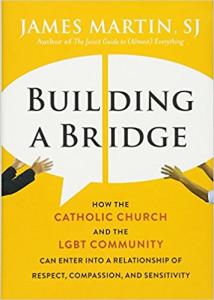
Another Author Who Gets Unfairly Attacked: James Martin, SJ
Ironically, the most common reasons some authors get targeted is usually because such writers are honest about criticizing the hierarchy, and/or they are calling for reform particularly in terms of how the Church approaches sexuality and gender, and/or they promote serious interfaith dialogue. For some reason, these are the issues that seem most likely to upset the authoritarians and the nostalgists.
Now, to get to the central aim of the reader’s question: what is the Church’s view on Richard Rohr? Like most Protestants, my reader is probably aware that the Catholic hierarchy for many centuries maintained an “Index” of books forbidden to lay Catholics. But it’s important to bear in mind that the Vatican has not published a list of forbidden books for over 50 years now.
The authoritarians, of course, think there should be such a list, and if any bishop or Vatican official criticizes a particular book or author (or better yet, suggests that Catholics shouldn’t read that person’s works), the authoritarians will attack it as if it were settled dogma that such-and-such author’s works are “forbidden.” But that is nonsense.
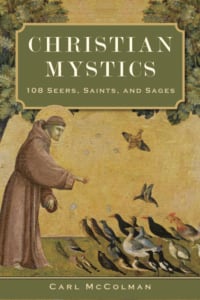
Christian Mystics (which includes a profile of Richard Rohr!)
As far as I know, there is no “official” Catholic line on Richard Rohr and his works. Nor should there be. I’d be willing to bet that he has many fans among the hieararchy, and probably has plenty of critics too — just like most other authors.
Since the Church no longer draws up a list of forbidden books, it is incumbent upon the ordinary Catholic layperson to use common sense and discernment when reading any author — not just the controversial ones. As I’ve said before, even the best author can make mistakes, and even the worst author can come up with a good idea from time to time.
So my final word to my reader who wrote the question, and indeed to anyone who has read this far: when you come across a website that “warns” you against the writings of Richard Rohr, or James Martin, or whomever else they’ve decided to attack this week, because such-and-such author is promoting “un-Catholic” or “anti-Christian” ideas, I certainly hope that you will take such invective with a sizable grain of salt. It’s been my experience that such websites/blogs actually tell us more about the psychology of authoritarianism than about the merits (or flaws) of the writers they attack.
Enjoy reading this blog?
Click here to become a patron.

Stay in touch! Connect with Carl McColman on Facebook:
Previous Post
September 22, 2017
Seven "Ingredients" for Cultivating a Truly Mystical Life
Next Post

September 27, 2017 When the Pope Talked to the Trappists
Browse Our Archives
Select a Category Activism Announcements Art Books Catholicism Celtic Christianity Christian mysticism Christianity Contemplation Current events Etc. Family humor interfaith dialogue Interfaith Wisdom Interspirituality Lay Cistercians Living the Faith Meditation movies Mysticism Mystics nature Poetry Reviews Scripture silence Spirituality Uncategorized Writing
Select a Month February 2025 January 2025 November 2024 September 2024 August 2024 July 2024 June 2024 May 2024 March 2024 January 2024 December 2023 November 2023 August 2023 June 2023 April 2023 March 2023 February 2023 January 2023 December 2022 November 2022 October 2022 September 2022 August 2022 July 2022 June 2022 May 2022 April 2022 February 2022 January 2022 December 2021 November 2021 October 2021 September 2021 August 2021 July 2021 June 2021 May 2021 April 2021 March 2021 February 2021 January 2021 December 2020 November 2020 October 2020 September 2020 August 2020 July 2020 June 2020 May 2020 April 2020 March 2020 February 2020 January 2020 December 2019 November 2019 October 2019 September 2019 August 2019 July 2019 June 2019 May 2019 April 2019 March 2019 February 2019 January 2019 December 2018 November 2018 October 2018 September 2018 August 2018 July 2018 June 2018 May 2018 April 2018 March 2018 February 2018 January 2018 December 2017 November 2017 October 2017 September 2017 August 2017 July 2017 June 2017 May 2017 April 2017 March 2017 February 2017 January 2017 December 2016 November 2016 October 2016 September 2016 August 2016 July 2016 June 2016 May 2016 March 2016 February 2016 January 2016 December 2015 November 2015 October 2015 September 2015 August 2015 July 2015 June 2015 May 2015 April 2015 March 2015 February 2015 January 2015 December 2014 November 2014 October 2014 September 2014 August 2014 July 2014 June 2014 May 2014 April 2014 March 2014 February 2014 January 2014 December 2013 October 2013 September 2013 July 2013 May 2013 January 2013 December 2012 November 2012 August 2012 July 2012 June 2012 March 2012 December 2011 September 2011 October 2010 August 2010 March 2010 September 2009 July 2008 January 2008 December 2007 September 2007 February 2007 January 2007 December 2004
Follow Us!
TAKE THE
Religious Wisdom Quiz
How did Judas signal who Jesus was to the soldiers?
Select your answer to see how you score.
With a kiss By pointing By handing Him bread By shouting
Support this
Column


Related posts from Carl McColman

Contemplative Books to Read and Savor During Advent...
New From Encountering Silence: Exploring the Lost History...
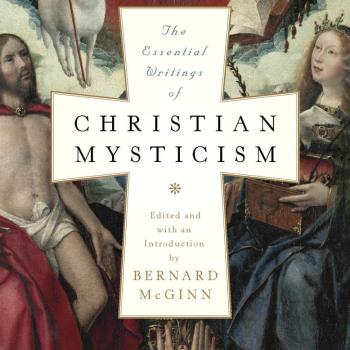
Twelve Mystical Anthologies That Belong in Every Contemplative...
TRENDING AT PATHEOS Contemplative

Handy Contemplative Practices for Political Spaces
A Spiritually Grounded Presence In order to bring a spiritually grounded presence...

Halloween: The Holiday of Loving Your Neighbor
All Hallows Eve Is Halloween the least Christian holiday in America, or...

Can Love Be Saved? Some Thoughts on the...
Happy Valentine's Day! I recently published a post on Patreon called Can...
"This Loving, Uniting Embrace": the Holy Ordinary
Today's guest post is by Mark Longhurst, author of The Holy Ordinary:...

How Are We Called to Live?: More About...
How Are We Called to Live? Many of us struggle with discerning...

A Spiritual Practice of Reading: Join Us Online
A Spiritual Practice of Reading A healthy spiritual practice of reading is...
view all Contemplative blogs
Ad-Free & Subscriber Log-In Subscription Support
- About Us
- 2026 Calendar
- Videos
- Podcasts
- Library of World Religions
- Faith In Media Tracker
- Advertise With Us
- Write for Us
- Privacy Policy
- Terms of Service
- Do Not Sell My Data
- Contact Us
- Radiant Digital
- Manage Newsletter Subscriptions
- Unsubscribe From Notifications
- Sitemap
Copyright 2008-2026, Patheos, part of the Radiant Digital network of media brands. All rights reserved.
Subscription Support Ad-Free & Subscriber Log-In
Follow Patheos