
BuddhistCatholicContemplativeEvangelicalGeneral ChristianHinduJewishLatter-day SaintMuslimNew VisionsProgressive Christian
Beliefs
- Buddhist
- Catholic
- Contemplative
- Evangelical
- General Christian
- Hindu
- Jewish
- Latter-day Saint
- More Voices
- Muslim
- New Visions
- Pagan
- Progressive Christian
Topics
- Religion News
- Food and Religion
- Sports and Religion
- Religious Art
- Religious Music and Entertainment
- Religious Events
- History and Religion
- Style and Religion
- Politics and Religion
- Women in Religion
- Recreation Outdoors and Religion
- Business Finance and Religion
- Careers Workplace and Religion
- Education and Religion
- Family Parenting and Religion
- Health Fitness and Religion
- Home and Religion
- Relationships and Religion
- Technology and Religion
- Travel and Religion
Columnists
- Buddhist Columnists
- Business Finance and Religion Columnists
- Careers Workplace and Religion Columnists
- Catholic Columnists
- Contemplative Columnists
- Education and Religion Columnists
- Evangelists Columnists
- Family Parenting and Religion Columnists
- General Christian Columnists
- Health Fitness and Religion Columnists
- Hindu Columnists
- History and Religion Columnists
- Home and Religion Columnists
- Jewish Columnists
- More Voices Columnists
- Latter Day Columnists
- Muslim Columnists
- New Visions Columnists
- Nonreligious Columnists
- Pagan Columnists
- Politics and Religion Columnists
- Progressive Columnists
- Recreation Outdoors and Religion Columnists
- Relationships and Religion Columnists
- Religion News Columnists
- Religious Art Columnists
- Religious Events Columnists
- Religious Music and Entertainment Columnists
- Sports and Religion Columnists
- Style and Religion Columnists
- Technology and Religion Columnists
- Travel and Religion Columnists
- Women in Religion Columnists
Resource Library
- 2026 Calendar
- Library of World Religions
- The 100 Most Holy Places on Earth
- Patheos Answers
- Podcasts
- Videos
- Faith Leaders Database
- Anglican Episcopalian
- Bahai
- Baptist
- Buddhism
- Christianity
- Confucianism
- Eastern Orthodoxy
- Hinduism
- Holiness and Pentecostal
- ISKCON
- Islam
- Judaism
- Lutheran
- Methodist
- The Church of Jesus Christ of Latter-day Saints
- New Age
- Paganism
- Presbytarian and Reformed
- Protestantism
- Religion Behind the Scenes
- Roman Catholic
- Scientology
- Shia Islam
- Sikhism
- Sufism
- Sunni Islam
- Taoism
- Zen
- See all religions
Research Tools
 Ad-Free & Subscriber Log-In Subscription Support
Ad-Free & Subscriber Log-In Subscription Support
Follow Patheos 

- Trending:
- Forgiveness
- |
- Marriage
- |
- Consciousness
- |
- Death Penalty
- |
- Election
- |
- Halloween

- Home
- Contemplative
- How to Practice Mindfulness without Narcissism
How to Practice Mindfulness without Narcissism
Last updated on: December 22, 2018 at 1:01 am by Carl "Skye" McColman
How to Practice Mindfulness without Narcissism 2018-12-22T01:01:40-04:00 Carl "Skye" McColman
Patheos Explore the world's faith through different perspectives on religion and spirituality! Patheos has the views of the prevalent religions and spiritualities of the world.
On Friday the Washington Post took a close look at the Mindfulness movement — and how at least in some sectors it has been undermined by good ol’ American narcissism.
The article is well worth reading: Mindfulness would be good for you. If it weren’t so selfish. It is written by Thomas Joiner, a psychologist who authored a book on this topic, called Mindlessness: The Corruption of Mindfulness in a Culture of Narcissism.
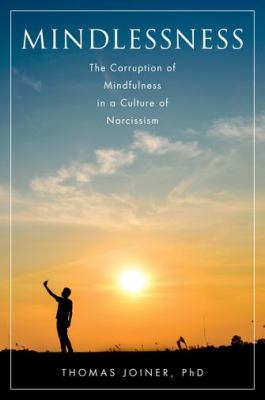
Mindlessness
A little over four years ago, I was invited to speak at a small conference on the language of contemplation across religious traditions. About a dozen of us gathered at a Tibetan Buddhist center in California, representing all the world’s great spiritual traditions and sharing ideas with one another about the relationship between meditation, contemplation, language, and culture. The sponsoring organization is involved in translating Tibetan texts into English and other languages, and recognized that there is a perennial tension between trying to capture, in words, a spirituality that is essentially ineffable and indescribable. It was an excellent conference (see below for a video of one of the sessions).
But what I remember, more than anything else, from that conference, was hearing one of the Buddhist speakers talk about his concerns about the mindfulness movement, which he saw as dangerously severing meditation practice from its philosophical and religious matrix. A secularized meditation intended strictly for therapeutic purposes, he warned, will reduce the practice to an ego-centric tool that actually works against the goals of Buddhism — or other faiths.
So when I come across a book like Joiner’s Mindlessness — or, for that matter, Miguel Farias & Catherine Wikholm’s The Buddha Pill, which explores some of these same concerns — it feels like, in Yogi Berra’s famous dictum, “déjà vu all over again.”
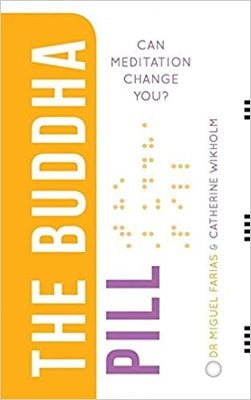
Buddha Pill
I think Joiner does a very good job at acknowledging what is good about mindfulness practice. Even though he suggests that the empirical evidence for mindfulness having therapeutic value is weaker than its boosters would have you believe (another point previous explored by Farias & Wikholm), he writes eloquently about why mindfulness is attractive, and how — at its best — it really does invite the practitioner into a place of deepened awareness and gentle acceptance. He very astutely recognizes that a key to fully entering into mindfulness is humility — I’ll get back to that point.
But he sees problems with how mindfulness is promoted in our society — that the story is all about what mindfulness will do for you. In other words, it reinforces our cultural obsession with the self. In other words, our tendency toward narcissism. And since narcissism and self-obsession are big problems in themselves, mindfulness simply doesn’t help as much as it’s cracked up to, and may actually be unhelpful for those whose root problem is not anxiety or depression but, well, self-obsession.
I agree with Dr. Joiner. But I think this is a problem that our secular culture is not well equipped to address. By stripping meditation of its religious matrix — whether Buddhist or Christian or whatever — we strip it of the very cultural safeguards that are in place to promote simplicity, compassion, service, and self-forgetfulness (humility). In other words, what is needed to make mindfulness a more truly holistic practice — not only psychologically therapeutic but also spiritually healing/liberating — is the very religious content that got discarded when “mindfulness” was first divorced from its historical background in order to be promoted to (and accepted by) the secular medical/scientific community.
It’s a fundamental paradox. Ours is a culture which values self-confidence, assertiveness, peace of mind, extraversion, and other “winner” qualities. Certainly such qualities can contribute to a happy and an effective life, so it is no surprise that our mental healthcare objectives typically involve cultivating these characteristics. Spirituality, on the other hand, invites us into humility, simplicity, receptivity, docility, deep silence/quiet, unknowing, wondering, and even obedience and repentance. Put another way, our secular model of wellness involves the assertion of the self, while the spiritual model of wellness involves dying to the self. Now, please understand — I am not attacking the goals of secular therapy! Many of us have poorly developed egos, and we need therapeutic support to grow a mature and healthy sense of self. We cannot die to ourselves if we have not given birth to a healthy self within us first. But spiritually generally picks up where therapy leaves off.
So the problem with a mindfulness practice divorced from spirituality is that we’ve taken a practice that works best when it is in service to humility — to self-forgetfulness, or dying-t0-self — and we’ve transplanted it into the context of secular therapy, which is all about giving-birth-to-self.
The solution: I think the best bet is to form strategic partnerships between secular mindfulness programs and spiritual centers such as Shambhala Buddhist Centers or Ignatian Retreat Houses. Let’s continue to teach people how to meditate, but let’s make sure they understand that there is a world of spiritual wisdom that must accompany such practice. It’s not optional. But by combining the pure process of mindfulness practice with the self-transcending wisdom of the dharma or Christian contemplation, then what is truly beneficial about mindfulness can more readily make a real difference in peoples’ lives.
Enjoy reading this blog?
Click here to become a patron.

Previous Post

August 24, 2017
What to Do When Contemplative Prayer Leads to Sadness
Next Post

August 30, 2017 The Church Says One Thing. My Conscience Disagrees. So What Do I Do?
Browse Our Archives
Select a Category Activism Announcements Art Books Catholicism Celtic Christianity Christian mysticism Christianity Contemplation Current events Etc. Family humor interfaith dialogue Interfaith Wisdom Interspirituality Lay Cistercians Living the Faith Meditation movies Mysticism Mystics nature Poetry Reviews Scripture silence Spirituality Uncategorized Writing
Select a Month February 2025 January 2025 November 2024 September 2024 August 2024 July 2024 June 2024 May 2024 March 2024 January 2024 December 2023 November 2023 August 2023 June 2023 April 2023 March 2023 February 2023 January 2023 December 2022 November 2022 October 2022 September 2022 August 2022 July 2022 June 2022 May 2022 April 2022 February 2022 January 2022 December 2021 November 2021 October 2021 September 2021 August 2021 July 2021 June 2021 May 2021 April 2021 March 2021 February 2021 January 2021 December 2020 November 2020 October 2020 September 2020 August 2020 July 2020 June 2020 May 2020 April 2020 March 2020 February 2020 January 2020 December 2019 November 2019 October 2019 September 2019 August 2019 July 2019 June 2019 May 2019 April 2019 March 2019 February 2019 January 2019 December 2018 November 2018 October 2018 September 2018 August 2018 July 2018 June 2018 May 2018 April 2018 March 2018 February 2018 January 2018 December 2017 November 2017 October 2017 September 2017 August 2017 July 2017 June 2017 May 2017 April 2017 March 2017 February 2017 January 2017 December 2016 November 2016 October 2016 September 2016 August 2016 July 2016 June 2016 May 2016 March 2016 February 2016 January 2016 December 2015 November 2015 October 2015 September 2015 August 2015 July 2015 June 2015 May 2015 April 2015 March 2015 February 2015 January 2015 December 2014 November 2014 October 2014 September 2014 August 2014 July 2014 June 2014 May 2014 April 2014 March 2014 February 2014 January 2014 December 2013 October 2013 September 2013 July 2013 May 2013 January 2013 December 2012 November 2012 August 2012 July 2012 June 2012 March 2012 December 2011 September 2011 October 2010 August 2010 March 2010 September 2009 July 2008 January 2008 December 2007 September 2007 February 2007 January 2007 December 2004
Follow Us!
TAKE THE
Religious Wisdom Quiz
What was the primary worship language in the Bible?
Select your answer to see how you score.
Latin Hebrew Greek Aramaic
Support this
Column


Related posts from Carl McColman

Four Dimensions of Mindfulness and Centering Prayer

A Meditation on the Spirituality of Healing (A...
The Prayer of Recollection: A Classic Mystical Practice...

Finding Your Perfect Prayer Posture
TRENDING AT PATHEOS Contemplative

Handy Contemplative Practices for Political Spaces
A Spiritually Grounded Presence In order to bring a spiritually grounded presence...

Halloween: The Holiday of Loving Your Neighbor
All Hallows Eve Is Halloween the least Christian holiday in America, or...

Can Love Be Saved? Some Thoughts on the...
Happy Valentine's Day! I recently published a post on Patreon called Can...

"This Loving, Uniting Embrace": the Holy Ordinary
Today's guest post is by Mark Longhurst, author of The Holy Ordinary:...

How Are We Called to Live?: More About...
How Are We Called to Live? Many of us struggle with discerning...

A Spiritual Practice of Reading: Join Us Online
A Spiritual Practice of Reading A healthy spiritual practice of reading is...
view all Contemplative blogs
Ad-Free & Subscriber Log-In Subscription Support
- About Us
- 2026 Calendar
- Videos
- Podcasts
- Library of World Religions
- Faith In Media Tracker
- Advertise With Us
- Write for Us
- Privacy Policy
- Terms of Service
- Do Not Sell My Data
- Contact Us
- Radiant Digital
- Manage Newsletter Subscriptions
- Unsubscribe From Notifications
- Sitemap
Copyright 2008-2026, Patheos. All rights reserved.
Subscription Support Ad-Free & Subscriber Log-In
Follow Patheos