
BuddhistCatholicContemplativeEvangelicalGeneral ChristianHinduJewishLatter-day SaintMuslimNew VisionsProgressive Christian
Beliefs
- Buddhist
- Catholic
- Contemplative
- Evangelical
- General Christian
- Hindu
- Jewish
- Latter-day Saint
- More Voices
- Muslim
- New Visions
- Pagan
- Progressive Christian
Topics
- Religion News
- Food and Religion
- Sports and Religion
- Religious Art
- Religious Music and Entertainment
- Religious Events
- History and Religion
- Style and Religion
- Politics and Religion
- Women in Religion
- Recreation Outdoors and Religion
- Business Finance and Religion
- Careers Workplace and Religion
- Education and Religion
- Family Parenting and Religion
- Health Fitness and Religion
- Home and Religion
- Relationships and Religion
- Technology and Religion
- Travel and Religion
Columnists
- Buddhist Columnists
- Business Finance and Religion Columnists
- Careers Workplace and Religion Columnists
- Catholic Columnists
- Contemplative Columnists
- Education and Religion Columnists
- Evangelists Columnists
- Family Parenting and Religion Columnists
- General Christian Columnists
- Health Fitness and Religion Columnists
- Hindu Columnists
- History and Religion Columnists
- Home and Religion Columnists
- Jewish Columnists
- More Voices Columnists
- Latter Day Columnists
- Muslim Columnists
- New Visions Columnists
- Nonreligious Columnists
- Pagan Columnists
- Politics and Religion Columnists
- Progressive Columnists
- Recreation Outdoors and Religion Columnists
- Relationships and Religion Columnists
- Religion News Columnists
- Religious Art Columnists
- Religious Events Columnists
- Religious Music and Entertainment Columnists
- Sports and Religion Columnists
- Style and Religion Columnists
- Technology and Religion Columnists
- Travel and Religion Columnists
- Women in Religion Columnists
Resource Library
- 2026 Calendar
- Library of World Religions
- The 100 Most Holy Places on Earth
- Patheos Answers
- Podcasts
- Videos
- Faith Leaders Database
- Anglican Episcopalian
- Bahai
- Baptist
- Buddhism
- Christianity
- Confucianism
- Eastern Orthodoxy
- Hinduism
- Holiness and Pentecostal
- ISKCON
- Islam
- Judaism
- Lutheran
- Methodist
- The Church of Jesus Christ of Latter-day Saints
- New Age
- Paganism
- Presbytarian and Reformed
- Protestantism
- Religion Behind the Scenes
- Roman Catholic
- Scientology
- Shia Islam
- Sikhism
- Sufism
- Sunni Islam
- Taoism
- Zen
- See all religions
Research Tools
 Ad-Free & Subscriber Log-In Subscription Support
Ad-Free & Subscriber Log-In Subscription Support
Follow Patheos 

- Trending:
- Forgiveness
- |
- Marriage
- |
- Consciousness
- |
- Death Penalty
- |
- Election
- |
- Halloween

- Home
- Contemplative
- Seven Things I’ve Learned from the Vinyl Revival
Seven Things I’ve Learned from the Vinyl Revival
Last updated on: November 18, 2017 at 1:31 am by Carl "Skye" McColman
Seven Things I’ve Learned from the Vinyl Revival 2017-11-18T01:31:29-04:00 Carl "Skye" McColman
Patheos Explore the world's faith through different perspectives on religion and spirituality! Patheos has the views of the prevalent religions and spiritualities of the world.
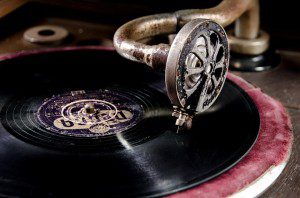
Image credit: Skitterphoto (public domain)
Sometimes I’m a bit slow on the uptake.
Apparently vinyl records have been making a kind of limited comeback for at least the past decade. But I’ve been pretty much oblivious to it, at least until I noticed that used vinyl record shops were opening (not closing) in trendy neighborhoods around Atlanta.
And then one day last year I stumbled across a rack of expensive, audiophile quality vinyl records in my local Barnes & Noble, of all places!
When I told a friend of mine about this, he offered to loan me his old turntable. I took him up on the offer, and soon I was joyfully scouring thrift stores and secondhand bookshops, happily scarfing up lost treasures from the ’50s and ’60s (and beyond) for as little as a dollar per record.
The 33 1/3 vinyl lp was back in my life, even though I had dismissed it unceremoniously after buying my first CD player way back in 1986.
Granted, vinyl is more of a hobby now than a mainstream way to listen to music; after setting up my turntable, I still listen mostly to CDs and MP3s. But I have enjoyed getting back into vinyl records far more than I would have guessed. And part of it is — maybe the largest part of it — has to do with a few insights that I have gleaned from contemplation, that helps me to appreciate vinyl (and vice versa).
So dust off that old copy of Frampton Comes Alive that you haven’t played in thirty years. Give it a spin, and reflect on these lessons that I have learned from the vinyl revival: insights not only for music lovers, but for spiritual seekers (especially contemplatives).
- Just because something is old doesn’t mean it’s dead. I suppose like many music lovers, I found the surface noise that mar older records annoying — so when the pristine sound of digitally recorded music (first CDs, and later MP3s) came along, I enthusiastically embraced the new media. Vinyl, as far as I was concerned, was old, passé, obsolete technology. But vinyl refused to die, and eventually I came to realize that it really does have qualities that digital music lacks. Moral of the story: just because something is old doesn’t mean it has no value. On the contrary: sometimes what is old is more valuable than we realize.
- Music (like all art) needs to be savored, not consumed. With digital music it’s easy to create playlists that go on for hours and hours. But if you have an iTunes library with over 20,000 songs that it would several months (at 24 hours a day) to listen to — yes, that’s my digital library, and I’m sure it’s not the biggest one out there! — at what point does music stop being an artifact of beauty, and become just another collectible item? It’s far too easy for music to become meaningless background noise, when it just drones on and on out of an overly-long playlist. Sure, you can over-do collecting vinyl as well — but you have to be intentional about playing a vinyl album (see #5 below), so even if you have access to a large library, listening to that music requires a level of mindfulness that fosters a sense of savoring the music, rather than just mindlessly letting it play in the background. In other words, vinyl helps preserve music’s integrity as a work of art.
- Beauty shines through imperfection. Your old vinyl records sound scratchy, with plenty of clicks and pops. So what? Sure, CDs or MP3s have a “cleaner” sound, but you could also make the case that vinyl has a warmer, richer, fuller sound. Even the surface noise — unless a record is badly scratched — cannot really distract from the overall beauty of the music, and by choosing to pay attention to the music rather than the imperfections, we train our ears and our minds to focus on what truly matters.
There’s a contemplative corollary here: when you enter into silent prayer, your mind has plenty of “clicks” and “pops” of its own (all those distracting thoughts!). But just as you can enjoy music even when played on a scratchy record, so too the beauty of contemplation shines through even a distracted mind. - Great music deserves great art and design. There’s a more comprehensive aesthetic experience to playing a vinyl record. The album is large enough that the artwork is much more pleasing than what is found on a CD cover (or a graphic on your iPhone). Especially in the heyday of albums, many were beautifully designed, with custom labels, gatefold albums, booklets, sleeves — an album like Jon Anderson’s Olias of Sunhillow or Led Zeppelin’s Physical Graffiti was a masterpiece of design. It’s a reminder that no form of art exists in a vacuum: the music is enhanced by visual art and design, just as silent prayer is enhanced by meaningful liturgical prayer.
- The best aesthetic experience sometimes moves at a slow pace. Vinyl forces you to slow down. With digital music (especially MP3s) you press a button and there’s the music. With vinyl, it’s a slower, fuller process: removing the disc from the album, cleaning the disc, positioning the needle, turning the album over after finishing one side (usually about 20 minutes); enjoying the art and lyrics printed on the album and sleeve as you listen… the overall experience of enjoying vinyl recordings is so much fuller than the antiseptic process of playing digital songs.
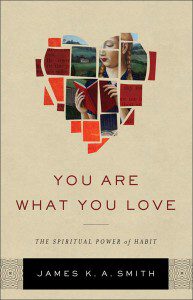 Rituals matter. I’m reading a wonderful book right now called You Are What You Love: The Spiritual Power of Habit. It’s a book about the importance of ritual in our lives, and reflects on how we all have “secular liturgies” (like shopping at the mall or attending a pro football game) that can shape us, for good or ill, just as religious liturgies can form who we are. Vinyl records have their own rituals, which I have detailed above. These are rituals that help us to value and care for the artistic beauty in our lives. It’s a joy to decide it’s time to listen to a favorite album and to go through the steps necessary to enjoy listening to it. It’s a ritual that celebrates not only music, but careful listening. As central as the music is, the “ritual” of listening to it on vinyl is part of the pleasure.
- Some of the life’s best treasures are hidden way off the beaten track. Finally: there’s some great music that’s only available on vinyl. You might have to go rummaging through a used record shop (or the used product listings on Amazon) to find them, but if you’re looking for rare gems like Fairport Convention’s Fairport Chronicles, the Phil Keaggy Band’s Emerging, or Honeytree’s Me and My Old Guitar (to list just a few of my favorites), you’re going to have to find them on vinyl. The takeaway: sometimes what’s really valuable is also really hidden. It’s worth seeking out.
This post is already way too long, but let me briefly tie this in with contemplative practice, which is after all the point behind this blog. Contemplative prayer is a type of “music” for the soul. It must happen slowly, and needs to be savored. It’s certainly an imperfect art, as any practitioner can tell you! It’s built on ancient wisdom that is centuries old, and often not readily available to the mainstream spiritual seeker. Silent prayer is enhanced when it is “ritualized” — such as praying in silence alongside, or as part of, a daily liturgical prayer practice. Finally, just as great music deserves great design, silent prayer deserves (and supports) an overall lifestyle dedicated to serenity, community, and compassion. Those virtues are the “designs” that make contemplation meaningful — and vice versa.
Do you have any other ideas about how something as ordinary as enjoying music on vinyl records can shed light on contemplative spirituality? If so, please share your thoughts with me, whether on a comment to this blog or via social media.
Enjoy reading this blog?
Click here to become a patron.

Stay in touch! Connect with Carl McColman on Facebook:

Next Post

April 14, 2017 Richard Rohr on the Spirituality of Unknowing (Video)
Browse Our Archives
Select a Category Activism Announcements Art Books Catholicism Celtic Christianity Christian mysticism Christianity Contemplation Current events Etc. Family humor interfaith dialogue Interfaith Wisdom Interspirituality Lay Cistercians Living the Faith Meditation movies Mysticism Mystics nature Poetry Reviews Scripture silence Spirituality Uncategorized Writing
Select a Month February 2025 January 2025 November 2024 September 2024 August 2024 July 2024 June 2024 May 2024 March 2024 January 2024 December 2023 November 2023 August 2023 June 2023 April 2023 March 2023 February 2023 January 2023 December 2022 November 2022 October 2022 September 2022 August 2022 July 2022 June 2022 May 2022 April 2022 February 2022 January 2022 December 2021 November 2021 October 2021 September 2021 August 2021 July 2021 June 2021 May 2021 April 2021 March 2021 February 2021 January 2021 December 2020 November 2020 October 2020 September 2020 August 2020 July 2020 June 2020 May 2020 April 2020 March 2020 February 2020 January 2020 December 2019 November 2019 October 2019 September 2019 August 2019 July 2019 June 2019 May 2019 April 2019 March 2019 February 2019 January 2019 December 2018 November 2018 October 2018 September 2018 August 2018 July 2018 June 2018 May 2018 April 2018 March 2018 February 2018 January 2018 December 2017 November 2017 October 2017 September 2017 August 2017 July 2017 June 2017 May 2017 April 2017 March 2017 February 2017 January 2017 December 2016 November 2016 October 2016 September 2016 August 2016 July 2016 June 2016 May 2016 March 2016 February 2016 January 2016 December 2015 November 2015 October 2015 September 2015 August 2015 July 2015 June 2015 May 2015 April 2015 March 2015 February 2015 January 2015 December 2014 November 2014 October 2014 September 2014 August 2014 July 2014 June 2014 May 2014 April 2014 March 2014 February 2014 January 2014 December 2013 October 2013 September 2013 July 2013 May 2013 January 2013 December 2012 November 2012 August 2012 July 2012 June 2012 March 2012 December 2011 September 2011 October 2010 August 2010 March 2010 September 2009 July 2008 January 2008 December 2007 September 2007 February 2007 January 2007 December 2004
Follow Us!
TAKE THE
Religious Wisdom Quiz
Who does the Bible say is Lord of the Sabbath?
Select your answer to see how you score.
Man Satan Jesus Moses
Support this
Column


Related posts from Carl McColman

Can Love Be Saved? Some Thoughts on the...

"This Loving, Uniting Embrace": the Holy Ordinary

Four Dimensions of Mindfulness and Centering Prayer
TRENDING AT PATHEOS Contemplative

Handy Contemplative Practices for Political Spaces
A Spiritually Grounded Presence In order to bring a spiritually grounded presence...

Halloween: The Holiday of Loving Your Neighbor
All Hallows Eve Is Halloween the least Christian holiday in America, or...

Can Love Be Saved? Some Thoughts on the...
Happy Valentine's Day! I recently published a post on Patreon called Can...

"This Loving, Uniting Embrace": the Holy Ordinary
Today's guest post is by Mark Longhurst, author of The Holy Ordinary:...

How Are We Called to Live?: More About...
How Are We Called to Live? Many of us struggle with discerning...

A Spiritual Practice of Reading: Join Us Online
A Spiritual Practice of Reading A healthy spiritual practice of reading is...
view all Contemplative blogs
Ad-Free & Subscriber Log-In Subscription Support
- About Us
- 2026 Calendar
- Videos
- Podcasts
- Library of World Religions
- Faith In Media Tracker
- Advertise With Us
- Write for Us
- Privacy Policy
- Terms of Service
- Do Not Sell My Data
- Contact Us
- Radiant Digital
- Manage Newsletter Subscriptions
- Unsubscribe From Notifications
- Sitemap
Copyright 2008-2026, Patheos. All rights reserved.
Subscription Support Ad-Free & Subscriber Log-In
Follow Patheos