
BuddhistCatholicContemplativeEvangelicalGeneral ChristianHinduJewishLatter-day SaintMuslimNew VisionsProgressive Christian
Beliefs
- Buddhist
- Catholic
- Contemplative
- Evangelical
- General Christian
- Hindu
- Jewish
- Latter-day Saint
- More Voices
- Muslim
- New Visions
- Pagan
- Progressive Christian
Topics
- Religion News
- Food and Religion
- Sports and Religion
- Religious Art
- Religious Music and Entertainment
- Religious Events
- History and Religion
- Style and Religion
- Politics and Religion
- Women in Religion
- Recreation Outdoors and Religion
- Business Finance and Religion
- Careers Workplace and Religion
- Education and Religion
- Family Parenting and Religion
- Health Fitness and Religion
- Home and Religion
- Relationships and Religion
- Technology and Religion
- Travel and Religion
Columnists
- Buddhist Columnists
- Business Finance and Religion Columnists
- Careers Workplace and Religion Columnists
- Catholic Columnists
- Contemplative Columnists
- Education and Religion Columnists
- Evangelists Columnists
- Family Parenting and Religion Columnists
- General Christian Columnists
- Health Fitness and Religion Columnists
- Hindu Columnists
- History and Religion Columnists
- Home and Religion Columnists
- Jewish Columnists
- More Voices Columnists
- Latter Day Columnists
- Muslim Columnists
- New Visions Columnists
- Nonreligious Columnists
- Pagan Columnists
- Politics and Religion Columnists
- Progressive Columnists
- Recreation Outdoors and Religion Columnists
- Relationships and Religion Columnists
- Religion News Columnists
- Religious Art Columnists
- Religious Events Columnists
- Religious Music and Entertainment Columnists
- Sports and Religion Columnists
- Style and Religion Columnists
- Technology and Religion Columnists
- Travel and Religion Columnists
- Women in Religion Columnists
Resource Library
- 2026 Calendar
- Library of World Religions
- The 100 Most Holy Places on Earth
- Patheos Answers
- Podcasts
- Videos
- Faith Leaders Database
- Anglican Episcopalian
- Bahai
- Baptist
- Buddhism
- Christianity
- Confucianism
- Eastern Orthodoxy
- Hinduism
- Holiness and Pentecostal
- ISKCON
- Islam
- Judaism
- Lutheran
- Methodist
- The Church of Jesus Christ of Latter-day Saints
- New Age
- Paganism
- Presbytarian and Reformed
- Protestantism
- Religion Behind the Scenes
- Roman Catholic
- Scientology
- Shia Islam
- Sikhism
- Sufism
- Sunni Islam
- Taoism
- Zen
- See all religions
Research Tools
 Ad-Free & Subscriber Log-In Subscription Support
Ad-Free & Subscriber Log-In Subscription Support
Follow Patheos 

- Trending:
- Forgiveness
- |
- Marriage
- |
- Consciousness
- |
- Death Penalty
- |
- Election
- |
- Halloween

- Home
- Contemplative
- How to be a Contemplative in a “Toxic” Community (Part One)
How to be a Contemplative in a “Toxic” Community (Part One)
Last updated on: December 15, 2018 at 4:41 pm by Carl "Skye" McColman
How to be a Contemplative in a “Toxic” Community (Part One) 2018-12-15T16:41:01-04:00 Carl "Skye" McColman
Patheos Explore the world's faith through different perspectives on religion and spirituality! Patheos has the views of the prevalent religions and spiritualities of the world.
A reader wrote the following message to me recently:
Hi Carl. I’m a contemplative in a Roman Catholic Community. It’s rather toxic and cold. I don’t go to dinners or other community building events. I go to Sunday Mass regularly. Does this fulfill my community efforts at not being a “Lone Ranger” and individualist mystic?
Regular readers of this blog will understand where the writer of this message is coming from. In posts like Is it possible to be a “Do It Yourself” Christian Mystic? or Do Contemplatives Need the Church?, I regularly make the case that Christian mysticism and contemplation needs to be fostered in a community.
Put more bluntly: if you want to be a Christian mystic, go to church.
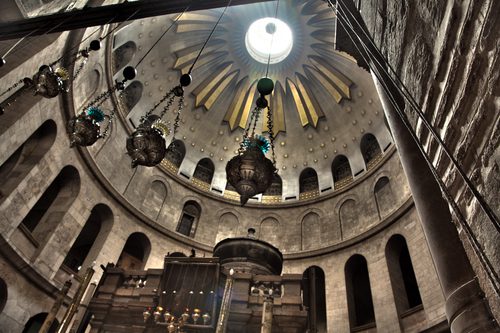
Shutterstock
But the message above raises some very important questions. It’s easy, in the abstract, to say “mystics and contemplatives need to be involved in a faith community.” But let’s try to unpack that a bit, looking both at unstated and perhaps unstated questions that the above message raises.
- What do you do when your church is toxic, cold, unhealthy?
- What if it’s a reasonably healthy church, but unfriendly to contemplation and/or mysticism?
- What does it mean to be “active” in a church? Is Sunday morning worship attendance enough?
- What’s wrong with being a “Lone Ranger” mystic anyway?
So today I want to briefly respond to these questions. But first, let’s acknowledge that every individual is unique, every church is unique, and every spiritual life is unique. I’ll never be able to address every possible situation or scenario in a blog post (or a hundred blog posts). So I would encourage anyone trying to sort out a deeper spiritual life and its implications for faith community to seek the wise counsel of a friendly and safe spiritual companion or spiritual director. So with that in mind, I’ll add a fifth question, looking at how to find a spiritual director. I’m answering the first two questions today, and will tackle the others tomorrow.
What do you do when your church is toxic, cold, unhealthy?
Words like “toxic” and “cold” can mean many different things. But I know that many churches can foster a way of thinking about God that is overly legalistic, hyper-partisan (during election season, every car in the parking lot has the same candidate’s bumper stickers on it), overly focused on either personal piety or social action (while ignoring the other), and at their very worst, churches can truly be abusive, psychologically, verbally, or physically.
If your church is a place where you are experiencing abuse, you need to leave. Get professional help, ideally a mental-health caregiver who is not affiliated with your parish or congregation. It may be important for you to report the abuse to church authorities at the diocesan or regional level, and/or report to secular authorities. I’m not qualified to provide legal or mental health advice, so these are simply general observations — consult with your healthcare provider and/or legal counsel to determine what is safest and best for you and for all parties concerned.
Assuming your church is not abusive, but simply unfriendly, or theologically biased, I think you need to discern two important questions: 1) am I being fed here? 2) can I make a difference here? St. Bernard of Clairvaux once counseled a nun who was thinking about leaving her convent. “You are either a wise or foolish virgin,” he observed. “If you are foolish, you need the convent. If you are wise, the convent needs you!” The truth is, we are all combinations of wisdom and foolery, so whenever we look at a faith community, we have to see how it helps us to be less foolish, and/or how we can use our wisdom to help others.
If, after honest reflection (and counsel with a trusted spiritual director or companion), your answer is “no” to both questions, then I believe you may need to consider finding a more congenial church home.
If you live in a remote or rural area where that is not possible, then you may need to set strict boundaries so that your involvement in the church is minimal — but as long as a church is not abusive, I believe minimal involvement in a cold church is better than no involvement at all. And that’s because churches are like living organisms — they always are evolving. In a few months’ time your church may have a new pastor, and/or the most toxic layperson may die or move away.
In other words, there’s hope that the situation could improve. By being marginally involved, you make yourself available to make a difference when you can. Also — keep praying. Pray (both silently and with words) that the community might open up, the coldness thaw out, the toxicity subside. Pray for the conversion of hearts of those who contribute most to the coldness and the toxicity. Pray also that you will be led to make a positive difference where and when you can. Pray to be able to love your neighbors the way Jesus loves them.
What if it’s a reasonably healthy church, but unfriendly to contemplation and/or mysticism?
I think a lot of people have this experience of church: it’s a reasonably safe or healthy community, but no one there is interested in the mystics or the interior life.
In circumstances like this, I believe it’s best to remain involved in the church, and to look for other ways you can make a contribution. Maybe no one wants a centering prayer group, but you can still volunteer to help build a habitat house. Usually in churches that are indifferent to the interior life, you may not be fed there, but you will find opportunities to serve. So be one of the “wise” and look for ways that you can be a blessing to others, even if contemplation and mysticism remain unexplored topics.
There are two reasons why I suggest this. First, people who are drawn to contemplation and mysticism need to find down-t0-earth ways to embody our faith, usually through very nuts and bolts ways of serving others. So get involved in chopping potatoes for the soup you’ll be serving homeless people.
The second reason is more long-term: your church may not be a contemplative-friendly environment today, but what about tomorrow? If you are patient with participating in the community as a regular member today, perhaps in a year or so (or whenever), there will be an opportunity for you to teach a class, or write an article for the parish website or newsletter, or otherwise share your love of the spiritual life with others. We have to earn the right to be leaders in our parish communities, and we earn this through humble service. So once again: as long as your community is not abusive, try to stick it out. Practice your silent prayer in solitude, and look for humble ways to serve. You will grow spiritually, and you might be surprised at how quickly opportunities emerge for you to contribute to others.
Hope this is helpful! Click here to read the second part of this post.
Enjoy reading this blog?
Click here to become a patron.

Previous Post

April 14, 2017
Richard Rohr on the Spirituality of Unknowing (Video)
Next Post

April 19, 2017 How to be a Contemplative in a "Toxic" Community (Part Two)
Browse Our Archives
Select a Category Activism Announcements Art Books Catholicism Celtic Christianity Christian mysticism Christianity Contemplation Current events Etc. Family humor interfaith dialogue Interfaith Wisdom Interspirituality Lay Cistercians Living the Faith Meditation movies Mysticism Mystics nature Poetry Reviews Scripture silence Spirituality Uncategorized Writing
Select a Month February 2025 January 2025 November 2024 September 2024 August 2024 July 2024 June 2024 May 2024 March 2024 January 2024 December 2023 November 2023 August 2023 June 2023 April 2023 March 2023 February 2023 January 2023 December 2022 November 2022 October 2022 September 2022 August 2022 July 2022 June 2022 May 2022 April 2022 February 2022 January 2022 December 2021 November 2021 October 2021 September 2021 August 2021 July 2021 June 2021 May 2021 April 2021 March 2021 February 2021 January 2021 December 2020 November 2020 October 2020 September 2020 August 2020 July 2020 June 2020 May 2020 April 2020 March 2020 February 2020 January 2020 December 2019 November 2019 October 2019 September 2019 August 2019 July 2019 June 2019 May 2019 April 2019 March 2019 February 2019 January 2019 December 2018 November 2018 October 2018 September 2018 August 2018 July 2018 June 2018 May 2018 April 2018 March 2018 February 2018 January 2018 December 2017 November 2017 October 2017 September 2017 August 2017 July 2017 June 2017 May 2017 April 2017 March 2017 February 2017 January 2017 December 2016 November 2016 October 2016 September 2016 August 2016 July 2016 June 2016 May 2016 March 2016 February 2016 January 2016 December 2015 November 2015 October 2015 September 2015 August 2015 July 2015 June 2015 May 2015 April 2015 March 2015 February 2015 January 2015 December 2014 November 2014 October 2014 September 2014 August 2014 July 2014 June 2014 May 2014 April 2014 March 2014 February 2014 January 2014 December 2013 October 2013 September 2013 July 2013 May 2013 January 2013 December 2012 November 2012 August 2012 July 2012 June 2012 March 2012 December 2011 September 2011 October 2010 August 2010 March 2010 September 2009 July 2008 January 2008 December 2007 September 2007 February 2007 January 2007 December 2004
Follow Us!
TAKE THE
Religious Wisdom Quiz
Who said, “Let there be light”?
Select your answer to see how you score.
Moses Noah Paul God
Support this
Column


Related posts from Carl McColman

Four Dimensions of Mindfulness and Centering Prayer
A Contemplative Reflection on the Death of Christ

LSD, Anxiety, and Contemplation: Can Psychedelic Therapy Support...

Discover the Three Forms of Contemplation, according to...
TRENDING AT PATHEOS Contemplative

Handy Contemplative Practices for Political Spaces
A Spiritually Grounded Presence In order to bring a spiritually grounded presence...

Halloween: The Holiday of Loving Your Neighbor
All Hallows Eve Is Halloween the least Christian holiday in America, or...

Can Love Be Saved? Some Thoughts on the...
Happy Valentine's Day! I recently published a post on Patreon called Can...

"This Loving, Uniting Embrace": the Holy Ordinary
Today's guest post is by Mark Longhurst, author of The Holy Ordinary:...

How Are We Called to Live?: More About...
How Are We Called to Live? Many of us struggle with discerning...

A Spiritual Practice of Reading: Join Us Online
A Spiritual Practice of Reading A healthy spiritual practice of reading is...
view all Contemplative blogs
Ad-Free & Subscriber Log-In Subscription Support
- About Us
- 2026 Calendar
- Videos
- Podcasts
- Library of World Religions
- Faith In Media Tracker
- Advertise With Us
- Write for Us
- Privacy Policy
- Terms of Service
- Do Not Sell My Data
- Contact Us
- Radiant Digital
- Manage Newsletter Subscriptions
- Unsubscribe From Notifications
- Sitemap
Copyright 2008-2026, Patheos. All rights reserved.
Subscription Support Ad-Free & Subscriber Log-In
Follow Patheos