
BuddhistCatholicContemplativeEvangelicalGeneral ChristianHinduJewishLatter-day SaintMuslimNew VisionsProgressive Christian
Beliefs
- Buddhist
- Catholic
- Contemplative
- Evangelical
- General Christian
- Hindu
- Jewish
- Latter-day Saint
- More Voices
- Muslim
- New Visions
- Pagan
- Progressive Christian
Topics
- Religion News
- Food and Religion
- Sports and Religion
- Religious Art
- Religious Music and Entertainment
- Religious Events
- History and Religion
- Style and Religion
- Politics and Religion
- Women in Religion
- Recreation Outdoors and Religion
- Business Finance and Religion
- Careers Workplace and Religion
- Education and Religion
- Family Parenting and Religion
- Health Fitness and Religion
- Home and Religion
- Relationships and Religion
- Technology and Religion
- Travel and Religion
Columnists
- Buddhist Columnists
- Business Finance and Religion Columnists
- Careers Workplace and Religion Columnists
- Catholic Columnists
- Contemplative Columnists
- Education and Religion Columnists
- Evangelists Columnists
- Family Parenting and Religion Columnists
- General Christian Columnists
- Health Fitness and Religion Columnists
- Hindu Columnists
- History and Religion Columnists
- Home and Religion Columnists
- Jewish Columnists
- More Voices Columnists
- Latter Day Columnists
- Muslim Columnists
- New Visions Columnists
- Nonreligious Columnists
- Pagan Columnists
- Politics and Religion Columnists
- Progressive Columnists
- Recreation Outdoors and Religion Columnists
- Relationships and Religion Columnists
- Religion News Columnists
- Religious Art Columnists
- Religious Events Columnists
- Religious Music and Entertainment Columnists
- Sports and Religion Columnists
- Style and Religion Columnists
- Technology and Religion Columnists
- Travel and Religion Columnists
- Women in Religion Columnists
Resource Library
- 2026 Calendar
- Library of World Religions
- The 100 Most Holy Places on Earth
- Patheos Answers
- Podcasts
- Videos
- Faith Leaders Database
- Anglican Episcopalian
- Bahai
- Baptist
- Buddhism
- Christianity
- Confucianism
- Eastern Orthodoxy
- Hinduism
- Holiness and Pentecostal
- ISKCON
- Islam
- Judaism
- Lutheran
- Methodist
- The Church of Jesus Christ of Latter-day Saints
- New Age
- Paganism
- Presbytarian and Reformed
- Protestantism
- Religion Behind the Scenes
- Roman Catholic
- Scientology
- Shia Islam
- Sikhism
- Sufism
- Sunni Islam
- Taoism
- Zen
- See all religions
Research Tools
 Ad-Free & Subscriber Log-In Subscription Support
Ad-Free & Subscriber Log-In Subscription Support
Follow Patheos 

- Trending:
- Forgiveness
- |
- Marriage
- |
- Consciousness
- |
- Death Penalty
- |
- Election
- |
- Halloween

- Home
- Contemplative
- Can Beauty Help Us to Be More Ecumenical?
Can Beauty Help Us to Be More Ecumenical?
Last updated on: December 15, 2018 at 4:48 pm by Carl "Skye" McColman
Can Beauty Help Us to Be More Ecumenical? 2018-12-15T16:48:24-04:00 Carl "Skye" McColman
Patheos Explore the world's faith through different perspectives on religion and spirituality! Patheos has the views of the prevalent religions and spiritualities of the world.
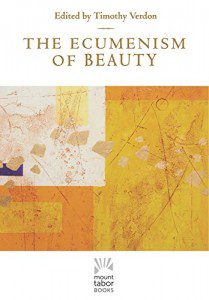
The Ecumenism of Beauty
Five hundred years ago this coming October, Martin Luther nailed his 95 theses on a church door in the University town of Wittenberg. He was just an academic interested in having a debate, but his unlikely act was the flashpoint in what we now call the Protestant Reformation. For centuries, bitterness, acrimony, mutual suspicion, and at times even violence enforced the line of separation between Catholic and Protestant. Within the last century, however, ecumenism — an effort to at least improve relations between the factions of western Christianity — has gained traction, thanks to Catholic efforts such as Vatican II and Protestant efforts such as regional or global councils of churches. But now, as we approach the quincentennial mark of this great wound in the Body of Christ, a new book asks, can beauty — art — help us to be more ecumenical?
Previously in this blog I have mentioned Timothy Verdon’s beautiful book Art & Prayer: The Beauty of Turning To God (Paraclete Press/Mount Tabor Books, 2014). Monsignor Verdon is a respected art historian based in Italy.
As a priest as well as a lover of art, Verdon recognizes that prayer and art are natural allies — that spirituality, at heart, is not merely a quest for truth and goodness, but also for authentic beauty as well.
Christians in the east, with their rich tradition of icons, have done a better job at retaining beauty as an integral part of the faith experience. So I truly admire Msgr. Verdon’s efforts to reclaim a rich and authentic spirituality of art. It’s a truly gorgeous book, filled with full color illustrations, that is as much a feast for the eyes as for the mind.
Now there’s a new book from Msgr. Verdon that serves as a kind of companion volume to Art & Prayer. The Ecumenism of Beauty is a slender volume (120 pages) of essays touching on topics such as the relationship between art and contemplation, liturgy, and architecture. It’s a companion volume to a symposium called “The Arts and Ecumenism: What Theology Risks in Artistic Creation” that will be taking place in several American and European cities this year, in observance of the Reformation quincentennial.
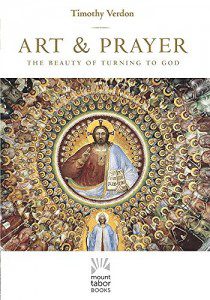
Art & Prayer
Like Art & Prayer, The Ecumenism of Beauty is an attractive cloth-bound book, printed on heavy paper and filled with illustrations. Its ecumenical focus is apparent in how both Catholic and Protestant topics and contributors are included, with at least three of the seven essays touching on an ecumenical religious order, the Community of Jesus (the order which owns Paraclete Press and sponsors the Mount Tabor Ecumenical Centre for Art and Spirituality). In fact, one of my chief complaints about the book is that it feels too focussed on that one Community, significantly narrowing its appeal to the general reader.
Naturally, I’m most interested in the essays on contemplation and the liturgy, so let me focus on those two.
“The Artist as Contemplative,” is by Filippo Rossi, an Italian Catholic artist who reflects on how prayer and contemplation have shaped several of his own works, including a “Magnificat” triptych which is now on display at the Community of Jesus’s Church, and several other works which have been displayed at the Basilica of St. Francis in Assisi. Unfortunately it reads more like an artist’s statement than a particularly perceptive consideration of the relationship between contemplation and art. Probably its most interesting insight comes from a talk given by Pope Benedict XVI in the Sistine Chapel. “Beauty,” said the Pope, “from that which we see in nature to that which is expressed in works of art, precisely because it broadens the horizon of human consciousness, because it pushes it beyond itself, because it brings consciousness to the abyss of infinity, can become a way leading to Transcendence, to the final Mystery, to God.” In other words, a contemplative approach to art — whether we approach as artists or as viewers — invites us into that place of mystery where image ultimately falls away, leaving only mystery. In other words, the place where apophatic and kataphatic mystery converge. Art may be grounded in image, but in a contemplative engagement with art, even image yields to mystery.
“Art and the Liturgy,” by Monsignor Verdon, begins by acknowledging the religious roots of art, suggesting (like Rossi did in his essay) that liturgical art represents a “vizualization of the mystery.” Seeing liturgy as both itself a work of art and also a means by which new art is generated, Verdon walks us through the aesthetics of Christian liturgy and sacraments, pointing out the almost symbiotic relationship between liturgy and images, suggesting that art created in service of liturgy functions as a kind of nonverbal “school of contemplation.”
Especially given how short this book is, I wish the editor and publishers had cast a wider net and included more essays without explicit ties to the Community of Jesus. Why not include essays about the Saint John’s Bible (one of the great projects of Christian art in our time) or contemporary Orthodox iconography? And since “beauty” encompasses more than just two-dimensional art, essays on music (shape-note singing), or even design (Shaker furniture), would have made this an even more truly ecumenical celebration of art.
I also wish that the book offered a more nuanced or complete view of the role art has played in the divisions within Christianity. All it takes is an afternoon visiting the murals of Belfast to understand that art has divided us as much as it can unite us. Much of the Protestant heritage has, in fact, been a reaction against the art and architecture that is associated with Catholicism. While Verdon optimistically muses that today “the sixteenth-century refusal of the visual arts in Protestant houses of prayer… is no longer considered a significant divisive element,” this book still seems to leave too many questions unasked, let alone unanswered. This would have been a much richer book had it been willing to ask some hard questions about the history of art in western Christianity, as well as considering what role art can (and, perhaps, cannot) play as the churches seek to heal the wounds of the Reformation in our time.
Enjoy reading this blog?
Click here to become a patron.

Previous Post

April 24, 2017
C. S. Lewis, Brendan the Navigator, and Evelyn Underhill
Next Post
April 27, 2017 When a Jesuit talked to a Franciscan (Video)
Browse Our Archives
Select a Category Activism Announcements Art Books Catholicism Celtic Christianity Christian mysticism Christianity Contemplation Current events Etc. Family humor interfaith dialogue Interfaith Wisdom Interspirituality Lay Cistercians Living the Faith Meditation movies Mysticism Mystics nature Poetry Reviews Scripture silence Spirituality Uncategorized Writing
Select a Month February 2025 January 2025 November 2024 September 2024 August 2024 July 2024 June 2024 May 2024 March 2024 January 2024 December 2023 November 2023 August 2023 June 2023 April 2023 March 2023 February 2023 January 2023 December 2022 November 2022 October 2022 September 2022 August 2022 July 2022 June 2022 May 2022 April 2022 February 2022 January 2022 December 2021 November 2021 October 2021 September 2021 August 2021 July 2021 June 2021 May 2021 April 2021 March 2021 February 2021 January 2021 December 2020 November 2020 October 2020 September 2020 August 2020 July 2020 June 2020 May 2020 April 2020 March 2020 February 2020 January 2020 December 2019 November 2019 October 2019 September 2019 August 2019 July 2019 June 2019 May 2019 April 2019 March 2019 February 2019 January 2019 December 2018 November 2018 October 2018 September 2018 August 2018 July 2018 June 2018 May 2018 April 2018 March 2018 February 2018 January 2018 December 2017 November 2017 October 2017 September 2017 August 2017 July 2017 June 2017 May 2017 April 2017 March 2017 February 2017 January 2017 December 2016 November 2016 October 2016 September 2016 August 2016 July 2016 June 2016 May 2016 March 2016 February 2016 January 2016 December 2015 November 2015 October 2015 September 2015 August 2015 July 2015 June 2015 May 2015 April 2015 March 2015 February 2015 January 2015 December 2014 November 2014 October 2014 September 2014 August 2014 July 2014 June 2014 May 2014 April 2014 March 2014 February 2014 January 2014 December 2013 October 2013 September 2013 July 2013 May 2013 January 2013 December 2012 November 2012 August 2012 July 2012 June 2012 March 2012 December 2011 September 2011 October 2010 August 2010 March 2010 September 2009 July 2008 January 2008 December 2007 September 2007 February 2007 January 2007 December 2004
Follow Us!
TAKE THE
Religious Wisdom Quiz
What does Paul tell Timothy to guard in 1 Timothy?
Select your answer to see how you score.
The gospel The church His heart What has been entrusted to his care
Support this
Column


Related posts from Carl McColman

Contemplative Books to Read and Savor During Advent...
New From Encountering Silence: Exploring the Lost History...
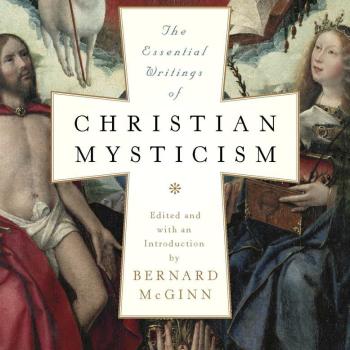
Twelve Mystical Anthologies That Belong in Every Contemplative...

TRENDING AT PATHEOS Contemplative

Handy Contemplative Practices for Political Spaces
A Spiritually Grounded Presence In order to bring a spiritually grounded presence...

Halloween: The Holiday of Loving Your Neighbor
All Hallows Eve Is Halloween the least Christian holiday in America, or...

Can Love Be Saved? Some Thoughts on the...
Happy Valentine's Day! I recently published a post on Patreon called Can...

"This Loving, Uniting Embrace": the Holy Ordinary
Today's guest post is by Mark Longhurst, author of The Holy Ordinary:...

How Are We Called to Live?: More About...
How Are We Called to Live? Many of us struggle with discerning...

A Spiritual Practice of Reading: Join Us Online
A Spiritual Practice of Reading A healthy spiritual practice of reading is...
view all Contemplative blogs
Ad-Free & Subscriber Log-In Subscription Support
- About Us
- 2026 Calendar
- Videos
- Podcasts
- Library of World Religions
- Faith In Media Tracker
- Advertise With Us
- Write for Us
- Privacy Policy
- Terms of Service
- Do Not Sell My Data
- Contact Us
- Radiant Digital
- Manage Newsletter Subscriptions
- Unsubscribe From Notifications
- Sitemap
Copyright 2008-2026, Patheos. All rights reserved.
Subscription Support Ad-Free & Subscriber Log-In
Follow Patheos