
BuddhistCatholicContemplativeEvangelicalGeneral ChristianHinduJewishLatter-day SaintMuslimNew VisionsProgressive Christian
Beliefs
- Buddhist
- Catholic
- Contemplative
- Evangelical
- General Christian
- Hindu
- Jewish
- Latter-day Saint
- More Voices
- Muslim
- New Visions
- Pagan
- Progressive Christian
Topics
- Religion News
- Food and Religion
- Sports and Religion
- Religious Art
- Religious Music and Entertainment
- Religious Events
- History and Religion
- Style and Religion
- Politics and Religion
- Women in Religion
- Recreation Outdoors and Religion
- Business Finance and Religion
- Careers Workplace and Religion
- Education and Religion
- Family Parenting and Religion
- Health Fitness and Religion
- Home and Religion
- Relationships and Religion
- Technology and Religion
- Travel and Religion
Columnists
- Buddhist Columnists
- Business Finance and Religion Columnists
- Careers Workplace and Religion Columnists
- Catholic Columnists
- Contemplative Columnists
- Education and Religion Columnists
- Evangelists Columnists
- Family Parenting and Religion Columnists
- General Christian Columnists
- Health Fitness and Religion Columnists
- Hindu Columnists
- History and Religion Columnists
- Home and Religion Columnists
- Jewish Columnists
- More Voices Columnists
- Latter Day Columnists
- Muslim Columnists
- New Visions Columnists
- Nonreligious Columnists
- Pagan Columnists
- Politics and Religion Columnists
- Progressive Columnists
- Recreation Outdoors and Religion Columnists
- Relationships and Religion Columnists
- Religion News Columnists
- Religious Art Columnists
- Religious Events Columnists
- Religious Music and Entertainment Columnists
- Sports and Religion Columnists
- Style and Religion Columnists
- Technology and Religion Columnists
- Travel and Religion Columnists
- Women in Religion Columnists
Resource Library
- 2026 Calendar
- Library of World Religions
- The 100 Most Holy Places on Earth
- Patheos Answers
- Podcasts
- Videos
- Faith Leaders Database
- Anglican Episcopalian
- Bahai
- Baptist
- Buddhism
- Christianity
- Confucianism
- Eastern Orthodoxy
- Hinduism
- Holiness and Pentecostal
- ISKCON
- Islam
- Judaism
- Lutheran
- Methodist
- The Church of Jesus Christ of Latter-day Saints
- New Age
- Paganism
- Presbytarian and Reformed
- Protestantism
- Religion Behind the Scenes
- Roman Catholic
- Scientology
- Shia Islam
- Sikhism
- Sufism
- Sunni Islam
- Taoism
- Zen
- See all religions
Research Tools
 Ad-Free & Subscriber Log-In Subscription Support
Ad-Free & Subscriber Log-In Subscription Support
Follow Patheos 

- Trending:
- Forgiveness
- |
- Marriage
- |
- Consciousness
- |
- Death Penalty
- |
- Election
- |
- Halloween

- Home
- Contemplative
- Books I Recommend (On Various Topics)
Books I Recommend (On Various Topics)
Last updated on: July 28, 2018 at 8:50 pm by Carl "Skye" McColman
Books I Recommend (On Various Topics) 2018-07-28T20:50:03-04:00 Carl "Skye" McColman
Patheos Explore the world's faith through different perspectives on religion and spirituality! Patheos has the views of the prevalent religions and spiritualities of the world.

So many books, so little time…
I’ll admit — I love lists of books. I find browsing someone’s list of recommended titles is a great way to find a new treasure. So with that in mind, here is an admittedly idiosyncratic list of books that I recommend for your consideration. Obviously I lead off with books on contemplation/mysticism, since that’s the main focus of this blog. But I wander a bit off topic as the list goes on… browse on, you’ll see for yourself. It’s an eclectic, ecumenical, and interfaith-friendly assortment.
Books are like people — none are perfect. I’ve included each title on this list because I believe it has something to offer the general reader; I am not suggesting that these works are above criticism; nor am I implying that every book listed here is equal to all the others in its merits or its relevance to any particular reader. Use discernment and common sense when reading a book and/or evaluating whether or not it is useful for your spiritual practice. When in doubt, consult with a trusted friend or spiritual companion.
Update 7-28-18: I have updated, and substantially revised this list; which I decided to publish as a new post. Please see the new list by clicking here: A Miscellaneous List of Books I Like (And Recommend)
The Christian Mystics: Introduction, History, Theology
- Carl McColman, The Big Book of Christian Mysticism: The Essential Guide to Contemplative Spirituality — When I was a youth, Evelyn Underhill’s Mysticism (see below) changed my life, initiating my own lifelong love for Christian mysticism. This book is my “thank you” to Underhill, published 99 years after hers. In it I reflect on what Christian mysticism is, and how it makes a different in peoples’ lives.
- Evelyn Underhill, Mysticism: A Study in the Nature and Development of Spiritual Consciousness — this 1911 study of visionary spirituality, primarily though not exclusively Christian, influenced numerous seekers, including C. S. Lewis, Thomas Merton, and Alan Watts. Dated but still essential.
- Evelyn Underhill, Practical Mysticism — originally subtitled “a little book for normal people,” Underhill’s concise explanation of mystical spirituality for laypersons remains surprisingly relevant even after a century. Topics include meditation, recollection, and three forms of contemplation.
- John R. Mabry, Growing into God: A Beginner’s Guide to Christian Mysticism — Explores the mystical life through a traditional model of awakening, purgation, illumination, dark night and union; also includes a generous selection of quotations from the mystics and suggested spiritual practices.
- Frederick Bauerschmidt, Why the Mystics Matter Now — a user-friendly introduction to the life and writings of seven key mystics (like Julian of Norwich and Meister Eckhart), with insights into why their teachings remain relevant to Christians even in the twenty-first century.
- Harvey D. Egan, Soundings in the Christian Mystical Tradition — almost a “who’s who” of Christian spirituality, this accessibly written book features brief biographies of over seventy-five mystics, arranged chronologically; offering insight into their lives, writings, and historical significance.
- L. William Countryman, The Mystical Way in the Fourth Gospel: Crossing Over into God — mysticism is often unfairly criticized as being “foreign” to authentic Christianity, but this book sets the record straight, showing how mystical spirituality informs the spirituality of the Gospel of John.
- George Maloney, The Mystery of Christ in You: The Mystical Vision of Saint Paul — another helpful resource detailing the origins of mystical theology in the New Testament; in this case examining how the theology of Paul celebrates an embodied communion with Christ and the Holy Spirit.
The Christian Mystics: Primary Texts for Study and Devotion
- Bernard McGinn, ed., The Essential Writings of Christian Mysticism — a superb anthology, arranged thematically, featuring excerpts from the most renowned works of the great mystics, in English translation. McGinn’s detailed and perceptive commentary makes the teachings herein come alive.
- Harvey D. Egan, ed., An Anthology of Christian Mysticism — another useful compendium, this one arranged chronologically, offering English translations of key mystical works from the Bible to Karl Rahner. The writings of over fifty mystics are included in this 700-page tome.
- Julian of Norwich, The Writings: A Vision Showed to a Devout Woman and A Revelation of Love, edited by Nicholas Watson & Jacqueline Jenkins — don’t be afraid to read Julian in her original Middle English! This text provides generous annotations to make Julian’s own words come alive.
- Anonymous, The Cloud of Unknowing, edited by Evelyn Underhill — one of the most respected editions of a fourteenth century English mystical/contemplative classic. Underhill’s edition retains much of the voice of the medieval original text, while modernizing the language enough to make it accessible to the average reader.
- Meister Eckhart, The Complete Mystical Works, translated by Maurice O’C Walshe, foreword by Bernard McGinn — Nearly one hundred of the great Dominican mystic’s sermons, originally preached in German, are collected here, revealing the breadth of his visionary theology and spiritual wisdom.
- John Ruusbroec, The Spiritual Espousals and Other Works — Ruusbroec (also spelled Ruysbroeck) is a lesser known younger contemporary of Eckhart’s whom Evelyn Underhill considered the greatest of all Christian mystics. Reading this contemporary English edition of his major works, it is easy to see why. Ruusbroec’s writing is literary and poetic, his thought profoundly nondual, and his theology beautiful and orthodox.
- Richard Rohr, The Naked Now: Learning to See as the Mystics See — many living writers reduce mysticism to the level of “personal experience,” but Rohr understands that mystical wisdom goes deeper than that, being primarily about a transfigured consciousness and a unitive way of beholding.
Contemporary Spirituality & Contemplative Prayer
- Carl McColman, Answering the Contemplative Call: First Steps on the Mystical Path — another book I wrote in response to Evelyn Underhill, this work reflects on Underhill’s notion of “the awakening of the self” — what I call “the contemplative call,” or the vocation to an intentional spiritual life.
- Kenneth Leech, Prayer and Prophecy: A Ken Leech Reader — if this were a just world, everyone would be reading Ken Leech. His writing combines a deep love of God with a clear contemplative vision and an insightful understanding of both holiness and justice, and the forces that undermine them. Absolutely essential reading.
- Martin Laird, Into the Silent Land: A Guide to the Christian Practice of Contemplation — one of the best and clearest introductory books on contemplative (silent) prayer. Grounded in the writings of the saints and mystics, and inspiring in its invitation into ever-deeper silence.
- Maggie Ross, Silence: A User’s Guide (Volume 1: Process) — surveys the history of how contemplation became marginalized in western Christianity, and critically assesses how contemporary spirituality is often trammelled by narcissism, solipsism or psycho-babble.
- Thomas Keating, Open Mind Open Heart: The Contemplative Dimension of the Gospel — a survey of the theory and practice of centering prayer (the use of a prayer word to enter into deep silence), full of useful advice for how to prayerfully seek deeper intimacy with God.
- Richard Rohr, Everything Belongs: The Gift of Contemplative Prayer — an accessible introduction to the inclusive, nondual practice of contemplation, a prayer of gently accepting the “call to the center” where we are invited to receive God’s radical grace.
- Abhishiktananda, Prayer — a manual for learning to listen, rest, and live each moment in the silent presence of God, written by a French Benedictine monk who moved to India and became a leading proponent of Hindu-Christian interspirituality.
- Paul Marechal, Dancing Madly Backwards: A Journey Into God — This under-appreciated gem from 1982, long out of print, offers poetic reflections on the deep sacred place where the boundaries that separate religions from each other — or us from God — fall away.
- Tilden Edwards, Living Simply Through the Day — a classic that is unjustly out of print, so grab a used copy before they get expensive. Another product of east-west dialogue, this time between an Episcopal priest and Tibetan Buddhism.
- Gerald May, Will and Spirit: A Contemplative Psychology — another book, like Ross’s, which doesn’t provide a “how-to” on silent prayer, but offers an excellent insight into the Christian meditative mind, written by a psychiatrist/spiritual director.
- Murchadh Ó Madagáin, Centering Prayer and the Healing of the Unconscious — while I think the true self/false self dichotomy is problematic, I like how this book seeks to understand centering prayer (and contemplation in general) in light of integral theory.
Cistercian Monasticism and Lay Cistercian Spirituality
- Carl McColman, Befriending Silence: Discovering the Gifts of Cistercian Spirituality — organized around St. Bernard of Clairvaux’s concept of the three steps of truth, this book examines different aspects of Cistercian and Trappist spirituality, reflecting on how the wisdom of the cloister can bless everyone, not just monks or nuns.
- Trisha Day, Inside the School of Charity: Lessons from the Monastery — the story of a lay woman who spends three months living in a Trappistine convent as a “monastic guest” and how the nun’s spirituality impacted her own faith journey after returning to secular life. An excellent introduction to Cistercian spirituality, especially for the laity.
- Thomas Merton, The Waters of Siloe — Merton’s history of Benedictine/Cistercian monasticism, with a particular emphasis on the Cistercians in North America. Richly anecdotal and anchored in a clear understanding that a Cistercian monastery needs to be contemplative: steeped in silence and prayer.
- Bernardo Olivera, The Sun at Midnight: Monastic Experience of the Christian Mystery — the former Abbot General of Cistercians of the Strict Observance offers his thoughts on the mystical theology of monastic life, showing how Cistercian mysticism is humble and down to earth.
- Elias Marechal, Tears of an Innocent God — Poetic and luminous, this non-linear collection of stories, parables, reflections and dream sequences celebrates not only the wonder of contemplative living, but also how Jesus’s radical message of equality and inclusivity offers a road map to a joyous and deeply transfigured life.
- Augustine Roberts, Finding the Treasure: Letters from a Global Monk — Wonderful epistolary autobiography of a Trappist monk who grew up in China, lived in communities in the USA and Argentina, and eventually went to Rome with the order’s Abbot General. Very spiritual and insightful into Cistercian life.
- Agnes Day, Light in the Shoe Shop: A Cobbler’s Contemplations — A charming and richly spiritual series of meditations from the former Abbess of Wrentham Abbey in Massachusetts. She leads the reader through the year, reflecting on the changing of the seasons and the liturgical year, seen through the lens of her work as the monastery’s cobbler. Also includes her autobiography and a selection of poetry.
- Frank Bianco, Voices of Silence: Lives of the Trappists Today — Insightful and honest exploration of the lives of several monks of Gethsemane Abbey, written by a journalist who wrestled with his own crisis of faith while researching and writing the book. Written in a narrative style, the book reads like a novel and really makes the monks “come alive.” Excellent introduction to monastic life in our time.
Celtic Christianity
- Carl McColman, 366 Celt: A Year and a Day of Celtic Wisdom and Lore — a book of daily meditations (but not keyed to specific dates, so it can be read in any order, at any time), reflecting on the spirituality of the Celtic world, encompassing pagan mythology as well as the mystical insight of the Christian saints.
- Esther De Waal, Every Earthly Blessing: Rediscovering the Celtic Tradition — maybe the best single introduction to Celtic Christianity as it is understood in our time: an expression of the faith that is poetic, mystical, nature-positive, optimistic, and resonant with stories of the saints we love, like Brigit, Patrick, and Columba.
- Ian Bradley, Celtic Christianity: Making Myths and Chasing Dreams — an important book that points out how much romanticizing has gone into the contemporary idea of “Celtic spirituality.” A reminder that we often project our ideals on to the people of the past — it’s best to let them be who they are, and “own” our ideals for ourselves.
- John Carey, A Single Ray of the Sun: Religious Speculation in Early Ireland — Carey explores some of the underlying perspectives that inform the Celtic way of understanding the cosmos, and how that worldview informed the unique expression of Celtic Christianity.
- Oliver Davies and Thomas O’Loughlin, Celtic Spirituality (Classics of Western Spirituality) — maybe the best collection of original sources in translation, this thick volume brings together poetry and prose from both the Irish and Welsh traditions, including hagiography, monastic and liturgical texts, and homilies.
- Kurt Neilson, Urban Iona: Celtic Hospitality in the City — a wonderful exploration of “applied Celtic spirituality.” Neilson, an Episcopal priest with Irish roots, takes a pilgrimage to the old country and brings back lessons in discipleship which he applies to his ministry in downtown Portland, OR.
- John O’Donohue, Anam Cara: A Book of Celtic Wisdom — one of the bestselling books of Celtic spirituality, and deservedly so. O’Donohue writes with a poet’s love of language and a mystic’s sensibility of wonder, creating a book which reads more like a guided meditation than anything else. Luminous, dreamlike and entirely lovely.
- Seán Ó Duinn, Where Three Streams Meet: Celtic Spirituality — Benedictine monk Seán Ó Duinn is one of my favorite authors, a Christian who appreciates how the ancient Celtic lore of the mythological era continues to inform and shape the spirituality of Ireland and the other Celtic lands. What emerges is a beautiful, holistic expression of spirituality.
Narnia and C. S. Lewis
- C. S. Lewis, The Voyage of the Dawn Treader — Lewis wrote a number of books worth reading, but Dawn Treader is my towering favorite (see below for my commentary on it). This book, part of the “Narnia” series, provides insight into the Christian spiritual life, under the guise of a charming sea adventure informed by Celtic mythology.
- C. S. Lewis, The Great Divorce — it’s not Narnia, but this early novel by Lewis is another gem; the story of a detailed dream in which the narrator explores both the dreariness of hell and the wonders of heaven. Filled with psychological insight, the book really takes flight when old George MacDonald himself pops up in the dream.
- C. S. Lewis, Till We Have Faces: A Myth Retold — written toward the end of his life, this book shows the wisdom of age. A retelling of the myth of Cupid and Psyche, it is filled with Lewis’s trademark luminous prose, and the ending is nothing short of glorious.
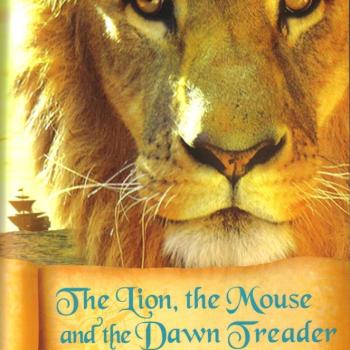
- Carl McColman, The Lion, the Mouse and the Dawn Treader: Spiritual Lessons from C. S. Lewis’s Narnia — Each chapter of my commentary on The Voyage of the Dawn Treader is keyed to the same chapter in Lewis’s book. I aim to show how Dawn Treader functions as a sustained metaphor for the mystical life.
- Kevin Brown, Inside the Voyage of the Dawn Treader: A Guide to Exploring the Journey beyond Narnia — another book about Lewis’s wondrous sea adventure; where my commentary concentrates on a mystical reading of Dawn Treader, this book considers the story in a broader sense of Christian discipleship.
- David C. Downing, Into the Region of Awe: Mysticism in C. S. Lewis — C. S. Lewis insisted he was not a mystic, but Downing makes a compelling argument that maybe the author was just being humble. He also provides one of the best, most down to earth definitions of Christian mysticism I’ve ever seen, which alone makes this a must-read.
- David C. Downing, Into the Wardrobe: C. S. Lewis and the Narnia Chronicles — more insight from Lewis scholar David Downing, who examines the symbolism and spiritual meaning behind all seven of the Narnia books.
- Michael Ward, Planet Narnia: The Seven Heavens in the Imagination of C. S. Lewis — one of the sources I used for The Lion, the Mouse and the Dawn Treader, Michael Ward provides a fascinating hypothesis: that Lewis organized the seven Narnia books around a medieval understanding of cosmology, and mythic/planetary symbolism.
Miscellaneous Titles I Recommend
- Wendell Berry, Sex, Economy, Freedom & Community — an incisive and insightful collection of essays from America’s favorite curmudgeonly farmer-poet. The introduction to this book is alone worth the price of admission, but Berry’s ruminations on land, agriculture, and the dangers of our entertainment culture are wise and important.
- Anne Lamott, Bird By Bird: Some Instructions on Writing and Life — this book, about the vocation of a writer, has been so helpful to me. When I hit a rough spot in my writing, I like to dip into Bird by Bird, both because it’s side-hurtingly funny, but also because it gently reminds me that writing is a nutty business — and that’s okay.
- Adam S. McHugh, Introverts in the Church: Finding Our Place in an Extroverted Culture — several books have been published on introvert psychology in recent years, but this one, specifically geared to the experience of introverts in professional ministry or lay leadership, is wise and gently affirming. It’s okay to be an introvert of faith!
- Kathleen Dowling Singh, The Grace in Dying: How We Are Transformed Spiritually as We Die — when my daughter was in hospice I read several books on death and dying, and this was by far the best. Approaching the topic from a Jungian and transpersonal perspective, Singh shows how dying is actually a deeply contemplative experience.
- Phyllis Theroux, The Good Bishop: The Life of Walter F. Sullivan — I grew up in Virginia, where Sullivan was the Catholic bishop; although I would not myself become Catholic until years later after moving to Georgia, the witness of Bishop Sullivan remained with me. He was a true hero of faith who was not afraid to rock the boat for his convictions.
- Ken Wilber, Sex, Ecology, Spirituality: The Spirit of Evolution — as the architect of “Integral Theory,” Ken Wilber has created a fascinating map of how science, psychology, philos0phy, eastern spirituality and western mysticism can be woven together to create a single holistic understanding of the cosmos. Whether you agree with him or not, his ideas are compelling and, I believe, filled with hope.
- Dennis, Sheila Fabricant, and Matthew Linn, Good Goats: Healing Our Image of God — I often talk about healing our image of God in classes and retreats, and this is my go-to resource on the topic. A gentle and nurturing book that demonstrates how our image of God shapes our entire faith experience and indeed worldview — so taking care to ensure we have a healthy image of God yields rich blessings indeed.
Living the Christian Faith Today
- Marcus Borg, The Heart of Christianity — Borg offers an incisive analysis of the tensions within modern Christianity between a literalist/dualist approach to the faith, and a more mystical/nondual approach. While he is clear in his criticism of the literalist position, he provides a positive and affirming approach to a way of being Christian which is unafraid of dialogue, committed to justice, and thoroughly at home with mystery.
- Robert Davis Hughes III, Beloved Dust: Tides of the Spirit in the Christian Life — this academic book offers a thorough and scholarly consideration of what a comprehensive Christian spiritual theology, grounded in the mystics yet engaged with the issues of the twenty-first century, could look like. I think the book’s survey of why spirituality fell into disrepute beginning with the Reformation and culminating in the secularized twentieth century, alone makes this a “must-read,” yet the exploration of the developmental spiritual life (following the map first set out by Evelyn Underhill) is also first-rate.
- Philip S. Kaufman, Why You Can Disagree and Remain a Faithful Catholic — as a convert to Catholicism, it saddens me that this is a controversial book, but I think that’s because spiritual people often are uncomfortable with conflict. Yet this is by no means an anti-Catholic or anti-Christian book; the author, who was a Benedictine monk, simply tries to set the record straight that throughout church history, people of good will have often disagreed vehemently over doctrine and morals. If we disagree with our church, our job is to prayerfully seek to follow the will of God as best we can. Maybe we’re in the wrong — but maybe we’re being led by the Holy Spirit to help the church grow. Humility, prayer, and a willingness to dialogue are the keys.
- Anne Lamott, Traveling Mercies: Some Thoughts on Faith — Before this book, Lamott had achieved some renown as a novelist, but Traveling Mercies made her a “rock star.” An honest and gritty memoir, she details her descent into alcoholism and unlikely but grace-filled journey into her own uniquely postmodern expression of faith. Lamott is a gifted writer, a natural storyteller, both funny and poignant, ironic and yet sincerely heartfelt. She is the patron saint of skeptics, cynics, anyone in recovery, and (of course) writers.
- Brian McLaren, A Generous Orthodoxy — if we are serious about ecumenism, perhaps the first step is truly learning to appreciate the beauty of all the different types of Christian expression, and evangelical/emergent author Brian McLaren does beautifully in this book. Surveying the many flavors of Christian expression from Orthodox to Catholic to Anglican to mainline Protestant to evangelical and charismatic, McLaren effectively articulates what is lovely, Godly, and worthy of emulating in each denominational tradition. This is not a book about “mixing it up” or “blending it all together,” but rather about reasserting that true orthodoxy is marked by generosity and hospitality, not defensiveness and isolation.
- Kathleen Norris, The Cloister Walk — Like Anne Lamott, Norris is also a littérateur (in her case, a poet) who became famous for her spiritual memoir (Dakota, listed below). Norris is a Benedictine oblate, and The Cloister Walk details a year of meditations and journal entries in which she explores the tensions at work in her journey: a woman associated with a men’s monastery; a Presbyterian affiliated with a Catholic community; a postmodern American finding spiritual sustenance from an ancient spiritual discipline. Because of her gifts as a poet, she makes the cloister — and her singular relationship to it — come alive.
- Richard Rohr, Falling Upward: A Spirituality for the Two Halves of Life — a simple and accessible book which explains why church often feels like it is geared toward teenagers rather than adults. That’s because it is. Without knocking religion for the “first half of life,” Rohr offers insight into how to care for ourselves spiritually even as we enter “the second half.”
The Bible and Lectio Divina
- New Jerusalem Bible: Saints Devotional Edition — my favorite Bible; not a study Bible but a beautifully designed edition of the New Jerusalem Bible, with devotional writings from a variety of Catholic saints interspersed throughout the text.
- Michael Casey, Sacred Reading: The Ancient Art of Lectio Divina — certainly the best exploration of lectio divina written by a Cistercian author and maybe the best treatment of the subject, period. Casey understands the rich contemplative quality that meditative scripture reading entails, and invites the reader into that kind of graced, unhurried relationship with the text.
- Marcus J. Borg, Reading the Bible Again For the First Time: Taking the Bible Seriously But Not Literally — Borg writes for the average layperson but from a position fully informed by Biblical scholarship. He advocates a faithful and honest approach to scripture that is informed by science, history, and criticism.
- Walter Brueggemann, The Bible Makes Sense — Brueggemann recognizes that for most Christians the Bible is read not as a scholarly discipline but a spiritual practice; he advocates entering the text with an appreciation of the spirituality at its heart, and seeking to make its wisdom relevant to life today.
- Christine Valters Paintner, Lectio Divina: The Sacred Art — as much as I love Casey’s Sacred Reading, Paintner’s book about lectio has plenty of offer in its own right. She is both a Benedictine oblate and an artist, so she offers a richly inclusive approach to lectio, where images and well as words can be read as a form of prayer.
- Richard Rohr, Things Hidden: Scripture as Spirituality — a down-to-earth, accessible survey of the Bible as a doorway to meaningful spirituality; Rohr is honest about the challenges in reading scripture, yet hopeful in presenting the key themes of the Bible as invitations to inner growth and personal transformation.
- Alexander Ryrie, Silent Waiting: The Biblical Roots of Contemplative Spirituality — believe it or not, Christian contemplation is deeply rooted in scripture, and this survey by a Scottish Anglican priest considers how themes in the Bible inspired the earliest Christian contemplatives, the desert fathers and mothers.
Embodied Faith: Spirituality and Nature
- David Abram, The Spell of the Sensuous: Perception and Language in a More-Than-Human World — a philosophical meditation on language, the senses, the nature of perception (and the perception of nature) and the necessity of honoring the intricate web of relations between humankind and our living environment.
- Wendell Berry, The Art of the Commonplace: The Agrarian Essays — Berry is a gifted poet but also a keen and insightful essayist, exploring his commitment to the land (he is a Kentucky farmer), his horror at the excesses of our technocratic society, and the simple pleasures of his faith as a Christian. The Art of the Commonplace gathers together twenty essays that explore themes of faith, economy, love of the land, and criticism of our unbalanced culture.
- Douglas E. Christie, The Blue Sapphire of the Mind: Notes for a Contemplative Ecology — What is the relationship between contemplative practice and a healthy relationship with the land? Christie, a professor at Loyola Marymount University, details how his exploration of Christian monastic spirituality and eco-activism has led to many points of convergence.
- Gerald G. May, The Wisdom of Wilderness: Experiencing the Healing Power of Nature — May chronicles a number of excursions into the natural world he undertook in the decade prior to his death; he finds the wilderness to be a congenial venue for deepening his contemplative view and practice.
- Mary Low, Celtic Christianity and Nature: The Early Irish and Hebridean Traditions — Celtic spirituality is popularly understood to be “nature-based” and this book explores the rich folkloric, mythic and poetic traditions that underlie this rich expression of Christian faith.
- Roger D. Sorrell, St. Francis of Assisi and Nature: Tradition and Innovation in Western Christian Attitudes toward the Environment — An attempt to understand the “nature-positive” dimensions of Franciscan spirituality by examining Francis in his 12th century context, looking at how he was shaped by the worldview of medieval Europe and Christian monasticism.
- Llewellyn Vaughan-Lee, ed., Spiritual Ecology: The Cry of the Earth — a sobering yet ultimately hopeful collection of essays detailing the nature of our ecological crisis, and the spiritual nature of our most promising path forward. Contributors include Thich Nhat Hanh, Wendell Berry, Richard Rohr, Brian Swimme and others.
The Wisdom of the World
- Timothy Freke & Peter Gandy, The Complete Guide to World Mysticism — a richly illustrated introduction to the spiritual heart of each of the major faith traditions around the globe.
- Andrew Harvey, The Essential Mystics : Selections from the World’s Great Wisdom Traditions — a poetic survey of writings and teachings from around the world, arranged for devotional rather than scholarly use, with a particular emphasis on the Divine Feminine.
- Steven T. Katz, ed., Comparative Mysticism: An Anthology of Original Sources — a pricey but comprehensive compendium of mystical texts from Judaism, Christianity, Islam, Hinduism, Buddhism, Chinese and Native American traditions.
- Geoffrey Parrinder, Mysticism in the World’s Religions — a classic book that attempts to explain “mysticism” as a universal category of spiritual experience found in all of the major religions.
- Stephen Prothero, God Is Not One: The Eight Rival Religions That Run the World—and Why Their Differences Matter — an important reality check, this book balances the optimism of most interfaith writings with a sober reminder of the many distinctions that continue to separate the world’s great faiths.
- Huston Smith, The World’s Religions — Originally called The Religions of Man, this book celebrates each of the major faiths for its own unique contribution to human spirituality. Smith manages to make each faith appealing and beautiful.
- Arthur Stein & Andrew Vidich, Let There Be Light — an accessible and informative survey of world mysticism focussing on the encounter with supernal light or heavenly sound. The book covers all the major traditions as well as Baha’i, Sant Mat, shamanism, and near death experiences.
Literary Treasures
- Annie Dillard, Pilgrim at Tinker Creek — this literary treasure is a classic exploration of the spirituality of the natural world (and nabbed Dillard the 1975 Pulitzer Prize for Nonfiction).
- Sara Maitland, A Book of Silence — the single most beautiful book I’ve ever read about silence. Deeply spiritual (and religious in the best sense of the word), this book combines memoir and general nonfiction to celebrate the beauty of soundlessness.
- George MacDonald, At the Back of the North Wind — MacDonald was a nineteenth century author and his books embody the worst of Victorian sentimentalism; but they are also luminous with spiritual depth and mythic resonance. This novel, about a sickly child who befriends the spirit of the north wind, offers an honest meditation on life, illness, death and eternity.
- Kathleen Norris, Dakota: A Spiritual Geography — Part memoir and part celebration of an austere landscape, this is the meditations of a poet who found spiritual meaning in her homeland of South Dakota.
- Flannery O’Connor, The Habit of Being — O’Connor was famous as a “southern gothic” novelist and story writer, but her letters, published after her death at age 39 from lupus, reveal a sharp with and a profoundly Catholic sensibility. Since O’Connor received spiritual direction from the monks of Conyers, she is very much an inspiration to me.
- Coventry Patmore, The Rod, the Root and the Flower — another underrated gem from the 19th century, this collection of contemplative meditations from a Victorian poet is surprisingly earthy, deeply Catholic, and mystical in the best sense of the word — luminous with its appreciation of God’s ineffable mystery.
- Barbara Brown Taylor, Learning to Walk in the Dark — Taylor’s frank, honest reflection on the spirituality of darkness (and doubt/unknowing) might seem threatening to those who want their spirituality tidy and self-contained, but it strikes me as an honest and beautifully written statement of how faith in our day always carries a shadow.
Enjoy reading this blog?
Click here to become a patron.

Previous Post
March 31, 2017
A Contemplative Conversation (Video)
Next Post
April 5, 2017 Why I Love the Carmina Gadelica (Despite Its Flaws)
Browse Our Archives
Select a Category Activism Announcements Art Books Catholicism Celtic Christianity Christian mysticism Christianity Contemplation Current events Etc. Family humor interfaith dialogue Interfaith Wisdom Interspirituality Lay Cistercians Living the Faith Meditation movies Mysticism Mystics nature Poetry Reviews Scripture silence Spirituality Uncategorized Writing
Select a Month February 2025 January 2025 November 2024 September 2024 August 2024 July 2024 June 2024 May 2024 March 2024 January 2024 December 2023 November 2023 August 2023 June 2023 April 2023 March 2023 February 2023 January 2023 December 2022 November 2022 October 2022 September 2022 August 2022 July 2022 June 2022 May 2022 April 2022 February 2022 January 2022 December 2021 November 2021 October 2021 September 2021 August 2021 July 2021 June 2021 May 2021 April 2021 March 2021 February 2021 January 2021 December 2020 November 2020 October 2020 September 2020 August 2020 July 2020 June 2020 May 2020 April 2020 March 2020 February 2020 January 2020 December 2019 November 2019 October 2019 September 2019 August 2019 July 2019 June 2019 May 2019 April 2019 March 2019 February 2019 January 2019 December 2018 November 2018 October 2018 September 2018 August 2018 July 2018 June 2018 May 2018 April 2018 March 2018 February 2018 January 2018 December 2017 November 2017 October 2017 September 2017 August 2017 July 2017 June 2017 May 2017 April 2017 March 2017 February 2017 January 2017 December 2016 November 2016 October 2016 September 2016 August 2016 July 2016 June 2016 May 2016 March 2016 February 2016 January 2016 December 2015 November 2015 October 2015 September 2015 August 2015 July 2015 June 2015 May 2015 April 2015 March 2015 February 2015 January 2015 December 2014 November 2014 October 2014 September 2014 August 2014 July 2014 June 2014 May 2014 April 2014 March 2014 February 2014 January 2014 December 2013 October 2013 September 2013 July 2013 May 2013 January 2013 December 2012 November 2012 August 2012 July 2012 June 2012 March 2012 December 2011 September 2011 October 2010 August 2010 March 2010 September 2009 July 2008 January 2008 December 2007 September 2007 February 2007 January 2007 December 2004
Follow Us!
TAKE THE
Religious Wisdom Quiz
What does Paul say will happen to those who are in Christ at the last trumpet?
Select your answer to see how you score.
They will receive new bodies They will meet the Lord in the air They will be caught up together They will be changed in a flash, in the twinkling of an eye
Support this
Column


Related posts from Carl McColman

Contemplative Books to Read and Savor During Advent...
New From Encountering Silence: Exploring the Lost History...
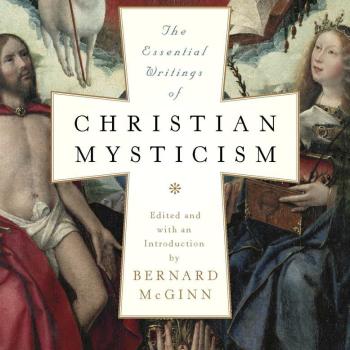
Twelve Mystical Anthologies That Belong in Every Contemplative...
TRENDING AT PATHEOS Contemplative

Handy Contemplative Practices for Political Spaces
A Spiritually Grounded Presence In order to bring a spiritually grounded presence...

Halloween: The Holiday of Loving Your Neighbor
All Hallows Eve Is Halloween the least Christian holiday in America, or...

Can Love Be Saved? Some Thoughts on the...
Happy Valentine's Day! I recently published a post on Patreon called Can...

"This Loving, Uniting Embrace": the Holy Ordinary
Today's guest post is by Mark Longhurst, author of The Holy Ordinary:...

How Are We Called to Live?: More About...
How Are We Called to Live? Many of us struggle with discerning...

A Spiritual Practice of Reading: Join Us Online
A Spiritual Practice of Reading A healthy spiritual practice of reading is...
view all Contemplative blogs
Ad-Free & Subscriber Log-In Subscription Support
- About Us
- 2026 Calendar
- Videos
- Podcasts
- Library of World Religions
- Faith In Media Tracker
- Advertise With Us
- Write for Us
- Privacy Policy
- Terms of Service
- Do Not Sell My Data
- Contact Us
- Radiant Digital
- Manage Newsletter Subscriptions
- Unsubscribe From Notifications
- Sitemap
Copyright 2008-2026, Patheos. All rights reserved.
Subscription Support Ad-Free & Subscriber Log-In
Follow Patheos