
BuddhistCatholicContemplativeEvangelicalGeneral ChristianHinduJewishLatter-day SaintMuslimNew VisionsProgressive Christian
Beliefs
- Buddhist
- Catholic
- Contemplative
- Evangelical
- General Christian
- Hindu
- Jewish
- Latter-day Saint
- More Voices
- Muslim
- New Visions
- Pagan
- Progressive Christian
Topics
- Religion News
- Food and Religion
- Sports and Religion
- Religious Art
- Religious Music and Entertainment
- Religious Events
- History and Religion
- Style and Religion
- Politics and Religion
- Women in Religion
- Recreation Outdoors and Religion
- Business Finance and Religion
- Careers Workplace and Religion
- Education and Religion
- Family Parenting and Religion
- Health Fitness and Religion
- Home and Religion
- Relationships and Religion
- Technology and Religion
- Travel and Religion
Columnists
- Buddhist Columnists
- Business Finance and Religion Columnists
- Careers Workplace and Religion Columnists
- Catholic Columnists
- Contemplative Columnists
- Education and Religion Columnists
- Evangelists Columnists
- Family Parenting and Religion Columnists
- General Christian Columnists
- Health Fitness and Religion Columnists
- Hindu Columnists
- History and Religion Columnists
- Home and Religion Columnists
- Jewish Columnists
- More Voices Columnists
- Latter Day Columnists
- Muslim Columnists
- New Visions Columnists
- Nonreligious Columnists
- Pagan Columnists
- Politics and Religion Columnists
- Progressive Columnists
- Recreation Outdoors and Religion Columnists
- Relationships and Religion Columnists
- Religion News Columnists
- Religious Art Columnists
- Religious Events Columnists
- Religious Music and Entertainment Columnists
- Sports and Religion Columnists
- Style and Religion Columnists
- Technology and Religion Columnists
- Travel and Religion Columnists
- Women in Religion Columnists
Resource Library
- 2026 Calendar
- Library of World Religions
- The 100 Most Holy Places on Earth
- Patheos Answers
- Podcasts
- Videos
- Faith Leaders Database
- Anglican Episcopalian
- Bahai
- Baptist
- Buddhism
- Christianity
- Confucianism
- Eastern Orthodoxy
- Hinduism
- Holiness and Pentecostal
- ISKCON
- Islam
- Judaism
- Lutheran
- Methodist
- The Church of Jesus Christ of Latter-day Saints
- New Age
- Paganism
- Presbytarian and Reformed
- Protestantism
- Religion Behind the Scenes
- Roman Catholic
- Scientology
- Shia Islam
- Sikhism
- Sufism
- Sunni Islam
- Taoism
- Zen
- See all religions
Research Tools
 Ad-Free & Subscriber Log-In Subscription Support
Ad-Free & Subscriber Log-In Subscription Support
Follow Patheos 

- Trending:
- Forgiveness
- |
- Marriage
- |
- Consciousness
- |
- Death Penalty
- |
- Election
- |
- Halloween

- Home
- Contemplative
- One Step Christians Must Take To Receive the Gift of Illumination
One Step Christians Must Take To Receive the Gift of Illumination
Last updated on: February 7, 2018 at 7:02 pm by Carl "Skye" McColman
One Step Christians Must Take To Receive the Gift of Illumination 2018-02-07T19:02:27-04:00 Carl "Skye" McColman
Patheos Explore the world's faith through different perspectives on religion and spirituality! Patheos has the views of the prevalent religions and spiritualities of the world.
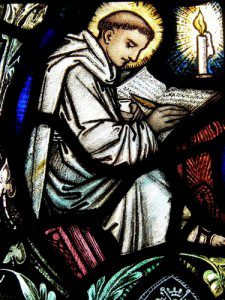
Image courtesy Shutterstock
In his wonderful book about the present and future of Christian mysticism, “Arise, My Love…”, author William Johnston, SJ tells a charming study about one of his brother Jesuits, Hugo Enomiya-Lassalle, who made an arduous journey to Thailand to meet with a renowned Buddhist teacher called Buddhadasa. Like Johnston, Enomiya-Lassalle was engaged in Buddhist-Catholic dialogue, so a meeting like this would have been significant for his work.
After arriving in Bangkok and riding on a rickety old bus in stifling heat, the priest finally arrived at the temple where Buddhadasa lived — only to learn that the renowned master was about to embark on a pilgrimage of his own, and so he only had a precious few minutes to meet with the Jesuit.
In their brief encounter, Buddhadasa made this comment:
Christians would get enlightenment if they knew how to read their own scriptures.
Johnston recounts this story because he agrees with Buddhadasa. And so do I.
Re-Learning to Read Scripture
Johnston goes on to say:
We Christians must re-learn how to read our scriptures. While retaining great esteem for scholarship, we must realize that scholarship alone will not bring us to enlightenment. Scholarship alone will not bring us to an understanding of the evangelists. Scholarship alone will not bring us to an understanding of the words and actions of Jesus. For here we are dealing with mystery.
Therein lies the heart of this issue that we face. For almost two hundred years now, western Christianity has benefited from a historical-critical method of scholarship that has revealed insight into the social, political, philosophical, and psychological dimensions of the writings in the Bible. Our knowledge and understanding of Biblical texts has grown tremendously. But it has come with a cost.
Too many of us — including our clergy and religious leaders — have lost the ability to read the Bible with an open heart and a contemplative mind. We’ve substituted a scholarly approach to scripture for the older way of reading the text with the eyes of faith.
This is not an either-or issue. But in order to find enlightenment (or a word I prefer, illumination) in the words of scripture, we have to re-learn how to read with the eyes of faith, without abandoning the knowledge afforded by scholarship.
Another quote from William Johnston:
One who would know the Jesus of history must search not only for knowledge that comes from study but also for wisdom that comes from prayer.
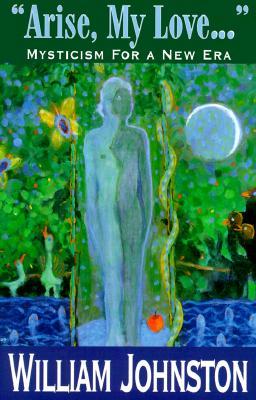
The Quotes in this blog post come from “Arise My Love…” by William Johnston, SJ
Which is to say, one who would receive the gift of contemplative illumination (or “enlightenment”) needs to balance an academic approach to scripture with a deeply prayerful encounter with the text.
Reading the Bible Prayerfully
Okay, then, so how do we do this?
For beginners, there are two key steps: praying the Daily Office, and learning to practice Lectio Divina. The hyperlinks take you to previous blog posts I have written on each of these practices.
Of course, when I say “for beginners,” that doesn’t mean that eventually we move beyond these foundational practices. These are practices for beginners at every level of spiritual practice.
The Daily Office, which is drawn largely from scripture (particularly the Psalms and various canticles), is an invitation to allow the Bible to become the foundation of our prayer. Over time, praying the Office integrates scripture and prayer into the fabric of our ongoing lives. It familiarizes us with the texture and resonance of the Biblical texts, and invites us into a world-view where prayer is normative and trust in God shapes the contours of the praying persons’ lives.
Lectio Divina (Latin for “sacred reading”) begins with a gesture of faith: faith that God longs to meet us, and will use the words of scripture to facilitate that encounter. Lectio is a four-step process: reading a passage from the Bible, reflecting on it, praying about it, and then resting in contemplative silence as a final moment of response.
It has become fashionable to apply the “lectio process” of reading, reflecting, responding and resting to others texts beside the Bible and even to art and nature. I think this is helpful insofar as it invites us to be open to God encountering us at any place or time in our lives. But I believe primacy of place should be given to the practice of lectio with the Bible. That’s how lectio was developed, after all: as a technique for reading the Bible prayerfully. So engaging in a regular practice of Biblical Lectio Divina will go far in fostering “the wisdom that comes from prayer.”
Once again, note that praying the Daily Office or practicing Lectio Divina is not a substitute for a grounded, scholarly approach to reading the Bible. We need a both-and approach to the sacred text.
So back to Buddhadasa. If we engage in prayerful practices like Lectio Divina or praying the Divine Office, does that guarantee we will have become enlightened? If what you mean by “enlightenment” is some sort of extraordinary or supernatural experience, I would say that God’s grace would almost always prevent that from happening! Listen to mystics throughout the Christian tradition, who counsel against the temptation of reducing the encounter with God to some sort of experience.
The illumination that comes from prayer and scripture is both mystical (hidden from ordinary consciousness) and transfigurative (it manifests not so much in our feelings or awareness but in how we conduct our lives).
In other words, practice Lectio and pray the Office. Do it faithfully, prayerfully, and with a generous and listening heart, for 6 months or a year or more. It might feel like “nothing is happening” but keep doing it anyway. And then one day, if your experience is anything like mine, one day you will notice that you are looking through a new pair of eyes, illuminated by a heart that is slowly being formed and reformed into the image and likeness of God, which is to say the image and likeness of Love.
And then you will begin to understand just what Buddhadasa was trying to tell us Christians.
Enjoy reading this blog?
Click here to become a patron.

Previous Post
February 20, 2017
Five Ideas that Shape Contemplative Prayer
Next Post

February 24, 2017 What is Christian Mysticism? (Video)
Browse Our Archives
Select a Category Activism Announcements Art Books Catholicism Celtic Christianity Christian mysticism Christianity Contemplation Current events Etc. Family humor interfaith dialogue Interfaith Wisdom Interspirituality Lay Cistercians Living the Faith Meditation movies Mysticism Mystics nature Poetry Reviews Scripture silence Spirituality Uncategorized Writing
Select a Month February 2025 January 2025 November 2024 September 2024 August 2024 July 2024 June 2024 May 2024 March 2024 January 2024 December 2023 November 2023 August 2023 June 2023 April 2023 March 2023 February 2023 January 2023 December 2022 November 2022 October 2022 September 2022 August 2022 July 2022 June 2022 May 2022 April 2022 February 2022 January 2022 December 2021 November 2021 October 2021 September 2021 August 2021 July 2021 June 2021 May 2021 April 2021 March 2021 February 2021 January 2021 December 2020 November 2020 October 2020 September 2020 August 2020 July 2020 June 2020 May 2020 April 2020 March 2020 February 2020 January 2020 December 2019 November 2019 October 2019 September 2019 August 2019 July 2019 June 2019 May 2019 April 2019 March 2019 February 2019 January 2019 December 2018 November 2018 October 2018 September 2018 August 2018 July 2018 June 2018 May 2018 April 2018 March 2018 February 2018 January 2018 December 2017 November 2017 October 2017 September 2017 August 2017 July 2017 June 2017 May 2017 April 2017 March 2017 February 2017 January 2017 December 2016 November 2016 October 2016 September 2016 August 2016 July 2016 June 2016 May 2016 March 2016 February 2016 January 2016 December 2015 November 2015 October 2015 September 2015 August 2015 July 2015 June 2015 May 2015 April 2015 March 2015 February 2015 January 2015 December 2014 November 2014 October 2014 September 2014 August 2014 July 2014 June 2014 May 2014 April 2014 March 2014 February 2014 January 2014 December 2013 October 2013 September 2013 July 2013 May 2013 January 2013 December 2012 November 2012 August 2012 July 2012 June 2012 March 2012 December 2011 September 2011 October 2010 August 2010 March 2010 September 2009 July 2008 January 2008 December 2007 September 2007 February 2007 January 2007 December 2004
Follow Us!
TAKE THE
Religious Wisdom Quiz
Who became Moses' spokesperson to Pharaoh?
Select your answer to see how you score.
Aaron Joshua Hur Miriam
Support this
Column


Related posts from Carl McColman

"This Loving, Uniting Embrace": the Holy Ordinary

I Believe Prayer Changes Things. Here's a Few...

If You Worship an Angry God, You'll Be...

The Difference Between Apophatic and Kataphatic Spirituality
TRENDING AT PATHEOS Contemplative

Handy Contemplative Practices for Political Spaces
A Spiritually Grounded Presence In order to bring a spiritually grounded presence...

Halloween: The Holiday of Loving Your Neighbor
All Hallows Eve Is Halloween the least Christian holiday in America, or...

Can Love Be Saved? Some Thoughts on the...
Happy Valentine's Day! I recently published a post on Patreon called Can...

"This Loving, Uniting Embrace": the Holy Ordinary
Today's guest post is by Mark Longhurst, author of The Holy Ordinary:...

How Are We Called to Live?: More About...
How Are We Called to Live? Many of us struggle with discerning...

A Spiritual Practice of Reading: Join Us Online
A Spiritual Practice of Reading A healthy spiritual practice of reading is...
view all Contemplative blogs
Ad-Free & Subscriber Log-In Subscription Support
- About Us
- 2026 Calendar
- Videos
- Podcasts
- Library of World Religions
- Faith In Media Tracker
- Advertise With Us
- Write for Us
- Privacy Policy
- Terms of Service
- Do Not Sell My Data
- Contact Us
- Radiant Digital
- Manage Newsletter Subscriptions
- Unsubscribe From Notifications
- Sitemap
Copyright 2008-2026, Patheos. All rights reserved.
Subscription Support Ad-Free & Subscriber Log-In
Follow Patheos