
BuddhistCatholicContemplativeEvangelicalGeneral ChristianHinduJewishLatter-day SaintMuslimNew VisionsProgressive Christian
Beliefs
- Buddhist
- Catholic
- Contemplative
- Evangelical
- General Christian
- Hindu
- Jewish
- Latter-day Saint
- More Voices
- Muslim
- New Visions
- Pagan
- Progressive Christian
Topics
- Religion News
- Food and Religion
- Sports and Religion
- Religious Art
- Religious Music and Entertainment
- Religious Events
- History and Religion
- Style and Religion
- Politics and Religion
- Women in Religion
- Recreation Outdoors and Religion
- Business Finance and Religion
- Careers Workplace and Religion
- Education and Religion
- Family Parenting and Religion
- Health Fitness and Religion
- Home and Religion
- Relationships and Religion
- Technology and Religion
- Travel and Religion
Columnists
- Buddhist Columnists
- Business Finance and Religion Columnists
- Careers Workplace and Religion Columnists
- Catholic Columnists
- Contemplative Columnists
- Education and Religion Columnists
- Evangelists Columnists
- Family Parenting and Religion Columnists
- General Christian Columnists
- Health Fitness and Religion Columnists
- Hindu Columnists
- History and Religion Columnists
- Home and Religion Columnists
- Jewish Columnists
- More Voices Columnists
- Latter Day Columnists
- Muslim Columnists
- New Visions Columnists
- Nonreligious Columnists
- Pagan Columnists
- Politics and Religion Columnists
- Progressive Columnists
- Recreation Outdoors and Religion Columnists
- Relationships and Religion Columnists
- Religion News Columnists
- Religious Art Columnists
- Religious Events Columnists
- Religious Music and Entertainment Columnists
- Sports and Religion Columnists
- Style and Religion Columnists
- Technology and Religion Columnists
- Travel and Religion Columnists
- Women in Religion Columnists
Resource Library
- 2026 Calendar
- Library of World Religions
- The 100 Most Holy Places on Earth
- Patheos Answers
- Podcasts
- Videos
- Faith Leaders Database
- Anglican Episcopalian
- Bahai
- Baptist
- Buddhism
- Christianity
- Confucianism
- Eastern Orthodoxy
- Hinduism
- Holiness and Pentecostal
- ISKCON
- Islam
- Judaism
- Lutheran
- Methodist
- The Church of Jesus Christ of Latter-day Saints
- New Age
- Paganism
- Presbytarian and Reformed
- Protestantism
- Religion Behind the Scenes
- Roman Catholic
- Scientology
- Shia Islam
- Sikhism
- Sufism
- Sunni Islam
- Taoism
- Zen
- See all religions
Research Tools
 Ad-Free & Subscriber Log-In Subscription Support
Follow Patheos 

- Trending:
- Advent
- |
- Forgiveness
- |
- Thanksgiving
- |
- Election
- |
- Seasonal Holidays
- |
- Marriage

- Home
- Contemplative
- What is Contemplation?
What is Contemplation?
Last updated on: January 26, 2018 at 12:08 pm by Carl "Skye" McColman
What is Contemplation? 2018-01-26T12:08:13-04:00 Carl "Skye" McColman
Patheos Explore the world's faith through different perspectives on religion and spirituality! Patheos has the views of the prevalent religions and spiritualities of the world.
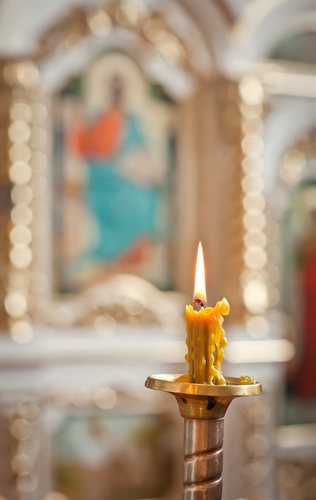
What is contemplation? Unfortunately, answering this question is tricky — for contemplation is like some other words in the English language, such as love or success or happiness. In other words, different people use it to mean different things.
Recently a reader named Daniel sent me this message:
I’ve been gradually learning about contemplative spirituality for a couple of years now. Throughout this journey I’ve continually wondered how “contemplation” should be defined. I’ve discovered that it seems to mean different things in different contexts. Nevertheless, I’ve often felt confused after contemplating the meaning of contemplation. Anyways, the purpose of my message is I’m wondering if you might be able to give me some of your thoughts/feedback/suggestions on the following definitions. Anything would be welcomed!
Daniel went on to offer his thoughts about defining contemplation/contemplative/to contemplate:
As a noun: “Contemplation is personal, experiential knowledge of God’s love and presence.”
As an adjective: “Contemplative activities and disciplines are those that aim to foster a personal, experiential knowledge of God’s love and presence.”
As a verb: “To contemplate, as a way of being, is to live with a personal, experiential awareness of God’s love and presence.”
Here’s how I responded to Daniel:
I think it’s helpful to look at the etymology of word when parsing out its meaning. Contemplation comes from the Latin word contemplari which means “to gaze, observe, behold.” So contemplation has it its heart the sense of beholding God’s presence. There is both a visionary dimension to this (seeing) but also an embodied dimension (finding God within). That’s why I think the word “beholding” is so useful, since it implies both seeing and “holding” God.
I would encourage you to avoid the word experience. It has come to mean something very narcissistic in our culture, reducing God to an object of our feelings or sensations or even imagination.
I could have a very powerful (and entirely self- generated) “experience” of God, complete with mystical visions and exalted feelings, but it could leave me utterly un-transformed. Meanwhile, someone like Mother Teresa went through life with little if any conscious experience of God, yet she changed the world with her selfless love and service to the poorest of the poor. So which one of us is the true mystic?
This begs the question: what if you don’t have this kind of an “experience” of God? What if your time of contemplative is simply filled with restlessness, or boredom, or distracted thoughts? Is that “failed” contemplation? Or is God operating at a level below the threshold of our conscious awareness?
Put another way: is the goal of contemplation for me to experience God, or is it for God to experience me? After all, who is the active subject here, and who is the receptive object?
What does it mean “to experience” something anyway? Many people can’t define it, but when you get right down to it the word is often used as a way to subtly undermine the presence of God that comes to us through other people.
People say, “I don’t want dogma, I want to experience God directly.” But what is dogma, other than the collective wisdom of all the lovers of God, over many generations, who have gone before us? Why should I be so quick to throw all that out, just because (living in an entertainment-obsessed culture like we do) I want God to “entertain” me directly?
So, I would caution against relying too much on “experience” as a foundation for contemplation. Instead, I’d suggest defining it in terms of waiting, of loving, of trusting, of obeying. Also silence. We contemplate God when we trustingly await God’s leading in our lives, resting in the silence found within our hearts, which is to say within our own bodies (beneath and in between all our restless thoughts and feelings), seeking to obey God’s word for us wherever it may come from.
So you see, contemplation really invites us to a place much deeper than mere experience. But we can’t find that place unless we befriend silence, unknowing, trust, and a willingness to wait in the darkness of our lack of control over God.
The Best Definition of Contemplation That I Have Found
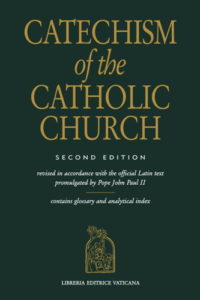 For what it’s worth, I find the definition of contemplation in the Catholic Catechism to be useful:
CONTEMPLATION: A form of wordless prayer in which mind and heart focus on God’s greatness and goodness in affective, loving adoration; to look on Jesus and the mysteries of his life with faith and love.
You’ll notice that it is consistent with the etymology of the word, and the “e” word doesn’t appear at all! Our task in contemplation is to pray in wordless (silent) love, adoration and beholding — recognizing that God comes to us in many ways, often at a level deeper than the threshold of our conscious awareness.
I hope this is helpful. Please let me know if you have further questions.
A few days later, Daniel replied:
I think my confusion over the meaning of contemplation stems from the fact that in some of what I read the term is used to refer to a subjective mystical experience, whereas in other instances it is used to refer to the act of gazing, beholding, and waiting upon God, as you explained.
Understanding the etymology is very helpful. So if “contemplation” or “contemplative prayer” is a spiritual disciple through which one seeks to silently behold and gaze upon God, then would you say that “contemplative spirituality” or “contemplative life” is a way of being through which one seeks to behold God within oneself, others, and all of creation and in every circumstance?
What still confuses me sometimes is the meaning of “contemplative” when it is applied to various things as an adjective (like prayer, disciplines, spirituality, life, Christianity, etc.).
I like your examples (contemplative spirituality, contemplative life). I think you’ve grasped the definition that I have found most useful — which is the definition found in the Catechism.
But as you yourself point out, since contemplation “seems to mean different things in different contexts” — in other words, people use the word in a variety of ways — naturally the adjective (contemplative) will have a similar “fuzzy” meaning. As I said above, it’s a word like love or happiness or success. Different people mean different things when they use these words, so we always have to try to discern exactly what they mean.
If you have an engineer’s mind (or simply prefer concrete ways of thinking), this will be an ongoing source of annoyance for you. My apologies. The way I deal with it is this: having found a definition that I think is both useful and reasonably accurate (i.e., the Catechism definition), that has become my “default” way of understanding contemplation/contemplative/to contemplate.
But knowing that this is one of those words that gets used in a variety of different ways, whenever I encounter these words, either in writing or in speaking with someone, I recognize that I have to discern what the author/speaker means by the word, which may not exactly line up with my understanding. That adds an extra challenge to the task of communication. But it’s an extra step worth taking, for the purpose of continuing to grow in my own spiritual life.
I’m sorry I can’t be any more definitive than this. But I hope this is at least somewhat helpful. My bottom line: the best definition I’ve ever found for contemplation is the Catechism definition, so when I use the word, I use it with that definition in mind. But when I hear or read others using it, I recognize that they may have a different understanding of the concept, so I make the effort to comprehend where they’re coming from.
God bless you on your continued journey.
Enjoy reading this blog?
Click here to become a patron.

Previous Post
June 8, 2016
Georgia Author of the Year!
Next Post
June 9, 2016 Rehabilitating Catholicism?
Browse Our Archives
Select a Category Activism Announcements Art Books Catholicism Celtic Christianity Christian mysticism Christianity Contemplation Current events Etc. Family humor interfaith dialogue Interfaith Wisdom Interspirituality Lay Cistercians Living the Faith Meditation movies Mysticism Mystics nature Poetry Reviews Scripture silence Spirituality Uncategorized Writing
Select a Month February 2025 January 2025 November 2024 September 2024 August 2024 July 2024 June 2024 May 2024 March 2024 January 2024 December 2023 November 2023 August 2023 June 2023 April 2023 March 2023 February 2023 January 2023 December 2022 November 2022 October 2022 September 2022 August 2022 July 2022 June 2022 May 2022 April 2022 February 2022 January 2022 December 2021 November 2021 October 2021 September 2021 August 2021 July 2021 June 2021 May 2021 April 2021 March 2021 February 2021 January 2021 December 2020 November 2020 October 2020 September 2020 August 2020 July 2020 June 2020 May 2020 April 2020 March 2020 February 2020 January 2020 December 2019 November 2019 October 2019 September 2019 August 2019 July 2019 June 2019 May 2019 April 2019 March 2019 February 2019 January 2019 December 2018 November 2018 October 2018 September 2018 August 2018 July 2018 June 2018 May 2018 April 2018 March 2018 February 2018 January 2018 December 2017 November 2017 October 2017 September 2017 August 2017 July 2017 June 2017 May 2017 April 2017 March 2017 February 2017 January 2017 December 2016 November 2016 October 2016 September 2016 August 2016 July 2016 June 2016 May 2016 March 2016 February 2016 January 2016 December 2015 November 2015 October 2015 September 2015 August 2015 July 2015 June 2015 May 2015 April 2015 March 2015 February 2015 January 2015 December 2014 November 2014 October 2014 September 2014 August 2014 July 2014 June 2014 May 2014 April 2014 March 2014 February 2014 January 2014 December 2013 October 2013 September 2013 July 2013 May 2013 January 2013 December 2012 November 2012 August 2012 July 2012 June 2012 March 2012 December 2011 September 2011 October 2010 August 2010 March 2010 September 2009 July 2008 January 2008 December 2007 September 2007 February 2007 January 2007 December 2004
Follow Us!
TAKE THE
Religious Wisdom Quiz
True or False: Ezekiel saw a vision of a valley of dry bones that came to life.
Select your answer to see how you score.
FALSE TRUE
Support this
Column


Related posts from Carl McColman
"This Loving, Uniting Embrace": the Holy Ordinary
Join Me for "24 Meditations for 2024"

LSD, Anxiety, and Contemplation: Can Psychedelic Therapy Support...
TRENDING AT PATHEOS Contemplative

Handy Contemplative Practices for Political Spaces
A Spiritually Grounded Presence In order to bring a spiritually grounded presence...

Halloween: The Holiday of Loving Your Neighbor
All Hallows Eve Is Halloween the least Christian holiday in America, or...

Can Love Be Saved? Some Thoughts on the...
Happy Valentine's Day! I recently published a post on Patreon called Can...
"This Loving, Uniting Embrace": the Holy Ordinary
Today's guest post is by Mark Longhurst, author of The Holy Ordinary:...

How Are We Called to Live?: More About...
How Are We Called to Live? Many of us struggle with discerning...

A Spiritual Practice of Reading: Join Us Online
A Spiritual Practice of Reading A healthy spiritual practice of reading is...
view all Contemplative blogs
Ad-Free & Subscriber Log-In Subscription Support
- About Us
- 2026 Calendar
- Videos
- Podcasts
- Library of World Religions
- Faith In Media Tracker
- Advertise With Us
- Write for Us
- Privacy Policy
- Terms of Service
- Do Not Sell My Data
- Contact Us
- Radiant Digital
- Manage Newsletter Subscriptions
- Unsubscribe From Notifications
- Sitemap
Copyright 2008-2026, Patheos, part of the Radiant Digital network of media brands. All rights reserved.
Subscription Support Ad-Free & Subscriber Log-In
Follow Patheos