
BuddhistCatholicContemplativeEvangelicalGeneral ChristianHinduJewishLatter-day SaintMuslimNew VisionsProgressive Christian
Beliefs
- Buddhist
- Catholic
- Contemplative
- Evangelical
- General Christian
- Hindu
- Jewish
- Latter-day Saint
- More Voices
- Muslim
- New Visions
- Pagan
- Progressive Christian
Topics
- Religion News
- Food and Religion
- Sports and Religion
- Religious Art
- Religious Music and Entertainment
- Religious Events
- History and Religion
- Style and Religion
- Politics and Religion
- Women in Religion
- Recreation Outdoors and Religion
- Business Finance and Religion
- Careers Workplace and Religion
- Education and Religion
- Family Parenting and Religion
- Health Fitness and Religion
- Home and Religion
- Relationships and Religion
- Technology and Religion
- Travel and Religion
Columnists
- Buddhist Columnists
- Business Finance and Religion Columnists
- Careers Workplace and Religion Columnists
- Catholic Columnists
- Contemplative Columnists
- Education and Religion Columnists
- Evangelists Columnists
- Family Parenting and Religion Columnists
- General Christian Columnists
- Health Fitness and Religion Columnists
- Hindu Columnists
- History and Religion Columnists
- Home and Religion Columnists
- Jewish Columnists
- More Voices Columnists
- Latter Day Columnists
- Muslim Columnists
- New Visions Columnists
- Nonreligious Columnists
- Pagan Columnists
- Politics and Religion Columnists
- Progressive Columnists
- Recreation Outdoors and Religion Columnists
- Relationships and Religion Columnists
- Religion News Columnists
- Religious Art Columnists
- Religious Events Columnists
- Religious Music and Entertainment Columnists
- Sports and Religion Columnists
- Style and Religion Columnists
- Technology and Religion Columnists
- Travel and Religion Columnists
- Women in Religion Columnists
Resource Library
- 2026 Calendar
- Library of World Religions
- The 100 Most Holy Places on Earth
- Patheos Answers
- Podcasts
- Videos
- Faith Leaders Database
- Anglican Episcopalian
- Bahai
- Baptist
- Buddhism
- Christianity
- Confucianism
- Eastern Orthodoxy
- Hinduism
- Holiness and Pentecostal
- ISKCON
- Islam
- Judaism
- Lutheran
- Methodist
- The Church of Jesus Christ of Latter-day Saints
- New Age
- Paganism
- Presbytarian and Reformed
- Protestantism
- Religion Behind the Scenes
- Roman Catholic
- Scientology
- Shia Islam
- Sikhism
- Sufism
- Sunni Islam
- Taoism
- Zen
- See all religions
Research Tools
 Ad-Free & Subscriber Log-In Subscription Support
Ad-Free & Subscriber Log-In Subscription Support
Follow Patheos 

- Trending:
- Forgiveness
- |
- Marriage
- |
- Consciousness
- |
- Death Penalty
- |
- Election
- |
- Halloween

- Home
- Contemplative
- Mystagogy: the Heart of Spiritual Formation
Mystagogy: the Heart of Spiritual Formation
Last updated on: March 4, 2018 at 11:56 pm by Carl "Skye" McColman
Mystagogy: the Heart of Spiritual Formation 2018-03-04T23:56:32-04:00 Carl "Skye" McColman
Patheos Explore the world's faith through different perspectives on religion and spirituality! Patheos has the views of the prevalent religions and spiritualities of the world.
The Rite of Christian Initiation of Adults — the Catholic process by which adults enter the Church — suggests that there are four stages or steps in the process of Christian initiation. These steps — evangelization, catechesis, initiation, and mystagogy — not only define the journey of general formation in the life of Christ (in other words, “becoming a Christian”) but they also give us insight into the process by which followers of Christ are called “deeper” into the contemplative or mystical life.

Mystagogy: The contemplative equivalent of the caterpillar-to-butterfly process.
Okay, so words like evangelization, catechesis, initiation, and mystagogy are a mouthful. Let’s take a look at each one of these “steps” to an adult faith. And while I’m using specifically Catholic language of Christian initiation, I believe this way of understanding Christian formation would apply to other Christian traditions as well.
- Evangelization means simply “hearing the good news.” To be evangelized means to discover, for yourself, the possibilities of joy, wisdom, compassion, and inner transformation that await the person who chooses to follow Jesus Christ. Especially in our time, when so many misconceptions about Christianity abound in our culture, evangelization means unlearning some of the erroneous ideas about life in Christ (for example, that to be a Christian implies being judgmental or hostile to others) even as we embrace the joyful and promising message of unconditional Divine Love and its availability to us.
- Catechesis follows our first encounter with Divine Love: this is where we say “I want to learn more.” The emphasis here is on education: the student (“catechumen”) is given information and new insights to open his or her mind and heart to the splendor and promise of faith, of repentance (accepting the “higher mind” of Christ into our lives), of integration into the community of fellow Christians, and of service to the world at large. Catechesis is when we “learn the ropes,” so to speak. We are apprentices on this life-long journey of being formed as members of the Body of Christ.
- Initiation is the decisive moment, the point of no return, when we embrace the transformation that is offered to us in Christ. It is not a solitary act! Initiation into Christ, for adults, typically involves three sacramental rites, given to us by the church we are joining: Baptism, where we formally receive God’s cleansing us of our sin; Confirmation, where we say “Yes” to the indwelling of the Holy Spirit in our lives, and Communion, where we receive the Body and Blood of Christ. Notice the Trinitarian nature of initiation. The sacraments link us to God — and to one another — in the dazzling beauty of love.
- Mystagogy means, in the words of C. S. Lewis, “further up and further in.” We have received the good news, we’ve learned the ropes, we’ve been initiated into the new life. But our formation is never complete, not on this side of eternity. So the journey of ever-more-deeply giving ourselves to Christ continues. However, whereas Catechesis involved learning new ideas, new insights, new ways of seeing and thinking in response to the love of God, Mystagogy leads us to embrace the mystery of God — so it is more “heart” than “head,” more embodied, more experiential (in the humblest sense of the word), more reliant on allowing the indwelling Spirit to take the lead in our lives, encouraging and empowering us to love as Christ loves, to be Christ, to be Love, to be one with God (I Corinthians 6:17, Galatians 2:20, Colossians 1:27, II Peter 1:4).
It’s a wonderful process. Unfortunately, though, it seems that mystagogy often gets overlooked.
When I went through RCIA, we were basically turned loose after the Easter Vigil (the Rite of Initiation). The “mystagogy” step was more or less left for each person to figure out on his or her own. I recently discussed this with a friend who oversees the RCIA program in his parish, and he admitted that, in his church, about all they did for the new initiates was to encourage them to get involved in parish life, so they could “experience” it for themselves!
It’s not my purpose here to criticize catechists, who often put in many hours of dedicated service to help newcomers feel welcome and integrated into their church communities. I think mystagogy gets short shrift because of overall weaknesses in western Christian culture: we’re good at book-learning (that’s the “Catechesis” part), but we fumble when it comes to a more embodied way of formation: of discovering the inner process of being formed in Christ.
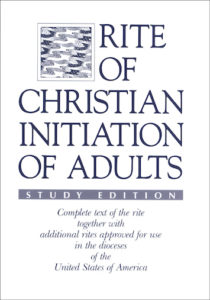
RCIA: from Evangelization to Mystagogy
It seems to me that the season of “Mystagogy” would be a natural time for introducing new Christians to the regular practice of prayer (in all its many forms, but especially the Divine Office and silent prayer), lectio divina (the meditative reading of scripture), spiritual direction, Ignatian spirituality, the daily examen, making an annual retreat — and then engaging in the practice of reflection and discernment, to integrate all these spiritual practices into the more active side of Christian life, such as outreach ministries or parish work.
I understand that many churches simply don’t have the resources to provide this kind of intensive, almost one-on-one mentoring to their new members. Which is too bad, really. Priests and religious educators have admitted to me that far too many people who complete RCIA sooner or later drop out of active involvement with the church. Perhaps an effective process of mystagogy would help more of the new initiates to persevere in their ever-deepening relationship with (and formation in) Christ.
Mystagogy and Spiritual Formation
But my purpose in writing this blog post is not just to lament the imperfections of the RCIA process in Catholicism — but also to suggest that this fourfold process of formation applies not only to people joining the church for the first time but also to people who discern a call to become contemplative.
We are evangelized in contemplation when we first recognize in our heart a call for something deeper, a yearning for “more God” than words or ideas can satisfy. This stirring for something-more might come in response to a book we read, a conversation we have or an insight we receive in response to someone already on the contemplative path. Or the call may simply come from deep within us.
We are catechized in contemplation when we make the effort to learn more: we read books on contemplative prayer and related practices, we attend one or more retreats at a monastery or Jesuit center, we begin working with a spiritual director, we make the effort to begin praying the Divine Office. We’re beginners, in a time of apprenticeship marked by joy as we learn ways to respond to our call.
We are initiated into contemplation when we realize that we have made a non-negotiable commitment to the life of prayer, and that it is impacting how we relate to others. We pray daily, and encourage others to do so too. Perhaps we seek to become monastic oblates (or even to enter into religious life), or we discern a call to become a spiritual director. Each “initiation” is unique, but it marks us as contemplatives for life.
We embrace a contemplative mystagogy when we surrender to the recognition that growth in contemplation is a life-long journey (and beyond). We are always beginners, we are always apprentices. There is no limit to the depth of love into which we have been called. Union with God is not an idea to which we assent, but a way of living, being, knowing, to which we continually give ourselves. Life has become an ever-blossoming flower, a love affair with God that continually unfolds ever-new ways of receiving and sharing joy, wisdom, compassion, healing, and life. Further up and further in!
So where are you on your contemplative journey? Remembering that the map is not the territory (in other words, your unique adventure of responding to the love of God might look different), does this “four-movement” model speak to you? Is there something I’m missing? If you have any thoughts to share, please post them below.
Enjoy reading this blog?
Click here to become a patron.

Previous Post
May 18, 2016
Who's Who Among the Christian Mystics...
Next Post

May 31, 2016 Remembering the Monks of Tibhirine
Browse Our Archives
Select a Category Activism Announcements Art Books Catholicism Celtic Christianity Christian mysticism Christianity Contemplation Current events Etc. Family humor interfaith dialogue Interfaith Wisdom Interspirituality Lay Cistercians Living the Faith Meditation movies Mysticism Mystics nature Poetry Reviews Scripture silence Spirituality Uncategorized Writing
Select a Month February 2025 January 2025 November 2024 September 2024 August 2024 July 2024 June 2024 May 2024 March 2024 January 2024 December 2023 November 2023 August 2023 June 2023 April 2023 March 2023 February 2023 January 2023 December 2022 November 2022 October 2022 September 2022 August 2022 July 2022 June 2022 May 2022 April 2022 February 2022 January 2022 December 2021 November 2021 October 2021 September 2021 August 2021 July 2021 June 2021 May 2021 April 2021 March 2021 February 2021 January 2021 December 2020 November 2020 October 2020 September 2020 August 2020 July 2020 June 2020 May 2020 April 2020 March 2020 February 2020 January 2020 December 2019 November 2019 October 2019 September 2019 August 2019 July 2019 June 2019 May 2019 April 2019 March 2019 February 2019 January 2019 December 2018 November 2018 October 2018 September 2018 August 2018 July 2018 June 2018 May 2018 April 2018 March 2018 February 2018 January 2018 December 2017 November 2017 October 2017 September 2017 August 2017 July 2017 June 2017 May 2017 April 2017 March 2017 February 2017 January 2017 December 2016 November 2016 October 2016 September 2016 August 2016 July 2016 June 2016 May 2016 March 2016 February 2016 January 2016 December 2015 November 2015 October 2015 September 2015 August 2015 July 2015 June 2015 May 2015 April 2015 March 2015 February 2015 January 2015 December 2014 November 2014 October 2014 September 2014 August 2014 July 2014 June 2014 May 2014 April 2014 March 2014 February 2014 January 2014 December 2013 October 2013 September 2013 July 2013 May 2013 January 2013 December 2012 November 2012 August 2012 July 2012 June 2012 March 2012 December 2011 September 2011 October 2010 August 2010 March 2010 September 2009 July 2008 January 2008 December 2007 September 2007 February 2007 January 2007 December 2004
Follow Us!
TAKE THE
Religious Wisdom Quiz
In what town did Jesus grow up?
Select your answer to see how you score.
Jericho Nazareth Bethlehem Jerusalem
Support this
Column


Related posts from Carl McColman

LSD, Anxiety, and Contemplation: Can Psychedelic Therapy Support...

Finding Your Perfect Prayer Posture
Advice for Contemplatives looking for a Spiritual Community...
A Reason Why Liturgy Matters: "Like Staring Out...
TRENDING AT PATHEOS Contemplative

Handy Contemplative Practices for Political Spaces
A Spiritually Grounded Presence In order to bring a spiritually grounded presence...

Halloween: The Holiday of Loving Your Neighbor
All Hallows Eve Is Halloween the least Christian holiday in America, or...

Can Love Be Saved? Some Thoughts on the...
Happy Valentine's Day! I recently published a post on Patreon called Can...

"This Loving, Uniting Embrace": the Holy Ordinary
Today's guest post is by Mark Longhurst, author of The Holy Ordinary:...

How Are We Called to Live?: More About...
How Are We Called to Live? Many of us struggle with discerning...

A Spiritual Practice of Reading: Join Us Online
A Spiritual Practice of Reading A healthy spiritual practice of reading is...
view all Contemplative blogs
Ad-Free & Subscriber Log-In Subscription Support
- About Us
- 2026 Calendar
- Videos
- Podcasts
- Library of World Religions
- Faith In Media Tracker
- Advertise With Us
- Write for Us
- Privacy Policy
- Terms of Service
- Do Not Sell My Data
- Contact Us
- Radiant Digital
- Manage Newsletter Subscriptions
- Unsubscribe From Notifications
- Sitemap
Copyright 2008-2026, Patheos. All rights reserved.
Subscription Support Ad-Free & Subscriber Log-In
Follow Patheos