
BuddhistCatholicContemplativeEvangelicalGeneral ChristianHinduJewishLatter-day SaintMuslimNew VisionsProgressive Christian
Beliefs
- Buddhist
- Catholic
- Contemplative
- Evangelical
- General Christian
- Hindu
- Jewish
- Latter-day Saint
- More Voices
- Muslim
- New Visions
- Pagan
- Progressive Christian
Topics
- Religion News
- Food and Religion
- Sports and Religion
- Religious Art
- Religious Music and Entertainment
- Religious Events
- History and Religion
- Style and Religion
- Politics and Religion
- Women in Religion
- Recreation Outdoors and Religion
- Business Finance and Religion
- Careers Workplace and Religion
- Education and Religion
- Family Parenting and Religion
- Health Fitness and Religion
- Home and Religion
- Relationships and Religion
- Technology and Religion
- Travel and Religion
Columnists
- Buddhist Columnists
- Business Finance and Religion Columnists
- Careers Workplace and Religion Columnists
- Catholic Columnists
- Contemplative Columnists
- Education and Religion Columnists
- Evangelists Columnists
- Family Parenting and Religion Columnists
- General Christian Columnists
- Health Fitness and Religion Columnists
- Hindu Columnists
- History and Religion Columnists
- Home and Religion Columnists
- Jewish Columnists
- More Voices Columnists
- Latter Day Columnists
- Muslim Columnists
- New Visions Columnists
- Nonreligious Columnists
- Pagan Columnists
- Politics and Religion Columnists
- Progressive Columnists
- Recreation Outdoors and Religion Columnists
- Relationships and Religion Columnists
- Religion News Columnists
- Religious Art Columnists
- Religious Events Columnists
- Religious Music and Entertainment Columnists
- Sports and Religion Columnists
- Style and Religion Columnists
- Technology and Religion Columnists
- Travel and Religion Columnists
- Women in Religion Columnists
Resource Library
- 2026 Calendar
- Library of World Religions
- The 100 Most Holy Places on Earth
- Patheos Answers
- Podcasts
- Videos
- Faith Leaders Database
- Anglican Episcopalian
- Bahai
- Baptist
- Buddhism
- Christianity
- Confucianism
- Eastern Orthodoxy
- Hinduism
- Holiness and Pentecostal
- ISKCON
- Islam
- Judaism
- Lutheran
- Methodist
- The Church of Jesus Christ of Latter-day Saints
- New Age
- Paganism
- Presbytarian and Reformed
- Protestantism
- Religion Behind the Scenes
- Roman Catholic
- Scientology
- Shia Islam
- Sikhism
- Sufism
- Sunni Islam
- Taoism
- Zen
- See all religions
Research Tools
 Ad-Free & Subscriber Log-In Subscription Support
Ad-Free & Subscriber Log-In Subscription Support
Follow Patheos 

- Trending:
- Forgiveness
- |
- Marriage
- |
- Consciousness
- |
- Death Penalty
- |
- Election
- |
- Halloween

- Home
- Contemplative
- Do Contemplatives Need the Church?
Do Contemplatives Need the Church?
Last updated on: December 13, 2018 at 12:46 pm by Carl "Skye" McColman
Do Contemplatives Need the Church? 2018-12-13T12:46:27-04:00 Carl "Skye" McColman
Patheos Explore the world's faith through different perspectives on religion and spirituality! Patheos has the views of the prevalent religions and spiritualities of the world.
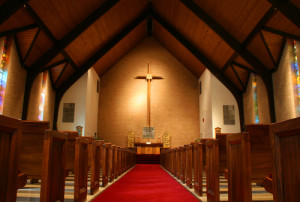 A post on this blog received the following comment yesterday:
Having been with the Catholic Church and seminary trained for all my 71 years of life . I am naturally contemplative . But I do now believe practising formal meditation/contemplation is false . Aren’t we missing the point if we try and set time aside for contemplation?
Surely if we are made in Gods image we are already suffused with Gods holy grace and we are divinised, so if we are living in Christ what’s the point in pretending to get closer to God when He’s already there? The very air we breathe is holy .
A religionless Christianity is for me. There is now no need for a Church, priests, bible, sacraments, prayer.
My parish is the world wherever I am.
This has given me much food for thought. I promised the person who made this comment I would reply in a new blog post. So here goes. I’m writing this as a direct response to the author of the comment; hopefully it will be of interest to others as well.
Thank you for your comment. It’s wonderful that you have given your life to contemplative spirituality, to the point now where “the world is your parish” and you don’t even see a distinction between a prayer practice and living a prayerful life.
Indeed, the very air we breathe is holy!
So is the ground we walk on, the bodies we inhabit, the relationships that shape and form us every day. We are “all walking around shining like the sun,” as Merton put it. Most of us go through lives never realizing this, what a grace that you have a caught at least a glimpse of glory.
Saint Paul mandates that we “pray without ceasing” and I suspect that this means to do something similar to what Brother Lawrence calls “the practice of the presence of God” — which is to say, to reach a point of non-dual beholding where we find God in all things and all things in God.
“For the fullness of joy is to behold God in all,” as Julian of Norwich put it. Only you can say if you’ve actually reached this point, but your comment makes it sound as if you have.
I suspect that for many people, discovering the grace of “beholding God in all” includes a recognition that truly God is everywhere — not just in Church.
On a street corner in Louisville, one day Thomas Merton suddenly fell in love with everyone he saw. He realized there was greater dignity in being human than in being a monk. It was a major turning point in his life, with a rich lesson for us all.
Can We Dispense with Daily Practice (or the Church)?
When it comes to both the importance of a daily practice, or involvement in a faith community, I have a different perspective than you do.
I believe reaching the point of non-dual contemplation or “beholding God in all” renders Church and practice more necessary than ever. I’d like to share with you why I think so.
Let’s talk about daily practice first. You say:
I do now believe practising formal meditation/contemplation is false. Aren’t we missing the point if we try and set time aside for contemplation?
You give contemplative practice a label: “false.” Immediately I wonder if trying to put contemplative, or silent, prayer into words — calling it “true” or “false,” “meaningful” or “boring,” isn’t somehow missing the point.
That’s because the point of contemplative practice is silence. Not what we think or say about silence (or, for that matter, about the practice).
The point behind a contemplative practice (whether it’s liturgical prayer like the Daily Office, or a meditative exercise like centering prayer) is to dispose ourselves to silence: to a place beyond concepts like “meaningful” or “boring” or “joyful” or “false.”
We enter into intentional silence to remind ourselves to pay attention to the silence that is always, already there.
To me, the best analogy for a contemplative practice is physical exercise.
I personally don’t find a lot of joy in going to workout. I was never a jock and at age 55 I doubt if I’ll become one now! But I still try to faithfully show up at my fitness center several times a week to break a sweat.
Why? Because when I work out, I feel better the other 23 hours a day. And I know if I don’t work out, I start to lose energy, to lose muscle tone.
I believe that health is a gift from God. But if we don’t dispose ourselves to be healthy (through exercise, proper diet, enough sleep, and managing stress), then we are at risk of losing that gift.
The same goes with contemplative silence. It is a free gift from God, we can’t do anything to earn it.
In your words, “we are made in God’s image” and “we are already suffused with God’s holy grace… we are divinised.” Yes, absolutely! But are we mindful of this truth?
I believe the daily practice is essential for disposing myself to that mindfulness.
Perhaps you do not need a daily practice to maintain that level of mindfulness, of awareness, of practicing-the-presence. But I need it! For me, abandoning my daily contemplative practice would be like no longer exercising.
Maybe at first my health would stay strong. But if I stop working out, sooner or later, I’ll notice the loss.
If we are living in Christ what’s the point in pretending to get closer to God when He’s already there?
Well, yes, we are living in Christ. There’s no point in “pretending to get closer to God” — but if that’s your experience of contemplative practice, may I gently suggest that you might find it more satisfying if you think about it differently?
Contemplative practice is not about pretending anything. It’s about authenticity, about being who we truly are.
We need to let go of the internal commentary that says “this is a waste of time, this is just pretending, this is boring, you don’t need this, yada yada yada.” That’s what Buddhists call “the monkey mind.” Don’t try to argue with it, just gently let it go.
The point behind contemplative practice is to rest in silence. Whenever we think about it, or try to interpret it, we’re not doing it.
We don’t do this “to get closer to God.” That’s impossible, for already in God “we live and move and have our being” (Acts 17:28). We make a practice of resting in silence to remember — to cultivate mindfulness, to exercise the gift that has already been given.
Sure, no one needs to practice contemplative prayer*.* Just like no one needs to go to the fitness center. But people keep going because realize that the workout is worth the blessings that flow from it. The same principle is at work in contemplative practice.
The Church and the Contemplative
The final words of your comment:
A religionless Christianity is for me. There is now no need for a Church, priests, bible, sacraments, prayer.
My parish is the world wherever I am.
To push my metaphor further: if contemplative practice is like a workout, then the Church is like the fitness center.
Some people can stay physically fit without membership in a fitness center. But that requires tremendous willpower, commitment, and resolve. For most of us mere mortals, joining (and using) a fitness center is essential for staying physically fit.
I think the same can be said of Church participation and “spiritual fitness.”
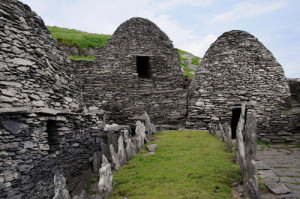
No, it’s not a Jedi temple! But Skellig Michael is evidence that even 1500 years ago in remote Ireland, hermit Christians formed community.
Now, I do believe that a small percentage of Christians are called to the vocation of hermit. If that is you, then of course I wish you well and much grace as you live into the calling you have received.
But even hermits need other people, just like a pilot needs a ground crew: the mechanic, the air traffic controller, the meteorologist, and so forth.
I think it’s important to remember that “Church” is just a fancy word for “community.” To say “I have no need for Church” is tantamount to saying “I have no need for other people.”
Now, I know that many people have had terrible experiences with their local church. People have been abused, exploited, oppressed by individuals and by the institution as a whole. The Church is made up of sinners, after all.
But when something is broken, you fix it. Human beings need community. If our communities are broken, the solution is to build better communities, not to give up on community altogether.
So I’m afraid I must disagree when you say “there is no need” for the Church, etc. That’s like saying “I’m physically fit. I no longer need the gym, or a trainer, or weights, or the treadmill.”
If you’re that good, then why don’t you help out some folks who aren’t as far along as you?
Which brings me to, what I suppose, is the main point of this long post. Maybe after years of contemplative living, you’ve decided you no longer need the Church (I disagree with you, but you’re entitled to your opinion).
But doesn’t the Church need you?
Again and again I get emails from Christians who struggle because their hearts have opened up to contemplative spirituality, and yet their Churches aren’t there yet. I feel their pain, because I’ve been there too.
I hear from clergy persons — priests and ministers — who feel this way. I also hear from laypeople in the same boat.
I believe the Christian Church (not just Catholicism, but all the denominations) is in the midst of a spiritual revolution, as the Holy Spirit calls more and more people to embrace contemplative prayer and practice.
But we’re at the cutting edge, friends. Many Christians still haven’t received the memo.
The Church needs contemplatives. The Church needs us to be contemplatives in the Church — even if all the other members of the Church don’t realize it yet.
I’m not saying we all need to go and start centering prayer groups, or teach a class on mysticism, or whatever. In many places, the last thing that is needed is another “program.”
In some places, though, that might be important. We all need to discern where we are called.
But I think in many Churches, we simply need to be present. We need to share with the clergy and other Church leaders that we are called to pray in silence. And then we need to do it. We need to be a contemplative presence in the Church.
Sometimes this might mean starting a program, or teaching a class. Or it might mean a ministry of spiritual companionship. Or it could just mean a daily ministry of intercessory silent prayer.
Every contemplative will have a unique calling. But I believe with all my heart that a central part of following Christ is washing one another’s feet.
And the Church is where we do that.
A Final Word
To my friend who left the comment: I do not mean to preach to you, and I have no interest in saying you are right or wrong. I trust you to follow God as best you can.
But I hope you can at least see, in this post, that there are some positive things to say about maintaining a committed daily prayer practice, and about being part of a faith community.
Commitment and community. They’re beautiful. Certainly not perfect. But necessary anyway.
Do you have a question about silent prayer, contemplative living, or Christian mysticism? If so, please leave it in a comment below — and I might choose it to feature in a future blog post. Thanks for reading!
Enjoy reading this blog?
Click here to become a patron.


Next Post

March 22, 2016 Is Easter Dangerous? (Should it be?)
Browse Our Archives
Select a Category Activism Announcements Art Books Catholicism Celtic Christianity Christian mysticism Christianity Contemplation Current events Etc. Family humor interfaith dialogue Interfaith Wisdom Interspirituality Lay Cistercians Living the Faith Meditation movies Mysticism Mystics nature Poetry Reviews Scripture silence Spirituality Uncategorized Writing
Select a Month February 2025 January 2025 November 2024 September 2024 August 2024 July 2024 June 2024 May 2024 March 2024 January 2024 December 2023 November 2023 August 2023 June 2023 April 2023 March 2023 February 2023 January 2023 December 2022 November 2022 October 2022 September 2022 August 2022 July 2022 June 2022 May 2022 April 2022 February 2022 January 2022 December 2021 November 2021 October 2021 September 2021 August 2021 July 2021 June 2021 May 2021 April 2021 March 2021 February 2021 January 2021 December 2020 November 2020 October 2020 September 2020 August 2020 July 2020 June 2020 May 2020 April 2020 March 2020 February 2020 January 2020 December 2019 November 2019 October 2019 September 2019 August 2019 July 2019 June 2019 May 2019 April 2019 March 2019 February 2019 January 2019 December 2018 November 2018 October 2018 September 2018 August 2018 July 2018 June 2018 May 2018 April 2018 March 2018 February 2018 January 2018 December 2017 November 2017 October 2017 September 2017 August 2017 July 2017 June 2017 May 2017 April 2017 March 2017 February 2017 January 2017 December 2016 November 2016 October 2016 September 2016 August 2016 July 2016 June 2016 May 2016 March 2016 February 2016 January 2016 December 2015 November 2015 October 2015 September 2015 August 2015 July 2015 June 2015 May 2015 April 2015 March 2015 February 2015 January 2015 December 2014 November 2014 October 2014 September 2014 August 2014 July 2014 June 2014 May 2014 April 2014 March 2014 February 2014 January 2014 December 2013 October 2013 September 2013 July 2013 May 2013 January 2013 December 2012 November 2012 August 2012 July 2012 June 2012 March 2012 December 2011 September 2011 October 2010 August 2010 March 2010 September 2009 July 2008 January 2008 December 2007 September 2007 February 2007 January 2007 December 2004
Follow Us!
TAKE THE
Religious Wisdom Quiz
Which prophet's book names the birthplace of the Messiah?
Select your answer to see how you score.
Amos Micah Jonah Obadiah
Support this
Column


Related posts from Carl McColman

I Believe Prayer Changes Things. Here's a Few...

Join Me for "24 Meditations for 2024"

LSD, Anxiety, and Contemplation: Can Psychedelic Therapy Support...

TRENDING AT PATHEOS Contemplative

Handy Contemplative Practices for Political Spaces
A Spiritually Grounded Presence In order to bring a spiritually grounded presence...

Halloween: The Holiday of Loving Your Neighbor
All Hallows Eve Is Halloween the least Christian holiday in America, or...

Can Love Be Saved? Some Thoughts on the...
Happy Valentine's Day! I recently published a post on Patreon called Can...

"This Loving, Uniting Embrace": the Holy Ordinary
Today's guest post is by Mark Longhurst, author of The Holy Ordinary:...

How Are We Called to Live?: More About...
How Are We Called to Live? Many of us struggle with discerning...

A Spiritual Practice of Reading: Join Us Online
A Spiritual Practice of Reading A healthy spiritual practice of reading is...
view all Contemplative blogs
Ad-Free & Subscriber Log-In Subscription Support
- About Us
- 2026 Calendar
- Videos
- Podcasts
- Library of World Religions
- Faith In Media Tracker
- Advertise With Us
- Write for Us
- Privacy Policy
- Terms of Service
- Do Not Sell My Data
- Contact Us
- Radiant Digital
- Manage Newsletter Subscriptions
- Unsubscribe From Notifications
- Sitemap
Copyright 2008-2026, Patheos. All rights reserved.
Subscription Support Ad-Free & Subscriber Log-In
Follow Patheos