
BuddhistCatholicContemplativeEvangelicalGeneral ChristianHinduJewishLatter-day SaintMuslimNew VisionsProgressive Christian
Beliefs
- Buddhist
- Catholic
- Contemplative
- Evangelical
- General Christian
- Hindu
- Jewish
- Latter-day Saint
- More Voices
- Muslim
- New Visions
- Pagan
- Progressive Christian
Topics
- Religion News
- Food and Religion
- Sports and Religion
- Religious Art
- Religious Music and Entertainment
- Religious Events
- History and Religion
- Style and Religion
- Politics and Religion
- Women in Religion
- Recreation Outdoors and Religion
- Business Finance and Religion
- Careers Workplace and Religion
- Education and Religion
- Family Parenting and Religion
- Health Fitness and Religion
- Home and Religion
- Relationships and Religion
- Technology and Religion
- Travel and Religion
Columnists
- Buddhist Columnists
- Business Finance and Religion Columnists
- Careers Workplace and Religion Columnists
- Catholic Columnists
- Contemplative Columnists
- Education and Religion Columnists
- Evangelists Columnists
- Family Parenting and Religion Columnists
- General Christian Columnists
- Health Fitness and Religion Columnists
- Hindu Columnists
- History and Religion Columnists
- Home and Religion Columnists
- Jewish Columnists
- More Voices Columnists
- Latter Day Columnists
- Muslim Columnists
- New Visions Columnists
- Nonreligious Columnists
- Pagan Columnists
- Politics and Religion Columnists
- Progressive Columnists
- Recreation Outdoors and Religion Columnists
- Relationships and Religion Columnists
- Religion News Columnists
- Religious Art Columnists
- Religious Events Columnists
- Religious Music and Entertainment Columnists
- Sports and Religion Columnists
- Style and Religion Columnists
- Technology and Religion Columnists
- Travel and Religion Columnists
- Women in Religion Columnists
Resource Library
- 2026 Calendar
- Library of World Religions
- The 100 Most Holy Places on Earth
- Patheos Answers
- Podcasts
- Videos
- Faith Leaders Database
- Anglican Episcopalian
- Bahai
- Baptist
- Buddhism
- Christianity
- Confucianism
- Eastern Orthodoxy
- Hinduism
- Holiness and Pentecostal
- ISKCON
- Islam
- Judaism
- Lutheran
- Methodist
- The Church of Jesus Christ of Latter-day Saints
- New Age
- Paganism
- Presbytarian and Reformed
- Protestantism
- Religion Behind the Scenes
- Roman Catholic
- Scientology
- Shia Islam
- Sikhism
- Sufism
- Sunni Islam
- Taoism
- Zen
- See all religions
Research Tools
 Ad-Free & Subscriber Log-In Subscription Support
Ad-Free & Subscriber Log-In Subscription Support
Follow Patheos 

- Trending:
- Forgiveness
- |
- Marriage
- |
- Consciousness
- |
- Death Penalty
- |
- Election
- |
- Halloween

- Home
- Contemplative
- Is There a “Contemplative” Personality Type?
Is There a “Contemplative” Personality Type?
Last updated on: December 13, 2018 at 12:34 pm by Carl "Skye" McColman
Is There a “Contemplative” Personality Type? 2018-12-13T12:34:03-04:00 Carl "Skye" McColman
Patheos Explore the world's faith through different perspectives on religion and spirituality! Patheos has the views of the prevalent religions and spiritualities of the world.

Silent prayer is for all personality types.
I once heard Richard Rohr tell a charming story of giving a retreat at the Abbey of Gethsemani, where Thomas Merton lived. Rohr was surprised to find that not all the monks particularly cared for Merton. When he asked about this, one of the brothers said, “Merton told us we weren’t contemplatives, we were just introverts!”
It’s a sweet story and the audience chuckled when we heard it, but it does point to an interesting question: what connection is there between personality type and prayer type?
A friend of mine on Facebook brought up this question recently. She asked me if there is a “relationship between being an extrovert or introvert and contemplation.” Before I had a chance to reply, another friend chimed in: “I did my Doctor of Ministry research on this topic. In short, I couldn’t find a definitive difference between the two types and contemplative practices, which, frankly, surprised me.”
Now, I don’t have a body of research under my belt, nor am I a psychologist, so my thoughts on this question are simply reflections shaped by my own intuition and experience. With that disclaimer in mind, here’s my thought:
Contemplative prayer is for everyone, regardless of personality type. However, the way we embrace contemplation may be shaped by our personality.
The topic of “personality type” makes me think of the Myers-Briggs Type Indicator, a test anyone can take to assess what their personality type is like. Based on Jungian psychology, the MBTI considers four basic distinctions — introverted or extroverted, sensible or intuitive, thinking or feeling, decisive or perceptive — with sixteen possible “types” based on these distinctions.
When I take the test, I usually (but not always) score as INFP: introverted, intuitive, feeling, perceptive. Now somewhere — I don’t remember where — I read that INFPs are the most “contemplative” of the sixteen personality types. Which I find reassuring, since I am devoting my life to writing about contemplation!
But even though I’m no scientist, this still gives me pause. The Myers-Briggs is a self-administered test; in other words, I get to choose how I think of myself or perceive myself. So does the test measure who I really am, or just who I think I am?
Put another way: am I a contemplative because I am an INFP, or, do I describe myself as an INFP because that “fits” with my self-image as a contemplative?
See? It’s tricky. And Merton’s words, as reported by Rohr, keeps echoing in my mind: being an introvert does not make one a contemplative.
Even as I wrote the above paragraphs, my humility-buzzer was going off. I really don’t like calling myself “a contemplative,” I think it’s more accurate to say I’m a contemplative practitioner or an aspiring contemplative — or even just a contemplative Christian.
In other words, we become contemplatives by the grace of God; it’s not something we choose so much as we receive. Now, having said that, I do believe God desires to give the grace of contemplation to everyone, so maybe it’s not so bad to call myself a contemplative — as long as I am clear that it’s a pure gift from God.
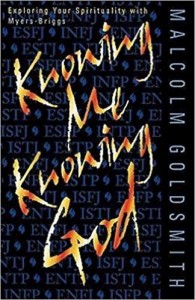
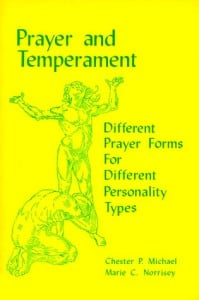 Books have been written about the spirituality of the different personality types, such as Prayer and Temperament: Different Prayer Forms for Personality Types by Chester Michael and Marie Norrisey; and Knowing Me, Knowing God: Exploring Your Spirituality with Myers-Briggs by Malcolm Goldsmith. I haven’t read these books, so I don’t want to knock them (although I can’t endorse them either); but I must admit that I think it would be sad if someone read a book like this and decided that a particular way of praying wasn’t for them, just because they were the “wrong” personality type.
I think rather than saying “INFPs are natural contemplatives, and ESTJs would naturally prefer the Ignatian exercises, etc. etc.” I think it’s more useful to think along these lines: Contemplation — wordless prayer in which we gaze on Jesus and the mysteries of his life with faith and love — is for everyone, regardless of your personality type. But how we enter contemplative prayer may vary based on our interests and preferences.
Here are a few thoughts along these lines:
- Introverts might be more comfortable with pure silent prayer, whereas extroverts might enjoy something like walking a labyrinth, or silently doing something creative (painting, pottery) as a way of “being with God”;
- Sensory-oriented people might find contemplation in yoga, while intuitives might prefer learning to practice zen meditation;
- For thinkers, contemplation means finding mental clarity in silence; for feelers, it means resting one’s awareness in the silent love in the heart;
- The decisively-minded emphasize daily discipline (silent prayer for twenty minutes in the morning and in the evening), while the more perceptively-minded simply wants to learn how to “practice the presence of God” all day.
 The Catholic Catechism describes contemplation first and foremost as “wordless prayer.” What I see in this, not just for Catholics but for all contemplatives, is that the heart of contemplation is silence — internal as well as external.
Silence can be found in all of our hearts, regardless of our personality types. Silence is a gift from God, and is freely given to everyone.
Sure, maybe an introvert might be quicker to see the beauty of silence than an extrovert. And maybe not. But once the extrovert beholds that splendor, he or she can be just as filled with the grace of beholding it as any introvert.
Some wise person once said, “Pray as you can, not as you can’t.” Pray as you can, not just according to your personality type. Sure, books like the ones mentioned above might be helpful in giving us suggestions of prayer forms to explore, especially in light of our personalities. But don’t limit yourself to the forms of prayer that some expert somewhere says is right for you. What’s right for you is the way of praying that you keep returning to, that allows you and enables you to pray every day. That’s what it means to “pray as you can.”
However you pray, however you approach the mystery we call God, take the time to make silence a regular and ongoing part of your practice. Do this, and trust that God, when the time is right, will lead you to the threshold of contemplation. Just don’t be surprised if your threshold of silence looks different from mine. There are many paths up the mountain. Find the one that’s right for you, and keep climbing.
Enjoy reading this blog?
Click here to become a patron.

Previous Post

March 1, 2016
A Memoir with a Message
Next Post

March 4, 2016 In Pursuit of Silence: A Quiet Movie with Much to Say
Browse Our Archives
Select a Category Activism Announcements Art Books Catholicism Celtic Christianity Christian mysticism Christianity Contemplation Current events Etc. Family humor interfaith dialogue Interfaith Wisdom Interspirituality Lay Cistercians Living the Faith Meditation movies Mysticism Mystics nature Poetry Reviews Scripture silence Spirituality Uncategorized Writing
Select a Month February 2025 January 2025 November 2024 September 2024 August 2024 July 2024 June 2024 May 2024 March 2024 January 2024 December 2023 November 2023 August 2023 June 2023 April 2023 March 2023 February 2023 January 2023 December 2022 November 2022 October 2022 September 2022 August 2022 July 2022 June 2022 May 2022 April 2022 February 2022 January 2022 December 2021 November 2021 October 2021 September 2021 August 2021 July 2021 June 2021 May 2021 April 2021 March 2021 February 2021 January 2021 December 2020 November 2020 October 2020 September 2020 August 2020 July 2020 June 2020 May 2020 April 2020 March 2020 February 2020 January 2020 December 2019 November 2019 October 2019 September 2019 August 2019 July 2019 June 2019 May 2019 April 2019 March 2019 February 2019 January 2019 December 2018 November 2018 October 2018 September 2018 August 2018 July 2018 June 2018 May 2018 April 2018 March 2018 February 2018 January 2018 December 2017 November 2017 October 2017 September 2017 August 2017 July 2017 June 2017 May 2017 April 2017 March 2017 February 2017 January 2017 December 2016 November 2016 October 2016 September 2016 August 2016 July 2016 June 2016 May 2016 March 2016 February 2016 January 2016 December 2015 November 2015 October 2015 September 2015 August 2015 July 2015 June 2015 May 2015 April 2015 March 2015 February 2015 January 2015 December 2014 November 2014 October 2014 September 2014 August 2014 July 2014 June 2014 May 2014 April 2014 March 2014 February 2014 January 2014 December 2013 October 2013 September 2013 July 2013 May 2013 January 2013 December 2012 November 2012 August 2012 July 2012 June 2012 March 2012 December 2011 September 2011 October 2010 August 2010 March 2010 September 2009 July 2008 January 2008 December 2007 September 2007 February 2007 January 2007 December 2004
Follow Us!
TAKE THE
Religious Wisdom Quiz
How was Haman punished for his plot?
Select your answer to see how you score.
He was turned into a pillar of salt He was exiled He was beheaded He was hanged on the gallows he built
Support this
Column


Related posts from Carl McColman

"This Loving, Uniting Embrace": the Holy Ordinary

Join Me for "24 Meditations for 2024"

LSD, Anxiety, and Contemplation: Can Psychedelic Therapy Support...

TRENDING AT PATHEOS Contemplative

Handy Contemplative Practices for Political Spaces
A Spiritually Grounded Presence In order to bring a spiritually grounded presence...

Halloween: The Holiday of Loving Your Neighbor
All Hallows Eve Is Halloween the least Christian holiday in America, or...

Can Love Be Saved? Some Thoughts on the...
Happy Valentine's Day! I recently published a post on Patreon called Can...

"This Loving, Uniting Embrace": the Holy Ordinary
Today's guest post is by Mark Longhurst, author of The Holy Ordinary:...

How Are We Called to Live?: More About...
How Are We Called to Live? Many of us struggle with discerning...

A Spiritual Practice of Reading: Join Us Online
A Spiritual Practice of Reading A healthy spiritual practice of reading is...
view all Contemplative blogs
Ad-Free & Subscriber Log-In Subscription Support
- About Us
- 2026 Calendar
- Videos
- Podcasts
- Library of World Religions
- Faith In Media Tracker
- Advertise With Us
- Write for Us
- Privacy Policy
- Terms of Service
- Do Not Sell My Data
- Contact Us
- Radiant Digital
- Manage Newsletter Subscriptions
- Unsubscribe From Notifications
- Sitemap
Copyright 2008-2026, Patheos. All rights reserved.
Subscription Support Ad-Free & Subscriber Log-In
Follow Patheos