
BuddhistCatholicContemplativeEvangelicalGeneral ChristianHinduJewishLatter-day SaintMuslimNew VisionsProgressive Christian
Beliefs
- Buddhist
- Catholic
- Contemplative
- Evangelical
- General Christian
- Hindu
- Jewish
- Latter-day Saint
- More Voices
- Muslim
- New Visions
- Pagan
- Progressive Christian
Topics
- Religion News
- Food and Religion
- Sports and Religion
- Religious Art
- Religious Music and Entertainment
- Religious Events
- History and Religion
- Style and Religion
- Politics and Religion
- Women in Religion
- Recreation Outdoors and Religion
- Business Finance and Religion
- Careers Workplace and Religion
- Education and Religion
- Family Parenting and Religion
- Health Fitness and Religion
- Home and Religion
- Relationships and Religion
- Technology and Religion
- Travel and Religion
Columnists
- Buddhist Columnists
- Business Finance and Religion Columnists
- Careers Workplace and Religion Columnists
- Catholic Columnists
- Contemplative Columnists
- Education and Religion Columnists
- Evangelists Columnists
- Family Parenting and Religion Columnists
- General Christian Columnists
- Health Fitness and Religion Columnists
- Hindu Columnists
- History and Religion Columnists
- Home and Religion Columnists
- Jewish Columnists
- More Voices Columnists
- Latter Day Columnists
- Muslim Columnists
- New Visions Columnists
- Nonreligious Columnists
- Pagan Columnists
- Politics and Religion Columnists
- Progressive Columnists
- Recreation Outdoors and Religion Columnists
- Relationships and Religion Columnists
- Religion News Columnists
- Religious Art Columnists
- Religious Events Columnists
- Religious Music and Entertainment Columnists
- Sports and Religion Columnists
- Style and Religion Columnists
- Technology and Religion Columnists
- Travel and Religion Columnists
- Women in Religion Columnists
Resource Library
- 2026 Calendar
- Library of World Religions
- The 100 Most Holy Places on Earth
- Patheos Answers
- Podcasts
- Videos
- Faith Leaders Database
- Anglican Episcopalian
- Bahai
- Baptist
- Buddhism
- Christianity
- Confucianism
- Eastern Orthodoxy
- Hinduism
- Holiness and Pentecostal
- ISKCON
- Islam
- Judaism
- Lutheran
- Methodist
- The Church of Jesus Christ of Latter-day Saints
- New Age
- Paganism
- Presbytarian and Reformed
- Protestantism
- Religion Behind the Scenes
- Roman Catholic
- Scientology
- Shia Islam
- Sikhism
- Sufism
- Sunni Islam
- Taoism
- Zen
- See all religions
Research Tools
 Ad-Free & Subscriber Log-In Subscription Support
Ad-Free & Subscriber Log-In Subscription Support
Follow Patheos 

- Trending:
- Forgiveness
- |
- Marriage
- |
- Consciousness
- |
- Death Penalty
- |
- Election
- |
- Halloween

- Home
- Contemplative
- Preliminary Practices for Christian Contemplatives
Preliminary Practices for Christian Contemplatives
Last updated on: November 27, 2018 at 12:59 am by Carl "Skye" McColman
Preliminary Practices for Christian Contemplatives 2018-11-27T00:59:28-04:00 Carl "Skye" McColman
Patheos Explore the world's faith through different perspectives on religion and spirituality! Patheos has the views of the prevalent religions and spiritualities of the world.
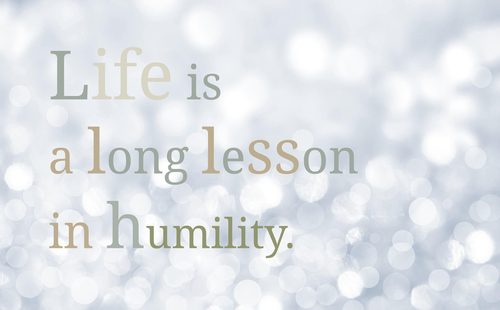
Fostering Humility is a Christian “Preliminary Practice” (image: Shutterstock)
Tibetan Buddhists have a series of spiritual exercises that are seen as foundational to their spiritual practice: a sort of “spiritual boot camp.” They are called ngöndro or in English, “preliminary practices.”
The aspirant who wishes to attain enlightenment begins with these preliminary exercises, which include a series of 100,000 prostrations and a variety of chants designed to purify the individual of impediments such as jealousy, attachment, or delusion. According to Thubten Chodron, “The purpose of preliminary practices is thus to clear and enrich our minds, allowing our practice to progress smoothly and our heart to become the path to enlightenment.”
We don’t have an equivalent concept in Catholicism. As Christians, we can sit down and read a book like St. Teresa of Avila’s Interior Castle or St. John of the Cross’s Dark Night of the Soul and imagine that we are already prepared to enter into the highest forms of mystical or contemplative prayer. After all, God loves us just as we are, right? So why would God require us to go through a series of preliminary or beginning exercises, before bestowing upon us the highest of mystical graces?
While certainly God’s love for each of us is unconditional, immediate, and lavish, it’s a self-evident truth that if you want to be good at something, you practice at it — whether it’s learning to play a musical instrument, excel at a sport, or master a discipline. Christianity does not require anyone to become a saint — but those who do embody heroic virtue are a blessing to the world. It is in this spirit that the idea of pursuing (always according to God’s grace) an ever-maturing prayer life makes sense.
Put another way: Christian spirituality begins not with extraordinary experiences or mystical ecstasy (unless, of course, God chooses to bestow something like that on someone, but that is entirely a matter of grace). For most people, the spiritual life begins with humility and obedience. So even though the concept of “preliminary practices” may be foreign to Christianity, I’d like to suggest that we need our own ngöndro — our own body of “entry-level” disciplines and exercises that any aspiring mystic or contemplative would ordinarily begin with.
In the monastic world, new monks go through a series of stages in their process of monastic formation. First they are observers, then they become postulants, and after that become novices. The novitiate could last anywhere from 1 to 3 years, depending on the monastery. Only after completing the novitiate does a monk make temporary vows — and it could still be three or more years before the monk or nun finally makes his or her permanent, life profession.
So the time from when a person first thinks, “hey, I might want to be a monk (or a nun)” to the solemn profession, might easily be six or seven years (or more).
Monastic culture allows this long process not only to give the aspiring monk or nun plenty of time to make sure this is what she or he really wants, but also to allow enough time for monastic formation — in other words, time for the person to gradually take on the character of monastic life, by living it, watching others do it, and slowly adopting and internalizing the values, rhythms, and perspectives of the contemplative life. So in its own way, monastic formation serves as a kind of “preliminary practice.”
For those of us who are not monks or nuns, we might need to be a bit more intentional about our own preliminary practice. No one is going to tell us what we need to be doing or should be doing. Even if we have a graced spiritual director, he or she will likely not want to intrude in our own journey toward intimacy with God, and will likely demur if we ask for specific instructions. So we are really very much on our own when it comes to the “spiritual boot camp” of the Christian contemplative life.
So I’d like to offer a few thoughts about what I think a Christian preliminary practice might look like. This carries no weight beyond the force of my own opinion, so you are free to disagree or disregard this list if you want. But I hope that — especially if you are interested in Christian mysticism or contemplation — you’ll at least consider this list as a framework for your own spiritual practice.
If you are a beginner, here is a set of foundational exercises; if you have been exploring Christian spirituality for a while, perhaps this list will help you to fill in a few gaps or revisit the basics (always a good thing to do).
So, I propose that Christian preliminary practices involve taking these essential steps, as preliminary to any other spiritual exercise:
- Turn away from your sin. For Catholics, this means celebrating the Sacrament of Reconciliation. I continue to be amazed at how many Catholics are not only resistant, but even hostile, to Reconciliation. I am not suggesting you just go a confessional and recite your peccadillos in order to receive Communion. Reconciliation is not a mechanical exercise, but the sign of a restored relationship. It is humbling (and depending on your sins, embarrassing) to receive this Sacrament, but that paves the way for the rest of your practices in contemplation. I know this is harsh, but I’m going to say it anyway: if you’re too proud to confess your sins to another human being in a private, confidential space, then perhaps you are too proud to do any of the other deeply humbling exercises that contemplation entails.
- Begin to cultivate a spirit of humility. I’m not talking about humiliation, or low-self-esteem, or false modesty. A humble person still gets to be good at the things he or she is good at. Humility is about authenticity and non-attachment. Humility means being down-to-earth, being flexible and non-attached to the circumstances of our lives. A humble person is free, because he or she is not invested in things begin “just a certain way.” To engage in this preliminary practice, pay attention to the corners of your life where you insist on being “in charge” or look for the adulation or approval of others. See what you can do to let go of that tendency to always be in control (or controlling). But note: if you are someone with low-self-esteem or a tendency to let others walk all over you, for you humility may involve learning to take better care of yourself.
- Pray (using words) every day. Yes, contemplative prayer is silent. But all the great saints, monks and mystics immersed themselves in prayer; those who were monks or nuns did it multiple times each day. Some folks people try to pray by holding a spontaneous conversation with God, only to find it becomes difficult on a day-in-day-out basis — which explains why monasteries use liturgical (formulaic) prayers. We who do not live in a cloister can do the same. Resources like The Liturgy of the Hours or Give Us This Day can help us to foster a regular rhythm of daily prayer. Just because you use words printed on a page doesn’t mean you just read them blithely. Pay attention to the words and recognize their meaning in your own heart. Of course, you’ll find that sometimes the words have no direct meaning for you — for example, you might be in a wonderful mood but the Psalm of the day involves lamentation over misfortune. On days like this, remember that your prayer is for the entire world — which includes people who might be feeling exactly what the Psalm is talking about. When you pray that Psalm, you’re praying for them. Incidentally, aside from the prayer resources mentioned above, an essential resource for daily prayer is the Bible. If you don’t own a Bible, get one. Read it, meditate on it, pray through it. It will be your doorway to contemplation.
- Remember (and observe) a weekly Sabbath day. Jesus liberated us from legalism, so your Sabbath day of rest does not have to be on a Saturday — or a Sunday, for that matter. Use common sense and pick one day a week when you will not work or worry about earthly concerns. But then stick to it. Let the time be an opportunity for rest, renewal, creativity (for love, not money) and spiritual reflection. Give yourself permission to take a long nap, a sumptuous bubble bath, a leisurely walk. Enjoy yourself! For many people this is surprisingly difficult. But you need to do this in order to foster leisure in your life, for leisure is the foundation on which your gradual formation in the Spirit of God will take place. You need time to breathe, to think, to reflect, and to rest in order to be available for the hard work of conforming to the mind of Christ.
- Participate in your neighborhood parish (or some form of faith community). Many aspiring contemplatives bristle at this suggestion, and I think it’s because we tend to be introverts and we don’t like engaging with people that much. So see this is a call to step out of your comfort zone. And if you don’t want anything to do with the church because you disagree with this or that policy or doctrine, keep in mind that just about everybody who shows up Sunday after Sunday has something they don’t like about church. The church does not exist to meet our needs, it exists to help us love our neighbors. If you don’t want to teach a class or sing in the choir, you don’t have to: most faith communities have a variety of needs so it’s likely there’s at least one way you can humbly pitch in to help. If you’ve given parish life an honest try and it still leaves you cold, then look at other models of community, like centering prayer groups or monastic oblate communities. While these do not replace the parish (which, after all, is where you go to receive the sacraments), involvement in an explicitly spiritual community can be a very important and meaningful practice.
- Do something to help out someone(s) less fortunate than you. Jesus made it clear that one of the most direct ways to encounter him was through service to those who are poor, sick, imprisoned, elderly, or otherwise in need. This can take a variety of forms, from volunteering in a soup kitchen to helping an illiterate adult learn to read to teaching English to newly-arrived refugees. Like parish involvement, look for a way to help others that draws on your strengths, for then you are more likely to feel like you are making a difference. This kind of work can be difficult and it can force us to face up to our own addiction to comfort, or lack of humility, or lack of generosity. So it’s not always easy. But it is good work and necessary work.
- Seek out a spiritual companion or spiritual director. Once you have anchored yourself in each of the above practices, you will be ready to begin a more intentional, serious exploration of contemplative prayer: the prayer of deep, restful silence. Only one more thing remains: finding someone with whom you can honestly share both your desire for God and your thoughts and feelings as you enter into silence. This person could be lay or ordained, a trained spiritual director or simply an amateur who shares your thirst for God. The key element for a good spiritual companion is a commitment to prayer, a loving and humble heart, and a willingness to listen. Once you find a spiritual companion whom you trust, make it a practice to be as honest as possible with this person. Your loving relationship with God is meant to be shared with others, and your spiritual companion will provide a safe and confidential arena in which you can do just that.
So… while it doesn’t involve endless chants or prostrations, I believe these seven steps can provide anyone with a thorough grounding in the basics of Christ-centered spirituality. Think of it as setting up a “base camp” from which you will climb the mountain of spiritual ascent. Everyone wants to make it to the mountain top! But to do that, we need a safe and established starting point. These seven practices will provide you with that foundation.
Enjoy reading this blog?
Click here to become a patron.

Previous Post

January 20, 2016
Is Contemplation Dangerous?
Next Post
January 27, 2016 Relational Contemplation
Browse Our Archives
Select a Category Activism Announcements Art Books Catholicism Celtic Christianity Christian mysticism Christianity Contemplation Current events Etc. Family humor interfaith dialogue Interfaith Wisdom Interspirituality Lay Cistercians Living the Faith Meditation movies Mysticism Mystics nature Poetry Reviews Scripture silence Spirituality Uncategorized Writing
Select a Month February 2025 January 2025 November 2024 September 2024 August 2024 July 2024 June 2024 May 2024 March 2024 January 2024 December 2023 November 2023 August 2023 June 2023 April 2023 March 2023 February 2023 January 2023 December 2022 November 2022 October 2022 September 2022 August 2022 July 2022 June 2022 May 2022 April 2022 February 2022 January 2022 December 2021 November 2021 October 2021 September 2021 August 2021 July 2021 June 2021 May 2021 April 2021 March 2021 February 2021 January 2021 December 2020 November 2020 October 2020 September 2020 August 2020 July 2020 June 2020 May 2020 April 2020 March 2020 February 2020 January 2020 December 2019 November 2019 October 2019 September 2019 August 2019 July 2019 June 2019 May 2019 April 2019 March 2019 February 2019 January 2019 December 2018 November 2018 October 2018 September 2018 August 2018 July 2018 June 2018 May 2018 April 2018 March 2018 February 2018 January 2018 December 2017 November 2017 October 2017 September 2017 August 2017 July 2017 June 2017 May 2017 April 2017 March 2017 February 2017 January 2017 December 2016 November 2016 October 2016 September 2016 August 2016 July 2016 June 2016 May 2016 March 2016 February 2016 January 2016 December 2015 November 2015 October 2015 September 2015 August 2015 July 2015 June 2015 May 2015 April 2015 March 2015 February 2015 January 2015 December 2014 November 2014 October 2014 September 2014 August 2014 July 2014 June 2014 May 2014 April 2014 March 2014 February 2014 January 2014 December 2013 October 2013 September 2013 July 2013 May 2013 January 2013 December 2012 November 2012 August 2012 July 2012 June 2012 March 2012 December 2011 September 2011 October 2010 August 2010 March 2010 September 2009 July 2008 January 2008 December 2007 September 2007 February 2007 January 2007 December 2004
Follow Us!
TAKE THE
Religious Wisdom Quiz
How many total plagues did God send on Egypt?
Select your answer to see how you score.
Ten Five Twelve Seven
Support this
Column


Related posts from Carl McColman

"This Loving, Uniting Embrace": the Holy Ordinary

I Believe Prayer Changes Things. Here's a Few...

If You Worship an Angry God, You'll Be...

The Difference Between Apophatic and Kataphatic Spirituality
TRENDING AT PATHEOS Contemplative

Handy Contemplative Practices for Political Spaces
A Spiritually Grounded Presence In order to bring a spiritually grounded presence...

Halloween: The Holiday of Loving Your Neighbor
All Hallows Eve Is Halloween the least Christian holiday in America, or...

Can Love Be Saved? Some Thoughts on the...
Happy Valentine's Day! I recently published a post on Patreon called Can...

"This Loving, Uniting Embrace": the Holy Ordinary
Today's guest post is by Mark Longhurst, author of The Holy Ordinary:...

How Are We Called to Live?: More About...
How Are We Called to Live? Many of us struggle with discerning...

A Spiritual Practice of Reading: Join Us Online
A Spiritual Practice of Reading A healthy spiritual practice of reading is...
view all Contemplative blogs
Ad-Free & Subscriber Log-In Subscription Support
- About Us
- 2026 Calendar
- Videos
- Podcasts
- Library of World Religions
- Faith In Media Tracker
- Advertise With Us
- Write for Us
- Privacy Policy
- Terms of Service
- Do Not Sell My Data
- Contact Us
- Radiant Digital
- Manage Newsletter Subscriptions
- Unsubscribe From Notifications
- Sitemap
Copyright 2008-2026, Patheos. All rights reserved.
Subscription Support Ad-Free & Subscriber Log-In
Follow Patheos