
BuddhistCatholicContemplativeEvangelicalGeneral ChristianHinduJewishLatter-day SaintMuslimNew VisionsProgressive Christian
Beliefs
- Buddhist
- Catholic
- Contemplative
- Evangelical
- General Christian
- Hindu
- Jewish
- Latter-day Saint
- More Voices
- Muslim
- New Visions
- Pagan
- Progressive Christian
Topics
- Religion News
- Food and Religion
- Sports and Religion
- Religious Art
- Religious Music and Entertainment
- Religious Events
- History and Religion
- Style and Religion
- Politics and Religion
- Women in Religion
- Recreation Outdoors and Religion
- Business Finance and Religion
- Careers Workplace and Religion
- Education and Religion
- Family Parenting and Religion
- Health Fitness and Religion
- Home and Religion
- Relationships and Religion
- Technology and Religion
- Travel and Religion
Columnists
- Buddhist Columnists
- Business Finance and Religion Columnists
- Careers Workplace and Religion Columnists
- Catholic Columnists
- Contemplative Columnists
- Education and Religion Columnists
- Evangelists Columnists
- Family Parenting and Religion Columnists
- General Christian Columnists
- Health Fitness and Religion Columnists
- Hindu Columnists
- History and Religion Columnists
- Home and Religion Columnists
- Jewish Columnists
- More Voices Columnists
- Latter Day Columnists
- Muslim Columnists
- New Visions Columnists
- Nonreligious Columnists
- Pagan Columnists
- Politics and Religion Columnists
- Progressive Columnists
- Recreation Outdoors and Religion Columnists
- Relationships and Religion Columnists
- Religion News Columnists
- Religious Art Columnists
- Religious Events Columnists
- Religious Music and Entertainment Columnists
- Sports and Religion Columnists
- Style and Religion Columnists
- Technology and Religion Columnists
- Travel and Religion Columnists
- Women in Religion Columnists
Resource Library
- 2026 Calendar
- Library of World Religions
- The 100 Most Holy Places on Earth
- Patheos Answers
- Podcasts
- Videos
- Faith Leaders Database
- Anglican Episcopalian
- Bahai
- Baptist
- Buddhism
- Christianity
- Confucianism
- Eastern Orthodoxy
- Hinduism
- Holiness and Pentecostal
- ISKCON
- Islam
- Judaism
- Lutheran
- Methodist
- The Church of Jesus Christ of Latter-day Saints
- New Age
- Paganism
- Presbytarian and Reformed
- Protestantism
- Religion Behind the Scenes
- Roman Catholic
- Scientology
- Shia Islam
- Sikhism
- Sufism
- Sunni Islam
- Taoism
- Zen
- See all religions
Research Tools
 Ad-Free & Subscriber Log-In Subscription Support
Ad-Free & Subscriber Log-In Subscription Support
Follow Patheos 

- Trending:
- Forgiveness
- |
- Marriage
- |
- Consciousness
- |
- Death Penalty
- |
- Election
- |
- Halloween

- Home
- Contemplative
- Seven Reasons to Pray the Divine Office
Seven Reasons to Pray the Divine Office
Last updated on: November 27, 2018 at 12:50 am by Carl "Skye" McColman
Seven Reasons to Pray the Divine Office 2018-11-27T00:50:31-04:00 Carl "Skye" McColman
Patheos Explore the world's faith through different perspectives on religion and spirituality! Patheos has the views of the prevalent religions and spiritualities of the world.
Everyone knows that monks devote their lives to silence, but also to daily prayer and chanting. Monastic prayer occurs at fixed-hours throughout the day. The rota of Psalms, canticles, scripture readings, antiphons and other prayers that incorporate this daily liturgy is known as the Divine Office (or the Daily Office, or the Liturgy of the Hours).

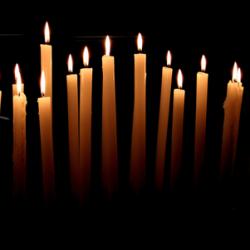
The Divine Office: a Path of Prayer (Photo: Georgia Botanical Gardens; courtesy of Shutterstock)
Praying the Divine Office is central to monastic life, but even those of us who aren’t monks may find that this type of prayer is an essential part of our spiritual practice.
But it’s a huge commitment and many people might find it daunting to pray even part of the Divine Office on a regular basis.
If you’ve read Befriending Silence, then you know that I have a tempestuous relationship with daily prayer. In chapter 7, I make the following confession:
When I first became a Lay Cistercian, I struggled with the liturgy… My life was too busy, too unstructured, too freeform, and too spontaneous for me to be bothered by something like daily prayers. Or so I rationalized it to myself. I muddled along, praying from time to time and justified to myself all the days that I didn’t manage to pray.
In the book, I go on to talk about how forming a friendship with a devout Muslim, who prays five times every day, inspired me to take the Divine Office more seriously. I wish I could say that I am now a model practitioner of daily prayer, but the truth is, I still struggle with it.
Recently I met with one of the monks who guides our Lay Cistercian community, and we talked about the liturgy. He asked me why I find the Divine Office worth praying. Just off the top of my head, I came up with four reasons, and as I reflected on it, I thought of three more. So I thought I would share them with you.
If you pray the Divine Office, perhaps this will be inspiration to carry on. If you don’t yet pray it, or need encouragement to begin or (like me) to strengthen your commitment to regular prayer, then I hope the following reasons will be a help for you.
- The Divine Office provides us with a language for prayer. Sometimes it’s hard to find the words for prayer. But in the Liturgy of the Hours we have access to wisdom that stretches back to before the time of Jesus. The Psalms, canticles, and other passages from scripture form the bulk of the Daily Office; in many ways, it is the Bible at prayer. But the liturgy also contains many other prayers that convey a range of feelings and concerns — it is a rich and nuanced vocabulary for prayer, that will deepen your ability to communicate with God throughout the day.
- The Divine Office teaches us who God is, who the Church is, and who we are. What’s interesting about the liturgy is that not all parts of it are addressed to God — some of it (for example, the canticles of Zechariah and Mary) is language about God. But it’s still prayer — because prayer is more than just us talking to God, it’s God speaking to us. And throughout the liturgy, we encounter insight into God’s personality and character — along with similar insights into what it means to be human in relationship with God, whether as individuals or as a community.
- The Divine Office forms our identity as members of the Body of Christ. The liturgy does more than just describe who God is, and who we are. It also guides us to become who God wants us to be. Our faith is clear: we are created in God’s image and likeness, but we often behave in ways that fail to live up to who God calls us to be. We need guidance to be the people we are meant to be. The wisdom abounding in the Office shows us the path God calls us to follow. It’s not magic: we still need to respond to God’s call to become holy. But the liturgy is a trustworthy map.
- The Divine Office helps us to pray at a level deeper than our feelings or experience. The liturgy is a daily commitment, not a “when you feel like it” commitment. It is meant to be offered to God on a regular basis, no matter what kind of mood you’re in or what’s going on in your mind. In that sense it is like marriage: a commitment of love, understanding that true love runs deeper than the emotions that ebb and flow from day to day or season to season. And while it is hard to keep praying during dry seasons or times of emotional turmoil, doing so is a powerful way to deepen your faith.
- The Divine Office teaches us humility, obedience, fidelity, and patience. This is the other side of the previous point. We pray on a regular, daily basis, not because our mercurial emotions tell us to, but rather because we want to be faithful to God, obedient to God’s word, and committed to a trusting relationship with God built on eternal values like humility and patience. These are values at the heart of Christian spirituality — even if they are not always held in high esteem by our secular culture. But when we grow in these authentic values, we conform more fully to the image and likeness of the God who created us.
- The Divine Office helps us to grow in intimacy with God. I’ve compared the liturgy to marriage, and it’s an appropriate analogy, because like marriage, the Daily Office is all about love. Too often we get unhelpful messages about God, not only from secular society but even sometimes from the Church. Too many of us have images of God that emphasize anger over love, judgment over mercy, sternness over tenderness. Yes, God is holy and just, that is true. But God is Love — and the promise of spirituality is to discover that Love and to become one with it. The Divine Office calls us to that graced discovery.
- The Divine Office reminds us that every day is a place where we can touch eternity. I experience the liturgy in many different ways: sometimes it inspires me, sometimes it encourages me, and frankly, sometimes I argue with it or chafe against it. All this is okay. The liturgy speaks to us in the glorious complexity of our humanity, which means we will react to it in a variety of ways. But what is always part of the Divine Office is its orientation toward eternity: it is an invitation to see God, and life, and humanity, from the vantage point of heaven rather than just earth. It reminds us that communion with God isn’t just something that happens on Sundays or at churches or monasteries. The healing and life-transfiguring power of intimacy with God can touch (and transform) our lives at all times and in all places. The very regular, ordinary, dailiness of the liturgy helps us to keep this in mind.
I hope you find this list helpful — and may it be encouragement and inspiration for you as you continue your journey deeper into the heart of God.
Enjoy reading this blog?
Click here to become a patron.

Stay in touch! Connect with Carl McColman on Facebook:
Previous Post

January 1, 2016
Pentecost and Ecstasy
Next Post

January 8, 2016 Is Mysticism Genetic?
Browse Our Archives
Select a Category Activism Announcements Art Books Catholicism Celtic Christianity Christian mysticism Christianity Contemplation Current events Etc. Family humor interfaith dialogue Interfaith Wisdom Interspirituality Lay Cistercians Living the Faith Meditation movies Mysticism Mystics nature Poetry Reviews Scripture silence Spirituality Uncategorized Writing
Select a Month February 2025 January 2025 November 2024 September 2024 August 2024 July 2024 June 2024 May 2024 March 2024 January 2024 December 2023 November 2023 August 2023 June 2023 April 2023 March 2023 February 2023 January 2023 December 2022 November 2022 October 2022 September 2022 August 2022 July 2022 June 2022 May 2022 April 2022 February 2022 January 2022 December 2021 November 2021 October 2021 September 2021 August 2021 July 2021 June 2021 May 2021 April 2021 March 2021 February 2021 January 2021 December 2020 November 2020 October 2020 September 2020 August 2020 July 2020 June 2020 May 2020 April 2020 March 2020 February 2020 January 2020 December 2019 November 2019 October 2019 September 2019 August 2019 July 2019 June 2019 May 2019 April 2019 March 2019 February 2019 January 2019 December 2018 November 2018 October 2018 September 2018 August 2018 July 2018 June 2018 May 2018 April 2018 March 2018 February 2018 January 2018 December 2017 November 2017 October 2017 September 2017 August 2017 July 2017 June 2017 May 2017 April 2017 March 2017 February 2017 January 2017 December 2016 November 2016 October 2016 September 2016 August 2016 July 2016 June 2016 May 2016 March 2016 February 2016 January 2016 December 2015 November 2015 October 2015 September 2015 August 2015 July 2015 June 2015 May 2015 April 2015 March 2015 February 2015 January 2015 December 2014 November 2014 October 2014 September 2014 August 2014 July 2014 June 2014 May 2014 April 2014 March 2014 February 2014 January 2014 December 2013 October 2013 September 2013 July 2013 May 2013 January 2013 December 2012 November 2012 August 2012 July 2012 June 2012 March 2012 December 2011 September 2011 October 2010 August 2010 March 2010 September 2009 July 2008 January 2008 December 2007 September 2007 February 2007 January 2007 December 2004
Follow Us!
TAKE THE
Religious Wisdom Quiz
True or False: Paul instructs the Philippians to do everything without grumbling or arguing.
Select your answer to see how you score.
FALSE TRUE
Support this
Column


Related posts from Carl McColman

I Believe Prayer Changes Things. Here's a Few...

You don't have to become a monk to...

LSD, Anxiety, and Contemplation: Can Psychedelic Therapy Support...
TRENDING AT PATHEOS Contemplative

Handy Contemplative Practices for Political Spaces
A Spiritually Grounded Presence In order to bring a spiritually grounded presence...

Halloween: The Holiday of Loving Your Neighbor
All Hallows Eve Is Halloween the least Christian holiday in America, or...

Can Love Be Saved? Some Thoughts on the...
Happy Valentine's Day! I recently published a post on Patreon called Can...

"This Loving, Uniting Embrace": the Holy Ordinary
Today's guest post is by Mark Longhurst, author of The Holy Ordinary:...

How Are We Called to Live?: More About...
How Are We Called to Live? Many of us struggle with discerning...

A Spiritual Practice of Reading: Join Us Online
A Spiritual Practice of Reading A healthy spiritual practice of reading is...
view all Contemplative blogs
Ad-Free & Subscriber Log-In Subscription Support
- About Us
- 2026 Calendar
- Videos
- Podcasts
- Library of World Religions
- Faith In Media Tracker
- Advertise With Us
- Write for Us
- Privacy Policy
- Terms of Service
- Do Not Sell My Data
- Contact Us
- Radiant Digital
- Manage Newsletter Subscriptions
- Unsubscribe From Notifications
- Sitemap
Copyright 2008-2026, Patheos. All rights reserved.
Subscription Support Ad-Free & Subscriber Log-In
Follow Patheos