
BuddhistCatholicContemplativeEvangelicalGeneral ChristianHinduJewishLatter-day SaintMuslimNew VisionsProgressive Christian
Beliefs
- Buddhist
- Catholic
- Contemplative
- Evangelical
- General Christian
- Hindu
- Jewish
- Latter-day Saint
- More Voices
- Muslim
- New Visions
- Pagan
- Progressive Christian
Topics
- Religion News
- Food and Religion
- Sports and Religion
- Religious Art
- Religious Music and Entertainment
- Religious Events
- History and Religion
- Style and Religion
- Politics and Religion
- Women in Religion
- Recreation Outdoors and Religion
- Business Finance and Religion
- Careers Workplace and Religion
- Education and Religion
- Family Parenting and Religion
- Health Fitness and Religion
- Home and Religion
- Relationships and Religion
- Technology and Religion
- Travel and Religion
Columnists
- Buddhist Columnists
- Business Finance and Religion Columnists
- Careers Workplace and Religion Columnists
- Catholic Columnists
- Contemplative Columnists
- Education and Religion Columnists
- Evangelists Columnists
- Family Parenting and Religion Columnists
- General Christian Columnists
- Health Fitness and Religion Columnists
- Hindu Columnists
- History and Religion Columnists
- Home and Religion Columnists
- Jewish Columnists
- More Voices Columnists
- Latter Day Columnists
- Muslim Columnists
- New Visions Columnists
- Nonreligious Columnists
- Pagan Columnists
- Politics and Religion Columnists
- Progressive Columnists
- Recreation Outdoors and Religion Columnists
- Relationships and Religion Columnists
- Religion News Columnists
- Religious Art Columnists
- Religious Events Columnists
- Religious Music and Entertainment Columnists
- Sports and Religion Columnists
- Style and Religion Columnists
- Technology and Religion Columnists
- Travel and Religion Columnists
- Women in Religion Columnists
Resource Library
- 2026 Calendar
- Library of World Religions
- The 100 Most Holy Places on Earth
- Patheos Answers
- Podcasts
- Videos
- Faith Leaders Database
- Anglican Episcopalian
- Bahai
- Baptist
- Buddhism
- Christianity
- Confucianism
- Eastern Orthodoxy
- Hinduism
- Holiness and Pentecostal
- ISKCON
- Islam
- Judaism
- Lutheran
- Methodist
- The Church of Jesus Christ of Latter-day Saints
- New Age
- Paganism
- Presbytarian and Reformed
- Protestantism
- Religion Behind the Scenes
- Roman Catholic
- Scientology
- Shia Islam
- Sikhism
- Sufism
- Sunni Islam
- Taoism
- Zen
- See all religions
Research Tools
 Ad-Free & Subscriber Log-In Subscription Support
Ad-Free & Subscriber Log-In Subscription Support
Follow Patheos 

- Trending:
- Forgiveness
- |
- Marriage
- |
- Consciousness
- |
- Death Penalty
- |
- Election
- |
- Halloween

- Home
- Contemplative
- Three Mystics You May Have Missed
Three Mystics You May Have Missed
Last updated on: December 11, 2018 at 7:44 pm by Carl "Skye" McColman
Three Mystics You May Have Missed 2018-12-11T19:44:55-04:00 Carl "Skye" McColman
Patheos Explore the world's faith through different perspectives on religion and spirituality! Patheos has the views of the prevalent religions and spiritualities of the world.
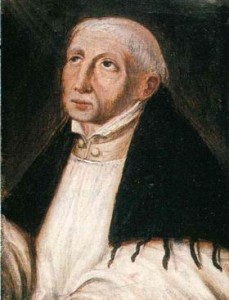
Jan Van Ruysbroeck (Ruusbroec), a mystic worth reading (image: public domain)
Walk into a Catholic bookstore — or a general bookstore large enough to have a “Christian mysticism” section — and you will see books by or about Thomas Merton, Julian of Norwich, John of the Cross, and Teresa of Avila, along with anonymous works like The Cloud of Unknowing or The Way of a Pilgrim. These are the “A-List” mystics: figures who are renowned for their sanctity, their wisdom, and their contemplative teaching.
Anyone who is interested in discovering the wisdom of the mystics ought to read the writings of the “A-Listers.” Other A-Listers include Evelyn Underhill, Meister Eckhart, Francis of Assisi, Bernard of Clairvaux, and Hildegard of Bingen.
But there are many Christian contemplatives and visionaries who aren’t nearly as well known as these “rock star” mystics. Not everyone gets to be a celebrity — not every musician is as famous as the Beatles; not every actress is as famous as Meryl Streep. But countless musicians, actors, and other types of artists create work that is world-class, even if they themselves are not household names.
The same dynamic is at work among Christian mystics. Some of the greatest mystics are not well-known at all, even among people who are interested in mysticism (okay, let’s be real: mysticism itself is hardly a mainstream phenomenon, so even the greatest mystics — with the possible exception of Francis of Assisi — are relatively unknown figures). Yes, even among “mysticism geeks,” there are many contemplatives whose work is woefully unknown — who deserve to be read, and studied, and talked about, far more than they currently are.
So for today’s post I’d like to introduce you to three such “underrated” contemplatives. Perhaps you’ve run across their names here and there (especially if you’ve been reading my blog for a while). But I want to formally introduce you to these figures in the hopes that you’ll take a look at their wonderful writings.

The Scale of Perfection
Walter Hilton
Walter Hilton is to Julian of Norwich and the author of The Cloud of Unknowing what George Harrison of the Beatles was to John Lennon and Paul McCartney. In other words, just as Harrison was an excellent songwriter in his own right but almost totally overshadowed by the two legends who were his bandmates, so too Walter Hilton sadly gets overlooked because of the two mystical geniuses who were his contemporaries in late fourteenth century England.
And that’s a shame, because in some ways Hilton’s writings, especially his masterpiece The Scale of Perfection, are more accessible and user-friendly than the visionary poetry of Julian or the monastic austerity of The Cloud.
Hilton was born probably in the 1340s and died in 1396; little is known about his life, although it is likely he studied law at Cambridge before becoming an Augustinian priest. His writings, mostly in Middle English, were popular during his lifetime and the following century. Hilton reveals a keen understanding of the psychology of contemplative life, and (like The Cloud) reveals considerable talent as a spiritual directer in his work.
The Scale of Perfection concerns the ongoing process of inner transfiguration that marks perseverance in contemplation. Hilton follows the longstanding mystical tradition that understands the human soul as created in the image and likeness of God, and the contemplative life consisting of a gradual reformation of the soul, to restore the image that has been defaced by sin.
Book to read: The Scale of Perfection
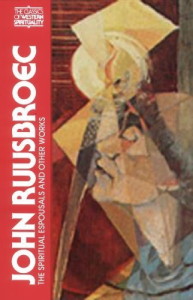
The Spiritual Espousals and Other Works
John Ruusbroec
Evelyn Underhill, the renowned British scholar of Christian mysticism, held John Ruusbroec in the highest esteem. She referred to him as “great,” “mighty,” “supreme,” “the most transcendental of all mystics.” In The Mystics of the Church, she notes that Ruusbroec “seems often to use [Meister] Eckhart’s ideas as a means of expressing his own experiences, but the ardour and realism with which he invests them are his own.” Who
was this relatively obscure figure who won Underhill’s admiration?
Unlike the Meister, Ruusbroec was never formally charged with heresy. In fact, Ruusbroec has been beatified by the Catholic Church — one step short of being declared a saint. So while institutional Christianity accepts him as orthodox, his work is arguably every bit as radical as that of the more notorious Eckhart.
Born in the village of Ruisbroek (in modern-day Belgium) in 1293, young John began studying for the priesthood with his uncle when only 11 years old. After his ordination in 1318 he served as a parish priest until 1343, when he and two other priests retired to the forest of Groenendal, near Brussels, to become hermit contemplatives. Eventually, though, their small community became an Augustinian friary, with Ruusbroec serving as the community leader until his death in 1381.
He was a prolific writer, usually composing his works in Flemish rather than Latin, in order to reach a wider audience. Today his best known work is The Spiritual Espousals, a luminous meditation on how Christ, the Bridegroom, unites human nature with his own, in a sacred marriage officiated by the Holy Spirit.
Book to read: The Spiritual Espousals and Other Works

The Reed of God
Caryll Houselander
If you are looking for a devotional book to read in Advent, consider The Reed of God, one of the better known works by Caryll Houselander, and English poet, artist, writer and mystic. Not a particularly pious woman (she smoked cigarettes and was known to swear), Houselander suffered from panic attacks and poor health; she succumbed to breast cancer at age 53. Baptized a Catholic at age 6 (she called herself a “Rocking-Horse Catholic” rather than a “Cradle Catholic”), she made the faith her own as a young adult and became a popular spiritual writer in her lifetime.
She was also a mystic, having had several visions of Christ, including one where she saw Christ like he might be depicted on a Russian Orthodox icon, spread across the sky and watching over the world. Another time, in a vision reminiscent of Thomas Merton’s epiphany on a street corner in Louisville, she was riding the London Underground when she saw Christ within everyone on the train. From this, Houselander developed a truly mystical ability to see Christ in all persons, even in “sinners” — those who, on the surface, may seem to be the most alienated from Christ or from spirituality.
The author of over a dozen books, her output included poetry (and even her prose writings have a decidedly poetic “voice”). But no work is as enduring as The Reed of God, her meditation on Mary, emphasizing how real, how human, how down to earth the Mother of God was.
The book shimmers with contemplative insight. She calls Advent (the season of preparation before Christmas, symbolically linked to Mary’s season of pregnancy) “the season of the secret, the secret of the growth of Christ, of Divine Love growing in silence. It is the season of humility, silence, and growth.” (Reed, 28).
She speaks of the importance of praying in silence, of waiting, and of seeking Christ, “because in the search we become aware of the wonder and mystery that contentment blinds us to.” (Reed, 119).
Book to read: The Reed of God
Are there other “underrated” mystics whose teachings have been important to you? If so, please let me know — either through social media or by leaving a comment here.
Enjoy reading this blog?
Click here to become a patron.

Previous Post

August 28, 2015
Creative Conversation Begins with Contemplative Compassion
Next Post

September 4, 2015 The Contemplative Story of Dear Prudence
Browse Our Archives
Select a Category Activism Announcements Art Books Catholicism Celtic Christianity Christian mysticism Christianity Contemplation Current events Etc. Family humor interfaith dialogue Interfaith Wisdom Interspirituality Lay Cistercians Living the Faith Meditation movies Mysticism Mystics nature Poetry Reviews Scripture silence Spirituality Uncategorized Writing
Select a Month February 2025 January 2025 November 2024 September 2024 August 2024 July 2024 June 2024 May 2024 March 2024 January 2024 December 2023 November 2023 August 2023 June 2023 April 2023 March 2023 February 2023 January 2023 December 2022 November 2022 October 2022 September 2022 August 2022 July 2022 June 2022 May 2022 April 2022 February 2022 January 2022 December 2021 November 2021 October 2021 September 2021 August 2021 July 2021 June 2021 May 2021 April 2021 March 2021 February 2021 January 2021 December 2020 November 2020 October 2020 September 2020 August 2020 July 2020 June 2020 May 2020 April 2020 March 2020 February 2020 January 2020 December 2019 November 2019 October 2019 September 2019 August 2019 July 2019 June 2019 May 2019 April 2019 March 2019 February 2019 January 2019 December 2018 November 2018 October 2018 September 2018 August 2018 July 2018 June 2018 May 2018 April 2018 March 2018 February 2018 January 2018 December 2017 November 2017 October 2017 September 2017 August 2017 July 2017 June 2017 May 2017 April 2017 March 2017 February 2017 January 2017 December 2016 November 2016 October 2016 September 2016 August 2016 July 2016 June 2016 May 2016 March 2016 February 2016 January 2016 December 2015 November 2015 October 2015 September 2015 August 2015 July 2015 June 2015 May 2015 April 2015 March 2015 February 2015 January 2015 December 2014 November 2014 October 2014 September 2014 August 2014 July 2014 June 2014 May 2014 April 2014 March 2014 February 2014 January 2014 December 2013 October 2013 September 2013 July 2013 May 2013 January 2013 December 2012 November 2012 August 2012 July 2012 June 2012 March 2012 December 2011 September 2011 October 2010 August 2010 March 2010 September 2009 July 2008 January 2008 December 2007 September 2007 February 2007 January 2007 December 2004
Follow Us!
TAKE THE
Religious Wisdom Quiz
What principle does "love covers a multitude of sins" teach?
Select your answer to see how you score.
Revenge is best Jealousy wins Forgiveness and mercy Pride is good
Support this
Column


Related posts from Carl McColman

"This Loving, Uniting Embrace": the Holy Ordinary

You don't have to become a monk to...

LSD, Anxiety, and Contemplation: Can Psychedelic Therapy Support...

Mysticism, Faith, and "Knowing" God's Will
TRENDING AT PATHEOS Contemplative

Handy Contemplative Practices for Political Spaces
A Spiritually Grounded Presence In order to bring a spiritually grounded presence...

Halloween: The Holiday of Loving Your Neighbor
All Hallows Eve Is Halloween the least Christian holiday in America, or...

Can Love Be Saved? Some Thoughts on the...
Happy Valentine's Day! I recently published a post on Patreon called Can...

"This Loving, Uniting Embrace": the Holy Ordinary
Today's guest post is by Mark Longhurst, author of The Holy Ordinary:...

How Are We Called to Live?: More About...
How Are We Called to Live? Many of us struggle with discerning...

A Spiritual Practice of Reading: Join Us Online
A Spiritual Practice of Reading A healthy spiritual practice of reading is...
view all Contemplative blogs
Ad-Free & Subscriber Log-In Subscription Support
- About Us
- 2026 Calendar
- Videos
- Podcasts
- Library of World Religions
- Faith In Media Tracker
- Advertise With Us
- Write for Us
- Privacy Policy
- Terms of Service
- Do Not Sell My Data
- Contact Us
- Radiant Digital
- Manage Newsletter Subscriptions
- Unsubscribe From Notifications
- Sitemap
Copyright 2008-2026, Patheos. All rights reserved.
Subscription Support Ad-Free & Subscriber Log-In
Follow Patheos