
BuddhistCatholicContemplativeEvangelicalGeneral ChristianHinduJewishLatter-day SaintMuslimNew VisionsProgressive Christian
Beliefs
- Buddhist
- Catholic
- Contemplative
- Evangelical
- General Christian
- Hindu
- Jewish
- Latter-day Saint
- More Voices
- Muslim
- New Visions
- Pagan
- Progressive Christian
Topics
- Religion News
- Food and Religion
- Sports and Religion
- Religious Art
- Religious Music and Entertainment
- Religious Events
- History and Religion
- Style and Religion
- Politics and Religion
- Women in Religion
- Recreation Outdoors and Religion
- Business Finance and Religion
- Careers Workplace and Religion
- Education and Religion
- Family Parenting and Religion
- Health Fitness and Religion
- Home and Religion
- Relationships and Religion
- Technology and Religion
- Travel and Religion
Columnists
- Buddhist Columnists
- Business Finance and Religion Columnists
- Careers Workplace and Religion Columnists
- Catholic Columnists
- Contemplative Columnists
- Education and Religion Columnists
- Evangelists Columnists
- Family Parenting and Religion Columnists
- General Christian Columnists
- Health Fitness and Religion Columnists
- Hindu Columnists
- History and Religion Columnists
- Home and Religion Columnists
- Jewish Columnists
- More Voices Columnists
- Latter Day Columnists
- Muslim Columnists
- New Visions Columnists
- Nonreligious Columnists
- Pagan Columnists
- Politics and Religion Columnists
- Progressive Columnists
- Recreation Outdoors and Religion Columnists
- Relationships and Religion Columnists
- Religion News Columnists
- Religious Art Columnists
- Religious Events Columnists
- Religious Music and Entertainment Columnists
- Sports and Religion Columnists
- Style and Religion Columnists
- Technology and Religion Columnists
- Travel and Religion Columnists
- Women in Religion Columnists
Resource Library
- 2026 Calendar
- Library of World Religions
- The 100 Most Holy Places on Earth
- Patheos Answers
- Podcasts
- Videos
- Faith Leaders Database
- Anglican Episcopalian
- Bahai
- Baptist
- Buddhism
- Christianity
- Confucianism
- Eastern Orthodoxy
- Hinduism
- Holiness and Pentecostal
- ISKCON
- Islam
- Judaism
- Lutheran
- Methodist
- The Church of Jesus Christ of Latter-day Saints
- New Age
- Paganism
- Presbytarian and Reformed
- Protestantism
- Religion Behind the Scenes
- Roman Catholic
- Scientology
- Shia Islam
- Sikhism
- Sufism
- Sunni Islam
- Taoism
- Zen
- See all religions
Research Tools
 Ad-Free & Subscriber Log-In Subscription Support
Ad-Free & Subscriber Log-In Subscription Support
Follow Patheos 

- Trending:
- Forgiveness
- |
- Marriage
- |
- Consciousness
- |
- Death Penalty
- |
- Election
- |
- Halloween

- Home
- Contemplative
- Thirteen Characteristics of Healthy Spirituality
Thirteen Characteristics of Healthy Spirituality
Last updated on: November 26, 2018 at 4:30 pm by Carl "Skye" McColman
Thirteen Characteristics of Healthy Spirituality 2018-11-26T16:30:32-04:00 Carl "Skye" McColman
Patheos Explore the world's faith through different perspectives on religion and spirituality! Patheos has the views of the prevalent religions and spiritualities of the world.
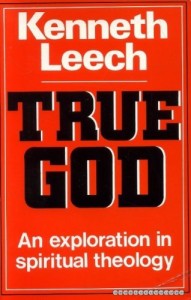
True God
Following the passing of Anglican contemplative theologian Kenneth Leech, I’ve been revisiting several of his books. In the back of his book True God: An Exploration in Spiritual Theology is Leech’s manifesto “Toward a Renewed Spirituality.” It’s an important statement that deserves wide consideration.
Ken offers thirteen points that he considers essential for the ongoing renewal of Christian spirituality. Here are his points with a my reflection on them. Ken’s words are in bold type, my commentary in regular type.
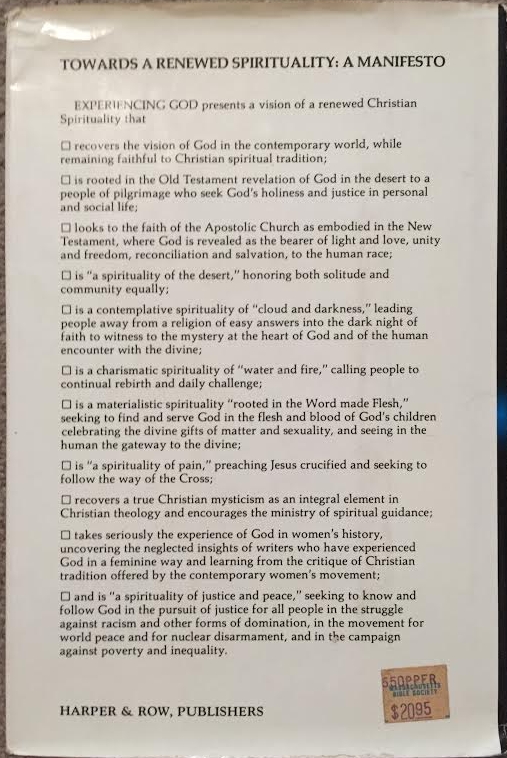
The back cover of the first American edition of “True God” (renamed “Experiencing God”)
- A renewed Christian spirituality will be concerned with the recovery of the vision of God in the contemporary world. The key phrase here is “vision of God.” It’s not an abstract, cerebral, disincarnate spirituality, but a visionary, relational, practical embodiment of God’s life, ways, and values here and now. It is a spirituality of beholding the Divine Mystery, not as a set of ideas to discuss, but as a way of living.
- It will be a spirituality which is rooted in the experience of God in the life of the Jewish people. Out of the Jewish matrix of western spirituality we discern God’s holiness, God’s passion for justice, God’s desire for mercy and for a covenant relationship with God’s people. It is a spirituality of poetry and praise, of prayer and prophecy, of Sabbath rest and silent reflection, and of community and celebration.
- It will be a spirituality which finds its centre in Jesus Christ, seeing in him the fullness of the Godhead dwelling bodily. Jesus of Nazareth put the “Christ” in Christian spirituality, and in Him we find salvation (wholeness), forgiveness, and reconciliation. Our devotion to Christ keeps our spirituality embodied, humanist (in the best sense of the word) and grounded in a spirit of repentance (renewed consciousness), service, and healing.
- It will be a spirituality which looks to the faith of the Apostolic Church as exhibited in the New Testament. In the New Testament we learn that we are the Body of Christ, we have the mind of Christ. Our community of faith is meant to be the means by which God’s lavish love and mercy is spread freely and fully to a world that is suffering.
- It will be a spirituality of the desert. Moses, Elijah, Jesus, and the Desert Mothers and Fathers all turned to the desert for inspiration and formation. The desert teaches us to rely on God, rather than our own ambitions and plans. It teaches us humility, patience, and simplicity. It also teaches us to listen, to trust silence, and to drink deeply from the wells of both solitude and fellowship.
- It will be a contemplative spirituality. In the spiritual life we are called to listen, to be silent, to wait, and to trust, even in the face of mystery, of doubt and darkness, of the cloud of unknowing. We surrender all of our images of God before the silence of the Divine Mystery, trusting in the primacy of embodied love over abstract knowledge.
- It will be a charismatic spirituality. We are called to celebrate, to rejoice, to dance with ecstatic abandon in glad delight over the God who loves us unconditionally. We seek to be healed and then to be agents of healing for others. We offer our bodies as temples of the Holy Spirit so that we may be living tabernacles, bringing God to all who hunger for God.
- It will be a spirituality rooted in Word made flesh… a materialistic spirituality. I probably would have said “earthy spirituality” here, but Ken is revealing his political roots. A materialistic spirituality is an earthy spirituality, that loves matter and the body and sexuality and seeks healthy relationships to all of these, received gratefully as gifts from God. To love God means not rejecting the world, but working for its redemption.
- It will be a eucharistic spirituality. This means both a spirituality of sacrament and communion, of God really present in our midst; but also a spirituality of thanksgiving and gratitude. We bow down before the Real Presence in the consecrated host and precious blood, so that we may also bow down before the image and likeness of God in all people (especially the poor, the needy, the forgotten).
- It will be a spirituality of pain, seeing in the passion and death of Jesus the heart of the gospel. Ours is a spirituality of joy and love, but it is not a spirituality which denies the real suffering and tribulation that so many people must endure in our sinful and broken world. When we encounter those who suffer, who are poor, who are handicapped, who are the victims of racism or injustice, we encounter Christ crucified, and our task is to love and minister to Christ whenever and however we meet Him.
- It will learn from the mystical writers to see God as the ground of all reality and of our own beings. It will seek to recover and promote a true Christian mysticism as an integral element in Christian theology. Can I have an “Amen” here? Christian spirituality is mystical at its core. The mystics are our teachers — and they teach us to see what is “hidden in plain sight” — how God, the Divine Mystery, is truly present and we are truly called into Union with God, given to us when we were created in God’s image and likeness.
- It will be a spirituality which will take seriously the experience of God in women’s history; the feminine namings of God in Scripture and tradition; and the forgotten or neglected insights of writers who have experienced and described God in a feminine way. Julian of Norwich said it best, “As truly as God is our father, so truly is God our mother.” There is no room for sexism or gender privilege in authentic spirituality. When we listen to the marginalized traditions of our spirituality that embraced the feminine and affirms equality between the sexes — and work to make gender equality a reality in our time — then we are faithful to Saint Paul’s declaration that in Christ there is “neither male nor female.”
- It will seek to know and follow God in the pursuit of justice for all people, in the struggle against racism and other forms of domination, in the movement for world peace and for nuclear disarmament, and in the campaign against poverty and inequality. This is simply restating a theme that shines throughout this manifesto, and indeed throughout all of Ken Leech’s writing: spirituality isn’t really spirituality unless it anchors its contemplative, charismatic, eucharistic, mystical dimensions in a practical, down-to-earth commitment to creating and sustaining a world where freedom, justice, fairness, and equality exist for everybody, not just the privileged few. The heavenly banquet only happens when everyone is invited.
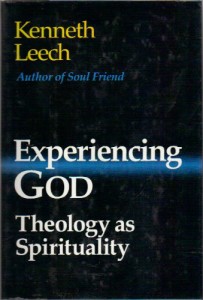
The first American edition (now out of print)
May all of us who seek to embody an authentic Christian spirituality learn to seek and foster each of these characteristics in our own faith, life, practice, and relationships.
Incidentally, True God was published in America under a different (and in my opinion, far inferior) title: Experiencing God: Theology as Spirituality. I think the American title reveals much of what is wrong with American (mis)understanding of spirituality and spiritual theology.
The current American edition.
When we talk about spirituality in terms of “experience” rather than “truth,” I worry that we may be abandoning objective truth in favor of subjective experience. Which is not to say that spirituality has no place for the embodied encounter with the Living Mystery, but that it is always something much bigger, deeper, vaster, and truer that mere personal “experience.” Let’s go back to the British title of this important book, please.
Enjoy reading this blog?
Click here to become a patron.

What do you think of Ken Leech’s manifesto? Is there any other elements of a renewed spirituality that you think needs to be addressed? Please share your thoughts — in a comment below, or on social media. Thank you!
Previous Post

September 13, 2015
In Memoriam: Kenneth Leech
Next Post
September 17, 2015 Happy St. Hildegard's Day!
Browse Our Archives
Select a Category Activism Announcements Art Books Catholicism Celtic Christianity Christian mysticism Christianity Contemplation Current events Etc. Family humor interfaith dialogue Interfaith Wisdom Interspirituality Lay Cistercians Living the Faith Meditation movies Mysticism Mystics nature Poetry Reviews Scripture silence Spirituality Uncategorized Writing
Select a Month February 2025 January 2025 November 2024 September 2024 August 2024 July 2024 June 2024 May 2024 March 2024 January 2024 December 2023 November 2023 August 2023 June 2023 April 2023 March 2023 February 2023 January 2023 December 2022 November 2022 October 2022 September 2022 August 2022 July 2022 June 2022 May 2022 April 2022 February 2022 January 2022 December 2021 November 2021 October 2021 September 2021 August 2021 July 2021 June 2021 May 2021 April 2021 March 2021 February 2021 January 2021 December 2020 November 2020 October 2020 September 2020 August 2020 July 2020 June 2020 May 2020 April 2020 March 2020 February 2020 January 2020 December 2019 November 2019 October 2019 September 2019 August 2019 July 2019 June 2019 May 2019 April 2019 March 2019 February 2019 January 2019 December 2018 November 2018 October 2018 September 2018 August 2018 July 2018 June 2018 May 2018 April 2018 March 2018 February 2018 January 2018 December 2017 November 2017 October 2017 September 2017 August 2017 July 2017 June 2017 May 2017 April 2017 March 2017 February 2017 January 2017 December 2016 November 2016 October 2016 September 2016 August 2016 July 2016 June 2016 May 2016 March 2016 February 2016 January 2016 December 2015 November 2015 October 2015 September 2015 August 2015 July 2015 June 2015 May 2015 April 2015 March 2015 February 2015 January 2015 December 2014 November 2014 October 2014 September 2014 August 2014 July 2014 June 2014 May 2014 April 2014 March 2014 February 2014 January 2014 December 2013 October 2013 September 2013 July 2013 May 2013 January 2013 December 2012 November 2012 August 2012 July 2012 June 2012 March 2012 December 2011 September 2011 October 2010 August 2010 March 2010 September 2009 July 2008 January 2008 December 2007 September 2007 February 2007 January 2007 December 2004
Follow Us!
TAKE THE
Religious Wisdom Quiz
How many years did the Israelites wander in the wilderness?
Select your answer to see how you score.
10 years 40 years 100 years 25 years
Support this
Column


Related posts from Carl McColman

"This Loving, Uniting Embrace": the Holy Ordinary

I Believe Prayer Changes Things. Here's a Few...

You don't have to become a monk to...

LSD, Anxiety, and Contemplation: Can Psychedelic Therapy Support...
TRENDING AT PATHEOS Contemplative

Handy Contemplative Practices for Political Spaces
A Spiritually Grounded Presence In order to bring a spiritually grounded presence...

Halloween: The Holiday of Loving Your Neighbor
All Hallows Eve Is Halloween the least Christian holiday in America, or...

Can Love Be Saved? Some Thoughts on the...
Happy Valentine's Day! I recently published a post on Patreon called Can...

"This Loving, Uniting Embrace": the Holy Ordinary
Today's guest post is by Mark Longhurst, author of The Holy Ordinary:...

How Are We Called to Live?: More About...
How Are We Called to Live? Many of us struggle with discerning...

A Spiritual Practice of Reading: Join Us Online
A Spiritual Practice of Reading A healthy spiritual practice of reading is...
view all Contemplative blogs
Ad-Free & Subscriber Log-In Subscription Support
- About Us
- 2026 Calendar
- Videos
- Podcasts
- Library of World Religions
- Faith In Media Tracker
- Advertise With Us
- Write for Us
- Privacy Policy
- Terms of Service
- Do Not Sell My Data
- Contact Us
- Radiant Digital
- Manage Newsletter Subscriptions
- Unsubscribe From Notifications
- Sitemap
Copyright 2008-2026, Patheos. All rights reserved.
Subscription Support Ad-Free & Subscriber Log-In
Follow Patheos