
BuddhistCatholicContemplativeEvangelicalGeneral ChristianHinduJewishLatter-day SaintMuslimNew VisionsProgressive Christian
Beliefs
- Buddhist
- Catholic
- Contemplative
- Evangelical
- General Christian
- Hindu
- Jewish
- Latter-day Saint
- More Voices
- Muslim
- New Visions
- Pagan
- Progressive Christian
Topics
- Religion News
- Food and Religion
- Sports and Religion
- Religious Art
- Religious Music and Entertainment
- Religious Events
- History and Religion
- Style and Religion
- Politics and Religion
- Women in Religion
- Recreation Outdoors and Religion
- Business Finance and Religion
- Careers Workplace and Religion
- Education and Religion
- Family Parenting and Religion
- Health Fitness and Religion
- Home and Religion
- Relationships and Religion
- Technology and Religion
- Travel and Religion
Columnists
- Buddhist Columnists
- Business Finance and Religion Columnists
- Careers Workplace and Religion Columnists
- Catholic Columnists
- Contemplative Columnists
- Education and Religion Columnists
- Evangelists Columnists
- Family Parenting and Religion Columnists
- General Christian Columnists
- Health Fitness and Religion Columnists
- Hindu Columnists
- History and Religion Columnists
- Home and Religion Columnists
- Jewish Columnists
- More Voices Columnists
- Latter Day Columnists
- Muslim Columnists
- New Visions Columnists
- Nonreligious Columnists
- Pagan Columnists
- Politics and Religion Columnists
- Progressive Columnists
- Recreation Outdoors and Religion Columnists
- Relationships and Religion Columnists
- Religion News Columnists
- Religious Art Columnists
- Religious Events Columnists
- Religious Music and Entertainment Columnists
- Sports and Religion Columnists
- Style and Religion Columnists
- Technology and Religion Columnists
- Travel and Religion Columnists
- Women in Religion Columnists
Resource Library
- 2026 Calendar
- Library of World Religions
- The 100 Most Holy Places on Earth
- Patheos Answers
- Podcasts
- Videos
- Faith Leaders Database
- Anglican Episcopalian
- Bahai
- Baptist
- Buddhism
- Christianity
- Confucianism
- Eastern Orthodoxy
- Hinduism
- Holiness and Pentecostal
- ISKCON
- Islam
- Judaism
- Lutheran
- Methodist
- The Church of Jesus Christ of Latter-day Saints
- New Age
- Paganism
- Presbytarian and Reformed
- Protestantism
- Religion Behind the Scenes
- Roman Catholic
- Scientology
- Shia Islam
- Sikhism
- Sufism
- Sunni Islam
- Taoism
- Zen
- See all religions
Research Tools
 Ad-Free & Subscriber Log-In Subscription Support
Ad-Free & Subscriber Log-In Subscription Support
Follow Patheos 

- Trending:
- Forgiveness
- |
- Marriage
- |
- Consciousness
- |
- Death Penalty
- |
- Election
- |
- Halloween

- Home
- Contemplative
- How Mysticism is Unique — and Universal
How Mysticism is Unique — and Universal
Last updated on: November 26, 2018 at 3:55 pm by Carl "Skye" McColman
How Mysticism is Unique — and Universal 2018-11-26T15:55:52-04:00 Carl "Skye" McColman
Patheos Explore the world's faith through different perspectives on religion and spirituality! Patheos has the views of the prevalent religions and spiritualities of the world.
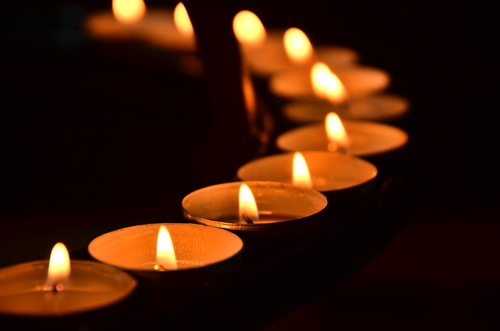
One Light… Many Candles…
How, exactly, does Christian mysticism relate to all the other “mysticisms” of the world (Kabbalah, Sufism, Taoism, Vedanta, Zen, etc.)?
A reader of this blog writes:
I have been reading your Big Book of Christian Mysticism: on page 64 you say that “Ultimately … no absolutely clear distinction can be drawn between Christian and non-Christian mysticism.” This concerns me, because you *do* seem to say in other parts of the book that there *is* a clear distinction between the two (for one, Christian mysticism is practiced “in Christ,” and while Eastern forms of mysticism seek to empty the mind, Christian is a ‘thinking’ form of meditation [pg. 218]). So, did you come to a different conclusion while writing the book, or would you still hold that Christian and non-Christian mysticism are basically the same?
Thank you for your question. I think the issue really has to do with the distinction between “Christian mysticism” as a unique expression of Christian spirituality, and “mysticism” as a more general term referring to deep spirituality regardless of its context. To parse out that distinction, let’s look at prayer.
Any religious or faith tradition that believes in one or more gods will involve some sort of prayer — that is to say, efforts to communicate with the deity. Jews pray, Christians pray, Muslims pray, Hindus pray, theistically-minded new agers pray, even some Wiccans and other pagans pray, depending on their understanding of deity.
So prayer is an element of spirituality that transcends religious identity. And certainly there are deep similarities between say, Christian prayer and Jewish prayer. But there are also profound differences. Christians pray in, through and to Christ, while Jews and Muslims do not. Each tradition has its own language and literature of prayer, and while there is some overlap (both Christians and Jews pray the Psalms, for example) there is also much that is unique to each tradition.
And when you consider the difference between the religious traditions founded on Abrahamic monotheism, and other traditions (like Hinduism), the language, practice, and theology of prayer becomes even more varied. So much so that many Christians might not feel comfortable participating in a Hindu puja.
So is prayer a universal human activity (or near-universal, since non-theists do not pray) — or is prayer merely an umbrella term for a variety of human religious activities, many of which are incompatible at a fairly deep level? Different people with different values will answer this question differently, but I think it’s a “both/and,” not an “either/or” scenario. Prayer is universal, and prayer is varied. Both are true.
The same holds for mysticism. On one level, mysticism is an umbrella term for the spiritual heart of all the world’s great spiritual and religious traditions, holding that at their heart — at a level deeper than cultural or mythological or cognitive expression, mysticism points to something universal, nondual, inclusive, and unifying, a deep place of spiritual expression where love marginalizes dogma, compassion trumps cultural identity, and unity matters more than the human capacity to judge others.
On the other hand, Christian mysticism is not the same thing as Zen, or Sufism, or Kabbalah, or any of the other great “mystical traditions” in the world. and to say that they are the same is to be willfully ignorant of the many teachings and values that define differences between the traditions.
As I write these words, I recognize that many readers of this blog will be more comfortable with the “all mysticism is the same” perspective, while others will be more comfortable with the “each mysticism is unique” perspective. Wherever you may fall on this continuum, I invite you to consider that this is yet another mystical paradox, and that both of these perspectives have a deep truth to them — even though, on the surface, they seem contradictory.
So Christian mystics anchor their faith in Jesus Christ, and the other mysticisms of the world do not share that faith. That seems to be an irreconcilable difference. And yet, the Dalai Lama and Thomas Merton regarded each other as brothers, finding a place where they could relate out of love and compassion, all0wing their cultural and religious differences to fall away. Love conquers all. And yet, when the Dalai Lama talks to Christians, he doesn’t tell them to become Buddhists or even interspiritualists; he encourages them to be good Christians.
Now, to directly answer your question: “did you come to a different conclusion while writing the book, or would you still hold that Christian and non-Christian mysticism are basically the same?”
I would still say that mysticism, in its most general sense, points to a place beyond cultural and religious identity where we recognize the unity of all humankind, the primacy of love, and the sanctity of all life. At the same time, I would still say that Christian mysticism refers to a distinctive expression of Christian spirituality, grounded in mystery and silence and joy, that embodies what St. Peter called “partaking of the Divine nature” and Christ’s insistence that we “abide in him as he abides in us” (II Peter 1:4; John 15:4). Mysticism is universal; Christian mysticism is distinctive. Both are true. It’s a paradox.
To finish with a quote from the book: “as soon as you try to put it into your own words, mysticism unfolds itself into a variety of paradoxes and seemingly contradictory truths that leave you as confused and befuddled as ever.” (p. 25)
Sorry I can’t be any clearer than that. Please don’t shoot the messenger.
Enjoy reading this blog?
Click here to become a patron.

The Big Book of Christian Mysticism

Next Post
August 19, 2015 How Saint Benedict Can Help Us Grow Spiritually
Browse Our Archives
Select a Category Activism Announcements Art Books Catholicism Celtic Christianity Christian mysticism Christianity Contemplation Current events Etc. Family humor interfaith dialogue Interfaith Wisdom Interspirituality Lay Cistercians Living the Faith Meditation movies Mysticism Mystics nature Poetry Reviews Scripture silence Spirituality Uncategorized Writing
Select a Month February 2025 January 2025 November 2024 September 2024 August 2024 July 2024 June 2024 May 2024 March 2024 January 2024 December 2023 November 2023 August 2023 June 2023 April 2023 March 2023 February 2023 January 2023 December 2022 November 2022 October 2022 September 2022 August 2022 July 2022 June 2022 May 2022 April 2022 February 2022 January 2022 December 2021 November 2021 October 2021 September 2021 August 2021 July 2021 June 2021 May 2021 April 2021 March 2021 February 2021 January 2021 December 2020 November 2020 October 2020 September 2020 August 2020 July 2020 June 2020 May 2020 April 2020 March 2020 February 2020 January 2020 December 2019 November 2019 October 2019 September 2019 August 2019 July 2019 June 2019 May 2019 April 2019 March 2019 February 2019 January 2019 December 2018 November 2018 October 2018 September 2018 August 2018 July 2018 June 2018 May 2018 April 2018 March 2018 February 2018 January 2018 December 2017 November 2017 October 2017 September 2017 August 2017 July 2017 June 2017 May 2017 April 2017 March 2017 February 2017 January 2017 December 2016 November 2016 October 2016 September 2016 August 2016 July 2016 June 2016 May 2016 March 2016 February 2016 January 2016 December 2015 November 2015 October 2015 September 2015 August 2015 July 2015 June 2015 May 2015 April 2015 March 2015 February 2015 January 2015 December 2014 November 2014 October 2014 September 2014 August 2014 July 2014 June 2014 May 2014 April 2014 March 2014 February 2014 January 2014 December 2013 October 2013 September 2013 July 2013 May 2013 January 2013 December 2012 November 2012 August 2012 July 2012 June 2012 March 2012 December 2011 September 2011 October 2010 August 2010 March 2010 September 2009 July 2008 January 2008 December 2007 September 2007 February 2007 January 2007 December 2004
Follow Us!
TAKE THE
Religious Wisdom Quiz
What tree were Adam and Eve told not to eat from?
Select your answer to see how you score.
Tree of Life Tree of Knowledge of Good and Evil Olive Tree Fig Tree
Support this
Column


Related posts from Carl McColman

"This Loving, Uniting Embrace": the Holy Ordinary

You don't have to become a monk to...

Join Me for "24 Meditations for 2024"

LSD, Anxiety, and Contemplation: Can Psychedelic Therapy Support...
TRENDING AT PATHEOS Contemplative

Handy Contemplative Practices for Political Spaces
A Spiritually Grounded Presence In order to bring a spiritually grounded presence...

Halloween: The Holiday of Loving Your Neighbor
All Hallows Eve Is Halloween the least Christian holiday in America, or...

Can Love Be Saved? Some Thoughts on the...
Happy Valentine's Day! I recently published a post on Patreon called Can...

"This Loving, Uniting Embrace": the Holy Ordinary
Today's guest post is by Mark Longhurst, author of The Holy Ordinary:...

How Are We Called to Live?: More About...
How Are We Called to Live? Many of us struggle with discerning...

A Spiritual Practice of Reading: Join Us Online
A Spiritual Practice of Reading A healthy spiritual practice of reading is...
view all Contemplative blogs
Ad-Free & Subscriber Log-In Subscription Support
- About Us
- 2026 Calendar
- Videos
- Podcasts
- Library of World Religions
- Faith In Media Tracker
- Advertise With Us
- Write for Us
- Privacy Policy
- Terms of Service
- Do Not Sell My Data
- Contact Us
- Radiant Digital
- Manage Newsletter Subscriptions
- Unsubscribe From Notifications
- Sitemap
Copyright 2008-2026, Patheos. All rights reserved.
Subscription Support Ad-Free & Subscriber Log-In
Follow Patheos