
BuddhistCatholicContemplativeEvangelicalGeneral ChristianHinduJewishLatter-day SaintMuslimNew VisionsProgressive Christian
Beliefs
- Buddhist
- Catholic
- Contemplative
- Evangelical
- General Christian
- Hindu
- Jewish
- Latter-day Saint
- More Voices
- Muslim
- New Visions
- Pagan
- Progressive Christian
Topics
- Religion News
- Food and Religion
- Sports and Religion
- Religious Art
- Religious Music and Entertainment
- Religious Events
- History and Religion
- Style and Religion
- Politics and Religion
- Women in Religion
- Recreation Outdoors and Religion
- Business Finance and Religion
- Careers Workplace and Religion
- Education and Religion
- Family Parenting and Religion
- Health Fitness and Religion
- Home and Religion
- Relationships and Religion
- Technology and Religion
- Travel and Religion
Columnists
- Buddhist Columnists
- Business Finance and Religion Columnists
- Careers Workplace and Religion Columnists
- Catholic Columnists
- Contemplative Columnists
- Education and Religion Columnists
- Evangelists Columnists
- Family Parenting and Religion Columnists
- General Christian Columnists
- Health Fitness and Religion Columnists
- Hindu Columnists
- History and Religion Columnists
- Home and Religion Columnists
- Jewish Columnists
- More Voices Columnists
- Latter Day Columnists
- Muslim Columnists
- New Visions Columnists
- Nonreligious Columnists
- Pagan Columnists
- Politics and Religion Columnists
- Progressive Columnists
- Recreation Outdoors and Religion Columnists
- Relationships and Religion Columnists
- Religion News Columnists
- Religious Art Columnists
- Religious Events Columnists
- Religious Music and Entertainment Columnists
- Sports and Religion Columnists
- Style and Religion Columnists
- Technology and Religion Columnists
- Travel and Religion Columnists
- Women in Religion Columnists
Resource Library
- 2026 Calendar
- Library of World Religions
- The 100 Most Holy Places on Earth
- Patheos Answers
- Podcasts
- Videos
- Faith Leaders Database
- Anglican Episcopalian
- Bahai
- Baptist
- Buddhism
- Christianity
- Confucianism
- Eastern Orthodoxy
- Hinduism
- Holiness and Pentecostal
- ISKCON
- Islam
- Judaism
- Lutheran
- Methodist
- The Church of Jesus Christ of Latter-day Saints
- New Age
- Paganism
- Presbytarian and Reformed
- Protestantism
- Religion Behind the Scenes
- Roman Catholic
- Scientology
- Shia Islam
- Sikhism
- Sufism
- Sunni Islam
- Taoism
- Zen
- See all religions
Research Tools
 Ad-Free & Subscriber Log-In Subscription Support
Follow Patheos 

- Trending:
- Advent
- |
- Forgiveness
- |
- Thanksgiving
- |
- Election
- |
- Seasonal Holidays
- |
- Marriage

- Home
- Contemplative
- Why Is “Mysticism” A Dirty Word?
Why Is “Mysticism” A Dirty Word?
Last updated on: December 5, 2018 at 4:53 pm by Carl "Skye" McColman
Why Is “Mysticism” A Dirty Word? 2018-12-05T16:53:50-04:00 Carl "Skye" McColman
Patheos Explore the world's faith through different perspectives on religion and spirituality! Patheos has the views of the prevalent religions and spiritualities of the world.
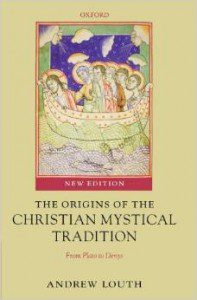
Andrew Louth criticizes “mysticism” as a controversial or useless word.
In the introduction to her book Writing the Icon of the Heart, Maggie Ross makes this rather in-your-face claim:
The word ‘mystic’… has, in my view, become entirely useless. It has acquired nuances of romanticism, exoticism and self-absorption. In addition, far too many studies of ‘mysticism’ and ‘spirituality’ are based on a modern and narcissistic notion of ‘experience’ as self-authenticating that corresponds neither to the way the brain works nor to notions of experience in the ancient and medieval worlds, which in fact do correspond to the way the brain works.
She’s not alone. Here’s what William Harmless, author of Mystics, has to say:
If you wander into your local Barnes & Noble or Border’s, you soon discover whole shelves devoted to what booksellers catalog as “mysticism.” There you usually find legitimate books on mysticism mixed in with stuff on the occult and witchcraft, fortune-telling, mind reading, and alien abductions. Mysticism, of course, has nothing to do with such matters, but the confusion on the shelves illustrates how in popular parlance “mysticism” can become a catch-all for religious weirdness. In the 196os it became fashionable to suggest that mystics experienced altered states of consciousness and that such states could be reproduced with drugs or other mind-altering techniques. Much earlier, in the eighteenth and nineteenth centuries, philosophers tended to write off mystics as either gullible cranks or deluded neurotics.
Andrew Louth, in the afterword to the second edition of The Origins of the Christian Mystical Tradition, offers a thoughtful argument as to why words like “mystical” and “mysticism” are more trouble then they’re worth: that the words “mystic” and “mystical” as used in the first centuries of Christianity carried a meaning that was embedded in liturgy, the sacraments, and reading of scripture, and only became associated with inner experience or personal awareness of God’s presence in the middle ages, as a kind of subversive reaction the the power of the church and the priesthood. Our much more modern word “mysticism” implies a kind of tradition of experiencing God, but this is a modern projection back on to church history: none of the people we think of as mystics today (John of the Cross, Teresa of Avila, Julian of Norwich, Meister Eckhart and so forth) would have called themselves mystics. They would have had a self-understood identity simply as “Christian” or “Catholic,” followers of Christ seeking to be as faithful as possible according to the religious expectations of their day.
Well, as humbling as it is to admit it (considered that I’ve written three books with some variation of “mystic” in the title and will have another one out in 2016 or 2017), I agree with these three scholars. Yep. Mysticism is a dirty word.
But I’m not willing to go as far as Ross and dismiss the word as “entirely useless.” Like it or not, the words are in our language and plenty of people continue to feel attracted to the concept, and if they are attracted to mysticism for basically experiential or narcissistic reasons, they need to be educated, not denounced. Harmless tries to parse out the difference between “good” and “bad” mysticism (I’m reminded of Glinda asking Dorothy “Are you a good witch or a bad witch?”), and so I think he is taking that more sensible, “let’s educate ourselves” approach. And Louth actually goes a long way toward providing a historical background to help us discern how mysticism is best understood in relation to social or political dynamics within the church, which in turn could shed some light on what it means to be a seeker after God today.
Because that’s the real issue here. I could care less about whether or not I’m a mystic. I want to be a lover of God. I want to respond to God’s love. I began to engage with this concept of “mysticism” and “mystical tradition” after reading authors like Evelyn Underhill or Thomas Merton, who use such terms uncritically — but let’s be clear: what drew me to those authors (and this language) was a hunger for God.
Was that hunger narcissistic, originally? Of course it was!
Anyone who has read Bernard of Clairvaux understands that the quest for God begins in narcissism. So should we condemn narcissism (as Ross appears to be doing), or should we recognize that narcissism is a problem only when people decide to stay put there? I opt for the latter. Granted, in today’s society it’s a huge challenge — we live in a profoundly narcissistic culture, and our many forms of distraction and addiction and obsession with entertainment and consumerism compound the problem. But narcissism isn’g going to go away by talking about how bad it is. The solution to narcissism is to discover pathways out of it, into deeper and more truly satisfying ways of loving: loving ourselves, loving our neighbors (including our enemies) and loving God.
So back to the title of this post. Why is mysticism a dirty word? Well, because it has become so corrupted by being used to mean so many different things. Modifying it as “Christian mysticism” helps some, but again, over two thousand years it is far too easy to project modernist or postmodernist notions about mysticism onto past writers, thereby misunderstanding what they were really trying to say. But perhaps the single most important reason why mysticism is a dirty word is because it can lead us to settle for the idolatry of experience. We say we hunger for “the experience of God.” But which do we want? God? or just the experience of God? Do we just want God to entertain us? Or are we seeking a true glimpse into the nature of eternal and unconditional Love, which will probably scare us from one end of the galaxy to the other and leave us forever changed?
Because I think the bottom line is this: “bad” mysticism is just another addiction, it leaves us hungering for more mysticism, while “good” mysticism points beyond itself to God. “Bad” mysticism reinforces our narcissism, whereas “good” mysticism calls us beyond it. But that “going beyond” feels like dying. And it’s up to us to learn the difference, and never to settle for the “bad” kind of mysticism, no matter how entertaining or “experiential” it might seem to be.
Enjoy reading this blog?
Click here to become a patron.


Next Post

April 15, 2015 Contemplation and Grieving
Browse Our Archives
Select a Category Activism Announcements Art Books Catholicism Celtic Christianity Christian mysticism Christianity Contemplation Current events Etc. Family humor interfaith dialogue Interfaith Wisdom Interspirituality Lay Cistercians Living the Faith Meditation movies Mysticism Mystics nature Poetry Reviews Scripture silence Spirituality Uncategorized Writing
Select a Month February 2025 January 2025 November 2024 September 2024 August 2024 July 2024 June 2024 May 2024 March 2024 January 2024 December 2023 November 2023 August 2023 June 2023 April 2023 March 2023 February 2023 January 2023 December 2022 November 2022 October 2022 September 2022 August 2022 July 2022 June 2022 May 2022 April 2022 February 2022 January 2022 December 2021 November 2021 October 2021 September 2021 August 2021 July 2021 June 2021 May 2021 April 2021 March 2021 February 2021 January 2021 December 2020 November 2020 October 2020 September 2020 August 2020 July 2020 June 2020 May 2020 April 2020 March 2020 February 2020 January 2020 December 2019 November 2019 October 2019 September 2019 August 2019 July 2019 June 2019 May 2019 April 2019 March 2019 February 2019 January 2019 December 2018 November 2018 October 2018 September 2018 August 2018 July 2018 June 2018 May 2018 April 2018 March 2018 February 2018 January 2018 December 2017 November 2017 October 2017 September 2017 August 2017 July 2017 June 2017 May 2017 April 2017 March 2017 February 2017 January 2017 December 2016 November 2016 October 2016 September 2016 August 2016 July 2016 June 2016 May 2016 March 2016 February 2016 January 2016 December 2015 November 2015 October 2015 September 2015 August 2015 July 2015 June 2015 May 2015 April 2015 March 2015 February 2015 January 2015 December 2014 November 2014 October 2014 September 2014 August 2014 July 2014 June 2014 May 2014 April 2014 March 2014 February 2014 January 2014 December 2013 October 2013 September 2013 July 2013 May 2013 January 2013 December 2012 November 2012 August 2012 July 2012 June 2012 March 2012 December 2011 September 2011 October 2010 August 2010 March 2010 September 2009 July 2008 January 2008 December 2007 September 2007 February 2007 January 2007 December 2004
Follow Us!
TAKE THE
Religious Wisdom Quiz
What does Jude say Enoch prophesied about?
Select your answer to see how you score.
The coming Messiah The end of the world The flood The Lord coming with thousands of his holy ones to judge everyone
Support this
Column


Related posts from Carl McColman

You don't have to become a monk to...

LSD, Anxiety, and Contemplation: Can Psychedelic Therapy Support...

Mysticism, Faith, and "Knowing" God's Will

TRENDING AT PATHEOS Contemplative

Handy Contemplative Practices for Political Spaces
A Spiritually Grounded Presence In order to bring a spiritually grounded presence...

Halloween: The Holiday of Loving Your Neighbor
All Hallows Eve Is Halloween the least Christian holiday in America, or...

Can Love Be Saved? Some Thoughts on the...
Happy Valentine's Day! I recently published a post on Patreon called Can...
"This Loving, Uniting Embrace": the Holy Ordinary
Today's guest post is by Mark Longhurst, author of The Holy Ordinary:...

How Are We Called to Live?: More About...
How Are We Called to Live? Many of us struggle with discerning...

A Spiritual Practice of Reading: Join Us Online
A Spiritual Practice of Reading A healthy spiritual practice of reading is...
view all Contemplative blogs
Ad-Free & Subscriber Log-In Subscription Support
- About Us
- 2026 Calendar
- Videos
- Podcasts
- Library of World Religions
- Faith In Media Tracker
- Advertise With Us
- Write for Us
- Privacy Policy
- Terms of Service
- Do Not Sell My Data
- Contact Us
- Radiant Digital
- Manage Newsletter Subscriptions
- Unsubscribe From Notifications
- Sitemap
Copyright 2008-2026, Patheos, part of the Radiant Digital network of media brands. All rights reserved.
Subscription Support Ad-Free & Subscriber Log-In
Follow Patheos