
BuddhistCatholicContemplativeEvangelicalGeneral ChristianHinduJewishLatter-day SaintMuslimNew VisionsProgressive Christian
Beliefs
- Buddhist
- Catholic
- Contemplative
- Evangelical
- General Christian
- Hindu
- Jewish
- Latter-day Saint
- More Voices
- Muslim
- New Visions
- Pagan
- Progressive Christian
Topics
- Religion News
- Food and Religion
- Sports and Religion
- Religious Art
- Religious Music and Entertainment
- Religious Events
- History and Religion
- Style and Religion
- Politics and Religion
- Women in Religion
- Recreation Outdoors and Religion
- Business Finance and Religion
- Careers Workplace and Religion
- Education and Religion
- Family Parenting and Religion
- Health Fitness and Religion
- Home and Religion
- Relationships and Religion
- Technology and Religion
- Travel and Religion
Columnists
- Buddhist Columnists
- Business Finance and Religion Columnists
- Careers Workplace and Religion Columnists
- Catholic Columnists
- Contemplative Columnists
- Education and Religion Columnists
- Evangelists Columnists
- Family Parenting and Religion Columnists
- General Christian Columnists
- Health Fitness and Religion Columnists
- Hindu Columnists
- History and Religion Columnists
- Home and Religion Columnists
- Jewish Columnists
- More Voices Columnists
- Latter Day Columnists
- Muslim Columnists
- New Visions Columnists
- Nonreligious Columnists
- Pagan Columnists
- Politics and Religion Columnists
- Progressive Columnists
- Recreation Outdoors and Religion Columnists
- Relationships and Religion Columnists
- Religion News Columnists
- Religious Art Columnists
- Religious Events Columnists
- Religious Music and Entertainment Columnists
- Sports and Religion Columnists
- Style and Religion Columnists
- Technology and Religion Columnists
- Travel and Religion Columnists
- Women in Religion Columnists
Resource Library
- 2026 Calendar
- Library of World Religions
- The 100 Most Holy Places on Earth
- Patheos Answers
- Podcasts
- Videos
- Faith Leaders Database
- Anglican Episcopalian
- Bahai
- Baptist
- Buddhism
- Christianity
- Confucianism
- Eastern Orthodoxy
- Hinduism
- Holiness and Pentecostal
- ISKCON
- Islam
- Judaism
- Lutheran
- Methodist
- The Church of Jesus Christ of Latter-day Saints
- New Age
- Paganism
- Presbytarian and Reformed
- Protestantism
- Religion Behind the Scenes
- Roman Catholic
- Scientology
- Shia Islam
- Sikhism
- Sufism
- Sunni Islam
- Taoism
- Zen
- See all religions
Research Tools
 Ad-Free & Subscriber Log-In Subscription Support
Ad-Free & Subscriber Log-In Subscription Support
Follow Patheos 

- Trending:
- Forgiveness
- |
- Marriage
- |
- Consciousness
- |
- Death Penalty
- |
- Election
- |
- Halloween

- Home
- Contemplative
- Contemplation and Conflict, or, How the Prayer of Silence Changes the Way We Think About Possessions, Theft, and Just About Everything Else
Contemplation and Conflict, or, How the Prayer of Silence Changes the Way We Think About Possessions, Theft, and Just About Everything Else
Last updated on: December 5, 2018 at 4:51 pm by Carl "Skye" McColman
Contemplation and Conflict, or, How the Prayer of Silence Changes the Way We Think About Possessions, Theft, and Just About Everything Else 2018-12-05T16:51:53-04:00 Carl "Skye" McColman
Patheos Explore the world's faith through different perspectives on religion and spirituality! Patheos has the views of the prevalent religions and spiritualities of the world.
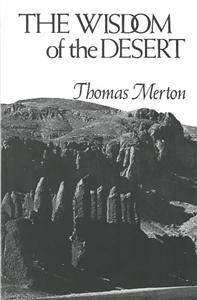
The Wisdom of the Desert
I simply love this story of two desert fathers, which Thomas Merton recounts in his book The Wisdom of the Desert:
There were two elders living together in a cell, and they had never had so much as one quarrel with one another. One therefore said to the other: Come on, let us have at least one quarrel, like other men. The other said: I don’t know how to start a quarrel. The first said: I will take this brick and place it here between us. Then I will say: It is mine. After that you will say: It is mine. This is what leads to a dispute and a fight. So then they placed the brick between them, one said: It is mine, and the other replied to the first: I do believe that it is mine. The first one said again: It is not yours, it is mine. So the other answered: Well then, if it is yours, take it! Thus they did not manage after all to get into a quarrel.
This reminds me of the story that I once heard Sara Miles tell, when she was speaking at a church in Atlanta. It was about something that happened when she was in San Francisco working at The Food Pantry, which gives away groceries to about 400 families each week. This particular day she had a group of fifth graders volunteering to help run the pantry, and some of them noticed that one of the recipients was dressed in a suit, speaking on a cellphone. They watched him leave after he picked up his free food, and he drove off in a Mercedes. The kids were scandalized! They spoke to Sara, asking why she allowed this man to take food that was meant for someone who was poor and couldn’t afford groceries.
Sara said she saw this as a teachable moment, so she explained to the children that they weren’t in the business of judging the people they served. For all they knew, he was recently laid off from his job, and was dressed nice today because he had just returned from an interview. In other words, they really couldn’t assume that he didn’t actually need free food. And then she said, you can’t steal from us, because we’d just give it to you anyway.
This in turn reminds me of a conversation I once had with one of my favorite authors, Kenneth Leech. I was working on my first book at the time, and like many new authors I was nervous about copyright. I asked Ken how he handled it. He told me he didn’t worry about it, as far as he was concerned his work belonged to God, not him, and if someone wanted to copy it he was just glad that his ideas were being spread far and wide.
Now, let me be real. I’m sure Ken Leech’s publisher watches over his rights, and I bet if someone smartly dressed were to show up at the Food Pantry week after week after week, they’d try to get to know the person and figure out what was going on. My point in sharing these little stories is not to suggest that boundaries are unnecessary. Prudence has its place.
But my point for sharing these stories is very simple: when we commit to following Jesus, we need to remember that we are no longer victims. Not even if someone takes advantage of us, or tries to.
“If any one strikes you on the right cheek, turn to him the other also,” Jesus instructed his followers. “If any one would sue you and take your coat, let him have your cloak as well; and if any one forces you to go one mile, go with him two miles.” (Matthew 5:39-40) This is not about being a doormat! Jesus understood just how subversive these teachings really are. When we are anchored in the love of God, we find welling up within us a generosity, a love, dare I even say a power that enables us to be non-attached to the normal human tendency to fight off others who are perceived as a threat.
Here’s the bottom line, my friends. If we are serious about prayer — serious about deepening intimacy with God, about restoring the likeness of God in our souls (we are created in God’s image and likeness, after all), and serious about resting in the nourishing silence of contemplative prayer — if we are serious about these things, we will spontaneously begin to become non-attached, or at least, less attached, to all sorts of things: our pride, our sense of entitlement, our money, the things we own and are in the habit of protecting. And the point behind such non-attachment is not to make you or me a victim, but rather to free us — yes, liberate us — to relate to others from a position of generous love rather than self-protective fear.
Contemplation will not magically make conflict disappear, and I recognize that even contemplatives have to protect themselves or sometimes fight for what is right. When the Vikings showed up in Ireland, the monks didn’t just invite them in for tea.
But I also think that some of the conflicts that are making headlines in today’s world might look a lot different if people on both sides (yes, both sides) of a particular issue would approach the matter from a position of contemplative non-attachment. If we could love our “enemies” instead of always trying to defeat them. If we could serve everybody, without judgment. If we could be gracious when others refuse to serve us, and simply move on, without needing to retaliate in any way. And even if (gasp!) we saw lawsuits as a signal that we need to build and restore relationships, rather than hunker down for an expensive legal fight.
I suppose I’m a dreamer. But if we don’t dream about these kinds of possibilities, what’s the alternative? We will in effect be settling for a world “swept with confused alarms of struggle and flight, where ignorant armies clash by night.” That’s not a future I’m interested in.
Let’s build a more loving, kind, merciful and forgiving world. And I think the first step involves sitting still and being silent.
Enjoy reading this blog?
Click here to become a patron.

Previous Post

April 2, 2015
What Good is Religion? A Contemplative Perspective
Next Post

April 10, 2015 Why Is "Mysticism" A Dirty Word?
Browse Our Archives
Select a Category Activism Announcements Art Books Catholicism Celtic Christianity Christian mysticism Christianity Contemplation Current events Etc. Family humor interfaith dialogue Interfaith Wisdom Interspirituality Lay Cistercians Living the Faith Meditation movies Mysticism Mystics nature Poetry Reviews Scripture silence Spirituality Uncategorized Writing
Select a Month February 2025 January 2025 November 2024 September 2024 August 2024 July 2024 June 2024 May 2024 March 2024 January 2024 December 2023 November 2023 August 2023 June 2023 April 2023 March 2023 February 2023 January 2023 December 2022 November 2022 October 2022 September 2022 August 2022 July 2022 June 2022 May 2022 April 2022 February 2022 January 2022 December 2021 November 2021 October 2021 September 2021 August 2021 July 2021 June 2021 May 2021 April 2021 March 2021 February 2021 January 2021 December 2020 November 2020 October 2020 September 2020 August 2020 July 2020 June 2020 May 2020 April 2020 March 2020 February 2020 January 2020 December 2019 November 2019 October 2019 September 2019 August 2019 July 2019 June 2019 May 2019 April 2019 March 2019 February 2019 January 2019 December 2018 November 2018 October 2018 September 2018 August 2018 July 2018 June 2018 May 2018 April 2018 March 2018 February 2018 January 2018 December 2017 November 2017 October 2017 September 2017 August 2017 July 2017 June 2017 May 2017 April 2017 March 2017 February 2017 January 2017 December 2016 November 2016 October 2016 September 2016 August 2016 July 2016 June 2016 May 2016 March 2016 February 2016 January 2016 December 2015 November 2015 October 2015 September 2015 August 2015 July 2015 June 2015 May 2015 April 2015 March 2015 February 2015 January 2015 December 2014 November 2014 October 2014 September 2014 August 2014 July 2014 June 2014 May 2014 April 2014 March 2014 February 2014 January 2014 December 2013 October 2013 September 2013 July 2013 May 2013 January 2013 December 2012 November 2012 August 2012 July 2012 June 2012 March 2012 December 2011 September 2011 October 2010 August 2010 March 2010 September 2009 July 2008 January 2008 December 2007 September 2007 February 2007 January 2007 December 2004
Follow Us!
TAKE THE
Religious Wisdom Quiz
Which New Testament book quotes Psalm 110 to describe Jesus as the eternal High Priest?
Select your answer to see how you score.
Hebrews Acts Romans Revelation
Support this
Column


Related posts from Carl McColman

LSD, Anxiety, and Contemplation: Can Psychedelic Therapy Support...

Discover the Three Forms of Contemplation, according to...

Thomas Merton: the Noisy Contemplative
"He Confuses a Lot of People" — Jon...
TRENDING AT PATHEOS Contemplative

Handy Contemplative Practices for Political Spaces
A Spiritually Grounded Presence In order to bring a spiritually grounded presence...

Halloween: The Holiday of Loving Your Neighbor
All Hallows Eve Is Halloween the least Christian holiday in America, or...

Can Love Be Saved? Some Thoughts on the...
Happy Valentine's Day! I recently published a post on Patreon called Can...

"This Loving, Uniting Embrace": the Holy Ordinary
Today's guest post is by Mark Longhurst, author of The Holy Ordinary:...

How Are We Called to Live?: More About...
How Are We Called to Live? Many of us struggle with discerning...

A Spiritual Practice of Reading: Join Us Online
A Spiritual Practice of Reading A healthy spiritual practice of reading is...
view all Contemplative blogs
Ad-Free & Subscriber Log-In Subscription Support
- About Us
- 2026 Calendar
- Videos
- Podcasts
- Library of World Religions
- Faith In Media Tracker
- Advertise With Us
- Write for Us
- Privacy Policy
- Terms of Service
- Do Not Sell My Data
- Contact Us
- Radiant Digital
- Manage Newsletter Subscriptions
- Unsubscribe From Notifications
- Sitemap
Copyright 2008-2026, Patheos. All rights reserved.
Subscription Support Ad-Free & Subscriber Log-In
Follow Patheos