
BuddhistCatholicContemplativeEvangelicalGeneral ChristianHinduJewishLatter-day SaintMuslimNew VisionsProgressive Christian
Beliefs
- Buddhist
- Catholic
- Contemplative
- Evangelical
- General Christian
- Hindu
- Jewish
- Latter-day Saint
- More Voices
- Muslim
- New Visions
- Pagan
- Progressive Christian
Topics
- Religion News
- Food and Religion
- Sports and Religion
- Religious Art
- Religious Music and Entertainment
- Religious Events
- History and Religion
- Style and Religion
- Politics and Religion
- Women in Religion
- Recreation Outdoors and Religion
- Business Finance and Religion
- Careers Workplace and Religion
- Education and Religion
- Family Parenting and Religion
- Health Fitness and Religion
- Home and Religion
- Relationships and Religion
- Technology and Religion
- Travel and Religion
Columnists
- Buddhist Columnists
- Business Finance and Religion Columnists
- Careers Workplace and Religion Columnists
- Catholic Columnists
- Contemplative Columnists
- Education and Religion Columnists
- Evangelists Columnists
- Family Parenting and Religion Columnists
- General Christian Columnists
- Health Fitness and Religion Columnists
- Hindu Columnists
- History and Religion Columnists
- Home and Religion Columnists
- Jewish Columnists
- More Voices Columnists
- Latter Day Columnists
- Muslim Columnists
- New Visions Columnists
- Nonreligious Columnists
- Pagan Columnists
- Politics and Religion Columnists
- Progressive Columnists
- Recreation Outdoors and Religion Columnists
- Relationships and Religion Columnists
- Religion News Columnists
- Religious Art Columnists
- Religious Events Columnists
- Religious Music and Entertainment Columnists
- Sports and Religion Columnists
- Style and Religion Columnists
- Technology and Religion Columnists
- Travel and Religion Columnists
- Women in Religion Columnists
Resource Library
- 2026 Calendar
- Library of World Religions
- The 100 Most Holy Places on Earth
- Patheos Answers
- Podcasts
- Videos
- Faith Leaders Database
- Anglican Episcopalian
- Bahai
- Baptist
- Buddhism
- Christianity
- Confucianism
- Eastern Orthodoxy
- Hinduism
- Holiness and Pentecostal
- ISKCON
- Islam
- Judaism
- Lutheran
- Methodist
- The Church of Jesus Christ of Latter-day Saints
- New Age
- Paganism
- Presbytarian and Reformed
- Protestantism
- Religion Behind the Scenes
- Roman Catholic
- Scientology
- Shia Islam
- Sikhism
- Sufism
- Sunni Islam
- Taoism
- Zen
- See all religions
Research Tools
 Ad-Free & Subscriber Log-In Subscription Support
Ad-Free & Subscriber Log-In Subscription Support
Follow Patheos 

- Trending:
- Forgiveness
- |
- Marriage
- |
- Consciousness
- |
- Death Penalty
- |
- Election
- |
- Halloween

- Home
- Contemplative
- Following the Ancient Path Today
Following the Ancient Path Today
Last updated on: November 26, 2018 at 1:02 pm by Carl "Skye" McColman
Following the Ancient Path Today 2018-11-26T13:02:36-04:00 Carl "Skye" McColman
Patheos Explore the world's faith through different perspectives on religion and spirituality! Patheos has the views of the prevalent religions and spiritualities of the world.
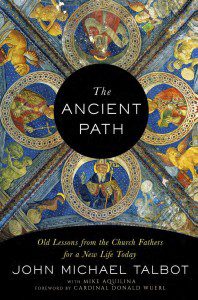 If you’re anything like me, the first thing you’ll notice about The Ancient Path: Old Lessons from the Church Fathers for a New Life Today is how beautifully designed the book is. The dust jacket features a fifteenth century fresco by Giovanni Pietro da Cemmo, of Saints Ambrose, Augustine, Gregory the Great, and Jerome. It is simultaneously elegant and inviting. The book itself presents a polite and at times engaging story in which a popular Catholic musician tells the story of his own spiritual journey — and how the great Fathers of the Church have inspired and illuminated the way for him. It’s an enjoyable read, providing a nice introduction to the Fathers, although I’m not sure it manages to make the case for why they are so important today.
The primary author, John Michael Talbot, probably needs no introduction: as perhaps the most well-known Catholic musician of our time, he has recorded upwards of fifty albums (such as Table of Plenty), written or co-written twenty books, and even in his 60s maintains a busy schedule of touring and promoting his television show, “All Things Are Possible.” Much of his music is a gentle folk or folk-rock style that shows off his pleasant tenor voice. His best work is richly contemplative, a quality he brings to his concerts (at least the few times I’ve seen him). Although he began his career as a Christian musician identified as an evangelical, he entered the Catholic Church while still in his twenties and went on to found a semi-monastic community, the Brothers and Sisters of Charity, where — in the tradition of the old Celtic monasteries — a mixed community of celibates, singles and marrieds live together in an intentional faith community.
All of this is detailed in The Ancient Path, for this is not just a book about the Fathers of the Church — the “new life today” in the subtitle matters just as much as the “old lessons from the Church Fathers.” Granted, the Church Fathers — the group of early Catholic/Orthodox theologians and saints whose writings helped to shape the depth and beauty of Christian doctrine and dogma — are central to how this narrative is organized; Talbot’s co-author, Mike Aquilina, is known for The Fathers of the Church, a book written for a popular/non-academic audience. But this is no dry treatise on long-dead saints. Following the general format of James Martin’s fabulous book My Life with the Saints, The Ancient Path introduces the reader to significant figures and themes of the Church Fathers through how their wisdom shaped Talbot’s life journey.
So over the course of this book the reader is introduced to the earliest post-New Testament figures (like Clement of Rome and Ignatius of Antioch) through to the first mystics (Clement of Alexandria and Origen) through the age of the great church councils, to the life and ministry of some of the best-known ancient figures, like Augustine of Hippo and Gregory the Great. Talbot and Aquilina consider John of Damascus, who died in 749, to be the last of the fathers (as a Lay Cistercian, naturally I disagree — St. Bernard of Clairvaux has long been considered “the Last of the Fathers”! But we’ll let that go). Yet even more important than introducing readers to names and dates, The Ancient Path invites us to consider key themes in the writings of the Fathers, from theology to church governance to sacramental spirituality. These themes are presented always in the context of Talbot’s own life journey, showing how the wisdom of the past is relevant to the challenges and issues surrounding life here in the twenty-first century.
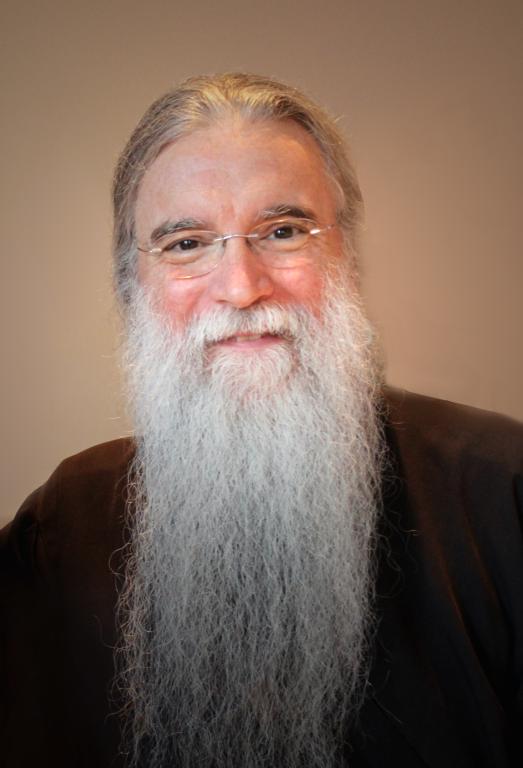
John Michael Talbot. Courtesy of Image Books.
As another adult convert to Catholicism, I particularly enjoyed Talbot’s story of his own conversion, including disillusionment that began with the writings of the renowned evangelical philosopher Francis Schaeffer, and culminating in the lovely witness of a Franciscan friar, Father Martin, who mentored Talbot as he embraced not only Catholicism but a contemplative approach to spirituality. Like many converts to Catholicism (at least, like me), for Talbot entry into the Church marked a period of falling in love with the rich tradition of the faith, including the witness of the Fathers. That obvious love shines through the book, and gives it much of its appeal.
He goes on to discuss a variety of topics related to the teaching of the Church Fathers, including salvation, community, prayer, liturgy, church hierarchy, and care for the poor. Some sections of this book work better than others. Critics have suggested that Thomas Merton’s writing was the weakest when he was trying to simply be a spokesperson for Catholic teaching, rather than wrestling with the issues or conflicts of lift that mattered most to him. Something of the same dynamic is at work in The Ancient Path. At times, the narrative comes across as little more than a rather uninspired exercise in basic Catholic apologetics (perhaps aimed at the many fans of Talbot’s music who may not share his loyalty to Catholicism).
Even the chapter on “Stewardship of the Earth” ultimately disappointed me — by not including later figures like St. Hildegard of Bingen or St. Francis of Assisi, Talbot is left admitting that the bulk of the Fathers’ writings simply do not address questions of caring for the earth, simply because those issues were not part of the ancient church’s concern. He does suggest that the Father’s criticism of sins like avarice and gluttony can indirectly help us to find a better relationship with the earth today, which is true enough. But if he had only allowed himself a broader definition of “Fathers” it would have made for a much stronger chapter. Hildegard, especially, has much to say about our relationship with the earth. Of course, she is a woman, so perhaps including her would throw the entire notion of “Church Fathers” into disarray!
So I think this is a book that pulls its punches and ultimately settles for being a gentle and non-controversial reading of the Church Fathers, suggesting that they can provide inspiration to Christians today, especially those who opt for a conservative Catholic faith. Fans of John Michael Talbot will enjoy it for the glimpse it provides into his own heart, but I’m not sure that it achieves its goal of commending the Fathers as essential guides for our generation. I’m not saying that it undermines that goal in any way. But it doesn’t really close the sale.
Please note that if you follow one of the links in this post it will take you to Amazon, where if you make a purchase, the author of this blog receives a small commission. Thank you for doing so — it’s the easiest way you can support the ministry of this blog.
Enjoy reading this blog?
Click here to become a patron.

Previous Post

January 22, 2015
How to Stay in Touch
Next Post
January 31, 2015 Seven Essential Thomas Merton Books
Browse Our Archives
Select a Category Activism Announcements Art Books Catholicism Celtic Christianity Christian mysticism Christianity Contemplation Current events Etc. Family humor interfaith dialogue Interfaith Wisdom Interspirituality Lay Cistercians Living the Faith Meditation movies Mysticism Mystics nature Poetry Reviews Scripture silence Spirituality Uncategorized Writing
Select a Month February 2025 January 2025 November 2024 September 2024 August 2024 July 2024 June 2024 May 2024 March 2024 January 2024 December 2023 November 2023 August 2023 June 2023 April 2023 March 2023 February 2023 January 2023 December 2022 November 2022 October 2022 September 2022 August 2022 July 2022 June 2022 May 2022 April 2022 February 2022 January 2022 December 2021 November 2021 October 2021 September 2021 August 2021 July 2021 June 2021 May 2021 April 2021 March 2021 February 2021 January 2021 December 2020 November 2020 October 2020 September 2020 August 2020 July 2020 June 2020 May 2020 April 2020 March 2020 February 2020 January 2020 December 2019 November 2019 October 2019 September 2019 August 2019 July 2019 June 2019 May 2019 April 2019 March 2019 February 2019 January 2019 December 2018 November 2018 October 2018 September 2018 August 2018 July 2018 June 2018 May 2018 April 2018 March 2018 February 2018 January 2018 December 2017 November 2017 October 2017 September 2017 August 2017 July 2017 June 2017 May 2017 April 2017 March 2017 February 2017 January 2017 December 2016 November 2016 October 2016 September 2016 August 2016 July 2016 June 2016 May 2016 March 2016 February 2016 January 2016 December 2015 November 2015 October 2015 September 2015 August 2015 July 2015 June 2015 May 2015 April 2015 March 2015 February 2015 January 2015 December 2014 November 2014 October 2014 September 2014 August 2014 July 2014 June 2014 May 2014 April 2014 March 2014 February 2014 January 2014 December 2013 October 2013 September 2013 July 2013 May 2013 January 2013 December 2012 November 2012 August 2012 July 2012 June 2012 March 2012 December 2011 September 2011 October 2010 August 2010 March 2010 September 2009 July 2008 January 2008 December 2007 September 2007 February 2007 January 2007 December 2004
Follow Us!
TAKE THE
Religious Wisdom Quiz
True or False: The Corinthians were told that love is patient and kind.
Select your answer to see how you score.
TRUE FALSE
Support this
Column


Related posts from Carl McColman

Contemplative Books to Read and Savor During Advent...
New From Encountering Silence: Exploring the Lost History...
Twelve Mystical Anthologies That Belong in Every Contemplative...
TRENDING AT PATHEOS Contemplative

Handy Contemplative Practices for Political Spaces
A Spiritually Grounded Presence In order to bring a spiritually grounded presence...

Halloween: The Holiday of Loving Your Neighbor
All Hallows Eve Is Halloween the least Christian holiday in America, or...

Can Love Be Saved? Some Thoughts on the...
Happy Valentine's Day! I recently published a post on Patreon called Can...

"This Loving, Uniting Embrace": the Holy Ordinary
Today's guest post is by Mark Longhurst, author of The Holy Ordinary:...

How Are We Called to Live?: More About...
How Are We Called to Live? Many of us struggle with discerning...

A Spiritual Practice of Reading: Join Us Online
A Spiritual Practice of Reading A healthy spiritual practice of reading is...
view all Contemplative blogs
Ad-Free & Subscriber Log-In Subscription Support
- About Us
- 2026 Calendar
- Videos
- Podcasts
- Library of World Religions
- Faith In Media Tracker
- Advertise With Us
- Write for Us
- Privacy Policy
- Terms of Service
- Do Not Sell My Data
- Contact Us
- Radiant Digital
- Manage Newsletter Subscriptions
- Unsubscribe From Notifications
- Sitemap
Copyright 2008-2026, Patheos. All rights reserved.
Subscription Support Ad-Free & Subscriber Log-In
Follow Patheos