
BuddhistCatholicContemplativeEvangelicalGeneral ChristianHinduJewishLatter-day SaintMuslimNew VisionsProgressive Christian
Beliefs
- Buddhist
- Catholic
- Contemplative
- Evangelical
- General Christian
- Hindu
- Jewish
- Latter-day Saint
- More Voices
- Muslim
- New Visions
- Pagan
- Progressive Christian
Topics
- Religion News
- Food and Religion
- Sports and Religion
- Religious Art
- Religious Music and Entertainment
- Religious Events
- History and Religion
- Style and Religion
- Politics and Religion
- Women in Religion
- Recreation Outdoors and Religion
- Business Finance and Religion
- Careers Workplace and Religion
- Education and Religion
- Family Parenting and Religion
- Health Fitness and Religion
- Home and Religion
- Relationships and Religion
- Technology and Religion
- Travel and Religion
Columnists
- Buddhist Columnists
- Business Finance and Religion Columnists
- Careers Workplace and Religion Columnists
- Catholic Columnists
- Contemplative Columnists
- Education and Religion Columnists
- Evangelists Columnists
- Family Parenting and Religion Columnists
- General Christian Columnists
- Health Fitness and Religion Columnists
- Hindu Columnists
- History and Religion Columnists
- Home and Religion Columnists
- Jewish Columnists
- More Voices Columnists
- Latter Day Columnists
- Muslim Columnists
- New Visions Columnists
- Nonreligious Columnists
- Pagan Columnists
- Politics and Religion Columnists
- Progressive Columnists
- Recreation Outdoors and Religion Columnists
- Relationships and Religion Columnists
- Religion News Columnists
- Religious Art Columnists
- Religious Events Columnists
- Religious Music and Entertainment Columnists
- Sports and Religion Columnists
- Style and Religion Columnists
- Technology and Religion Columnists
- Travel and Religion Columnists
- Women in Religion Columnists
Resource Library
- 2026 Calendar
- Library of World Religions
- The 100 Most Holy Places on Earth
- Patheos Answers
- Podcasts
- Videos
- Faith Leaders Database
- Anglican Episcopalian
- Bahai
- Baptist
- Buddhism
- Christianity
- Confucianism
- Eastern Orthodoxy
- Hinduism
- Holiness and Pentecostal
- ISKCON
- Islam
- Judaism
- Lutheran
- Methodist
- The Church of Jesus Christ of Latter-day Saints
- New Age
- Paganism
- Presbytarian and Reformed
- Protestantism
- Religion Behind the Scenes
- Roman Catholic
- Scientology
- Shia Islam
- Sikhism
- Sufism
- Sunni Islam
- Taoism
- Zen
- See all religions
Research Tools
 Ad-Free & Subscriber Log-In Subscription Support
Ad-Free & Subscriber Log-In Subscription Support
Follow Patheos 

- Trending:
- Forgiveness
- |
- Marriage
- |
- Consciousness
- |
- Death Penalty
- |
- Election
- |
- Halloween

- Home
- Contemplative
- Christian Mystics to Celebrate in 2015
Christian Mystics to Celebrate in 2015
Last updated on: November 26, 2018 at 12:57 pm by Carl "Skye" McColman
Christian Mystics to Celebrate in 2015 2018-11-26T12:57:59-04:00 Carl "Skye" McColman
Patheos Explore the world's faith through different perspectives on religion and spirituality! Patheos has the views of the prevalent religions and spiritualities of the world.
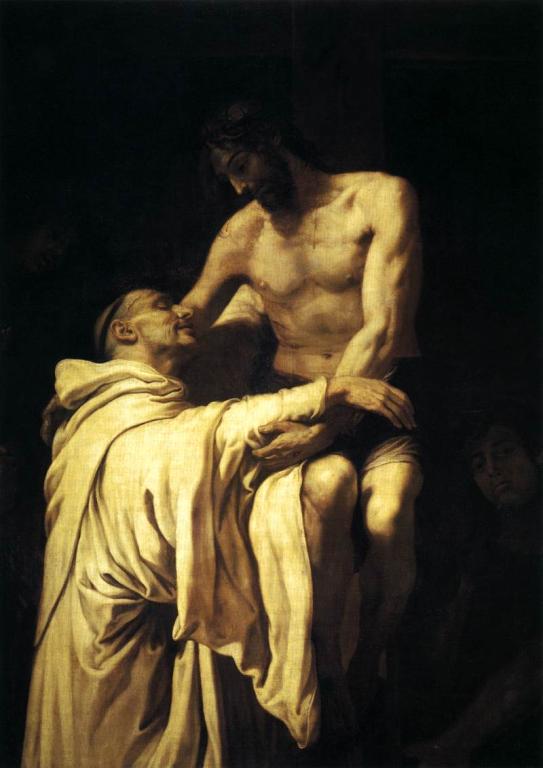
“Christ Embracing Saint Bernard” by Francisco Ribalta (1565-1628). Public domain.
2015 is something of a red-letter year for Christian contemplatives.
This is the 100th anniversary of the birth year of Thomas Merton, who was born on January 31, 1915. Merton lived until 1968, and in his short life wrote over fifty books, published both before and after his accidental death at age 53. Merton entered the Trappist Abbey of Gethsemani in 1941, and became world-renowned after his spiritual memoir, The Seven Storey Mountain, became a surprise bestseller in 1948. Merton is a textbook example of why you don’t write your autobiography while in your 30s — he eventually grew to rue the book’s youthful swagger and arrogance. But even with its flaws, Seven Storey is a compelling and beautifully written book, and it gave Merton a lifelong platform for his own continual spiritual evolution — from a rather ordinary writer of prosaic books of Catholic piety in the late 40s and early 50s, to an outspoken critic of social/national sins such as racism and the nuclear arms race, and an eager proponent of interfaith dialogue, particularly with Buddhism. Among Merton’s most lasting spiritual writings are New Seeds of Contemplation and The Inner Experience. As a mystic, Merton is noted for three “epiphanies” of moments of profound spiritual insight: in a Catholic Church in Cuba in 1940, he embodied heaven-on-earth during the Mass; at a busy street corner in Louisville, KY, in 1958, he “fell in love with all those people” and saw that our common humanity mattered more than artificial religious or vocational distinctions; and in 1968, just days before he died, while visiting the ancient city of Polonnaruwa in Ceylon (now Sri Lanka) and gazing upon the magnificent stone carved Buddhas in the Gil Vihara monastery, he sensed “beauty and spiritual validity running together in one aesthetic illumination” that he compared to sunyata or “emptiness”: “everything is emptiness and everything is compassion.” It was a luminous instance of unity in which the Catholic monk encountered spiritual truth in a Buddhist setting: truly a moment of grace.
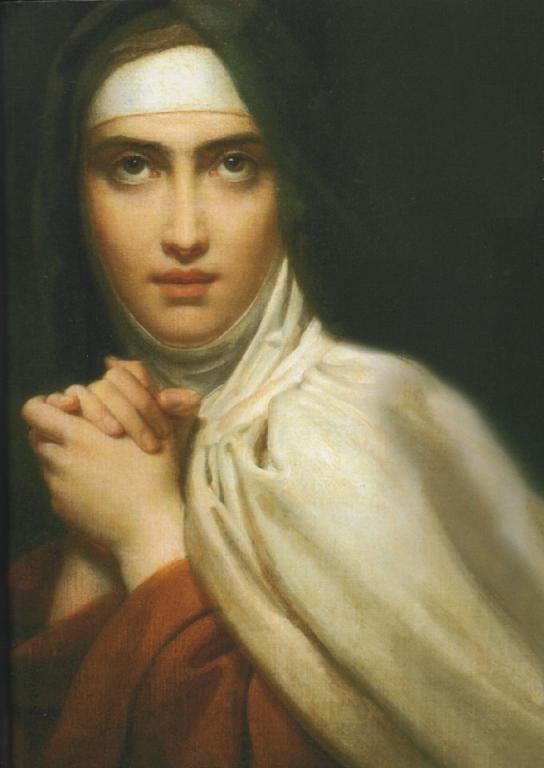
“Teresa of Ávila” (1827) by François Gérard (1770-1837). Public domain.
2015 also marks the 500th anniversary of the birth year of Saint Teresa of Ávila, born on March 28, 1515. Teresa Sánchez de Cepeda y Ahumada entered a Carmelite convent as a young woman, and despite ill health went on to become not only a great mystic and contemplative, but also the spearhead of the Discalced Carmelite reform, which began in Spain in 1562 with the founding of the Convent of St. Joseph, where Teresa along with several other nuns sought to follow a more rigorously contemplative religious life in the spirit of the earliest Carmelites. While the reform met with much opposition in Teresa’s lifetime, she — along with her protege, Saint John of the Cross — managed to establish fourteen new convents, thus setting the stage for the formal establish of the Discalced Carmelites in 1593. As a woman with a vibrant prayer life and a vivid relationship with Christ as both her king and her lover, Teresa was often misunderstood by her confessors or other spiritual mentors. In the 1560s one of her confessors instructed her to write an account of her life; the result, The Book of My Life, is a classic spiritual autobiography on a par with Augustine’s Confessions or Merton’s Seven Storey Mountain. Numerous other writings followed, including two renowned masterpieces of mystical literature: The Way of Perfection, written for the Carmelites as a manual of prayer, and Interior Castle, a brilliant depiction of the stages of mystical faith, comparing the developmental spiritual life to a castle where Christ presides as lord in the center, and various “mansions” or rooms represent different dimensions of prayer and sanctification as a soul seeks union with the Divine lover. Not only has Teresa been canonized as a saint, she is one of only four women to be declared a “Doctor of the Church,” meaning her writings are considered exemplary teachings of the Catholic faith.
2015 is likewise the 500th anniversary of the birth year of Saint Philip Neri, born on July 21, 1515. Neri was not a writer and so may not enjoy the same renown as Merton or Teresa, but he is remembered as the founder of a religious order, the Congregation of the Oratory, and especially as a proponent of a cheerful, even playful spirituality — certainly not the norm in the sixteenth century! “A joyful heart is more easily made perfect than a downcast one,” he said, revealing a positive piety that made him a favorite among the poor. He was canonized a saint in 1622.
And finally, 2015 is the 900th anniversary of the founding of the Cistercian Monastery of Clairvaux, France, traditionally said to have been established on June 25, 1115. Clairvaux matters because its first abbot, Bernard, is — while not as well known today as Merton or Teresa — one of the most important figures in the entire history of western Christian mysticism. Saint Bernard of Clairvaux wrote prolifically, including a classic treatise On Loving God and a sublime set of mystical Sermons On the Song of Songs, and was the first important voice in the tradition to articulate the relationship between the individual and God in terms of passionate love. St. Bernard was a key figure in the development of medieval devotion to Mary, helped to establish Saint Hildegard of Bingen’s reputation as a mystic and visionary, and mentored pope Eugene III. St. Bernard was deeply involved in both church and secular politics — his reputation is marred because of his support for the second crusade — but his lasting legacy must be his spirituality, encoded in writing which is eloquent, luminous, and at times bitingly funny. Under Saint Bernard’s guidance the Cistercian order was transformed from a single struggling monastery to a mighty confederation of over 300 monasteries and priories at the time of his death in 1153. Saint Bernard was canonized in 1174 and declared a Doctor of the Church in 1830.
So enjoy 2015 — and think of the amazing contemplatives and mystics who were born (or began their careers) in 1915, 1515, or 1115. I wonder who will be born this year to make a signfiicant difference for the church of the future?
Please note that if you follow one of these links it will take you to Amazon, where if you make a purchase, the author of this blog receives a small commission. Thank you for doing so — it’s the easiest way you can support the ministry of this blog.
Enjoy reading this blog?
Click here to become a patron.

Previous Post
December 5, 2014
Do Contemplatives Need Bible Software?
Next Post

January 22, 2015 How to Stay in Touch
Browse Our Archives
Select a Category Activism Announcements Art Books Catholicism Celtic Christianity Christian mysticism Christianity Contemplation Current events Etc. Family humor interfaith dialogue Interfaith Wisdom Interspirituality Lay Cistercians Living the Faith Meditation movies Mysticism Mystics nature Poetry Reviews Scripture silence Spirituality Uncategorized Writing
Select a Month February 2025 January 2025 November 2024 September 2024 August 2024 July 2024 June 2024 May 2024 March 2024 January 2024 December 2023 November 2023 August 2023 June 2023 April 2023 March 2023 February 2023 January 2023 December 2022 November 2022 October 2022 September 2022 August 2022 July 2022 June 2022 May 2022 April 2022 February 2022 January 2022 December 2021 November 2021 October 2021 September 2021 August 2021 July 2021 June 2021 May 2021 April 2021 March 2021 February 2021 January 2021 December 2020 November 2020 October 2020 September 2020 August 2020 July 2020 June 2020 May 2020 April 2020 March 2020 February 2020 January 2020 December 2019 November 2019 October 2019 September 2019 August 2019 July 2019 June 2019 May 2019 April 2019 March 2019 February 2019 January 2019 December 2018 November 2018 October 2018 September 2018 August 2018 July 2018 June 2018 May 2018 April 2018 March 2018 February 2018 January 2018 December 2017 November 2017 October 2017 September 2017 August 2017 July 2017 June 2017 May 2017 April 2017 March 2017 February 2017 January 2017 December 2016 November 2016 October 2016 September 2016 August 2016 July 2016 June 2016 May 2016 March 2016 February 2016 January 2016 December 2015 November 2015 October 2015 September 2015 August 2015 July 2015 June 2015 May 2015 April 2015 March 2015 February 2015 January 2015 December 2014 November 2014 October 2014 September 2014 August 2014 July 2014 June 2014 May 2014 April 2014 March 2014 February 2014 January 2014 December 2013 October 2013 September 2013 July 2013 May 2013 January 2013 December 2012 November 2012 August 2012 July 2012 June 2012 March 2012 December 2011 September 2011 October 2010 August 2010 March 2010 September 2009 July 2008 January 2008 December 2007 September 2007 February 2007 January 2007 December 2004
Follow Us!
TAKE THE
Religious Wisdom Quiz
"Train up a child in the way he should go" is found in which book?
Select your answer to see how you score.
Matthew Job Jonah Proverbs
Support this
Column


Related posts from Carl McColman

You don't have to become a monk to...

Mysticism, Faith, and "Knowing" God's Will

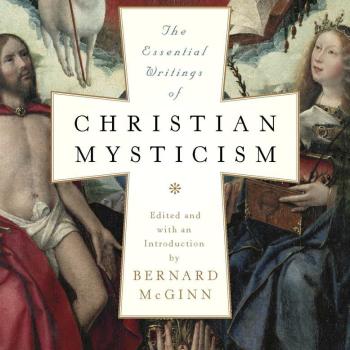
Twelve Mystical Anthologies That Belong in Every Contemplative...
TRENDING AT PATHEOS Contemplative

Handy Contemplative Practices for Political Spaces
A Spiritually Grounded Presence In order to bring a spiritually grounded presence...

Halloween: The Holiday of Loving Your Neighbor
All Hallows Eve Is Halloween the least Christian holiday in America, or...

Can Love Be Saved? Some Thoughts on the...
Happy Valentine's Day! I recently published a post on Patreon called Can...

"This Loving, Uniting Embrace": the Holy Ordinary
Today's guest post is by Mark Longhurst, author of The Holy Ordinary:...

How Are We Called to Live?: More About...
How Are We Called to Live? Many of us struggle with discerning...

A Spiritual Practice of Reading: Join Us Online
A Spiritual Practice of Reading A healthy spiritual practice of reading is...
view all Contemplative blogs
Ad-Free & Subscriber Log-In Subscription Support
- About Us
- 2026 Calendar
- Videos
- Podcasts
- Library of World Religions
- Faith In Media Tracker
- Advertise With Us
- Write for Us
- Privacy Policy
- Terms of Service
- Do Not Sell My Data
- Contact Us
- Radiant Digital
- Manage Newsletter Subscriptions
- Unsubscribe From Notifications
- Sitemap
Copyright 2008-2026, Patheos. All rights reserved.
Subscription Support Ad-Free & Subscriber Log-In
Follow Patheos