
BuddhistCatholicContemplativeEvangelicalGeneral ChristianHinduJewishLatter-day SaintMuslimNew VisionsProgressive Christian
Beliefs
- Buddhist
- Catholic
- Contemplative
- Evangelical
- General Christian
- Hindu
- Jewish
- Latter-day Saint
- More Voices
- Muslim
- New Visions
- Pagan
- Progressive Christian
Topics
- Religion News
- Food and Religion
- Sports and Religion
- Religious Art
- Religious Music and Entertainment
- Religious Events
- History and Religion
- Style and Religion
- Politics and Religion
- Women in Religion
- Recreation Outdoors and Religion
- Business Finance and Religion
- Careers Workplace and Religion
- Education and Religion
- Family Parenting and Religion
- Health Fitness and Religion
- Home and Religion
- Relationships and Religion
- Technology and Religion
- Travel and Religion
Columnists
- Buddhist Columnists
- Business Finance and Religion Columnists
- Careers Workplace and Religion Columnists
- Catholic Columnists
- Contemplative Columnists
- Education and Religion Columnists
- Evangelists Columnists
- Family Parenting and Religion Columnists
- General Christian Columnists
- Health Fitness and Religion Columnists
- Hindu Columnists
- History and Religion Columnists
- Home and Religion Columnists
- Jewish Columnists
- More Voices Columnists
- Latter Day Columnists
- Muslim Columnists
- New Visions Columnists
- Nonreligious Columnists
- Pagan Columnists
- Politics and Religion Columnists
- Progressive Columnists
- Recreation Outdoors and Religion Columnists
- Relationships and Religion Columnists
- Religion News Columnists
- Religious Art Columnists
- Religious Events Columnists
- Religious Music and Entertainment Columnists
- Sports and Religion Columnists
- Style and Religion Columnists
- Technology and Religion Columnists
- Travel and Religion Columnists
- Women in Religion Columnists
Resource Library
- 2026 Calendar
- Library of World Religions
- The 100 Most Holy Places on Earth
- Patheos Answers
- Podcasts
- Videos
- Faith Leaders Database
- Anglican Episcopalian
- Bahai
- Baptist
- Buddhism
- Christianity
- Confucianism
- Eastern Orthodoxy
- Hinduism
- Holiness and Pentecostal
- ISKCON
- Islam
- Judaism
- Lutheran
- Methodist
- The Church of Jesus Christ of Latter-day Saints
- New Age
- Paganism
- Presbytarian and Reformed
- Protestantism
- Religion Behind the Scenes
- Roman Catholic
- Scientology
- Shia Islam
- Sikhism
- Sufism
- Sunni Islam
- Taoism
- Zen
- See all religions
Research Tools
 Ad-Free & Subscriber Log-In Subscription Support
Ad-Free & Subscriber Log-In Subscription Support
Follow Patheos 

- Trending:
- Forgiveness
- |
- Marriage
- |
- Consciousness
- |
- Death Penalty
- |
- Election
- |
- Halloween

- Home
- Contemplative
- Our Choices Determine Who We Are
Our Choices Determine Who We Are
Last updated on: August 2, 2018 at 8:25 pm by Carl "Skye" McColman
Our Choices Determine Who We Are 2018-08-02T20:25:14-04:00 Carl "Skye" McColman
Patheos Explore the world's faith through different perspectives on religion and spirituality! Patheos has the views of the prevalent religions and spiritualities of the world.
A reflection given at Our Lady of Mercy Catholic Church, Artane, Dublin, Ireland, on September 28, 2014
Scripture: Ezekiel 18:25-28, Philippians 2:1-11, Matthew 21:28-32
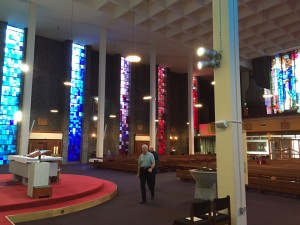
Our Lady of Mercy Church, Artane, Dublin
It is said that actions speak louder than words. It has also been said that our choices determine who we are, or perhaps, who we shall become. Our lessons today highlight this essential spiritual principle. Ezekiel reminds us that when we blame God for our misfortune, often the real cause of our distress lies far closer to home. When we abandon justice to embrace what is evil, common sense dictates that tragedy will soon follow. But those who reject wickedness to do what is right are, in effect, choosing life over death.
Both of these scenarios imply making a significant, life-altering change — not a mere whimsical, spur-of-the-moment choice, but a carefully considered decision. Our Gospel lesson today underlines this point and perhaps even raises the stakes a little bit. Jesus tells us of a father making a request of two sons. He wants them to work in the family vineyard. I think we can assume that neither young man really wants to do his father’s will. The first son is honest about his lack of enthusiasm, although he later decides to go do the work. The other youth, by contrast, says yes to his father’s face but never follows through on the request. Jesus never tells us if the second son had good intentions about doing the work but somehow just never got around to it, or if he actually never meant to do the work at all — in other words, was he guilty of lack of follow-through, or of lying? It doesn’t really matter. Actions speak louder than words. When we say one thing and do another, at the end of the day it is our deeds that seem to matter most.
Jesus tells this story to a specific audience: the chief priests and elders, who were questioning his authority to teach. Typical of Jesus, he refuses to be intimidated by the authorities but he also replies to their challenge by recounting a few parables, of which today’s gospel is the first. When his questioners show that they get the point of the story, Jesus drives the message home by making it clear that no one — not even tax collectors and prostitutes — are beyond the reach of God’s liberating grace, if only they will choose to receive it. Actions speak louder than words. Our choices determine who we are, or perhaps, who we shall become.
Then we turn to today’s New Testament reading, one of the loveliest passages in the entirety of Sacred Scripture. Saint Paul wants his readers to be of the same mind, the same love, united in heart, thinking one thing. He calls upon the Philippians — and, by extension, all the faithful — to have the same attitude, or mind, that is ours in Christ Jesus. What does this mean, to have the mind of Christ? Paul tells us, through a lovely hymn: Jesus, though equal with God, emptied himself, humbling himself in human form even to the point of death. The fancy Greek word here is Kenosis — “emptying.” We embrace the mind of Christ in humility and self-emptying.
Since I’ve given you one Greek word this morning, I may as well give you another — Metanoia, which is rendered in English as “repentance,” a word that we often resist as being too churchy, too pious. But Metanoia, repentance, literally means simply “to change your mind” or perhaps even to go beyond your mind — the Greek prefix “meta-” means “beyond.” When we humbly empty our minds (and hearts) of all that stands in the way of love and life, we create the space for the Holy Spirit to bring healing from within. This is the essence of contemplative prayer — a prayer of radical silence, of emptying ourselves for the purpose of receiving God’s grace.
God’s love is a free gift; we cannot earn it. But we choose whether or not to receive it. When we choose the path of Jesus — the path of humility and silence, of self-emptying and trust, of choosing to do the right thing, even late in the game — when, like the Psalmist, we “wait all the day long” for God’s guidance, compassion and mercy — then we know that God’s grace and forgiveness shall determine who we are, and who we shall become.
Enjoy reading this blog?
Click here to become a patron.

Previous Post
September 18, 2014
Rhiannon's Vigil and Funeral
Next Post

October 26, 2014 Mary and Martha are Sisters
Browse Our Archives
Select a Category Activism Announcements Art Books Catholicism Celtic Christianity Christian mysticism Christianity Contemplation Current events Etc. Family humor interfaith dialogue Interfaith Wisdom Interspirituality Lay Cistercians Living the Faith Meditation movies Mysticism Mystics nature Poetry Reviews Scripture silence Spirituality Uncategorized Writing
Select a Month February 2025 January 2025 November 2024 September 2024 August 2024 July 2024 June 2024 May 2024 March 2024 January 2024 December 2023 November 2023 August 2023 June 2023 April 2023 March 2023 February 2023 January 2023 December 2022 November 2022 October 2022 September 2022 August 2022 July 2022 June 2022 May 2022 April 2022 February 2022 January 2022 December 2021 November 2021 October 2021 September 2021 August 2021 July 2021 June 2021 May 2021 April 2021 March 2021 February 2021 January 2021 December 2020 November 2020 October 2020 September 2020 August 2020 July 2020 June 2020 May 2020 April 2020 March 2020 February 2020 January 2020 December 2019 November 2019 October 2019 September 2019 August 2019 July 2019 June 2019 May 2019 April 2019 March 2019 February 2019 January 2019 December 2018 November 2018 October 2018 September 2018 August 2018 July 2018 June 2018 May 2018 April 2018 March 2018 February 2018 January 2018 December 2017 November 2017 October 2017 September 2017 August 2017 July 2017 June 2017 May 2017 April 2017 March 2017 February 2017 January 2017 December 2016 November 2016 October 2016 September 2016 August 2016 July 2016 June 2016 May 2016 March 2016 February 2016 January 2016 December 2015 November 2015 October 2015 September 2015 August 2015 July 2015 June 2015 May 2015 April 2015 March 2015 February 2015 January 2015 December 2014 November 2014 October 2014 September 2014 August 2014 July 2014 June 2014 May 2014 April 2014 March 2014 February 2014 January 2014 December 2013 October 2013 September 2013 July 2013 May 2013 January 2013 December 2012 November 2012 August 2012 July 2012 June 2012 March 2012 December 2011 September 2011 October 2010 August 2010 March 2010 September 2009 July 2008 January 2008 December 2007 September 2007 February 2007 January 2007 December 2004
Follow Us!
TAKE THE
Religious Wisdom Quiz
How many days was Jesus dead before the resurrection?
Select your answer to see how you score.
One Three Seven Ten
Support this
Column


Related posts from Carl McColman

LSD, Anxiety, and Contemplation: Can Psychedelic Therapy Support...

Finding Your Perfect Prayer Posture
Advice for Contemplatives looking for a Spiritual Community...
A Reason Why Liturgy Matters: "Like Staring Out...
TRENDING AT PATHEOS Contemplative

Handy Contemplative Practices for Political Spaces
A Spiritually Grounded Presence In order to bring a spiritually grounded presence...

Halloween: The Holiday of Loving Your Neighbor
All Hallows Eve Is Halloween the least Christian holiday in America, or...

Can Love Be Saved? Some Thoughts on the...
Happy Valentine's Day! I recently published a post on Patreon called Can...

"This Loving, Uniting Embrace": the Holy Ordinary
Today's guest post is by Mark Longhurst, author of The Holy Ordinary:...

How Are We Called to Live?: More About...
How Are We Called to Live? Many of us struggle with discerning...

A Spiritual Practice of Reading: Join Us Online
A Spiritual Practice of Reading A healthy spiritual practice of reading is...
view all Contemplative blogs
Ad-Free & Subscriber Log-In Subscription Support
- About Us
- 2026 Calendar
- Videos
- Podcasts
- Library of World Religions
- Faith In Media Tracker
- Advertise With Us
- Write for Us
- Privacy Policy
- Terms of Service
- Do Not Sell My Data
- Contact Us
- Radiant Digital
- Manage Newsletter Subscriptions
- Unsubscribe From Notifications
- Sitemap
Copyright 2008-2026, Patheos. All rights reserved.
Subscription Support Ad-Free & Subscriber Log-In
Follow Patheos