
BuddhistCatholicContemplativeEvangelicalGeneral ChristianHinduJewishLatter-day SaintMuslimNew VisionsProgressive Christian
Beliefs
- Buddhist
- Catholic
- Contemplative
- Evangelical
- General Christian
- Hindu
- Jewish
- Latter-day Saint
- More Voices
- Muslim
- New Visions
- Pagan
- Progressive Christian
Topics
- Religion News
- Food and Religion
- Sports and Religion
- Religious Art
- Religious Music and Entertainment
- Religious Events
- History and Religion
- Style and Religion
- Politics and Religion
- Women in Religion
- Recreation Outdoors and Religion
- Business Finance and Religion
- Careers Workplace and Religion
- Education and Religion
- Family Parenting and Religion
- Health Fitness and Religion
- Home and Religion
- Relationships and Religion
- Technology and Religion
- Travel and Religion
Columnists
- Buddhist Columnists
- Business Finance and Religion Columnists
- Careers Workplace and Religion Columnists
- Catholic Columnists
- Contemplative Columnists
- Education and Religion Columnists
- Evangelists Columnists
- Family Parenting and Religion Columnists
- General Christian Columnists
- Health Fitness and Religion Columnists
- Hindu Columnists
- History and Religion Columnists
- Home and Religion Columnists
- Jewish Columnists
- More Voices Columnists
- Latter Day Columnists
- Muslim Columnists
- New Visions Columnists
- Nonreligious Columnists
- Pagan Columnists
- Politics and Religion Columnists
- Progressive Columnists
- Recreation Outdoors and Religion Columnists
- Relationships and Religion Columnists
- Religion News Columnists
- Religious Art Columnists
- Religious Events Columnists
- Religious Music and Entertainment Columnists
- Sports and Religion Columnists
- Style and Religion Columnists
- Technology and Religion Columnists
- Travel and Religion Columnists
- Women in Religion Columnists
Resource Library
- 2026 Calendar
- Library of World Religions
- The 100 Most Holy Places on Earth
- Patheos Answers
- Podcasts
- Videos
- Faith Leaders Database
- Anglican Episcopalian
- Bahai
- Baptist
- Buddhism
- Christianity
- Confucianism
- Eastern Orthodoxy
- Hinduism
- Holiness and Pentecostal
- ISKCON
- Islam
- Judaism
- Lutheran
- Methodist
- The Church of Jesus Christ of Latter-day Saints
- New Age
- Paganism
- Presbytarian and Reformed
- Protestantism
- Religion Behind the Scenes
- Roman Catholic
- Scientology
- Shia Islam
- Sikhism
- Sufism
- Sunni Islam
- Taoism
- Zen
- See all religions
Research Tools
 Ad-Free & Subscriber Log-In Subscription Support
Ad-Free & Subscriber Log-In Subscription Support
Follow Patheos 

- Trending:
- Forgiveness
- |
- Marriage
- |
- Consciousness
- |
- Death Penalty
- |
- Election
- |
- Halloween

- Home
- Contemplative
- The Hidden Tradition of Christian Mysticism
The Hidden Tradition of Christian Mysticism
Last updated on: November 30, 2018 at 7:41 pm by Carl "Skye" McColman
The Hidden Tradition of Christian Mysticism 2018-11-30T19:41:04-04:00 Carl "Skye" McColman
Patheos Explore the world's faith through different perspectives on religion and spirituality! Patheos has the views of the prevalent religions and spiritualities of the world.
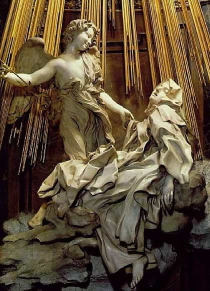
The Ecstasy of Saint Teresa of Avila
Karl Rahner, one of the most renowned Christian theologians of the twentieth century, once famously remarked that “the Christian of the future will be a mystic or will not exist at all.”
For people whose experience of Christianity is, often, little more than a religion invested in obedience and in patriarchal morality, this seems to be a bold statement. After all, mysticism implies not legalistic religion, but living spirituality — heart-felt intimacy with God, centered on a miraculous and joyful appreciation of the Spirit’s ability to heal and transform lives. Can Christianity and mysticism really co-exist?
Not only can Christianity be a mystical faith, but in fact a mystical element of Christianity has existed since the time of Jesus. But for a variety of historical, social and political reasons, Christian mysticism has always existed on the margins of the church. In the fourth and fifth centuries, as Christianity gradually moved into its position as the dominant religion in the Roman empire, the mystics, contemplatives, and others who sought profound intimate communion with God retreated from the cities into the deserts and the wilderness. These “Desert Fathers and Mothers” were the founders of the first monasteries — intentional communities of people who came together to live in perpetual prayer and meditation. By the middle ages, Christian mystics were, for the most part, found only in the monasteries and convents; then in the sixteenth century, when the Protestant Reformation led to religious strife (and, often, bloodshed), mystical spirituality fell under suspicion by both Catholics and Protestants. Although there have been mystics in every century of the Christian era, the sad reality is that, because of the political nature of the institutional church, many mystics have been persecuted, some even killed, and others learned to camouflage their wisdom teachings in carefully worded books and poems that appeared non-threatening to the religious authorities.
So the mystics (and their teachings) are, in a very real way, Christianity’s best-kept secret. And even though some Christians of the third millennium remain suspicious of mysticism, many others have begun to embrace the transfiguring beauty of such core spiritual practices as meditation, lectio divina (“sacred reading,” a meditative approach to the Bible and other wisdom texts), and contemplative prayer — the profound form of prayer in which meditative silence is offered directly to God for the purpose of seeking and fostering deeper spiritual intimacy and communion. Meanwhile, even familiar Christian practices such as the Catholic Rosary are being rediscovered as tools for entering into contemplative silence; while other, lesser known exercises (such as deeply meditative “prayer of the heart” from Eastern Orthodox Christianity) have gained newfound popularity as means for Christians to embrace unitive (nondual) states of consciousness, where — in the words of one great mystic, Meister Eckhart — “The eye with which I see God is the same eye with which God sees me. My eye and God’s eye is one eye, and one sight, and one knowledge, and one love.”
The roots of Christian mystical wisdom are found in the Bible itself. Unfortunately, centuries of reading and interpreting the Bible according to perspectives that have often been subtly (or explicitly) anti-mystical has made the visionary power of the New Testament’s wisdom teachings far too easy to miss. For example, the first verse of Psalm 65 makes the bluntly contemplative statement “To you, God, silence is praise” in the original Hebrew — but this verse has often been mistranslated when rendered into English or other languages; presumably many scholars who translate the Bible could not wrap their minds around the idea that silence could actually be a means for worship.
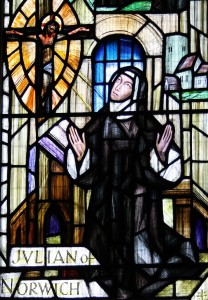
Julian of Norwich
But for those who have “eyes to see,” the mystical message of such writings as the Gospel of John or the Letters to the Ephesians can become obvious —just like the 3-D image in a “Magic Eye” poster is hidden at first, but becomes impossible to miss when we learn to look for it in just the right way. From a mystical perspective, “just the right way” means approaching the Bible as a document encoded with messages about what the ancient Greeks called theosis — participation in the very nature of the Divine.
Christianity is built on two controversial—but thoroughly mystical—teachings: first, that Jesus of Nazareth is both fully human and fully divine, and furthermore, that this same Jesus is, literally, one with God, one person in a trinity of persons who share the Divine Unity. For many Christians, these teachings have been interpreted to stress humanity’s separation from Divinity: Christ may be one with God, but no one else is. This, however, is not supported by the mystical wisdom found in the New Testament. Indeed, Jesus proclaims that he is one with God in the Gospel of John (see verse 10:30). But Biblical writings also stress the oneness between Jesus and those who follow his wisdom teachings. “We, who are many, are one body in Christ, and individually members one of another,” proclaims Saint Paul in his letter to the Romans. Christ is one with God, and we are one with Christ. Saint Peter is even more blunt, proclaiming that by the promises of Christ, his followers become “partakers of the divine nature.” Mystically speaking, Christianity points toward Divine communion as the ultimate destiny of being human.
Granted, Christian mystical theology is not the same as other wisdom teachings from around the world. Some wisdom paths point toward union with the Divine as the ultimate truth, suggesting that the experience of being a separate human person is, ultimately, simply an illusion that will fall away when we finally, fully, recognize our oneness with the Sacred. Christianity offers a different approach: in which the distinction between God and humanity is taken at face value, understood not as an illusion but rather as a simple point of fact in how the cosmos is structured. Such a distinction exists, according to Christian mystical teaching, not because humanity is inferior, but rather because it is only in the distinction between Divinity and humanity that we are able to fully, truly and ecstatically love each other. Thus, Christian mysticism celebrates communion with God as the ultimate destiny of humankind: eternal life is a never-ending cosmic dance, in which humanity and Divinity interpenetrate one another, joyfully sharing love and communion like a flower that is forever opening wider and deeper, evolving into ever new dimensions of blissful celebration.
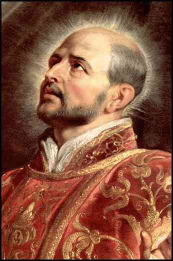
Ignatius of Loyola
While Christianity has its own distinctive mystical teachings that in some ways mark it as different from other spiritual paths, those who drink deeply from the wells of Christian contemplation tend, like mystics from all paths, to be far more interested in what unites people of different traditions, rather than what separates us. In the history of the Christian mystics, again and again the contemplatives have been the ones who reach out beyond the boundaries of institutional religion to embrace the teachings of other faiths. Clement and Origen, early mystics from the second and third centuries, embraced the wisdom of the pagan Greek philosophers in their teachings. Later, in Ireland and other Celtic lands, the saints of the Christian monasteries integrated druidic teachings and practices into their spiritual observance. In renaissance Spain, a number of Christians incorporated elements of the Kabbalah into their teaching; and the twentieth century was full of visionary Christians who reached out to the spiritual treasures of other cultures and paths: the Benedictine monk Bede Griffiths embraced Vedanta while the Trappist monk Thomas Merton explored Buddhism; Valentin Tomberg integrated Catholicism and Anthroposophy; and Mary Margaret Funk continues the work of deep interfaith encounter as she, a Benedictine nun, engages in constructive dialogue with members of the Muslim faith community. For Christians such as these, devotion to the wisdom teachings of Jesus and his followers is not about religious exclusivity or a belief that Christianity is superior to other faiths; rather it is about a joyful celebration of the beauty, splendor and diversity of all positive paths.
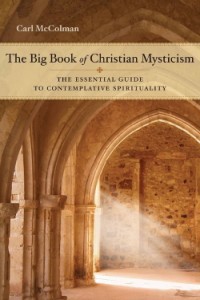
To learn more about Christian mysticism, read The Big Book of Christian Mysticism: The Essential Guide to Contemplative Spirituality by Carl McColman.
What difference can the mystical element of Christianity make in our world today? Sadly, most Christians remain unfamiliar with the spiritual wisdom hidden in their own tradition. But more and more people, both inside and beyond the institutional church, are turning to classic spiritual disciplines such as meditation, contemplation, lectio divina, regular chanting or recitation of the Psalms and other prayers (known as the Divine Office), devotion to Christ, Mary, and the saints, and turning to monasteries and convents for retreats grounded in silence and under the guidance of monks and nuns who have devoted their entire lives to prayer. The result, of course, is that more and more people are opening themselves up to joyful, visionary, and transfiguring encounters with Christ and the Holy Spirit. More and more Christians are finding in their faith not just the legalistic religion of old, but exciting possibilities of unitive consciousness found through silent communion with God. Such encounters may be thought of as “supernatural” but the case could be made that mystical spirituality is utterly natural: it is something that can reach us in the ordinary moments of life. At the same time, the encounter with God could also be so subtle that it is easily missed. No matter how glorious or humble, extraordinary or ordinary, such moments of communion with God often are marked by a profound sense of Divinely-given love, joy, and peace. They also can lead to a deeper sense of trust in God, love for other human beings, and — most crucial of all for our time — a profound respect for people of other cultures and faiths.
In other words, mystical wisdom and practice is not only the best hope for the future of Christianity, but it can also contribute to something that we all yearn for: a world shaped by peace and harmony among the people of all positive paths.
This article, in a slightly different form, originally appeared in the Summer 2010 issue of Evolve! (volume 9, number 3).
Enjoy reading this blog?
Click here to become a patron.

Stay in touch! Connect with Carl McColman on Facebook:
Previous Post

July 30, 2014
Lectio Divina Every Day
Next Post

August 8, 2014 A Beautiful New Bible and a Contemplative Request
Browse Our Archives
Select a Category Activism Announcements Art Books Catholicism Celtic Christianity Christian mysticism Christianity Contemplation Current events Etc. Family humor interfaith dialogue Interfaith Wisdom Interspirituality Lay Cistercians Living the Faith Meditation movies Mysticism Mystics nature Poetry Reviews Scripture silence Spirituality Uncategorized Writing
Select a Month February 2025 January 2025 November 2024 September 2024 August 2024 July 2024 June 2024 May 2024 March 2024 January 2024 December 2023 November 2023 August 2023 June 2023 April 2023 March 2023 February 2023 January 2023 December 2022 November 2022 October 2022 September 2022 August 2022 July 2022 June 2022 May 2022 April 2022 February 2022 January 2022 December 2021 November 2021 October 2021 September 2021 August 2021 July 2021 June 2021 May 2021 April 2021 March 2021 February 2021 January 2021 December 2020 November 2020 October 2020 September 2020 August 2020 July 2020 June 2020 May 2020 April 2020 March 2020 February 2020 January 2020 December 2019 November 2019 October 2019 September 2019 August 2019 July 2019 June 2019 May 2019 April 2019 March 2019 February 2019 January 2019 December 2018 November 2018 October 2018 September 2018 August 2018 July 2018 June 2018 May 2018 April 2018 March 2018 February 2018 January 2018 December 2017 November 2017 October 2017 September 2017 August 2017 July 2017 June 2017 May 2017 April 2017 March 2017 February 2017 January 2017 December 2016 November 2016 October 2016 September 2016 August 2016 July 2016 June 2016 May 2016 March 2016 February 2016 January 2016 December 2015 November 2015 October 2015 September 2015 August 2015 July 2015 June 2015 May 2015 April 2015 March 2015 February 2015 January 2015 December 2014 November 2014 October 2014 September 2014 August 2014 July 2014 June 2014 May 2014 April 2014 March 2014 February 2014 January 2014 December 2013 October 2013 September 2013 July 2013 May 2013 January 2013 December 2012 November 2012 August 2012 July 2012 June 2012 March 2012 December 2011 September 2011 October 2010 August 2010 March 2010 September 2009 July 2008 January 2008 December 2007 September 2007 February 2007 January 2007 December 2004
Follow Us!
TAKE THE
Religious Wisdom Quiz
What order did the four beasts that rose from the sea in Daniel's vision appear?
Select your answer to see how you score.
Lion with eagle's wings, bear, leopard, terrifying beast with iron teeth Terrifying beast with iron teeth, lion with eagle's wings, leopard, bear Bear, lion with eagle's wings, terrifying beast with iron teeth, leopard Leopard, bear, lion with eagle's wings, terrifying beast with iron teeth
Support this
Column


Related posts from Carl McColman

"This Loving, Uniting Embrace": the Holy Ordinary

You don't have to become a monk to...
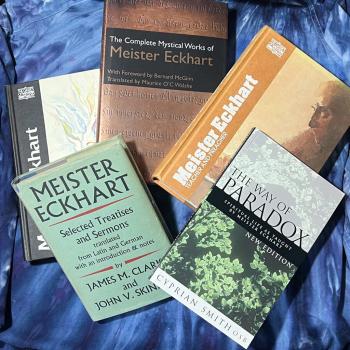
Meister Eckhart: A Deeper Dive (33 Books to...

Join Me for "24 Meditations for 2024"
TRENDING AT PATHEOS Contemplative

Handy Contemplative Practices for Political Spaces
A Spiritually Grounded Presence In order to bring a spiritually grounded presence...

Halloween: The Holiday of Loving Your Neighbor
All Hallows Eve Is Halloween the least Christian holiday in America, or...

Can Love Be Saved? Some Thoughts on the...
Happy Valentine's Day! I recently published a post on Patreon called Can...

"This Loving, Uniting Embrace": the Holy Ordinary
Today's guest post is by Mark Longhurst, author of The Holy Ordinary:...

How Are We Called to Live?: More About...
How Are We Called to Live? Many of us struggle with discerning...

A Spiritual Practice of Reading: Join Us Online
A Spiritual Practice of Reading A healthy spiritual practice of reading is...
view all Contemplative blogs
Ad-Free & Subscriber Log-In Subscription Support
- About Us
- 2026 Calendar
- Videos
- Podcasts
- Library of World Religions
- Faith In Media Tracker
- Advertise With Us
- Write for Us
- Privacy Policy
- Terms of Service
- Do Not Sell My Data
- Contact Us
- Radiant Digital
- Manage Newsletter Subscriptions
- Unsubscribe From Notifications
- Sitemap
Copyright 2008-2026, Patheos. All rights reserved.
Subscription Support Ad-Free & Subscriber Log-In
Follow Patheos