
BuddhistCatholicContemplativeEvangelicalGeneral ChristianHinduJewishLatter-day SaintMuslimNew VisionsProgressive Christian
Beliefs
- Buddhist
- Catholic
- Contemplative
- Evangelical
- General Christian
- Hindu
- Jewish
- Latter-day Saint
- More Voices
- Muslim
- New Visions
- Pagan
- Progressive Christian
Topics
- Religion News
- Food and Religion
- Sports and Religion
- Religious Art
- Religious Music and Entertainment
- Religious Events
- History and Religion
- Style and Religion
- Politics and Religion
- Women in Religion
- Recreation Outdoors and Religion
- Business Finance and Religion
- Careers Workplace and Religion
- Education and Religion
- Family Parenting and Religion
- Health Fitness and Religion
- Home and Religion
- Relationships and Religion
- Technology and Religion
- Travel and Religion
Columnists
- Buddhist Columnists
- Business Finance and Religion Columnists
- Careers Workplace and Religion Columnists
- Catholic Columnists
- Contemplative Columnists
- Education and Religion Columnists
- Evangelists Columnists
- Family Parenting and Religion Columnists
- General Christian Columnists
- Health Fitness and Religion Columnists
- Hindu Columnists
- History and Religion Columnists
- Home and Religion Columnists
- Jewish Columnists
- More Voices Columnists
- Latter Day Columnists
- Muslim Columnists
- New Visions Columnists
- Nonreligious Columnists
- Pagan Columnists
- Politics and Religion Columnists
- Progressive Columnists
- Recreation Outdoors and Religion Columnists
- Relationships and Religion Columnists
- Religion News Columnists
- Religious Art Columnists
- Religious Events Columnists
- Religious Music and Entertainment Columnists
- Sports and Religion Columnists
- Style and Religion Columnists
- Technology and Religion Columnists
- Travel and Religion Columnists
- Women in Religion Columnists
Resource Library
- 2026 Calendar
- Library of World Religions
- The 100 Most Holy Places on Earth
- Patheos Answers
- Podcasts
- Videos
- Faith Leaders Database
- Anglican Episcopalian
- Bahai
- Baptist
- Buddhism
- Christianity
- Confucianism
- Eastern Orthodoxy
- Hinduism
- Holiness and Pentecostal
- ISKCON
- Islam
- Judaism
- Lutheran
- Methodist
- The Church of Jesus Christ of Latter-day Saints
- New Age
- Paganism
- Presbytarian and Reformed
- Protestantism
- Religion Behind the Scenes
- Roman Catholic
- Scientology
- Shia Islam
- Sikhism
- Sufism
- Sunni Islam
- Taoism
- Zen
- See all religions
Research Tools
 Ad-Free & Subscriber Log-In Subscription Support
Ad-Free & Subscriber Log-In Subscription Support
Follow Patheos 

- Trending:
- Forgiveness
- |
- Marriage
- |
- Consciousness
- |
- Death Penalty
- |
- Election
- |
- Halloween

- Home
- Contemplative
- Living with Hospice
Living with Hospice
Last updated on: August 31, 2021 at 9:00 am by Carl "Skye" McColman
Living with Hospice 2021-08-31T09:00:51-04:00 Carl "Skye" McColman
Patheos Explore the world's faith through different perspectives on religion and spirituality! Patheos has the views of the prevalent religions and spiritualities of the world.
Today is my stepdaughter Rhiannon’s 29th birthday. It’s always a sweet day, but today is a bit sweeter than most, because just a few months ago we thought she wouldn’t live to see it.
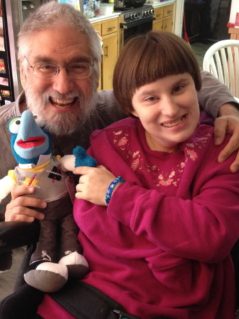
Carl and Rhiannon (with Gonzo the Great), Christmas 2013. Photo by Fran McColman, used by permission.
As I’ve explained in a previous post, Rhiannon lives with kidney and liver disease. Born with polycystic kidney disease that was so serious she almost didn’t make it out of neonatal intensive care, she developed problems with her liver as a result of her kidney problems. To top it all off, she is also partially paralyzed, thanks to a stroke she suffered when only three years old; she has never escaped a wheelchair since. The stroke has left her moderately intellectually disabled, and while she is very wise in some ways (she’s an amazingly astute judge of character), she basically relates to the world with the mind of an 8-year-old.
A few years ago it became apparent that she also suffered from dangerously low blood counts, due perhaps to the fact that her spleen sequesters blood as a result of the liver disease and portal hypertension. Hard and engorged so large that it almost feels like she has a football in her belly, Rhiannon’s spleen has become a repository for her blood cells, to the point that the blood literally dies before making it through that organ. To deal with the problem she began receiving procrit injections (procrit is a medicine that chemotherapy patients take to support the production of blood cells during their treatment), and then periodic blood transfusions.
Unfortunately because of the complexity of Rhiannon’s overall condition, more aggressive treatments — dialysis and/or organ transplants — were deemed too dangerous. So for several years she has lived on not only borrowed time, but borrowed blood. That strategy always had an expiration date, and we realized at the beginning of this year that we had begun to run out of options. Her markers for end-stage kidney disease, including levels of phosphorus and potassium in her blood, were rising. The transfusions, which a few years back were needed only every 4 – 6 months, now barely kept her blood levels out of the danger zone for two months. We were taking her back to the Emory Clinic every two weeks to have her blood screened, and when she needed blood it meant an inpatient stay, because her veins had become so scarred that only a central line inserted in her neck would work. Understandably freaked out by all this, Rhiannon needed sedation both to have the line installed and, a week later when her counts were finally stabilized (not at “normal” levels, mind you, just high enough to be out of immediate danger), another round of sedation was required to remove the line. We were all wrecks. Trying to stay one step ahead of her falling blood counts was rapidly becoming a full-time job.
And then, in January, during one last, most-horrendous-of-all hospital stay, conversations with a variety of friends and family all led to the same place: “Have you considered hospice care?”
Fran and I had originally resisted any mention of hospice. Both of my parents entered hospice late in the game: my mother lasted 8 days from admission into hospice until her death; my father died five days after we began talking about hospice, before we even had him properly admitted. So in our minds, hospice meant imminent death. It was like a parachute that you wouldn’t deploy until you jumped out of the rapidly-falling airplane. But on the Wednesday after Rhiannon was discharged from the hospital, Fran called me and asked me to meet her for lunch. Joining us was Lisa, a mutual friend who is a hospice nurse.
Lisa patiently explained that hospice meant far more than crisis management at the hour of death — in fact, she noted, most Americans tend to wait too long before accepting hospice care, so that the benefits of hospice remain largely untapped. The emphasis was not on the dying, but on living while dying. With a focus on palliative care, spiritual and emotional concerns, and support for the entire family, it was designed to be holistic, humane, and loving for both the terminally ill person and their loved ones.
The following day we met with Rhiannon’s primary care physician, and the news was sobering. While her blood counts were barely acceptable (thanks to the recent week-long hospital stay), her kidney markers were elevated. It seemed that, despite Fran’s almost heroic efforts to manage every detail of Rhiannon’s diet, her counts were still rising, perhaps due to minerals like potassium and phosphorus being present in the transfused blood. To address one of Rhiannon’s problems meant exacerbating another. We mentioned hospice to the primary, and she was supportive. Then she said words that terrified us: “I think she only has a few weeks.”
So the next step was to bring Rhiannon into the conversation. For this we enlisted the help of Lisa and another friend, Liz, who had recently lost her father to cancer but who had been happy with his hospice experience. This was a challenging moment, for Fran and I had carefully shielded Rhiannon from talk about being terminally ill — not because she didn’t deserve to know, but because we wanted her approach to healthcare to be marked by hope. But it was time to shift the emphasis from hope to trust.
The five of us sat down and Lisa took the lead, explaining to Rhiannon that the doctors had determined that no matter what they did, she was not going to “get better.” Rhiannon took it in, and asked her mom to hold her, and cried for a minute or two — but only for a short time. Lisa continued. “You know, because of this, you have a choice. We can keep taking you to the hospital every time your blood counts drop, but we think you don’t like going to the hospital. Is that right?”
“Bingo!” Rhiannon said, and we all laughed. Lisa continued. “Rhiannon, there is a kind of health care called hospice. It is different from the care you get in the hospital. With hospice, we don’t try to ‘fix things,’ but we do take good care of you. Best of all, you don’t have to go to the hospital with hospice, unless you decide you want to. Do you think you would be interested in hospice?”
Rhiannon was silent for a moment, allowing this information to be processed by her stroke-wounded brain. She looked at Lisa and said simply, “No more hospital?”
We were all wiping tears from our eyes. Lisa nodded. “No more hospital, unless you want it.”
Then Rhiannon said something that has haunted me. “I go to the hospital because my doctors want it.” Rhiannon tends to form strong affectional bonds with her doctors: she treats them as friends, not healthcare providers. In that moment it hit me. Rhiannon has been cooperating with her grueling healthcare to please others; it’s not what she necessarily wanted herself.
“Well, you don’t have to go any more, if you choose hospice,” Lisa pointed out.
“Yes,” said Rhiannon, and so we began a new journey.
• • •
Fran went on family medical leave from her job at the school board, and I cancelled much of my own work (readers of this blog will notice that I have been quieter than normal since January). We sent an email to over 100 family members and friends, announcing Rhiannon’s and our decision. The response was swift and enormous. Over the next week, friends and family, some of whom we hadn’t seen in ages, came by the house. My brother and sister-in-law drove up from Tampa; other relatives came from middle Georgia and South Carolina. Every day folks showed up, and Rhiannon reveled in the attention. The house felt like party central. As the weekend came near, it became obvious we would be spending it receiving, or dining, with a succession of loved ones. I sat down with Rhiannon to review the schedule, feeling like her social secretary.
“This is the best week ever!” she declared. Long-suffering Rhiannon, for years she has been an extraverted prisoner living with two introverted parents. Now, finally, she was getting the social juice she loved. I shook my head bemusedly, hoping that I could be so at peace that when I enter hospice I also could have my “best week ever.”
With the formal admission into hospice came its own flurry of activity. Since Rhiannon would continue to live at home with us, the care would come to our house. We found to our delight that medicine was delivered to our front door, along with a rota of nurses, a social worker and a chaplain. Fran and I took walks and talked about the enormity of the loss we were facing. We met with a priest and a funeral home director, and got all the arrangements in order. After all, the doctor said it would just be a matter of weeks.
But Rhiannon, who has been beating the odds ever since she survived neonatal intensive care, was not ready to call it a day. The weeks progressed and it slowly became evident to us that her condition was not so much “declining” as more or less “stable.” That’s not to say there hasn’t been some signs of her illness progressing: she gets tired much more easily, is very pale, uses oxygen all night long (and often sleeps for 14 hours or more), and has begun to show some hints of swelling. But only “hints” — she looks chubby, not bloated. Most important of all, she remains in good spirits, always up for a visit with friends or another dose of her and my incessant banter. We settled into a new routine of pizza every Monday night at a local joint with some close friends, and the obligatory visit from hospice nurses (including Lisa, who has proved to be as good a nurse as a friend) every Tuesday and Friday. The nurses check her vitals, read her blood oxygen, and — after four months — report that she is, relatively speaking, doing fine.
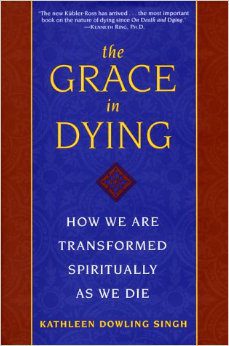
“The Grace in Dying” — a book which explores the contemplative dimension of death and dying
Fran’s sister-in-law suggested we read a book called Final Gifts: Understanding the Special Awareness, Needs, and Communications of the Dying by Maggie Callanan & Patricia Kelly; in reading that book I saw a reference to another, The Grace in Dying: How We Are Transformed Spiritually as We Die by Kathleen Dowling Singh. Singh begins her book by saying “If you…[or]…your loved one is facing death this soon, put the book down. And know that your loved one will be safe.” At the time I read it, I wasn’t sure just how soon Rhiannon’s death would be, but I kept reading anyway, and I’m glad I did. Where Callanan and Kelly offer general insight into the dying experience, Singh zeroes in on the spiritual dynamics of the process, and interprets dying through the lens of contemplation. It’s a compelling (and I believe, liberating) way to view death and dying. I am learning an entirely new way of thinking about death.
It’s not just Rhiannon, or reading a good book. I realize now that years of contemplative practice have helped me to reach this time in my life. Being affiliated with a monastery and seeing how accepting the monks are, in the presence of death, has also been a huge help. I’m not just talking about religious faith, although I believe a healthy faith in a loving and forgiving God certainly can be a blessing here. No, it’s something larger than mere religion. It has to do with trust and love. It has to do with a recognition that unknowing, and silence, and even loss are not our enemies.
When Rhiannon entered hospice in the middle of January, we thought she wouldn’t live but a few weeks. Whether that meant the middle of February or the middle of March, we didn’t know, but none us were planning to celebrate her birthday with her still here. Yet here we are (hallelujah). Chastened a bit, we no longer are worrying about how long she has. Friends have told us of people living with hospice for well over a year, so now we think it’s just in God’s hands. We’ve made the arrangements we’ve needed to make, so now Fran and I (and Rhiannon, who is the one most at peace with all this) are learning to live with the contingency, the unknowing, the necessity of remaining in the present moment. Fran’s gone back to work, and I’ve begun working on my next book. At a moment’s notice, we’ll be back at Rhiannon’s side. But for now, we’re taking things one day, one step, one breath at a time.
Isn’t that true for all of us? Of course it is. Hospice just makes it all so much more vividly real.
And in case you’re wondering: for her birthday, Rhiannon is getting a big jar of animal crackers, a copy of the Frozen DVD, and a pizza party with friends. Why such a modest birthday? Well, whenever we’ve asked her what she wants for her birthday, she just says she wants to spend time with people she loves.
UPDATE: Rhiannon completed her earthly journey on Saturday, August 30, 2014, approximately 3 and 1/2 months after this post was written. You can read about her passing at Completing the Hospice Journey.
More fun with Rhiannon, Fran and friends. A performance of
Pete the Cat at the L’Arche Atlanta Coffeehouse, 5-17-2014.
Disclosure: If you follow the link of a product mentioned in this post and purchase it or other items from Amazon.com, I receives a small commission from Amazon. Thank you for doing so — your support keeps this blog going.
Enjoy reading this blog?
Click here to become a patron.

Previous Post

May 10, 2014
A Prayer for the Morning
Next Post

June 1, 2014 "That God's Love Might Live in Us" — A Few Lovely Words from Thomas Merton
Browse Our Archives
Select a Category Activism Announcements Art Books Catholicism Celtic Christianity Christian mysticism Christianity Contemplation Current events Etc. Family humor interfaith dialogue Interfaith Wisdom Interspirituality Lay Cistercians Living the Faith Meditation movies Mysticism Mystics nature Poetry Reviews Scripture silence Spirituality Uncategorized Writing
Select a Month February 2025 January 2025 November 2024 September 2024 August 2024 July 2024 June 2024 May 2024 March 2024 January 2024 December 2023 November 2023 August 2023 June 2023 April 2023 March 2023 February 2023 January 2023 December 2022 November 2022 October 2022 September 2022 August 2022 July 2022 June 2022 May 2022 April 2022 February 2022 January 2022 December 2021 November 2021 October 2021 September 2021 August 2021 July 2021 June 2021 May 2021 April 2021 March 2021 February 2021 January 2021 December 2020 November 2020 October 2020 September 2020 August 2020 July 2020 June 2020 May 2020 April 2020 March 2020 February 2020 January 2020 December 2019 November 2019 October 2019 September 2019 August 2019 July 2019 June 2019 May 2019 April 2019 March 2019 February 2019 January 2019 December 2018 November 2018 October 2018 September 2018 August 2018 July 2018 June 2018 May 2018 April 2018 March 2018 February 2018 January 2018 December 2017 November 2017 October 2017 September 2017 August 2017 July 2017 June 2017 May 2017 April 2017 March 2017 February 2017 January 2017 December 2016 November 2016 October 2016 September 2016 August 2016 July 2016 June 2016 May 2016 March 2016 February 2016 January 2016 December 2015 November 2015 October 2015 September 2015 August 2015 July 2015 June 2015 May 2015 April 2015 March 2015 February 2015 January 2015 December 2014 November 2014 October 2014 September 2014 August 2014 July 2014 June 2014 May 2014 April 2014 March 2014 February 2014 January 2014 December 2013 October 2013 September 2013 July 2013 May 2013 January 2013 December 2012 November 2012 August 2012 July 2012 June 2012 March 2012 December 2011 September 2011 October 2010 August 2010 March 2010 September 2009 July 2008 January 2008 December 2007 September 2007 February 2007 January 2007 December 2004
Follow Us!
TAKE THE
Religious Wisdom Quiz
Who was Jacob’s only daughter?
Select your answer to see how you score.
Leah Dinah Rachel Tamar
Support this
Column


Related posts from Carl McColman
Seven Lessons I'm Learning on the Grief Journey

Completing the Hospice Journey
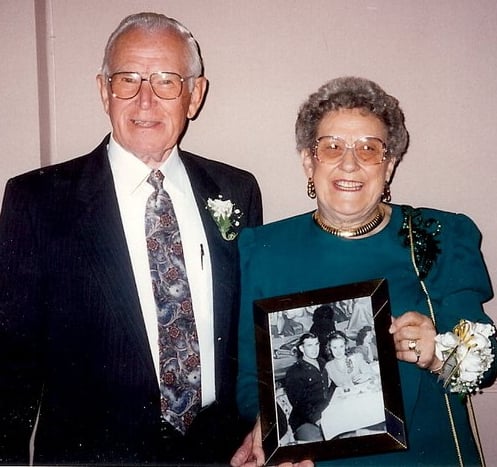
John D McColman: Obituary and Reminiscence
TRENDING AT PATHEOS Contemplative

Handy Contemplative Practices for Political Spaces
A Spiritually Grounded Presence In order to bring a spiritually grounded presence...

Halloween: The Holiday of Loving Your Neighbor
All Hallows Eve Is Halloween the least Christian holiday in America, or...

Can Love Be Saved? Some Thoughts on the...
Happy Valentine's Day! I recently published a post on Patreon called Can...

"This Loving, Uniting Embrace": the Holy Ordinary
Today's guest post is by Mark Longhurst, author of The Holy Ordinary:...

How Are We Called to Live?: More About...
How Are We Called to Live? Many of us struggle with discerning...

A Spiritual Practice of Reading: Join Us Online
A Spiritual Practice of Reading A healthy spiritual practice of reading is...
view all Contemplative blogs
Ad-Free & Subscriber Log-In Subscription Support
- About Us
- 2026 Calendar
- Videos
- Podcasts
- Library of World Religions
- Faith In Media Tracker
- Advertise With Us
- Write for Us
- Privacy Policy
- Terms of Service
- Do Not Sell My Data
- Contact Us
- Radiant Digital
- Manage Newsletter Subscriptions
- Unsubscribe From Notifications
- Sitemap
Copyright 2008-2026, Patheos. All rights reserved.
Subscription Support Ad-Free & Subscriber Log-In
Follow Patheos