
BuddhistCatholicContemplativeEvangelicalGeneral ChristianHinduJewishLatter-day SaintMuslimNew VisionsProgressive Christian
Beliefs
- Buddhist
- Catholic
- Contemplative
- Evangelical
- General Christian
- Hindu
- Jewish
- Latter-day Saint
- More Voices
- Muslim
- New Visions
- Pagan
- Progressive Christian
Topics
- Religion News
- Food and Religion
- Sports and Religion
- Religious Art
- Religious Music and Entertainment
- Religious Events
- History and Religion
- Style and Religion
- Politics and Religion
- Women in Religion
- Recreation Outdoors and Religion
- Business Finance and Religion
- Careers Workplace and Religion
- Education and Religion
- Family Parenting and Religion
- Health Fitness and Religion
- Home and Religion
- Relationships and Religion
- Technology and Religion
- Travel and Religion
Columnists
- Buddhist Columnists
- Business Finance and Religion Columnists
- Careers Workplace and Religion Columnists
- Catholic Columnists
- Contemplative Columnists
- Education and Religion Columnists
- Evangelists Columnists
- Family Parenting and Religion Columnists
- General Christian Columnists
- Health Fitness and Religion Columnists
- Hindu Columnists
- History and Religion Columnists
- Home and Religion Columnists
- Jewish Columnists
- More Voices Columnists
- Latter Day Columnists
- Muslim Columnists
- New Visions Columnists
- Nonreligious Columnists
- Pagan Columnists
- Politics and Religion Columnists
- Progressive Columnists
- Recreation Outdoors and Religion Columnists
- Relationships and Religion Columnists
- Religion News Columnists
- Religious Art Columnists
- Religious Events Columnists
- Religious Music and Entertainment Columnists
- Sports and Religion Columnists
- Style and Religion Columnists
- Technology and Religion Columnists
- Travel and Religion Columnists
- Women in Religion Columnists
Resource Library
- 2026 Calendar
- Library of World Religions
- The 100 Most Holy Places on Earth
- Patheos Answers
- Podcasts
- Videos
- Faith Leaders Database
- Anglican Episcopalian
- Bahai
- Baptist
- Buddhism
- Christianity
- Confucianism
- Eastern Orthodoxy
- Hinduism
- Holiness and Pentecostal
- ISKCON
- Islam
- Judaism
- Lutheran
- Methodist
- The Church of Jesus Christ of Latter-day Saints
- New Age
- Paganism
- Presbytarian and Reformed
- Protestantism
- Religion Behind the Scenes
- Roman Catholic
- Scientology
- Shia Islam
- Sikhism
- Sufism
- Sunni Islam
- Taoism
- Zen
- See all religions
Research Tools
 Ad-Free & Subscriber Log-In Subscription Support
Ad-Free & Subscriber Log-In Subscription Support
Follow Patheos 

- Trending:
- Forgiveness
- |
- Marriage
- |
- Consciousness
- |
- Death Penalty
- |
- Election
- |
- Halloween

- Home
- Contemplative
- Preparing for the Silent Night (Part Two)
Preparing for the Silent Night (Part Two)
Last updated on: November 26, 2018 at 10:05 am by Carl "Skye" McColman
Preparing for the Silent Night (Part Two) 2018-11-26T10:05:38-04:00 Carl "Skye" McColman
Patheos Explore the world's faith through different perspectives on religion and spirituality! Patheos has the views of the prevalent religions and spiritualities of the world.
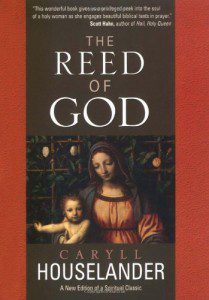
The Reed of God
This is the second of a series of Advent reflections. To read the first part, follow this link: Preparing for the Silent Night (Part One).
In part one of this series we considered the following quotation from The Reed of God by Caryll Houselander.
Because He is in the little house of our being, we will learn to control our minds, to gather our thoughts to silence, and to crown them with peace, just as we learn to control our voices and to move softly when a child is asleep in the house of bricks and mortar. (p. 100)
Houselander is suggesting that as we prepare for the coming of Christ in our hearts, we need to do five things:
- control our minds;
- gather our thoughts to silence;
- crown them with peace;
- control our voices; and
- move softly.
Let’s look at these one at a time.
Control our minds. We tend to think of the word “control” as having a meaning similar to “dominate.” But if you look at the history of the word, it originally had a meaning closer to “regulate” or “direct,” and I believe Houselander is using the word in this sense. So moving into silence is a matter of directing our minds. To what end? Well, Saint Paul instructs us to let “the mind of Christ be in us.” So the goal of contemplative prayer is to surrender our minds to the guidance of the Holy Spirit. To control our minds, paradoxically, means to relax into the loving direction of the Spirit. And how do we do that? Well, Caryll Houselander shows the way; and the first step is to…
Gather our thoughts to silence. The beautiful thing about silence is that it is always within us. We just usually don’t notice it, because we are so busy focusing on the content of our thoughts. But as Houselander suggests, we need to gather our thoughts to silence; in other words, to learn to pay attention not so much to the noise inside our minds, but to the silence that lies between and beneath our thoughts. As anyone who has any experience with centering prayer, Christian meditation, or any other form of contemplative practice knows, silent forms of prayer are not about making thoughts go away — rather, learning to trust the silence that can be found between and within the activity of our minds and hearts. To notice and attend to that silence is to gather our thoughts into it. As we learn to rest in the silence within us, this leads us to Houselander’s next step.
Crown our thoughts with peace. Saint Paul said, “the peace of God that surpasses all understanding will guard your hearts and minds in Christ Jesus.” (Philippians 4:7). In other words, as we let go of our need to understand the ways of God (which will always be limited by the finite nature of the human mind), we can more easily relax in to the peace of God which guards our hearts and minds — in silence. We typically speak about “peace and quiet,” acknowledging that there is a link between serenity and silence. The “silent night” is the night that belongs to the prince of Peace. Trust the silence within you, and God will lead you to peace. Even when our thoughts are agitated, confused, angry, or even violent, we can meet them with the peace of God which we find in the silence that is always resting deep within us. Thus, we crown our thoughts — all our thoughts, not just the “nice” or “spiritual” ones — with the profound, healing serenity of Christ.
Finally, Houselander suggests that this process of relaxing in to our inner silence, as a way of acknowledging that we are the bodily “house” of Christ, is similar to how a parent cares for a sleeping child. She notes two ways that parents do this:
Control our voices. Once again, remember we are called not to dominate our tongue, but to direct it to Godly purposes. Saint James says “no human being can tame the tongue,” but Saint Luke reminds us “What is impossible for human beings is possible for God” (James 3:8, Luke 18:27). By the grace of God, we can direct our voice, our tongue, to honor God through silence. We can learn to let go of the need to always be talking, always be making noise with our mouths. When we acknowledge that Christ dwells in our hearts, we can learn to let go of the compulsion to speak, and learn to listen instead. And even when we do speak, we are invited to do so gently, peacefully, quietly. Speak softly, and carry a big Spirit — the Spirit of God within you.
Move softly. Finally, Caryll Houselander speaks about “moving softly.” She’s talking about a parent caring for a sleeping child — we move softly to avoid disturbing our baby’s slumber — but I think this is symbolic of maturing in the spiritual life. As we embrace silence and discover God’s peace in our hearts, we realize that we can move gently through life. We can embrace compassion and tenderness, tenderness and self-control, as the defining characteristics of our lives. To be silent in God is to be capable of walking gently with wisdom. It leads to a holier way of being, of doing, of living.
Let me wrap up this reflection with one of my favorite verses in the Bible: Psalm 62:1, which to my mind captures the full spirit of Advent. In the New American Bible that verse reads “My soul rests in God alone, from whom comes my salvation.” But consider how it is translated in the Jewish Artscroll Translation: “For God alone my soul waits silently, from Him comes my salvation.” For God alone, my soul waits silently. The heart of this verse is a word in Hebrew, dumiyyah, which captures the essence of contemplation as well as of Advent. Dumiyyah can literally be translated as “silence” or “rest,” but it also has a sense of “waiting” about it. To rest in God means to wait in silence upon Him. It bears repeating: To rest in God, means to wait in silence upon Him. May each of us discover in these days of Advent our own path toward resting in silence as we wait for his coming, and for his coming again. Amen.
Disclosure: if you follow the link of the book mentioned in this post and purchase it or other products from Amazon.com, the author of this blog receives a small commission from Amazon. Thank you for doing so — your support keeps this blog going.
Enjoy reading this blog?
Click here to become a patron.

Previous Post
December 16, 2013
Preparing for the Silent Night (Part One)
Next Post
December 20, 2013 Preparing for the Silent Night (Conclusion)
Browse Our Archives
Select a Category Activism Announcements Art Books Catholicism Celtic Christianity Christian mysticism Christianity Contemplation Current events Etc. Family humor interfaith dialogue Interfaith Wisdom Interspirituality Lay Cistercians Living the Faith Meditation movies Mysticism Mystics nature Poetry Reviews Scripture silence Spirituality Uncategorized Writing
Select a Month February 2025 January 2025 November 2024 September 2024 August 2024 July 2024 June 2024 May 2024 March 2024 January 2024 December 2023 November 2023 August 2023 June 2023 April 2023 March 2023 February 2023 January 2023 December 2022 November 2022 October 2022 September 2022 August 2022 July 2022 June 2022 May 2022 April 2022 February 2022 January 2022 December 2021 November 2021 October 2021 September 2021 August 2021 July 2021 June 2021 May 2021 April 2021 March 2021 February 2021 January 2021 December 2020 November 2020 October 2020 September 2020 August 2020 July 2020 June 2020 May 2020 April 2020 March 2020 February 2020 January 2020 December 2019 November 2019 October 2019 September 2019 August 2019 July 2019 June 2019 May 2019 April 2019 March 2019 February 2019 January 2019 December 2018 November 2018 October 2018 September 2018 August 2018 July 2018 June 2018 May 2018 April 2018 March 2018 February 2018 January 2018 December 2017 November 2017 October 2017 September 2017 August 2017 July 2017 June 2017 May 2017 April 2017 March 2017 February 2017 January 2017 December 2016 November 2016 October 2016 September 2016 August 2016 July 2016 June 2016 May 2016 March 2016 February 2016 January 2016 December 2015 November 2015 October 2015 September 2015 August 2015 July 2015 June 2015 May 2015 April 2015 March 2015 February 2015 January 2015 December 2014 November 2014 October 2014 September 2014 August 2014 July 2014 June 2014 May 2014 April 2014 March 2014 February 2014 January 2014 December 2013 October 2013 September 2013 July 2013 May 2013 January 2013 December 2012 November 2012 August 2012 July 2012 June 2012 March 2012 December 2011 September 2011 October 2010 August 2010 March 2010 September 2009 July 2008 January 2008 December 2007 September 2007 February 2007 January 2007 December 2004
Follow Us!
TAKE THE
Religious Wisdom Quiz
True or False: Philip baptized the Ethiopian eunuch after explaining Isaiah 53 to him.
Select your answer to see how you score.
FALSE TRUE
Support this
Column


Related posts from Carl McColman

"This Loving, Uniting Embrace": the Holy Ordinary

I Believe Prayer Changes Things. Here's a Few...

If You Worship an Angry God, You'll Be...

The Difference Between Apophatic and Kataphatic Spirituality
TRENDING AT PATHEOS Contemplative

Handy Contemplative Practices for Political Spaces
A Spiritually Grounded Presence In order to bring a spiritually grounded presence...

Halloween: The Holiday of Loving Your Neighbor
All Hallows Eve Is Halloween the least Christian holiday in America, or...

Can Love Be Saved? Some Thoughts on the...
Happy Valentine's Day! I recently published a post on Patreon called Can...

"This Loving, Uniting Embrace": the Holy Ordinary
Today's guest post is by Mark Longhurst, author of The Holy Ordinary:...

How Are We Called to Live?: More About...
How Are We Called to Live? Many of us struggle with discerning...

A Spiritual Practice of Reading: Join Us Online
A Spiritual Practice of Reading A healthy spiritual practice of reading is...
view all Contemplative blogs
Ad-Free & Subscriber Log-In Subscription Support
- About Us
- 2026 Calendar
- Videos
- Podcasts
- Library of World Religions
- Faith In Media Tracker
- Advertise With Us
- Write for Us
- Privacy Policy
- Terms of Service
- Do Not Sell My Data
- Contact Us
- Radiant Digital
- Manage Newsletter Subscriptions
- Unsubscribe From Notifications
- Sitemap
Copyright 2008-2026, Patheos. All rights reserved.
Subscription Support Ad-Free & Subscriber Log-In
Follow Patheos