
BuddhistCatholicContemplativeEvangelicalGeneral ChristianHinduJewishLatter-day SaintMuslimNew VisionsProgressive Christian
Beliefs
- Buddhist
- Catholic
- Contemplative
- Evangelical
- General Christian
- Hindu
- Jewish
- Latter-day Saint
- More Voices
- Muslim
- New Visions
- Pagan
- Progressive Christian
Topics
- Religion News
- Food and Religion
- Sports and Religion
- Religious Art
- Religious Music and Entertainment
- Religious Events
- History and Religion
- Style and Religion
- Politics and Religion
- Women in Religion
- Recreation Outdoors and Religion
- Business Finance and Religion
- Careers Workplace and Religion
- Education and Religion
- Family Parenting and Religion
- Health Fitness and Religion
- Home and Religion
- Relationships and Religion
- Technology and Religion
- Travel and Religion
Columnists
- Buddhist Columnists
- Business Finance and Religion Columnists
- Careers Workplace and Religion Columnists
- Catholic Columnists
- Contemplative Columnists
- Education and Religion Columnists
- Evangelists Columnists
- Family Parenting and Religion Columnists
- General Christian Columnists
- Health Fitness and Religion Columnists
- Hindu Columnists
- History and Religion Columnists
- Home and Religion Columnists
- Jewish Columnists
- More Voices Columnists
- Latter Day Columnists
- Muslim Columnists
- New Visions Columnists
- Nonreligious Columnists
- Pagan Columnists
- Politics and Religion Columnists
- Progressive Columnists
- Recreation Outdoors and Religion Columnists
- Relationships and Religion Columnists
- Religion News Columnists
- Religious Art Columnists
- Religious Events Columnists
- Religious Music and Entertainment Columnists
- Sports and Religion Columnists
- Style and Religion Columnists
- Technology and Religion Columnists
- Travel and Religion Columnists
- Women in Religion Columnists
Resource Library
- 2026 Calendar
- Library of World Religions
- The 100 Most Holy Places on Earth
- Patheos Answers
- Podcasts
- Videos
- Faith Leaders Database
- Anglican Episcopalian
- Bahai
- Baptist
- Buddhism
- Christianity
- Confucianism
- Eastern Orthodoxy
- Hinduism
- Holiness and Pentecostal
- ISKCON
- Islam
- Judaism
- Lutheran
- Methodist
- The Church of Jesus Christ of Latter-day Saints
- New Age
- Paganism
- Presbytarian and Reformed
- Protestantism
- Religion Behind the Scenes
- Roman Catholic
- Scientology
- Shia Islam
- Sikhism
- Sufism
- Sunni Islam
- Taoism
- Zen
- See all religions
Research Tools
 Ad-Free & Subscriber Log-In Subscription Support
Ad-Free & Subscriber Log-In Subscription Support
Follow Patheos 

- Trending:
- Forgiveness
- |
- Marriage
- |
- Consciousness
- |
- Death Penalty
- |
- Election
- |
- Halloween

- Home
- Contemplative
- Preparing for the Silent Night (Part One)
Preparing for the Silent Night (Part One)
Last updated on: November 26, 2018 at 10:00 am by Carl "Skye" McColman
Preparing for the Silent Night (Part One) 2018-11-26T10:00:36-04:00 Carl "Skye" McColman
Patheos Explore the world's faith through different perspectives on religion and spirituality! Patheos has the views of the prevalent religions and spiritualities of the world.
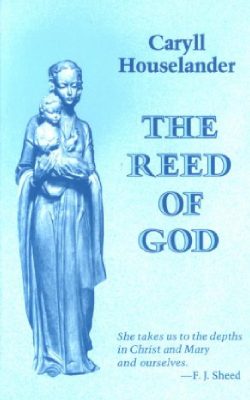
The Reed of God
My Advent reading for this year is The Reed of God by Caryll Houselander. A twentieth century Catholic mystic, Houselander lived from 1901 until dying from breast cancer in 1954. She wrote several books, but The Reed of God is her most enduring work; published in 1944, it explores themes of waiting, pregnancy, seeking and beauty in regard to Mary’s relationship to Christ. Insightful and earthy, it transcends the theological horizons of its time and has come to be regarded as a twentieth century spiritual classic. Poignant in her frank description of life (and faith) during war time, her theme of suffering the apparent absence of Christ (expanding from the story of Mary and Joseph searching for the 12-year-old Jesus when he was in the temple) continues to resonate 70 years later.
So as we progress into the third week of this short, lovely season, I thought reflecting on a few words from Caryll Houselander makes all sort of sense.
To begin…
Advent is the season of the secret, the secret of the growth of Christ, of Divine Love growing in silence. It is the season of humility, silence, and growth. (p. 28)
What does Houselander mean by “the secret”? I think she is referring to the mystery. We are moving into the dark time of the year, the days are getting shorter, the harvest is done, this is a time of letting go, of hibernation, of the old year passing away. But there’s a secret. In the midst of the cold, and the darkness, and the uncertainty, in the silence of Mary’s womb, a new life stirs — and not just any “new life,” but the life, the life of Christ. When things look their bleakest, God is secretly at work.
But because it is a secret, God keeps his mouth shut. The quality of God’s secret is that it comes to us in silence, silence and humility. The word humility means simple, down to earth, of the earth. And Jesus, who emptied himself of his transcendent being with God to take on the form of a baby, born in poverty, in a barn in a backwater town in a backwater province of the empire – that’s humility. And out of that secret, that silence, he literally changed the world, changed all things, forever.
So when we interrupt the noise and the craziness and the chaos of the secular “holiday season” to reconnect with silence, we are creating the space for each and every one of us to imitate Mary, and – entirely by the grace of the Holy Spirit – to open up a place in us, not in our wombs, but in our hearts, where Christ can be once again, born into a world that is so desperately hungry for Him. When we let our hearts be the new manger, the new crèche, where Christ can once again come into our lives, we become what Caryll Houselander called a “house” for Christ.
Let’s consider what she has to say:
Because He is in the little house of our being, we will learn to control our minds, to gather our thoughts to silence, and to crown them with peace, just as we learn to control our voices and to move softly when a child is asleep in the house of bricks and mortar. (p. 100)
Think about it. Houselander is writing these words decades before the modern explosion of interest in contemplative prayer, centering prayer, and so forth. This is a clear reminder that the western contemplative tradition has always affirmed silence as the heart of the mature spiritual life. This is why monasteries are havens of silence, and why churches up until recently were the same.
Houselander gives us a wonderful image: stay quiet inside our “house” — the house of our souls — like parents who lovingly keep quiet while their babies are sleeping. The “baby,” of course, is the presence of Christ, the Son of God, in our hearts. We remain quiet not out of fear of waking the sleeping baby, but rather as a way of lovingly tending to the humble presence of the Holy One within us, given to us in Baptism, fortified by the Eucharist and Reconciliation and all that we do to participate in God’s grace in our lives.
So the key to preparing for the silent night is, paradoxically, to find the night of silence inside of us. As important as it is to cultivate exterior silence by setting aside time when all the gadgets and gizmos are turned off, ultimately it is finding the interior silence that is the key to the contemplative life.
This does not need to be anything fancy, you do not have to become a monk or take a centering prayer class. Although those are wonderful things to do. But it can be as simple as spending a Holy Hour in the presence of the Blessed Sacrament, or dedicating the serenity of your morning walk to the unseen, unfelt, but truly real, presence of God.
To be continued… Click here to read part two.
Disclosure: if you follow the link of the book mentioned in this post and purchase it or other products from Amazon.com, the author of this blog receives a small commission from Amazon. Thank you for doing so — your support keeps this blog going.
Enjoy reading this blog?
Click here to become a patron.

Previous Post
December 11, 2013
Interfaith Dialogue, Interspirituality, and Holy Daring
Next Post
December 18, 2013 Preparing for the Silent Night (Part Two)
Browse Our Archives
Select a Category Activism Announcements Art Books Catholicism Celtic Christianity Christian mysticism Christianity Contemplation Current events Etc. Family humor interfaith dialogue Interfaith Wisdom Interspirituality Lay Cistercians Living the Faith Meditation movies Mysticism Mystics nature Poetry Reviews Scripture silence Spirituality Uncategorized Writing
Select a Month February 2025 January 2025 November 2024 September 2024 August 2024 July 2024 June 2024 May 2024 March 2024 January 2024 December 2023 November 2023 August 2023 June 2023 April 2023 March 2023 February 2023 January 2023 December 2022 November 2022 October 2022 September 2022 August 2022 July 2022 June 2022 May 2022 April 2022 February 2022 January 2022 December 2021 November 2021 October 2021 September 2021 August 2021 July 2021 June 2021 May 2021 April 2021 March 2021 February 2021 January 2021 December 2020 November 2020 October 2020 September 2020 August 2020 July 2020 June 2020 May 2020 April 2020 March 2020 February 2020 January 2020 December 2019 November 2019 October 2019 September 2019 August 2019 July 2019 June 2019 May 2019 April 2019 March 2019 February 2019 January 2019 December 2018 November 2018 October 2018 September 2018 August 2018 July 2018 June 2018 May 2018 April 2018 March 2018 February 2018 January 2018 December 2017 November 2017 October 2017 September 2017 August 2017 July 2017 June 2017 May 2017 April 2017 March 2017 February 2017 January 2017 December 2016 November 2016 October 2016 September 2016 August 2016 July 2016 June 2016 May 2016 March 2016 February 2016 January 2016 December 2015 November 2015 October 2015 September 2015 August 2015 July 2015 June 2015 May 2015 April 2015 March 2015 February 2015 January 2015 December 2014 November 2014 October 2014 September 2014 August 2014 July 2014 June 2014 May 2014 April 2014 March 2014 February 2014 January 2014 December 2013 October 2013 September 2013 July 2013 May 2013 January 2013 December 2012 November 2012 August 2012 July 2012 June 2012 March 2012 December 2011 September 2011 October 2010 August 2010 March 2010 September 2009 July 2008 January 2008 December 2007 September 2007 February 2007 January 2007 December 2004
Follow Us!
TAKE THE
Religious Wisdom Quiz
Which prophet had a vision of God standing beside a destroyed altar?
Select your answer to see how you score.
Micah Ezekiel Amos Joel
Support this
Column


Related posts from Carl McColman

"This Loving, Uniting Embrace": the Holy Ordinary

I Believe Prayer Changes Things. Here's a Few...

If You Worship an Angry God, You'll Be...

The Difference Between Apophatic and Kataphatic Spirituality
TRENDING AT PATHEOS Contemplative

Handy Contemplative Practices for Political Spaces
A Spiritually Grounded Presence In order to bring a spiritually grounded presence...

Halloween: The Holiday of Loving Your Neighbor
All Hallows Eve Is Halloween the least Christian holiday in America, or...

Can Love Be Saved? Some Thoughts on the...
Happy Valentine's Day! I recently published a post on Patreon called Can...

"This Loving, Uniting Embrace": the Holy Ordinary
Today's guest post is by Mark Longhurst, author of The Holy Ordinary:...

How Are We Called to Live?: More About...
How Are We Called to Live? Many of us struggle with discerning...

A Spiritual Practice of Reading: Join Us Online
A Spiritual Practice of Reading A healthy spiritual practice of reading is...
view all Contemplative blogs
Ad-Free & Subscriber Log-In Subscription Support
- About Us
- 2026 Calendar
- Videos
- Podcasts
- Library of World Religions
- Faith In Media Tracker
- Advertise With Us
- Write for Us
- Privacy Policy
- Terms of Service
- Do Not Sell My Data
- Contact Us
- Radiant Digital
- Manage Newsletter Subscriptions
- Unsubscribe From Notifications
- Sitemap
Copyright 2008-2026, Patheos. All rights reserved.
Subscription Support Ad-Free & Subscriber Log-In
Follow Patheos