
BuddhistCatholicContemplativeEvangelicalGeneral ChristianHinduJewishLatter-day SaintMuslimNew VisionsProgressive Christian
Beliefs
- Buddhist
- Catholic
- Contemplative
- Evangelical
- General Christian
- Hindu
- Jewish
- Latter-day Saint
- More Voices
- Muslim
- New Visions
- Pagan
- Progressive Christian
Topics
- Religion News
- Food and Religion
- Sports and Religion
- Religious Art
- Religious Music and Entertainment
- Religious Events
- History and Religion
- Style and Religion
- Politics and Religion
- Women in Religion
- Recreation Outdoors and Religion
- Business Finance and Religion
- Careers Workplace and Religion
- Education and Religion
- Family Parenting and Religion
- Health Fitness and Religion
- Home and Religion
- Relationships and Religion
- Technology and Religion
- Travel and Religion
Columnists
- Buddhist Columnists
- Business Finance and Religion Columnists
- Careers Workplace and Religion Columnists
- Catholic Columnists
- Contemplative Columnists
- Education and Religion Columnists
- Evangelists Columnists
- Family Parenting and Religion Columnists
- General Christian Columnists
- Health Fitness and Religion Columnists
- Hindu Columnists
- History and Religion Columnists
- Home and Religion Columnists
- Jewish Columnists
- More Voices Columnists
- Latter Day Columnists
- Muslim Columnists
- New Visions Columnists
- Nonreligious Columnists
- Pagan Columnists
- Politics and Religion Columnists
- Progressive Columnists
- Recreation Outdoors and Religion Columnists
- Relationships and Religion Columnists
- Religion News Columnists
- Religious Art Columnists
- Religious Events Columnists
- Religious Music and Entertainment Columnists
- Sports and Religion Columnists
- Style and Religion Columnists
- Technology and Religion Columnists
- Travel and Religion Columnists
- Women in Religion Columnists
Resource Library
- 2026 Calendar
- Library of World Religions
- The 100 Most Holy Places on Earth
- Patheos Answers
- Podcasts
- Videos
- Faith Leaders Database
- Anglican Episcopalian
- Bahai
- Baptist
- Buddhism
- Christianity
- Confucianism
- Eastern Orthodoxy
- Hinduism
- Holiness and Pentecostal
- ISKCON
- Islam
- Judaism
- Lutheran
- Methodist
- The Church of Jesus Christ of Latter-day Saints
- New Age
- Paganism
- Presbytarian and Reformed
- Protestantism
- Religion Behind the Scenes
- Roman Catholic
- Scientology
- Shia Islam
- Sikhism
- Sufism
- Sunni Islam
- Taoism
- Zen
- See all religions
Research Tools
 Ad-Free & Subscriber Log-In Subscription Support
Ad-Free & Subscriber Log-In Subscription Support
Follow Patheos 

- Trending:
- Forgiveness
- |
- Marriage
- |
- Consciousness
- |
- Death Penalty
- |
- Election
- |
- Halloween

- Home
- Contemplative
- The Ethics of Sharing Mystical Knowledge: Meister Eckhart and the Cloud Author
The Ethics of Sharing Mystical Knowledge: Meister Eckhart and the Cloud Author
Last updated on: December 21, 2018 at 7:56 pm by Carl "Skye" McColman
The Ethics of Sharing Mystical Knowledge: Meister Eckhart and the Cloud Author 2018-12-21T19:56:30-04:00 Carl "Skye" McColman
Patheos Explore the world's faith through different perspectives on religion and spirituality! Patheos has the views of the prevalent religions and spiritualities of the world.
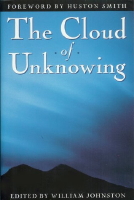
The Cloud of Unknowing
Pick up any edition of The Cloud of Unknowing, and you are likely to find the following language a bit intimidating:
Whoever you are possessing this book, know that I charge you with a serious responsibility, to which I attach the sternest sanctions that the bonds of love can bear. It does not matter whether this book belongs to you, whether you are keeping it for someone else, whether you are taking it to someone, or borrowing it; you are not to read it, write or speak of it, nor allow another to do so, unless you really believe that he is a person deeply committed to follow Christ perfectly. I have in mind a person who, over and above the good works of the active life, has resolved to follow Christ (as far as is humanly possible with God’s grace) into the inmost depths of contemplation. Do your best do determine if he is one who has first been faithful for some time to the demands of the active life, for otherwise he will not be prepared to fathom the contents of this book.
Whew!
In my work selling books through a monastery gift shop, I’ve had customers complain to me that I shouldn’t be selling The Cloud of Unknowing, referring to this passage to explain why. In their minds, unless I interviewed every person who wanted to purchase a copy to make sure he or she is “deeply committed to follow Christ perfectly,” — and refused to sell it to anyone who didn’t pass muster — then I am disrespecting the author by selling the book, or even by having it on display in the store. The first time this came up, I tried to reason with the person who complained by noting that I could not judge another person’s faith or intent, using Matthew 7:1 as my guiding principle. That did not satisfy her, and she left the store angry and unhappy with me.
This all reminds me of a friend who served in the peace corps in Tunisia. While there, he converted to Islam and began to study the Sufi masters, under the guidance of his Imam. Occasionally he would go into town to purchase a book by this or that classic author. He discovered that the bookstore where you could buy such books wanted to check him out first — they asked him who his Imam was, and apparently the bookseller talked to the Imam to make sure my friend had permission to study the book(s) in question, before they would sell them to him. I suppose that’s what my disgruntled customer wanted: before I would let anyone purchase The Cloud of Unknowing, I would check with their priest, pastor or spiritual director first, to make sure it was okay to sell it to them (never mind that anyone can freely download the text online).
Clearly, I see no point in trying to replicate the more controlled world of the Sufi bookseller in Tunisia (or, perhaps, the medieval scribe with a hand-copied manuscript) in 21st century America. But I am willing to acknowledge that there has always been a tradition (and not just among Christian contemplatives or Sufis) of withholding information from someone until he or she is deemed ready or worthy to receive it. Consider this tidbit from a book called Growing Up as a Trappist Monk, written by a former monk named William Nolan:
Strangely enough, novices were not allowed to read the writings of John of the Cross or Teresa of Avila (both great mystics of the Church). The reason given was that since we had not had much experience in the spiritual life we might imagine mystical experiences that were not real.
So the librarian or someone else in the monastery had to give a novice permission before he could read such advanced material.
Read What You Are Ready to Read
Even I, when talking to a customer, will try to steer people away from books if I think they are not “ready” for them. But it’s a gentler process. You don’t give a freshman in college a graduate-level textbook of theoretical physics. You start out with a basic undergraduate text (like Geller & Young’s College Physics), for the student must master that before he or she is ready to take on Morse and Feshbach’s Methods of Theoretical Physics. In a similar vein, if I catch a customer looking at The Philokalia or Raimon Panikkar’s The Rhythm of Being, I’ll ask them if they’ve read The Way of a Pilgrim or Christophany first. If not, I’ll encourage them to look at those more introductory texts. But the motivation here is not to withhold information; rather it is simply to assist the reader in finding the most user-friendly route toward grasping the depth and subtlety of mystical theology. Usually, that means beginning at the beginning.
Yesterday I stumbled across this delightful passage in one of Meister Eckhart’s works, The Book of Divine Consolation, found in the Classics of Western Spirituality’s Essential Meister Eckhart. Here, Eckhart is defending himself against critics who would argue that his advanced mystical teachings should not be made accessible to a general audience.
And we shall be told that one ought not to talk about or write such teachings to the untaught. But to this I say that if we are not to teach people who have not been taught, no one will ever be taught, and no one will ever be able to teach or write. For that is why we teach the untaught, so that they may be changed from uninstructed into instructed… But if there is someone who misunderstands what I say, what is that to the man who says truly that which is true? Saint John narrates his holy gospel for all believers and yet for all unbelievers, so that they might believe, and yet he begins that gospel with the most exalted thoughts any man could utter here about God; and both what he says and what our Lord says are constantly misunderstood.
Eckhart seems to be saying “yes, there is a risk that advanced mystical theology will be misunderstood by those who are ignorant or not yet ready for it, but it is important to make such wisdom widely available anyway, for the sake of those who are ready for it.”
The Importance of Discernment
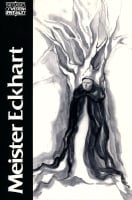
The Essential Meister Eckhart
I could not agree more with Eckhart, which explains why I continue to promote The Cloud of Unknowing as widely as I can, despite its stern warning. And yet, I do not disagree with what the Cloud author is saying, nor do I think Eckhart contradicts him. I see the warning at the beginning of the Cloud to be a statement about the importance of discernment and spiritual counsel.
Anyone who wants to pursue the contemplative life needs a spiritual director of some sort. Discernment is always best when communal. And even though a book like The Way of a Pilgrim offers detailed advice about how to cope if you cannot find a wise spiritual guide, the assumption is that you will continue to pray for one — and seek one — as part of your ongoing spiritual practice.
What The Way of a Pilgrim suggests is that, in the absence of a wise spiritual guide, we should immerse ourselves in the writings of the great saints — that is to say, in the literature of the mystics. A wise spiritual companion is always better than a book, but a book is better than no guide at all. Which points to Eckhart’s “open source” approach as, ultimately, more useful than The Cloud’s more restrictive idea.
Of course, one more thought. The Cloud was written about fifty years after Meister Eckhart’s death — and condemnation. The author of The Cloud of Unknowing may have been motivated not only by his desire that only those who are ready should read his book, but he may also have been wary about the risk of himself suffering Eckhart’s fate, and felt that warning away casual or uneducated readers from his book might be a defense if the heresy hunters ever came after him.
It’s sad that contemplative authors in the past had to be hyper-vigilant about avoiding even the slightest hint of error in their writings; surely this inquisitorial culture dampened rather than nurtured the ongoing flowering of mystical theology within Christianity. But the past cannot be changed, and when we read great mystics we are wise to remember that they often wrote their teaching with a sense of personal risk. No wonder they might have been picky about who they thought should (or should not) read their writings.
Enjoy reading this blog?
Click here to become a patron.

Disclosure: If you follow the links of the books mentioned in this post and purchase them or other products from Amazon.com, I receive a small commission from Amazon. Thank you for doing so — it is the easiest way you can support this blog.

Photo courtesy of Shutterstock, used by permission.
Previous Post

November 1, 2012
Instead of singing for your supper, how about blogging for books?
Next Post
December 21, 2012 101+ Books for Buddhist-Christian Dialogue
Browse Our Archives
Select a Category Activism Announcements Art Books Catholicism Celtic Christianity Christian mysticism Christianity Contemplation Current events Etc. Family humor interfaith dialogue Interfaith Wisdom Interspirituality Lay Cistercians Living the Faith Meditation movies Mysticism Mystics nature Poetry Reviews Scripture silence Spirituality Uncategorized Writing
Select a Month February 2025 January 2025 November 2024 September 2024 August 2024 July 2024 June 2024 May 2024 March 2024 January 2024 December 2023 November 2023 August 2023 June 2023 April 2023 March 2023 February 2023 January 2023 December 2022 November 2022 October 2022 September 2022 August 2022 July 2022 June 2022 May 2022 April 2022 February 2022 January 2022 December 2021 November 2021 October 2021 September 2021 August 2021 July 2021 June 2021 May 2021 April 2021 March 2021 February 2021 January 2021 December 2020 November 2020 October 2020 September 2020 August 2020 July 2020 June 2020 May 2020 April 2020 March 2020 February 2020 January 2020 December 2019 November 2019 October 2019 September 2019 August 2019 July 2019 June 2019 May 2019 April 2019 March 2019 February 2019 January 2019 December 2018 November 2018 October 2018 September 2018 August 2018 July 2018 June 2018 May 2018 April 2018 March 2018 February 2018 January 2018 December 2017 November 2017 October 2017 September 2017 August 2017 July 2017 June 2017 May 2017 April 2017 March 2017 February 2017 January 2017 December 2016 November 2016 October 2016 September 2016 August 2016 July 2016 June 2016 May 2016 March 2016 February 2016 January 2016 December 2015 November 2015 October 2015 September 2015 August 2015 July 2015 June 2015 May 2015 April 2015 March 2015 February 2015 January 2015 December 2014 November 2014 October 2014 September 2014 August 2014 July 2014 June 2014 May 2014 April 2014 March 2014 February 2014 January 2014 December 2013 October 2013 September 2013 July 2013 May 2013 January 2013 December 2012 November 2012 August 2012 July 2012 June 2012 March 2012 December 2011 September 2011 October 2010 August 2010 March 2010 September 2009 July 2008 January 2008 December 2007 September 2007 February 2007 January 2007 December 2004
Follow Us!
TAKE THE
Religious Wisdom Quiz
What does "be salt and light" mean in Jesus' teaching?
Select your answer to see how you score.
Be invisible Lose your flavor Change nothing Be a good example
Support this
Column


Related posts from Carl McColman

You don't have to become a monk to...
Meister Eckhart: A Deeper Dive (33 Books to...

Mysticism, Faith, and "Knowing" God's Will

TRENDING AT PATHEOS Contemplative

Handy Contemplative Practices for Political Spaces
A Spiritually Grounded Presence In order to bring a spiritually grounded presence...

Halloween: The Holiday of Loving Your Neighbor
All Hallows Eve Is Halloween the least Christian holiday in America, or...

Can Love Be Saved? Some Thoughts on the...
Happy Valentine's Day! I recently published a post on Patreon called Can...

"This Loving, Uniting Embrace": the Holy Ordinary
Today's guest post is by Mark Longhurst, author of The Holy Ordinary:...

How Are We Called to Live?: More About...
How Are We Called to Live? Many of us struggle with discerning...

A Spiritual Practice of Reading: Join Us Online
A Spiritual Practice of Reading A healthy spiritual practice of reading is...
view all Contemplative blogs
Ad-Free & Subscriber Log-In Subscription Support
- About Us
- 2026 Calendar
- Videos
- Podcasts
- Library of World Religions
- Faith In Media Tracker
- Advertise With Us
- Write for Us
- Privacy Policy
- Terms of Service
- Do Not Sell My Data
- Contact Us
- Radiant Digital
- Manage Newsletter Subscriptions
- Unsubscribe From Notifications
- Sitemap
Copyright 2008-2026, Patheos. All rights reserved.
Subscription Support Ad-Free & Subscriber Log-In
Follow Patheos