
BuddhistCatholicContemplativeEvangelicalGeneral ChristianHinduJewishLatter-day SaintMuslimNew VisionsProgressive Christian
Beliefs
- Buddhist
- Catholic
- Contemplative
- Evangelical
- General Christian
- Hindu
- Jewish
- Latter-day Saint
- More Voices
- Muslim
- New Visions
- Pagan
- Progressive Christian
Topics
- Religion News
- Food and Religion
- Sports and Religion
- Religious Art
- Religious Music and Entertainment
- Religious Events
- History and Religion
- Style and Religion
- Politics and Religion
- Women in Religion
- Recreation Outdoors and Religion
- Business Finance and Religion
- Careers Workplace and Religion
- Education and Religion
- Family Parenting and Religion
- Health Fitness and Religion
- Home and Religion
- Relationships and Religion
- Technology and Religion
- Travel and Religion
Columnists
- Buddhist Columnists
- Business Finance and Religion Columnists
- Careers Workplace and Religion Columnists
- Catholic Columnists
- Contemplative Columnists
- Education and Religion Columnists
- Evangelists Columnists
- Family Parenting and Religion Columnists
- General Christian Columnists
- Health Fitness and Religion Columnists
- Hindu Columnists
- History and Religion Columnists
- Home and Religion Columnists
- Jewish Columnists
- More Voices Columnists
- Latter Day Columnists
- Muslim Columnists
- New Visions Columnists
- Nonreligious Columnists
- Pagan Columnists
- Politics and Religion Columnists
- Progressive Columnists
- Recreation Outdoors and Religion Columnists
- Relationships and Religion Columnists
- Religion News Columnists
- Religious Art Columnists
- Religious Events Columnists
- Religious Music and Entertainment Columnists
- Sports and Religion Columnists
- Style and Religion Columnists
- Technology and Religion Columnists
- Travel and Religion Columnists
- Women in Religion Columnists
Resource Library
- 2026 Calendar
- Library of World Religions
- The 100 Most Holy Places on Earth
- Patheos Answers
- Podcasts
- Videos
- Faith Leaders Database
- Anglican Episcopalian
- Bahai
- Baptist
- Buddhism
- Christianity
- Confucianism
- Eastern Orthodoxy
- Hinduism
- Holiness and Pentecostal
- ISKCON
- Islam
- Judaism
- Lutheran
- Methodist
- The Church of Jesus Christ of Latter-day Saints
- New Age
- Paganism
- Presbytarian and Reformed
- Protestantism
- Religion Behind the Scenes
- Roman Catholic
- Scientology
- Shia Islam
- Sikhism
- Sufism
- Sunni Islam
- Taoism
- Zen
- See all religions
Research Tools
 Ad-Free & Subscriber Log-In Subscription Support
Ad-Free & Subscriber Log-In Subscription Support
Follow Patheos 

- Trending:
- Forgiveness
- |
- Marriage
- |
- Consciousness
- |
- Death Penalty
- |
- Election
- |
- Halloween

- Home
- More Voices
- The Secret to a Good Life? Science Says It’s Relationships
The Secret to a Good Life? Science Says It’s Relationships
Last updated on: February 11, 2025 at 9:55 am by Carl Gregg
The Secret to a Good Life? Science Says It’s Relationships 2025-02-11T09:55:08-05:00 Carl Gregg
Patheos Explore the world's faith through different perspectives on religion and spirituality! Patheos has the views of the prevalent religions and spiritualities of the world.
The Longest Study on Happiness: What We Can Learn
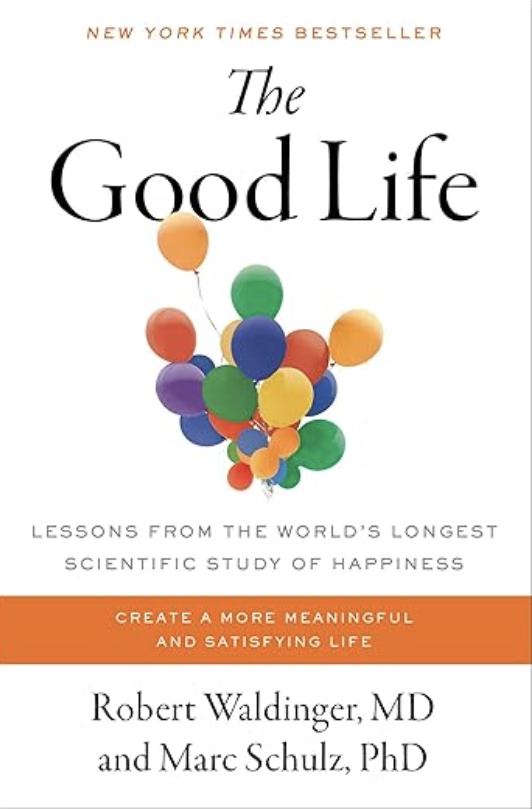
I would like to invite us to reflect on a book titled The Good Life: Lessons from the World’s Longest Scientific Study of Happiness, co-authored by Robert Waldinger, a professor of psychiatry at Harvard Medical School and an authorized Zen master; and Marc Schulz, a psychology professor at Bryn Mawr College. They are also the current directors of the Harvard Study of Adult Development, which began 87 years ago in 1938 and is still going strong.
Their joint project began as a longitudinal study that aimed to follow the lives of two groups: 268 undergraduates at Harvard College and 456 inner-city boys from Boston (11). Over the decades, the study expanded beyond its original aims to include “three generations and more than 1,300 of the descendants of its original 724 participants.” They have also incorporated findings from similar studies worldwide (3).
The results of this decades-long research are of particular interest because most longitudinal studies last somewhere between several years to a decade and maintain only 30 to 70 percent of their participants. This study has lasted almost nine decades and has maintained an 84 percent participation rate (14).
The Danger of Comparison: Stop Measuring Your Life Wrong
From the close study of more than 2,000 lifetimes, what have these researchers discovered about how to live the good life? One of the clearest takeaways from having followed the lived reality of so many people over their full lifespan is that everybody’s life is complicated.
Our age of social media makes it possible to choose to post only perfectly curated photos, which can make it seem like other people’s lives are perfect. But there’s a lot of wisdom in the old saying that cautions against judging your life based on the surface appearance of someone else’s life: “Never compare your insides to everyone else’s outsides” (2).
If you have intimate access to look closely over time, you’ll find that every human being faces significant ups and downs: “turmoil, calm, lightness, burdens, struggles, achievements, setbacks, leaps forward, and terrible falls” (3). By no means are everyone’s difficulties the same, but every human being has to face losses and sorrows, trials and challenges (2).
That’s one potential negative resolution (something to try to do less of) in this new year: stop comparing your insides to everyone else’s outsides — or at least become more aware of when you do it. A moment of mindfulness — of realizing, “Oh wait! I just compared my insides to someone else’s outsides — is major progress. Instead of just being caught up in that habitual pattern, becoming aware of the dynamic makes it more workable.
So what is a potential positive resolution (something to try to more of) in this new year that comes out of this nine-decade study of more than 2,000 lifetimes? Interestingly, instead of a long list, there is one particular finding that has stood out as contributing most commonly to happiness, healthiness, and the good life:
It’s not career achievement, or exercise, or a healthy diet…. These things matter (a lot). But [in this decades-long study] one thing continuously demonstrates its broad and enduring importance:
Good relationships. If you’re going to make one choice, that single decision that could best ensure your own health and happiness, science tells us that your choice should be to cultivate warm relationships. Of all kinds (10).
This finding makes me think that instead of the first question people often ask being, “What do you do for a living?” we should start asking people something like, “What social groups and organizations are you a part of that you really enjoy?” (2).

The frequency and the quality of our contact with other people are two major predictors of happiness. | Created in Dalle for Patheos.
Their big recommendation is that “the frequency and the quality of our contact with other people are two major predictors of happiness.” I know it can be hard to visit a new group for the first time, but I do encourage you to lean in toward discovering new groups where you might find some wonderful new relationships.
Relatedly, I should add one other important insight from modern psychology. Many studies have shown that most of us are bad at what social scientists call affective forecasting. That’s just a fancy way of saying that we humans tend to be bad at predicting how we’ll feel in new situations. In regard to potential new friendships, we tend to overestimate the messiness and unpredictability of getting to know someone and underestimate the beneficial effects of human connection. As a result, we tend to form fewer friendships, especially as we get older (36-37).
So, as you are reflecting on the relationships you already have (and the ones you may experiment with forming in 2025), the Harvard Study of Adult Development recommends a chart that looks like a giant “plus (+) sign” — just like the “x” and “y” axis from high school algebra — for evaluating whether your relationship with an individual or a group is good or not.
The vertical axis invites you to notice “How a relationship makes you feel.” The horizontal axis invites you to notice “How often that happens” (99).
At the top, “an energizing relationship enlivens and invigorates you” more often than not, and it gives you “a sense of connection and belonging.” It tends to leave you feeling better than you would have if you hadn’t met up with that person or attended that group meeting (100).
On the bottom, “a depleting relationship [more often than not] induces tension, frustration, or anxiety, and makes you feel worried, or even demoralized. It tends to make you feel lesser or more disconnected” than you would’ve felt if you were alone (ibid).
Think back on the people and groups in your life: which tend, on balance, to be energizing and which depleting? Moving forward, how might you increase or decrease the frequency accordingly? And what new people or groups might you experiment with to cultivate good relationships that might be more frequent and energizing?
Previous Post

February 10, 2025
Wicked, the Oscars, & the Hidden Political Allegory!
Next Post
August 27, 2025 Book Review: "Decolonizing the Religious Liberal Mind"
Recent Comments
""Next let’s consider the similarly wide range of American religious views about reproductive justice." You ..."
“How Rights Went Wrong”: On the ..."
""
"Me too they are soooo perfectT.E1269.US\f9352CE"
An Afro-Indigenous History of the US ..."
""
“Imagining How a More Just World ..."
Browse Our Archives
Select a Category Advent Anti-Racism Archaeology Atheism Baptism Best of the Year List Book Reviews Buddhism Catholicism Christian Education Church and State Church Planting Climate Change Conscientious Objection to War Creation Spirituality Death Penalty Didache Disability Rights Discernment Easter Ecology Emergent Church Movement Empire-Critical Ethics Evolution Feminist Theology Film Reviews Gandhi Gospel of Mark Gun Control Hinduism Immigration Reform Interfaith Islam JFK Judaism Jungian Spirituality Lectionary Commentary Lent Letters to the Editor LGBT Marriage MLK Multiculturalism Mysticism Nonviolent Activism Occupy Paganism (Earth-centered Religions) Parables Paul Pluralism Politics Process Theology Quantum Physics Requiescat In Pace Seminary and Divinity School Sermon Series Retrospective Sermons Spiritual Direction Spiritual Practices Stewardship (Fundraising) The Book of J The Wheel of the Year (Paganism) Theoblogger Challenge Triathlon Uncategorized Unitarian Universalism Worship Resources Youth Ministry
Select a Month July 2026 May 2026 March 2026 November 2025 October 2025 August 2025 February 2025 December 2024 October 2024 March 2024 January 2024 December 2023 November 2023 March 2023 February 2023 January 2023 December 2022 November 2022 August 2022 March 2022 February 2022 January 2022 December 2021 September 2021 August 2021 July 2021 June 2021 May 2021 February 2021 January 2021 December 2020 August 2020 June 2020 May 2020 April 2020 March 2020 February 2020 January 2020 December 2019 November 2019 October 2019 September 2019 July 2019 June 2019 March 2019 February 2019 January 2019 December 2018 November 2018 October 2018 September 2018 June 2018 May 2018 April 2018 March 2018 February 2018 January 2018 December 2017 November 2017 October 2017 September 2017 August 2017 July 2017 June 2017 May 2017 April 2017 March 2017 February 2017 January 2017 December 2016 November 2016 October 2016 September 2016 August 2016 June 2016 May 2016 April 2016 March 2016 February 2016 January 2016 December 2015 November 2015 October 2015 September 2015 August 2015 July 2015 June 2015 May 2015 April 2015 March 2015 February 2015 January 2015 December 2014 November 2014 October 2014 August 2014 July 2014 June 2014 May 2014 April 2014 March 2014 February 2014 January 2014 December 2013 November 2013 October 2013 September 2013 August 2013 July 2013 June 2013 May 2013 April 2013 March 2013 February 2013 January 2013 December 2012 November 2012 October 2012 September 2012 August 2012 July 2012 June 2012 May 2012 April 2012 March 2012 February 2012 January 2012 December 2011 November 2011 October 2011 September 2011 August 2011 July 2011 June 2011 May 2011 April 2011 March 2011 February 2011 January 2011 December 2010 November 2010 October 2010 August 2009 July 2009 May 2009
Follow Us!
TAKE THE
Religious Wisdom Quiz
What natural disaster did God use to destroy the earth in Noah’s time?
Select your answer to see how you score.
Fire Earthquake Famine Flood
Related posts from Carl Gregg

Reading America at 250: A Nation Wrestles With...


Andrew Holocek on the Power of Darkness

The Stories That Shape Us: Myths, Archetypes, &...
TRENDING AT PATHEOS More Voices

Reading America at 250: A Nation Wrestles With...
As part of my own reflection on the 250th anniversary of the...

Whenever I am reading a book or listening to an argument, I...

President Trump Ban Animal Torture Videos on Facebook
Call for Stricter Regulations of Animal Abuse Content on Facebook Although President...

Draft Amendments to Address Ritual Abuse in New...
The proposed changes would make it illegal for individuals in domestic partnerships...

How Bans on LGBTQ+ Student Clubs Threaten Religious...
On June 20, 2025, the State of Texas passed Senate Bill 12....

The Truth About the Gen Z Revival
This past year, there has been a lot of media buzz surrounding...
view all More Voices blogs
What Are Your Thoughts?leave a comment
Ad-Free & Subscriber Log-In Subscription Support
- About Us
- 2026 Calendar
- Videos
- Podcasts
- Library of World Religions
- Faith In Media Tracker
- Advertise With Us
- Write for Us
- Privacy Policy
- Terms of Service
- Do Not Sell My Data
- Contact Us
- Radiant Digital
- Manage Newsletter Subscriptions
- Unsubscribe From Notifications
- Sitemap
Copyright 2008-2026, Patheos. All rights reserved.
Subscription Support Ad-Free & Subscriber Log-In
Follow Patheos