
BuddhistCatholicContemplativeEvangelicalGeneral ChristianHinduJewishLatter-day SaintMuslimNew VisionsProgressive Christian
Beliefs
- Buddhist
- Catholic
- Contemplative
- Evangelical
- General Christian
- Hindu
- Jewish
- Latter-day Saint
- More Voices
- Muslim
- New Visions
- Pagan
- Progressive Christian
Topics
- Religion News
- Food and Religion
- Sports and Religion
- Religious Art
- Religious Music and Entertainment
- Religious Events
- History and Religion
- Style and Religion
- Politics and Religion
- Women in Religion
- Recreation Outdoors and Religion
- Business Finance and Religion
- Careers Workplace and Religion
- Education and Religion
- Family Parenting and Religion
- Health Fitness and Religion
- Home and Religion
- Relationships and Religion
- Technology and Religion
- Travel and Religion
Columnists
- Buddhist Columnists
- Business Finance and Religion Columnists
- Careers Workplace and Religion Columnists
- Catholic Columnists
- Contemplative Columnists
- Education and Religion Columnists
- Evangelists Columnists
- Family Parenting and Religion Columnists
- General Christian Columnists
- Health Fitness and Religion Columnists
- Hindu Columnists
- History and Religion Columnists
- Home and Religion Columnists
- Jewish Columnists
- More Voices Columnists
- Latter Day Columnists
- Muslim Columnists
- New Visions Columnists
- Nonreligious Columnists
- Pagan Columnists
- Politics and Religion Columnists
- Progressive Columnists
- Recreation Outdoors and Religion Columnists
- Relationships and Religion Columnists
- Religion News Columnists
- Religious Art Columnists
- Religious Events Columnists
- Religious Music and Entertainment Columnists
- Sports and Religion Columnists
- Style and Religion Columnists
- Technology and Religion Columnists
- Travel and Religion Columnists
- Women in Religion Columnists
Resource Library
- 2026 Calendar
- Library of World Religions
- The 100 Most Holy Places on Earth
- Patheos Answers
- Podcasts
- Videos
- Faith Leaders Database
- Anglican Episcopalian
- Bahai
- Baptist
- Buddhism
- Christianity
- Confucianism
- Eastern Orthodoxy
- Hinduism
- Holiness and Pentecostal
- ISKCON
- Islam
- Judaism
- Lutheran
- Methodist
- The Church of Jesus Christ of Latter-day Saints
- New Age
- Paganism
- Presbytarian and Reformed
- Protestantism
- Religion Behind the Scenes
- Roman Catholic
- Scientology
- Shia Islam
- Sikhism
- Sufism
- Sunni Islam
- Taoism
- Zen
- See all religions
Research Tools
 Ad-Free & Subscriber Log-In Subscription Support
Ad-Free & Subscriber Log-In Subscription Support
Follow Patheos 

- Trending:
- Forgiveness
- |
- Marriage
- |
- Consciousness
- |
- Death Penalty
- |
- Election
- |
- Halloween

- Home
- More Voices
- Yasodhara: The Forgotten Story of the Buddha’s Wife
Yasodhara: The Forgotten Story of the Buddha’s Wife
Last updated on: August 3, 2021 at 5:25 pm by Carl Gregg
Yasodhara: The Forgotten Story of the Buddha’s Wife 2021-08-03T17:25:46-04:00 Carl Gregg
Patheos Explore the world's faith through different perspectives on religion and spirituality! Patheos has the views of the prevalent religions and spiritualities of the world.
Growing up in a theologically conservative congregation in South Carolina, I was taught that there was only one right way to be religious, and conveniently, it was ours. All other paths—including many other Christian paths—were said to be dangerous and heretical. But the more I learned about the world, the more evident it became that there are multiple spiritual paths that can lead to compassionate, wise, and generous ways of being in the world.
If we stopped here with just that insight into the value of pluralism, that would already be significant. But there’s at least one more important twist on this journey. As I dove deeply into the world’s religions, it also became evident that all religious and spiritual traditions include problematic parts. No tradition is perfect. As frequent readers have heard me quote, “We are saved from perfection!” There is no one universal “way” that works for all people in all times and places. I’ve also come to value the importance of being transparent about both the good and the bad parts of various religious and spiritual traditions—the inspirational as well as the discredited.
Such recognitions can empower us to retain what remains valuable today (so that we aren’t throwing the proverbial baby out with the bathwater), even as we let go of anything obsolete and no longer helpful in the twenty-first century globalized pluralistic postmodern world in which we find ourselves.
Perhaps all that is obvious to many of you, but I will confess that there have been times that I have found myself learning about some branch of a spiritual path that I didn’t previously know much about, only to find myself thinking, “Maybe this is the one!” Maybe this path has all the virtues and none of the vices, all the benefits and none of the pitfalls. Well, at this point, having spent the last two-and-a-half decades exploring the world’s religions as my full-time profession, I have found that all faiths eventually disappoint on some level. We are saved from perfection!
Now, don’t get me wrong, there remains tremendous value in the world’s religions, especially when balanced with the insights of modern science. But I have also come to appreciate the importance of being honest about the shadow sides of the various traditions.
The specific example that I would like to invite us to wrestle with today comes from the Buddhist tradition. There are so many aspects of Buddhism that I love, and practicing meditation has been incredibly helpful and transformative in my life. As I have shared with you previously, I am about six months into a two-year formal Meditation Teacher Training through an organization called Buddhist Geeks. But one of the things that I heard about in passing that always bothered me—but that I didn’t know much about previously—was the relationship between the historical Buddha and his wife. So I did what I often do: I scheduled this post to force myself to learn more about that relationship, and to invite you to come with me on that journey.
Parts of the origin story of Buddhism are understandably often told in ways that glorify the historical Buddha, whose name was Siddhartha Gautama. For example, “the Buddha” is an honorific title, meaning “Awakened One,” in much the same way that Jesus’s last name isn’t Christ—but rather, a title meaning “Anointed One.”
Prior to going on a quest to become awakened (or enlightened), Siddhartha Gautama was said to have been a “prince.” His family lived somewhere in what is known today as northern India, or perhaps southern Nepal, sometime around the 5th century BCE, give or take a hundred years (Sasson 4). Siddhartha’s story can be quite inspirational. He was heir to considerable wealth and power, with access to all manner of worldly pleasures, the best food, clothes, sexual partners, and more. (Keep in mind that this is the same time period in India in which the Kama Sutra was written) (Garling 92). But Siddhartha turned his back on sensual pleasures to explore the most extreme ascetic spiritual practices of his time, before eventually realizing the profound insights into the nature of reality and the wisdom of the Middle Way which later became the basis for Buddhism.
On the one hand, I’m incredibly grateful for the spiritual insights that Siddhartha Gautama shared with the world, insights that have benefited me and so many others. On the other hand, if we zoom out, the story quickly becomes more complicated. As is often the case, it is important to recognize that multiple things can be true. Which brings us to a part of the historical Buddha’s legend that is often left out or glossed over: the impact of his choices upon his family.
Do you know the saying that, “If you’re not at the table, you might be on the menu?” Well, the Buddhist tradition has often been told in a way that privileges the perspectives of male monastics (10). And that tradition can begin to look quite different if you begin to acknowledge other perspectives.
For instance, prior to researching this post, I was vaguely aware that Prince Siddhartha Gautama was married and had a son, and that he left them at home when he embarked on his years-long spiritual quest. He later returned home only long enough to take his son with him, again leaving his wife behind.
Those details bothered me, and the more I learned, the worse I felt about the many disheartening possibilities behind those hard details. It bothers me that I have spent many years in and around the Buddhist tradition, but prior to researching this post, I could not have told you that the Buddha’s wife even had a name. Often in the early Buddhist writings, she is left out altogether, or called either “the Buddha’s wife” or “the mother of Rahula” which is the name of their son (Sasson 1). As it turns out, we do know her name: Yasodhara. And I want to invite us to spend a few moments considering how the origin story of Buddhism changes when we reflect on it from her perspective.
If this post leaves you curious to learn more, one good starting point is a book titled Yasodhara and the Buddha by the religion scholar Vanessa Sasson. 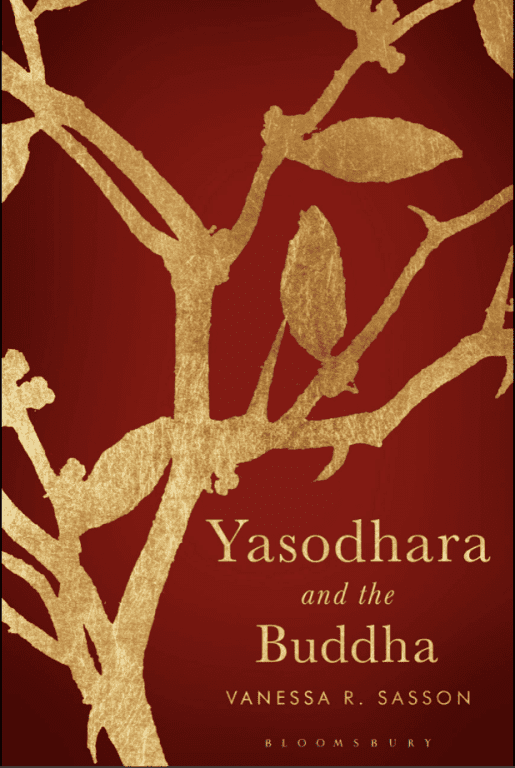 At the risk of stating the problem bluntly, I’ll follow the lead of Wendy Doniger, a religion professor at the University of Chicago, and one of the world’s more renowned experts in Indian religions. In considering Siddhartha’s story from the perspective of Yasodhara, Doniger has said, “her husband abandoned her, and even took away their child” (ix). I remember the first time I heard it phrased that way, I had to stop and let those harsh words sink in. That’s heavy stuff. It’s such a painful and all-too-human story that has played out across so many families over time.
And this is one of those points in which we are invited to consider whether we can allow multiple differing “truths” to co-exist. Can we allow for the messy, complicated possibility that the historical Buddha was both a spiritual genius and an uninvolved, disappointing, even really problematic husband (Garling 83)? Can we be honest that the Buddha has helped alleviate suffering for countless people through the spiritual practices he helped pioneer, and may have also caused significant suffering for his family in the process (Sasson 3)?
Let me add a few more details to Siddhartha’s story, then I would like to invite us to consider some takeaways for how it can inform our approach to meditation and to exploring the Buddhistic tradition from a twenty-first century perspective.
As best as scholars can discern, Siddhartha and Yasodhara were the same age; some traditions hold that they were born on the same day. And they were both sixteen years old on their wedding night. They were married for twelve years before Yasodhara became pregnant, at age twenty-eight, with their first child, a son. So there may have been some struggle around fertility.
Typically, there is joy around the birth of a firstborn son, particularly after trying without success to have a child for more than a decade (269). Instead, tradition holds that, of all nights, Siddhartha chose to leave home the day after his son was born—without meeting his son nor saying goodbye to his wife. Some early Buddhist records suggest that: “His abandonment was dramatic and the outcome devastating. Yasodhara woke up the next morning to the news of his departure…she challenges the Chariot Driver for taking her beloved away. She demands explanation, she shakes in fury, she collapses with pain.” (2-3).
When Siddhartha returned six or more years later around the age of thirty-five, many people in the palace rushed out to greet him. In contrast, there is a powerful line in some of the early Buddhist records that Yasodhara alone refused to go out to greet him. After so many years, she said that he could come to her (281).
According to the stories, he did come back to her, but only briefly and primarily to take his son with him back into the forest, again leaving her behind, which further hurt Yasodhara. Importantly, there were again other possible options he could have chosen. For instance, there are also ancient Indian traditions of “a king taking his wife with him if he departed for a contemplative forest life” (Garling 151). And given that Yasodhara eventually became a Buddhist nun, fully enlightened in her own right, an interesting question is what might they have discovered together if he had invited her to join him on his initial spiritual quest (260-1).
In the spirit of fairness, I will certainly concede that all this was playing out in a deeply patriarchal culture and time; and the historical Buddha did permit women to be taught meditation. Yet, women also remained second-class citizens in many Buddhist tradition. Most infamously, there is an early teaching of the Buddha that, “even the most senior [female] nun who has been ordained for one hundred years must bow down to and respect a junior [male] monk even if he has only been ordained for a single day” (Weiss 139).
So where do we go from here? What do we do with this imperfect, messy, and complex situation? Among many possible takeaways, I invite you to consider at least three in particular.
The first is that no human being—including religious and spiritual leaders—ever has or ever will perfect, whatever that would even mean. (Remember, we are saved from perfection because it is an impossible ideal to be all things to all people across time.) No one is perfect whether we’re talking about world-historical religious figures like the Buddha, Jesus, Mohammad, Moses, and others, or whether we’re talking about various stripes of ordained clergy. This claim is likely not particularly controversial among most religious progressives today, but let us also be honest that a lot of people have ended up in a lot of abusive situations when religious leaders are put up on pedestals and when religious leaders fail to deal honestly with their flaws and limitations. So may the story of Yasodhara be a reminder that religious leaders can be inspirational and important leaders, while also always remaining fallible human beings.
A second potential takeaway is to not limit ourselves to the understandings, standards and conventions of the past. As we saw before, multiple things can be true. The historical Buddha was clearly a spiritual genius, even though some aspects of his teachings are limited by the sexism, homophobia, ableism, and other oppressions of his time. As with all understandings, we should give ourselves the freedom to update old teachings in light of today’s evolving and more inclusive insights.
Finally, we should question the ideal of the solo monastic male. Don’t get me wrong. If you feel called to meditate alone in a cave or in a forest, and you can do so in a way that doesn’t unduly harm others, then that is indeed a time-tested way of pursuing spiritual growth. But the story of Yasodhara points us to another increasingly common way of pursuing spiritual growth: through meeting the challenges of everyday life.
The poet, environmental activist, and Buddhist practitioner Gary Snyder (1930 – ) put it this way regarding practicing the dharma no matter one’s situation in life:
All of us are apprentices to the same teacher that all masters have worked with—reality. Reality says: Master the twenty-four hours… It is as hard to get children herded into the car pool and down the road to the bus as it is to chant sutras in the Buddha Hall on a cold morning. One is not better than the other. Each can be quite boring. They both have the virtuous quality of repetition. Repetition and ritual and their good results come in many forms: changing the car filters, wiping noses, going to meetings, sitting in meditation, picking up around the house, washing dishes, checking the dipstick. Don’t let yourself think that one or more of these distracts you from the serious pursuits Such a round of chores is not a set of difficulties to escape so that we may do our practice that will put us on the path. It is our path. (Kornfield 72)
Our invitation is not only to “wake up,” it is also, as the saying goes, to “wake down”—to open ourselves fully—with mindfulness, heartfulness, bodyfulness—to the reality of the life we have.
Although I continue to value my occasional opportunities to go deeply into meditation states on long retreats, I am increasingly coming to experience the value and power of practicing mindfulness, heartfulness, embodiment, awareness, concentration, and more at home, at work, at the grocery store, at the gym, while reading the news. May the story of Yasodhara be a challenge to consider the ways that we can wake up right here, right now in the midst of our daily life. Everyday life can truly be one of the most difficult and fruitful places to practice.
That insight connects back to my post a few weeks ago on Dr. Nicole LePera’s Holistic Psychology. It can be one thing to think you are awakened or enlightened when you are out there alone in a cave; a much harder test is integrating your spiritual practice into your everyday life. Zen masters may be famous for being able to skillfully trigger us in the areas we still need to work on, but let me tell you: children are natural little Zen masters, often preternaturally able to push our buttons. As you’ve heard me say before, “Our families can push our buttons because our family sewed on our buttons.” Along these lines, Ram Dass used to say, “If you think you’re enlightened, spend a week with your family.” For most of us, doing so will quickly expose some places where we still get hooked, and where we still have work to do to become more fully liberated and free.
So, as we come to the end, I remain grateful for the tremendous legacy of spiritual wisdom and practice that Siddhartha Gautauma helped discover. And I also remain curious about all that remains to be discovered—beyond what he was able to teach us—about living out the dharma in the present context of our daily lives.
The Rev. Dr. Carl Gregg is a certified spiritual director, a D.Min. graduate of San Francisco Theological Seminary, and the minister of the Unitarian Universalist Congregation of Frederick, Maryland. Follow him on Facebook (facebook.com/carlgregg) and Twitter (@carlgregg).
Learn more about Unitarian Universalism: http://www.uua.org/beliefs/principles
Previous Post

July 14, 2021
Boundaries, Healing, & Hope: How to Shift Out of Survival Mode
Next Post
August 11, 2021 Doubts & Loves: Israel/Palestine, Perspectives, & Peace
Browse Our Archives
Select a Category Advent Anti-Racism Archaeology Atheism Baptism Best of the Year List Book Reviews Buddhism Catholicism Christian Education Church and State Church Planting Climate Change Conscientious Objection to War Creation Spirituality Death Penalty Didache Disability Rights Discernment Easter Ecology Emergent Church Movement Empire-Critical Ethics Evolution Feminist Theology Film Reviews Gandhi Gospel of Mark Gun Control Hinduism Immigration Reform Interfaith Islam JFK Judaism Jungian Spirituality Lectionary Commentary Lent Letters to the Editor LGBT Marriage MLK Multiculturalism Mysticism Nonviolent Activism Occupy Paganism (Earth-centered Religions) Parables Paul Pluralism Politics Process Theology Quantum Physics Requiescat In Pace Seminary and Divinity School Sermon Series Retrospective Sermons Spiritual Direction Spiritual Practices Stewardship (Fundraising) The Book of J The Wheel of the Year (Paganism) Theoblogger Challenge Triathlon Uncategorized Unitarian Universalism Worship Resources Youth Ministry
Select a Month July 2026 May 2026 March 2026 November 2025 October 2025 August 2025 February 2025 December 2024 October 2024 March 2024 January 2024 December 2023 November 2023 March 2023 February 2023 January 2023 December 2022 November 2022 August 2022 March 2022 February 2022 January 2022 December 2021 September 2021 August 2021 July 2021 June 2021 May 2021 February 2021 January 2021 December 2020 August 2020 June 2020 May 2020 April 2020 March 2020 February 2020 January 2020 December 2019 November 2019 October 2019 September 2019 July 2019 June 2019 March 2019 February 2019 January 2019 December 2018 November 2018 October 2018 September 2018 June 2018 May 2018 April 2018 March 2018 February 2018 January 2018 December 2017 November 2017 October 2017 September 2017 August 2017 July 2017 June 2017 May 2017 April 2017 March 2017 February 2017 January 2017 December 2016 November 2016 October 2016 September 2016 August 2016 June 2016 May 2016 April 2016 March 2016 February 2016 January 2016 December 2015 November 2015 October 2015 September 2015 August 2015 July 2015 June 2015 May 2015 April 2015 March 2015 February 2015 January 2015 December 2014 November 2014 October 2014 August 2014 July 2014 June 2014 May 2014 April 2014 March 2014 February 2014 January 2014 December 2013 November 2013 October 2013 September 2013 August 2013 July 2013 June 2013 May 2013 April 2013 March 2013 February 2013 January 2013 December 2012 November 2012 October 2012 September 2012 August 2012 July 2012 June 2012 May 2012 April 2012 March 2012 February 2012 January 2012 December 2011 November 2011 October 2011 September 2011 August 2011 July 2011 June 2011 May 2011 April 2011 March 2011 February 2011 January 2011 December 2010 November 2010 October 2010 August 2009 July 2009 May 2009
Follow Us!
TAKE THE
Religious Wisdom Quiz
What was the rider of the Red Horse in Revelation given?
Select your answer to see how you score.
A balance scale A large sword A crown A bow
Related posts from Carl Gregg

Reading America at 250: A Nation Wrestles With...


Andrew Holocek on the Power of Darkness

The Stories That Shape Us: Myths, Archetypes, &...
TRENDING AT PATHEOS More Voices

Reading America at 250: A Nation Wrestles With...
As part of my own reflection on the 250th anniversary of the...

Whenever I am reading a book or listening to an argument, I...

President Trump Ban Animal Torture Videos on Facebook
Call for Stricter Regulations of Animal Abuse Content on Facebook Although President...

Draft Amendments to Address Ritual Abuse in New...
The proposed changes would make it illegal for individuals in domestic partnerships...

How Bans on LGBTQ+ Student Clubs Threaten Religious...
On June 20, 2025, the State of Texas passed Senate Bill 12....

The Truth About the Gen Z Revival
This past year, there has been a lot of media buzz surrounding...
view all More Voices blogs
Ad-Free & Subscriber Log-In Subscription Support
- About Us
- 2026 Calendar
- Videos
- Podcasts
- Library of World Religions
- Faith In Media Tracker
- Advertise With Us
- Write for Us
- Privacy Policy
- Terms of Service
- Do Not Sell My Data
- Contact Us
- Radiant Digital
- Manage Newsletter Subscriptions
- Unsubscribe From Notifications
- Sitemap
Copyright 2008-2026, Patheos. All rights reserved.
Subscription Support Ad-Free & Subscriber Log-In
Follow Patheos