
BuddhistCatholicContemplativeEvangelicalGeneral ChristianHinduJewishLatter-day SaintMuslimNew VisionsProgressive Christian
Beliefs
- Buddhist
- Catholic
- Contemplative
- Evangelical
- General Christian
- Hindu
- Jewish
- Latter-day Saint
- More Voices
- Muslim
- New Visions
- Pagan
- Progressive Christian
Topics
- Religion News
- Food and Religion
- Sports and Religion
- Religious Art
- Religious Music and Entertainment
- Religious Events
- History and Religion
- Style and Religion
- Politics and Religion
- Women in Religion
- Recreation Outdoors and Religion
- Business Finance and Religion
- Careers Workplace and Religion
- Education and Religion
- Family Parenting and Religion
- Health Fitness and Religion
- Home and Religion
- Relationships and Religion
- Technology and Religion
- Travel and Religion
Columnists
- Buddhist Columnists
- Business Finance and Religion Columnists
- Careers Workplace and Religion Columnists
- Catholic Columnists
- Contemplative Columnists
- Education and Religion Columnists
- Evangelists Columnists
- Family Parenting and Religion Columnists
- General Christian Columnists
- Health Fitness and Religion Columnists
- Hindu Columnists
- History and Religion Columnists
- Home and Religion Columnists
- Jewish Columnists
- More Voices Columnists
- Latter Day Columnists
- Muslim Columnists
- New Visions Columnists
- Nonreligious Columnists
- Pagan Columnists
- Politics and Religion Columnists
- Progressive Columnists
- Recreation Outdoors and Religion Columnists
- Relationships and Religion Columnists
- Religion News Columnists
- Religious Art Columnists
- Religious Events Columnists
- Religious Music and Entertainment Columnists
- Sports and Religion Columnists
- Style and Religion Columnists
- Technology and Religion Columnists
- Travel and Religion Columnists
- Women in Religion Columnists
Resource Library
- 2026 Calendar
- Library of World Religions
- The 100 Most Holy Places on Earth
- Patheos Answers
- Podcasts
- Videos
- Faith Leaders Database
- Anglican Episcopalian
- Bahai
- Baptist
- Buddhism
- Christianity
- Confucianism
- Eastern Orthodoxy
- Hinduism
- Holiness and Pentecostal
- ISKCON
- Islam
- Judaism
- Lutheran
- Methodist
- The Church of Jesus Christ of Latter-day Saints
- New Age
- Paganism
- Presbytarian and Reformed
- Protestantism
- Religion Behind the Scenes
- Roman Catholic
- Scientology
- Shia Islam
- Sikhism
- Sufism
- Sunni Islam
- Taoism
- Zen
- See all religions
Research Tools
 Ad-Free & Subscriber Log-In Subscription Support
Ad-Free & Subscriber Log-In Subscription Support
Follow Patheos 

- Trending:
- Forgiveness
- |
- Marriage
- |
- Consciousness
- |
- Death Penalty
- |
- Election
- |
- Halloween

- Home
- More Voices
- The Stories We Tell Matter: On the 100th Anniversary of the Tulsa Race Massacre
The Stories We Tell Matter: On the 100th Anniversary of the Tulsa Race Massacre
Last updated on: June 6, 2021 at 9:52 am by Carl Gregg
The Stories We Tell Matter: On the 100th Anniversary of the Tulsa Race Massacre 2021-06-06T09:52:44-04:00 Carl Gregg
Patheos Explore the world's faith through different perspectives on religion and spirituality! Patheos has the views of the prevalent religions and spiritualities of the world.
The stories we tell matter. The choices we make about which stories to teach our children matter. All the stories we tell and retell, year after year matter. Our choices about stories we allow to be neglected or suppressed matter as well. And regarding stories and perspectives most and least prominent in our culture, who decides and who benefits matter.
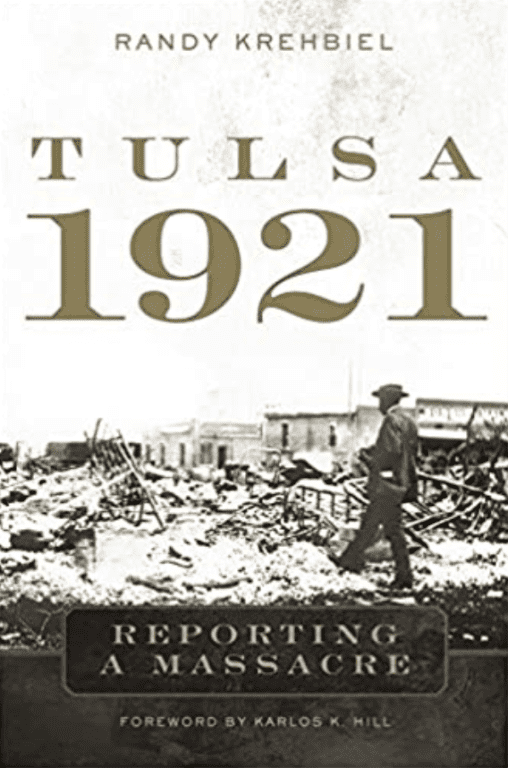 I bring all this up because May 31 and June 1 marked the 100th anniversary of the Tulsa Race Massacre of 1921. Although this event is now recognized as “the deadliest outbreak of white terrorist violence against a black community in American history,” the telling of this history was not only neglected, but downright suppressed for many years (Krehbiel xi). “Educators did not teach it. Government offices did not record it. Even archival copies of some newspaper accounts were selectively expunged” (The New York Times).
In recent years the tide has started to turn—including the commitment of the Tulsa public school system to finally incorporate this history into their standard curriculum (https://www.tulsaschools.org/tulsaracemassacre). And for the general public, Greenwood Rising, a permanent history center in Tulsa, is opening soon to honor the legacy of all impacted by these events, and to “inspire meaningful, sustainable action” toward a more equitable future.
Accordingly there is a prominent quote from James Baldwin at the entrance to the new history center: “Not everything that is faced can be changed, but nothing can be changed until it is faced.” Along these lines, last year, Bryan Stevenson’s Equal Justice Initiative partnered with the Tulsa Community Remembrance Coalition to place a historical marker that attempts to tell the story in a brief 200 words of what happened one hundred years ago this week:
On May 31 to June 1, 1921, a white mob attacked the prosperous Black neighborhood of Greenwood in Tulsa, resulting in the deaths of at least 36 Black Tulsans, the destruction of 36 city blocks, and the displacement of over 10,000 Black people. On May 31, Dick Rowland, a 19-year-old Black teenager, was jailed after being accused of assaulting a white woman. Although the charges were dropped, the local Tulsa Tribune newspaper published an inflammatory story that mobilized a white mob to lynch Rowland. In response, members of the Black community stationed themselves at the courthouse to protect him. Reports indicate that local authorities provided firearms and ammunition to the mob of thousands of white people who began firing at the Black men trying to protect Rowland. When the men retreated towards Greenwood, the mob, joined by city-appointed deputies, pursued them and began terrorizing the entire community, deliberately shooting Black residents, burning homes and buildings. When the Oklahoma National Guard was called to intervene, they ignored the mob’s rampage and instead arrested hundreds of Black survivors. Public officials failed to keep records of Black people who were wounded or killed. While the estimated number of deaths is at least 36, witness accounts report more than 300 Black people were killed. No one was held accountable for Greenwood’s devastation. Its only surviving foundation now sits under Vernon AME Church (The Historical Marker Database)
which is why this site was chose for the historical marker. Only now, a hundred years later are some of the mass graves being searched for in earnest and in some cases found (National Geographic).
This history is hard to hear, but how much more devastating for those to whom it happened to have awareness of these events neglected and suppressed? As psychologists tell us, whenever we try to repress something, it doesn’t go away; rather, it tends to come back up in twisted ways. As the saying goes: “What we resist persists, but what we feel we can heal.” Being increasingly honest about our past as a country is one potential path to healing.
In that spirit, let me say a little more about why it was especially devastating that this particular neighborhood was destroyed at this particular time. Almost a decade prior Booker T. Washington (1856 – 1915) had visited this prosperous Black neighborhood and nicknamed it “Black Wall Street” (5). And, drawing from some incredible, iinteractive research and reconstruction done by The New York Times, I can give you a sense of why.
Keep in mind that we are talking about the early 1900s. Decades before the Civil Rights Movement, African Americans in Tulsa had built a truly remarkable community. Remember that we’re talking about “the destruction of 36 city blocks, and the displacement of over 10,000 Black people,” who lived in this prosperous Tulsa neighborhood. One central block alone of Black Wall Street contained “more than 70 businesses operated in mostly one-, two- and three-story red brick buildings,” and they were almost exclusively owned and operated by Black entrepreneurs.
The 70+ Black-owned businesses on just this block included “four hotels, two newspapers, eight doctors, seven barbers, nine restaurants and a half-dozen professional offices of real estate agents, dentists and lawyers…a cabaret and a cigar shop…too.” Greenwood was a thriving community in which Black Americans could circulate freely and safely: “You could shop for groceries, play pool, take in a theater show, eat dinner or get your hair styled — without ever leaving the block.”
To introduce you to only a few of the fascinating people who made “Black Wall Street” a reality:
- Loula and John Williams owned a candy shop in the Greenwood neighborhood as well as the beloved Dreamland Theater, which could seat up to 750 people.
- Some of the pathbreaking women who were entrepreneurs in “Black Wall Street,” included Mary Parrish who ran a typing school and Mabel Little, who ran a beauty salon.
- Buck Franklin was a lawyer who, after his office was destroyed, continued to “offer legal services from a tent.”
- James Nails and other members of his family ran a shoe shop, dance hall, and skating rink.
- The Stratford family owned a renowned 54-room luxury hotel.
I highly recommend that you spend some time reflecting on the pictures of each of them, available from The New York Times.
Overall, the more I learn about the impressive people and places of Black Wall Street, the more devastating it is to know that it was obliterated in less than twenty-four hours. What a theft of Black life, Black joy, and Black community. “The white mob looted and then set ablaze practically every home and business in the Greenwood District”— more than one dozen churches, five hotels, thirty-one restaurants, four huge stores, eight doctors’ offices, two dozen grocery stores, a public library, and more than one thousand homes—lay in ruin” (Krehbiel xi).
One hundred years later, telling this story is important—to inform and inspire our work in the present, to dismantle White Supremacy Culture, and to commit to building up a diverse multicultural beloved community. Accordingly, I also need to name that there are some important parts of this story that connect it to our own UU history.
Richard Lloyd Jones (1873 – 1963) was the editor and publisher of the Tulsa Tribune, the newspaper that published the article that helped incite the white mob. He was a lifelong Unitarian, the son of Jenkin Lloyd Jones (an influential leader in the Unitarian movement), although the son did not carry on the legacy of his father’s more progressive social commitment. And it is important to emphasize that Richard Lloyd Jones was more than just a little bit Unitarian. To name only two major examples, in the early 1940s he served as vice-president of the American Unitarian Association, and he was a major co-founder of All Souls Unitarian Universalist Church in Tulsa, Oklahoma, which today is the largest UU congregation in the world, with more than two thousand members (Dictionary of UU Biography).
I’ll share with you just a little of the background behind his role in the Tulsa Race Massacre. Richard Lloyd Jones purchased the Tulsa Tribune on December 1, 1919, less than two years before the tragic events on which we’ve been reflecting. And he immediately began to engage in sensationalistic (and lucrative) “tabloid journalism” to compete with the Tulsa World, which had a larger subscriber base. And because multiple conflicting things can both be, in some part, true, we can note that Jones had a number of personal friendships with African Americans over the years, and that Jones regularly exploited racial resentments to sell newspapers. Moreover, “During the next fifty years, his newspaper did not again mention the riot” (Dictionary of UU Biography). Ultimately, it matters much less whether Jones held racial prejudice in his heart against various individuals, and it matters much more that he choose to regularly exploit systemic racism for his own financial advantage.
The stories we tell matter. The choices we make matter about which stories to tell and which stories to neglect or suppress. And regarding which stories and perspectives are most and least prominent in our culture, notice who decides and who benefits?
It matters that Richard Lloyd Jones’s reputation as “a generous and devoted Unitarian” did not hold him accountable for his direct role in helping incite “the deadliest outbreak of white terrorist violence against a black community in American history” (Dictionary of UU Biography).
Now, there’s a whole lot more to say about all this. And if you are curious to learn more, there are at least three new documentaries being released. The early word is that the History Channel’s Tulsa Burning – The 1921 Race Massacre is the best one, but PBS’s Tulsa: The Fire and the Forgotten and National Geographic’s Rise Again: Tulsa and the Red Summer are also supposed to be well worth watching (NPR).
I should also hasten to add that if you prefer fiction to nonfiction, HBO’s remarkable TV series Watchmen from a few years ago opens with a powerful montage of the Tulsa Race massacre, and the whole series is an extended reimagining of a world profoundly shaped by that particular moment of radicalized violence—all within the alternative history of Alan Moore’s deconstruction of the superhero genre. I have a whole lot more to say about Watchmen, but for now suffice it to say that it’s one of the most original, subversive, and important shows of recent years.
As I move toward my conclusion, however, it is important to zoom out briefly and consider the even bigger picture. Although this moment of the 100th anniversary of the Tulsa Race Massacre is an auspicious occasion for remembering that particular story, it is also important to recognize that what happened in Tulsa in 1921 was far from an isolated incident: “Over the course of American history, more than 250 episodes of collective white violence against black communities have occurred. Just two years prior to the Tulsa Massacre, similar large-scale outbreaks of white terrorist violence against Black communities occurred in Dewey, Oklahoma; Elaine, Arkansas; Washington, D.C.; and Chicago, Illinois (Krebiel xii). Those stories matter too, and also have reverberations that continue into our present day.
And as I’ve been sitting with the story of the Tulsa Race Massacre in preparation for this Sunday, one quote that keeps coming to mind is from Robin D.G. Kelley, a distinguished professor of U.S. history at UCLA, who has written that:
Our country was built on looting—the looting of Indigenous lands and African labor. African-Americans, in fact, have much more experience being looted than looting…. White mobs often backed by the police, not only looted and burned black homes and businesses but also maimed and killed black people. Our bodies were loot. A system of governance that suppressed our wages, relieved us of property and excluded black people from equal schools and public accommodation is a form of looting.”
We can add to that list racially-biased mass incarceration, the New Jim Crow, and more (97).
And one of the major unresolved issues on this 100th anniversary of the Tulsa Race Massacre is reparations for the tremendous loss of life and wealth from the destruction of Black Wall Street (UU World). More broadly, last month, H.R. 40, the “Commission to Study and Develop Reparation Proposals for African-Americans Act” made it out of committee in the U.S. House of Representatives for the first time, so keep an eye on that bill. Note that it is not about a specific method of reparations; rather, it is intended to appoint a committee to study the issue and develop proposals, such as how best to close the racial wealth gap which we’ve explored in depth previously (“The Color of Money”). For now, it is significant to have an increasingly honest reckoning with the painful truths in our country’s past. That is a crucial step toward the possibility of a more hopeful future with peace, liberty, and justice–not merely for some–but for all.
The Rev. Dr. Carl Gregg is a certified spiritual director, a D.Min. graduate of San Francisco Theological Seminary, and the minister of the Unitarian Universalist Congregation of Frederick, Maryland. Follow him on Facebook (facebook.com/carlgregg) and Twitter (@carlgregg).
Learn more about Unitarian Universalism: http://www.uua.org/beliefs/principles
Next Post

June 20, 2021 Climate Justice, Courage, & Hope
Browse Our Archives
Select a Category Advent Anti-Racism Archaeology Atheism Baptism Best of the Year List Book Reviews Buddhism Catholicism Christian Education Church and State Church Planting Climate Change Conscientious Objection to War Creation Spirituality Death Penalty Didache Disability Rights Discernment Easter Ecology Emergent Church Movement Empire-Critical Ethics Evolution Feminist Theology Film Reviews Gandhi Gospel of Mark Gun Control Hinduism Immigration Reform Interfaith Islam JFK Judaism Jungian Spirituality Lectionary Commentary Lent Letters to the Editor LGBT Marriage MLK Multiculturalism Mysticism Nonviolent Activism Occupy Paganism (Earth-centered Religions) Parables Paul Pluralism Politics Process Theology Quantum Physics Requiescat In Pace Seminary and Divinity School Sermon Series Retrospective Sermons Spiritual Direction Spiritual Practices Stewardship (Fundraising) The Book of J The Wheel of the Year (Paganism) Theoblogger Challenge Triathlon Uncategorized Unitarian Universalism Worship Resources Youth Ministry
Select a Month July 2026 May 2026 March 2026 November 2025 October 2025 August 2025 February 2025 December 2024 October 2024 March 2024 January 2024 December 2023 November 2023 March 2023 February 2023 January 2023 December 2022 November 2022 August 2022 March 2022 February 2022 January 2022 December 2021 September 2021 August 2021 July 2021 June 2021 May 2021 February 2021 January 2021 December 2020 August 2020 June 2020 May 2020 April 2020 March 2020 February 2020 January 2020 December 2019 November 2019 October 2019 September 2019 July 2019 June 2019 March 2019 February 2019 January 2019 December 2018 November 2018 October 2018 September 2018 June 2018 May 2018 April 2018 March 2018 February 2018 January 2018 December 2017 November 2017 October 2017 September 2017 August 2017 July 2017 June 2017 May 2017 April 2017 March 2017 February 2017 January 2017 December 2016 November 2016 October 2016 September 2016 August 2016 June 2016 May 2016 April 2016 March 2016 February 2016 January 2016 December 2015 November 2015 October 2015 September 2015 August 2015 July 2015 June 2015 May 2015 April 2015 March 2015 February 2015 January 2015 December 2014 November 2014 October 2014 August 2014 July 2014 June 2014 May 2014 April 2014 March 2014 February 2014 January 2014 December 2013 November 2013 October 2013 September 2013 August 2013 July 2013 June 2013 May 2013 April 2013 March 2013 February 2013 January 2013 December 2012 November 2012 October 2012 September 2012 August 2012 July 2012 June 2012 May 2012 April 2012 March 2012 February 2012 January 2012 December 2011 November 2011 October 2011 September 2011 August 2011 July 2011 June 2011 May 2011 April 2011 March 2011 February 2011 January 2011 December 2010 November 2010 October 2010 August 2009 July 2009 May 2009
Follow Us!
TAKE THE
Religious Wisdom Quiz
What is the primary language of the Eastern Orthodox liturgy in Greece?
Select your answer to see how you score.
English Russian Latin Greek
Related posts from Carl Gregg

Reading America at 250: A Nation Wrestles With...


Andrew Holocek on the Power of Darkness

The Stories That Shape Us: Myths, Archetypes, &...
TRENDING AT PATHEOS More Voices

Reading America at 250: A Nation Wrestles With...
As part of my own reflection on the 250th anniversary of the...

Whenever I am reading a book or listening to an argument, I...

President Trump Ban Animal Torture Videos on Facebook
Call for Stricter Regulations of Animal Abuse Content on Facebook Although President...

Draft Amendments to Address Ritual Abuse in New...
The proposed changes would make it illegal for individuals in domestic partnerships...

How Bans on LGBTQ+ Student Clubs Threaten Religious...
On June 20, 2025, the State of Texas passed Senate Bill 12....

The Truth About the Gen Z Revival
This past year, there has been a lot of media buzz surrounding...
view all More Voices blogs
Ad-Free & Subscriber Log-In Subscription Support
- About Us
- 2026 Calendar
- Videos
- Podcasts
- Library of World Religions
- Faith In Media Tracker
- Advertise With Us
- Write for Us
- Privacy Policy
- Terms of Service
- Do Not Sell My Data
- Contact Us
- Radiant Digital
- Manage Newsletter Subscriptions
- Unsubscribe From Notifications
- Sitemap
Copyright 2008-2026, Patheos. All rights reserved.
Subscription Support Ad-Free & Subscriber Log-In
Follow Patheos