
BuddhistCatholicContemplativeEvangelicalGeneral ChristianHinduJewishLatter-day SaintMuslimNew VisionsProgressive Christian
Beliefs
- Buddhist
- Catholic
- Contemplative
- Evangelical
- General Christian
- Hindu
- Jewish
- Latter-day Saint
- More Voices
- Muslim
- New Visions
- Pagan
- Progressive Christian
Topics
- Religion News
- Food and Religion
- Sports and Religion
- Religious Art
- Religious Music and Entertainment
- Religious Events
- History and Religion
- Style and Religion
- Politics and Religion
- Women in Religion
- Recreation Outdoors and Religion
- Business Finance and Religion
- Careers Workplace and Religion
- Education and Religion
- Family Parenting and Religion
- Health Fitness and Religion
- Home and Religion
- Relationships and Religion
- Technology and Religion
- Travel and Religion
Columnists
- Buddhist Columnists
- Business Finance and Religion Columnists
- Careers Workplace and Religion Columnists
- Catholic Columnists
- Contemplative Columnists
- Education and Religion Columnists
- Evangelists Columnists
- Family Parenting and Religion Columnists
- General Christian Columnists
- Health Fitness and Religion Columnists
- Hindu Columnists
- History and Religion Columnists
- Home and Religion Columnists
- Jewish Columnists
- More Voices Columnists
- Latter Day Columnists
- Muslim Columnists
- New Visions Columnists
- Nonreligious Columnists
- Pagan Columnists
- Politics and Religion Columnists
- Progressive Columnists
- Recreation Outdoors and Religion Columnists
- Relationships and Religion Columnists
- Religion News Columnists
- Religious Art Columnists
- Religious Events Columnists
- Religious Music and Entertainment Columnists
- Sports and Religion Columnists
- Style and Religion Columnists
- Technology and Religion Columnists
- Travel and Religion Columnists
- Women in Religion Columnists
Resource Library
- 2026 Calendar
- Library of World Religions
- The 100 Most Holy Places on Earth
- Patheos Answers
- Podcasts
- Videos
- Faith Leaders Database
- Anglican Episcopalian
- Bahai
- Baptist
- Buddhism
- Christianity
- Confucianism
- Eastern Orthodoxy
- Hinduism
- Holiness and Pentecostal
- ISKCON
- Islam
- Judaism
- Lutheran
- Methodist
- The Church of Jesus Christ of Latter-day Saints
- New Age
- Paganism
- Presbytarian and Reformed
- Protestantism
- Religion Behind the Scenes
- Roman Catholic
- Scientology
- Shia Islam
- Sikhism
- Sufism
- Sunni Islam
- Taoism
- Zen
- See all religions
Research Tools
 Ad-Free & Subscriber Log-In Subscription Support
Ad-Free & Subscriber Log-In Subscription Support
Follow Patheos 

- Trending:
- Forgiveness
- |
- Marriage
- |
- Consciousness
- |
- Death Penalty
- |
- Election
- |
- Halloween

- Home
- More Voices
- “Grandma Was a Suffragette”: Celebrating the 100th Anniversary of Women’s Right to Vote
“Grandma Was a Suffragette”: Celebrating the 100th Anniversary of Women’s Right to Vote
Last updated on: August 19, 2020 at 3:20 pm by Carl Gregg
“Grandma Was a Suffragette”: Celebrating the 100th Anniversary of Women’s Right to Vote 2020-08-19T15:20:25-04:00 Carl Gregg
Patheos Explore the world's faith through different perspectives on religion and spirituality! Patheos has the views of the prevalent religions and spiritualities of the world.
The Indigo Girls’ song “Go” includes these lyrics:
Grandma was a suffragette
Blacklisted for her publication
Blacklisted for my generation
Those lines have stuck with me ever since I first heard that song more than two decades ago. I find that reminder to be so powerful: invoking the memory of radical forebears who came before us—as suffragists, as abolitionists, as social justice activists for so many other causes—who together passed on to us a world with more justice and equity than the world they inherited.
As the Torah reminds us, “We live in cities that we did not build. We drink from wells we did not dig. We sit in the shade of trees we did not plant” (Deuteronomy 6:10, adapted). Along these lines, as I’ve immersed myself in the history of the women’s suffrage movement over the past few weeks, two particular examples stood out to me:
First, in 1913, white organizers told Ida B. Wells-Barnett and other Black women to walk at the back of the Woman Suffrage Procession in Washington, D.C. She rightly refused, and instead walked as part of the main delegation. She marched that day, however, not only for herself, but for the voting rights she would help win for her two daughters. Her perseverance and determination also helped win voting rights that would be inherited by descendants she would never meet, such as her great-granddaughter Michelle Duster, a proud voter today. In the words of a contemporary paraphrase of those verses from the Torah, “We build on foundations we did not lay. We warm ourselves by fires we did not light…. Together we can build across the generations.” (Rev. Peter Raible).
Second, consider the photo in this article of Elizabeth Cady Stanton, her daughter Harriot, and granddaughter Nora from 1892. All three generations fought for the right to vote. And although Elizabeth Cady Stanton died in 1902—eighteen years before women won the right to vote in this country—the story did not end with her death; her daughter and granddaughter continued in her footsteps. And in 1920, when the 19th Amendment did finally pass, her daughter was 64 years old, and would live to vote for another two decades. Elizabeth’s granddaughter, in 1920, was only 37 years old. She would live to vote another five decades until her death in 1971.
As with Ida B. Wells-Barnett, these three incredible women enfranchised not only themselves, but also descendants they would never meet, including Elizabeth Cady Stanton’s great-great granddaughter Coline Jenkins, who today carries on her family’s legacy as a women’s rights activist and elected legislator. Jenkins’ mother was born one month prior to the passage of the 19th Amendment. So both she and Coline have always had the right to vote for which their ancestors fought so hard to achieve (Equal Means Equal). “We build on foundations we did not lay. We warm ourselves by fires we did not light…. Together we can build across the generations.”
I could go on with many more examples, but the most important question before us has already emerged: not only how should we celebrate and honor the social justice victories of the past, but also how we should leverage the hard won freedoms we have inherited in order to secure even more profound peace, liberty, and justice for ourselves and for the generations that will follow us? We are called not only to learn history, but to make the history that we will pass on to future generations.
In reflecting on the struggle for women’s suffrage in this country, it is evident that the work of peace and justice so often stretches from generation to generation. Although the story of first wave feminism ends with victory, it is tragic in the sense that almost all the founders of the women’s movement died before that wave crested. Perhaps most prominently, Susan B. Anthony died in 1906, fourteen years before the 19th Amendment passed. And I find the story quite moving that as she lay dying her final words listed her comrades in the struggle for gender justice: “She named the women who had worked with her, as if in a roll-call.” After her death, her nurse said, “Dear old soul rather hated to die. She wanted to live to gain just one more victory” (DuBois 165). I love that.
Looking back over the span of decades, we now know what those 68 women who signed the Declaration of Sentiments at the first women’s rights convention in 1848 could not know at the time. Of those 68 signers, only one women—Charlotte Woodward Pierce, who was eighteen years old at the time—would live until 1920 when she was able to celebrate both the passage of the 19th Amendment and her 91st birthday (11).
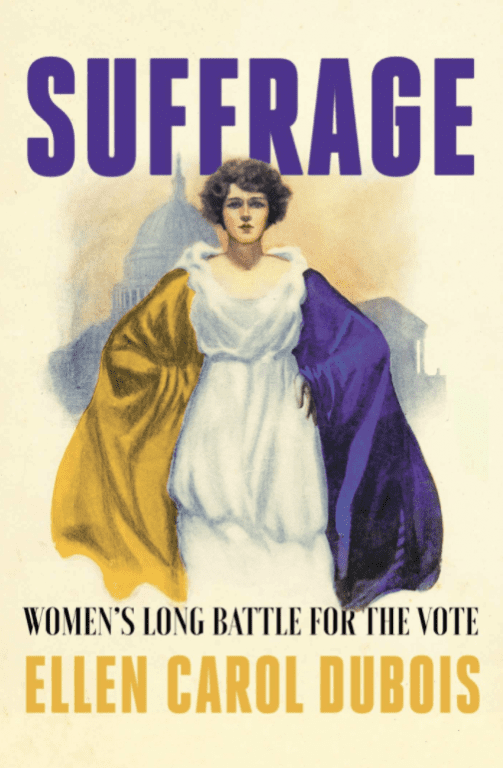 We find ourselves now, yet a century later. This Tuesday was the 100th Anniversary of the ratification of the 19th Amendment: “The right of citizens of the United States to vote shall not be denied or abridged by the United States or by any State on account of sex.” As the distinguished historian Ellen Carol DuBois has details in her book Suffrage: Women’s Long Battle for the Vote, Enshrining those 28 words in our U.S. Constitution has been described as a “75-year marathon”—spanning three generations—from the first women’s rights convention in Seneca Falls, New York in 1848 to victory in 1920 (1).
When you hear of that place, Seneca Falls, some of you may recall that one of the most memorable passages in President Obama’s Second Inaugural Address were these words, which echo both the Declaration of Independence and the poignancy of that inauguration, which happened on the weekend of Martin Luther King, Jr. Day:
We, the people, declare today that the most evident of truths –- that all of us are created equal –- is the star that guides us still; just as it guided our forebears through Seneca Falls, and Selma, and Stonewall; just as it guided all those men and women, sung and unsung, who left footprints along this great Mall, to hear a preacher say that we cannot walk alone; to hear a King proclaim that our individual freedom is inextricably bound to the freedom of every soul on Earth.
Within that memorable passage, the part that most strongly resonated with me and many others was our nation’s first black President inscribing into the annals of American history the formulation “Seneca Falls, Selma, Stonewall.”
It would have been enough for President Obama to rest on the rich symbolism of that day alone. It would have been enough for President Obama to rest on the historic sweep from Jefferson to Lincoln to King to himself. It would have been enough to celebrate the re-election to the highest office in the land of an African-American named Barack Hussein Obama. But President Obama’s alliterative allusion to “Seneca Falls, Selma, and Stonewall” pointed beyond the significance embodied in his own person to the larger intertwined tapestry of social justice movements in our country and beyond. Dr. Melissa Harris-Perry, an African-American political scientist, pundit, and Unitarian Universalist, described the importance this way, “When the president name-checked the watershed moments of the women’s rights, civil rights and LGBT equality movements, he offered a powerful moment of official recognition.”
As many of you have heard me say before, the stories we tell matter. It matters which stories we choose to tell. It matters how often we tell them, when and why. It matters whose stories we are lifting up and embedding further into our collective memory—and which stories we are passing over and allowing to be forgotten. In this case, I love President Obama’s choice to highlight the struggles for gender justice, racial justice, and LGBT equality as interwoven, interdependent strands in the great struggle for collective liberation in which we all get free.
Certainly there are times when activists in these various struggles have been forced into competition with one another, but there are also so many ways in which various historical movements for social justice in this country continue to influence and embolden one another. I only have time this morning to say a little more about the intersections of racial justice and gender justice in the early women’s movement, but I have a post planned for the winter in which I will focus much more fully on A Black Women’s History of the United States.
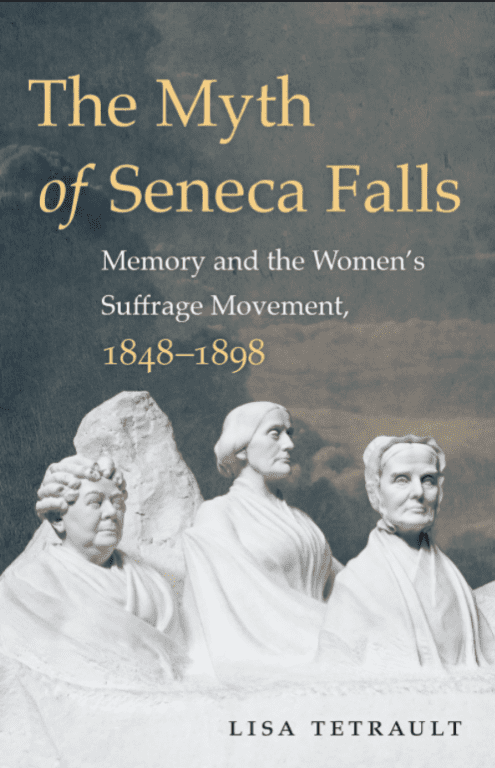 In retrospect, it is significant to note that in 1848, at that first women’s rights convention at Seneca Falls, the issue of whether their advocacy for women’s equality should include the right to vote was surprisingly controversial. Of the eleven resolutions in the Declaration of Sentiments being voted on that day, ten passed unanimously. The resolution proposing the right to vote, however, almost failed. The voice that proved decisive in helping pass that amendment was, ironically enough, a man’s voice— not just any man’s, but the voice of Frederick Douglass, the formerly enslaved African American who became one of our nation’s greatest orators, writers, and social reformers. Douglass’s presence at that first women’s rights convention is significant not only for racial equality, but also for gender equality (Tetrault 13).
At the same time, Douglass was clear that, if forced to choose, he supported racial justice before gender justice. To him, the imminent threat of lynchings and other acts of racial violence against African Americans made the movement for racial justice the single most urgent priority (DeBoise 76). Some early feminists countered that their support for gender justice was more important, because it would enfranchise literally half of the country’s population. As it turned out, the reality of Jim Crow laws and racist voter suppression meant that even when women were legally given the right to vote in 1920, in many states black men and women were regularly prevented from voting-for more than another four decades—until the passage of the 1965 Voting Rights Act (Tetrault 193).
In a similar vein, and following the story of the women’s rights movement beyond 1920, I highly recommend the mini-series Mrs. America, which is streaming on Hulu. It powerfully depicts how the torch of women’s rights was picked up and carried in the 1970s by second-wave feminists, including Gloria Steinem, Betty Friedan, Shirley Chisholm, Bella Abzug, and so many more.
For now, as we find ourselves commemorating the 100th anniversary of women’s suffrage at a time less than 80 days before the next presidential election, I invite you to read a recent poem titled “women’s voting rights at one hundred (but who’s counting?)” by Evie Shockley, a Black female English professor at Rutgers University.
As we near the 100th anniversary of women’s right to vote, let us remember that we are lifted up “on the shoulders of giants,” many of whom were pathbreaking women. But we are called not only to learn history—to honor and celebrate the victories of those who came before us—but also to do as they did: to make history. Together, may we do all that is in our power to create a better world for the generations to come: a world of peace, liberty, and justice not merely for some, but for all.
The Rev. Dr. Carl Gregg is a certified spiritual director, a D.Min. graduate of San Francisco Theological Seminary, and the minister of the Unitarian Universalist Congregation of Frederick, Maryland. Follow him on Facebook (facebook.com/carlgregg) and Twitter (@carlgregg).
Learn more about Unitarian Universalism: http://www.uua.org/beliefs/principles
Previous Post

August 3, 2020
The Death-positive Movement & The Order of the Good Death
Browse Our Archives
Select a Category Advent Anti-Racism Archaeology Atheism Baptism Best of the Year List Book Reviews Buddhism Catholicism Christian Education Church and State Church Planting Climate Change Conscientious Objection to War Creation Spirituality Death Penalty Didache Disability Rights Discernment Easter Ecology Emergent Church Movement Empire-Critical Ethics Evolution Feminist Theology Film Reviews Gandhi Gospel of Mark Gun Control Hinduism Immigration Reform Interfaith Islam JFK Judaism Jungian Spirituality Lectionary Commentary Lent Letters to the Editor LGBT Marriage MLK Multiculturalism Mysticism Nonviolent Activism Occupy Paganism (Earth-centered Religions) Parables Paul Pluralism Politics Process Theology Quantum Physics Requiescat In Pace Seminary and Divinity School Sermon Series Retrospective Sermons Spiritual Direction Spiritual Practices Stewardship (Fundraising) The Book of J The Wheel of the Year (Paganism) Theoblogger Challenge Triathlon Uncategorized Unitarian Universalism Worship Resources Youth Ministry
Select a Month July 2026 May 2026 March 2026 November 2025 October 2025 August 2025 February 2025 December 2024 October 2024 March 2024 January 2024 December 2023 November 2023 March 2023 February 2023 January 2023 December 2022 November 2022 August 2022 March 2022 February 2022 January 2022 December 2021 September 2021 August 2021 July 2021 June 2021 May 2021 February 2021 January 2021 December 2020 August 2020 June 2020 May 2020 April 2020 March 2020 February 2020 January 2020 December 2019 November 2019 October 2019 September 2019 July 2019 June 2019 March 2019 February 2019 January 2019 December 2018 November 2018 October 2018 September 2018 June 2018 May 2018 April 2018 March 2018 February 2018 January 2018 December 2017 November 2017 October 2017 September 2017 August 2017 July 2017 June 2017 May 2017 April 2017 March 2017 February 2017 January 2017 December 2016 November 2016 October 2016 September 2016 August 2016 June 2016 May 2016 April 2016 March 2016 February 2016 January 2016 December 2015 November 2015 October 2015 September 2015 August 2015 July 2015 June 2015 May 2015 April 2015 March 2015 February 2015 January 2015 December 2014 November 2014 October 2014 August 2014 July 2014 June 2014 May 2014 April 2014 March 2014 February 2014 January 2014 December 2013 November 2013 October 2013 September 2013 August 2013 July 2013 June 2013 May 2013 April 2013 March 2013 February 2013 January 2013 December 2012 November 2012 October 2012 September 2012 August 2012 July 2012 June 2012 May 2012 April 2012 March 2012 February 2012 January 2012 December 2011 November 2011 October 2011 September 2011 August 2011 July 2011 June 2011 May 2011 April 2011 March 2011 February 2011 January 2011 December 2010 November 2010 October 2010 August 2009 July 2009 May 2009
Follow Us!
TAKE THE
Religious Wisdom Quiz
What did God create on the second day?
Select your answer to see how you score.
Fish Sun Sky Trees
Related posts from Carl Gregg

Reading America at 250: A Nation Wrestles With...


Andrew Holocek on the Power of Darkness

The Stories That Shape Us: Myths, Archetypes, &...
TRENDING AT PATHEOS More Voices

Reading America at 250: A Nation Wrestles With...
As part of my own reflection on the 250th anniversary of the...

Whenever I am reading a book or listening to an argument, I...

President Trump Ban Animal Torture Videos on Facebook
Call for Stricter Regulations of Animal Abuse Content on Facebook Although President...

Draft Amendments to Address Ritual Abuse in New...
The proposed changes would make it illegal for individuals in domestic partnerships...

How Bans on LGBTQ+ Student Clubs Threaten Religious...
On June 20, 2025, the State of Texas passed Senate Bill 12....

The Truth About the Gen Z Revival
This past year, there has been a lot of media buzz surrounding...
view all More Voices blogs
Ad-Free & Subscriber Log-In Subscription Support
- About Us
- 2026 Calendar
- Videos
- Podcasts
- Library of World Religions
- Faith In Media Tracker
- Advertise With Us
- Write for Us
- Privacy Policy
- Terms of Service
- Do Not Sell My Data
- Contact Us
- Radiant Digital
- Manage Newsletter Subscriptions
- Unsubscribe From Notifications
- Sitemap
Copyright 2008-2026, Patheos. All rights reserved.
Subscription Support Ad-Free & Subscriber Log-In
Follow Patheos