
BuddhistCatholicContemplativeEvangelicalGeneral ChristianHinduJewishLatter-day SaintMuslimNew VisionsProgressive Christian
Beliefs
- Buddhist
- Catholic
- Contemplative
- Evangelical
- General Christian
- Hindu
- Jewish
- Latter-day Saint
- More Voices
- Muslim
- New Visions
- Pagan
- Progressive Christian
Topics
- Religion News
- Food and Religion
- Sports and Religion
- Religious Art
- Religious Music and Entertainment
- Religious Events
- History and Religion
- Style and Religion
- Politics and Religion
- Women in Religion
- Recreation Outdoors and Religion
- Business Finance and Religion
- Careers Workplace and Religion
- Education and Religion
- Family Parenting and Religion
- Health Fitness and Religion
- Home and Religion
- Relationships and Religion
- Technology and Religion
- Travel and Religion
Columnists
- Buddhist Columnists
- Business Finance and Religion Columnists
- Careers Workplace and Religion Columnists
- Catholic Columnists
- Contemplative Columnists
- Education and Religion Columnists
- Evangelists Columnists
- Family Parenting and Religion Columnists
- General Christian Columnists
- Health Fitness and Religion Columnists
- Hindu Columnists
- History and Religion Columnists
- Home and Religion Columnists
- Jewish Columnists
- More Voices Columnists
- Latter Day Columnists
- Muslim Columnists
- New Visions Columnists
- Nonreligious Columnists
- Pagan Columnists
- Politics and Religion Columnists
- Progressive Columnists
- Recreation Outdoors and Religion Columnists
- Relationships and Religion Columnists
- Religion News Columnists
- Religious Art Columnists
- Religious Events Columnists
- Religious Music and Entertainment Columnists
- Sports and Religion Columnists
- Style and Religion Columnists
- Technology and Religion Columnists
- Travel and Religion Columnists
- Women in Religion Columnists
Resource Library
- 2026 Calendar
- Library of World Religions
- The 100 Most Holy Places on Earth
- Patheos Answers
- Podcasts
- Videos
- Faith Leaders Database
- Anglican Episcopalian
- Bahai
- Baptist
- Buddhism
- Christianity
- Confucianism
- Eastern Orthodoxy
- Hinduism
- Holiness and Pentecostal
- ISKCON
- Islam
- Judaism
- Lutheran
- Methodist
- The Church of Jesus Christ of Latter-day Saints
- New Age
- Paganism
- Presbytarian and Reformed
- Protestantism
- Religion Behind the Scenes
- Roman Catholic
- Scientology
- Shia Islam
- Sikhism
- Sufism
- Sunni Islam
- Taoism
- Zen
- See all religions
Research Tools
 Ad-Free & Subscriber Log-In Subscription Support
Ad-Free & Subscriber Log-In Subscription Support
Follow Patheos 

- Trending:
- Forgiveness
- |
- Marriage
- |
- Consciousness
- |
- Death Penalty
- |
- Election
- |
- Halloween

- Home
- More Voices
- Spiritual Practices for “Sheltering in Place”: Inclining Your Heart & Mind toward Spaciousness
Spiritual Practices for “Sheltering in Place”: Inclining Your Heart & Mind toward Spaciousness
Last updated on: March 26, 2020 at 10:08 am by Carl Gregg
Spiritual Practices for “Sheltering in Place”: Inclining Your Heart & Mind toward Spaciousness 2020-03-26T10:08:48-04:00 Carl Gregg
Patheos Explore the world's faith through different perspectives on religion and spirituality! Patheos has the views of the prevalent religions and spiritualities of the world.
There are a lot of scary headlines out there. And even though we can’t control the state of the world, I would like to invite us to spend a little time reflecting on what we do have more influence over: how we respond to frightening news.
A simple framework that has stuck with me in recent years is fr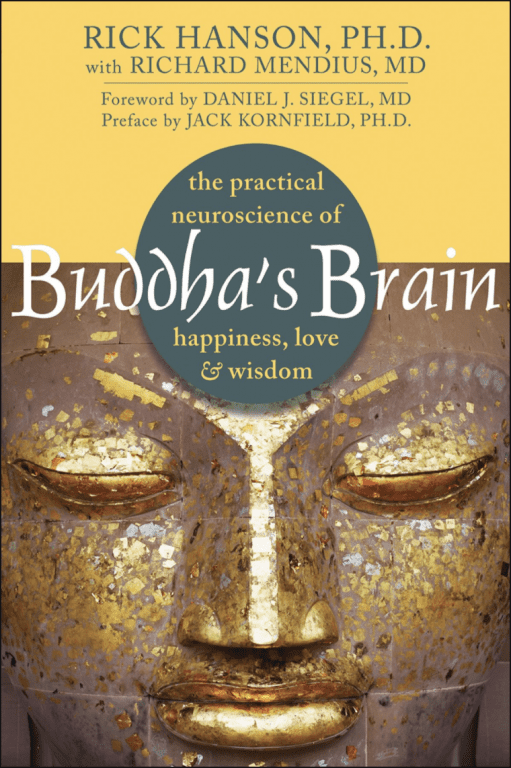 om the psychologist Rick Hanson. (Some of you may know his books, like Buddha’s Brain.) For now, imagine you are sitting in a car at a stop light: green means go and red means stop. Dr. Hanson has adapted that color coding for noticing what’s happening with the state of our minds (Hardwiring Happiness, 50).
When we feel safe, centered, and connected, it’s easier to skillfully respond to any problem that arises. When we’re relaxed and open, we are more able to be creative—and draw from our full set of inner resources, allowing the best versions of our self to emerge. That’s what Dr. Hanson calls “green” Responsive Mode. In contrast, when we feel threatened, anxious, or discombobulated, it can be easy to downshift into “red” Reactive Mode, and lash out at anything that triggers us.
To get a little nerdy about it, when we’re in “red” Reactive Mode, our amygdala (those two almond-shaped clusters of densely packed neurons in the temporal lobes of our brains) has taken over. The amygdala controls instinctual responses, and has been called the “fight or flight”—the “have-sex-with-it-or-kill-it”—part of the brain (Evolving Dharma, 35-36). When we are in “red” Reactive Mode, we’re acting primarily on base animal instinct.
By no means am I saying that we should get rid of our amygdala**.** This evolutionary inheritance can save our life in a high-threat situation. But it can also cause us to exist in a state of ratcheted-up anxiety all the time. When we are in “red” Reactive Mode, our “lizard brain”—our brain stem—takes over, and we don’t have access to all those more evolved parts of ourselves that the prefrontal cortex part of our brain makes possible: compassion, clarity, concentration, equanimity, and so much more.
So if you are finding yourself spending too much time in a ratcheted up “red” Reactive Mode, take a deep breath: in…and out. Take another one. Offer yourself some gentleness, kindness, and compassion. You’ve been going through a lot. We’ve been going through a lot. I invite you to notice in the coming days:
- What are the people, places, things, and activities that most regularly incline your heart and mind toward “green” Responsive Mode?
- And what are the people, places, things, and activities that most regularly incline your heart and mind toward “red” Reactive Mode?
You may not be able to eliminate all of those “red” stressors from your life, especially in such a time as this. But can you be intentional about getting more of the “green” people, places, things, and activities in your life—so that when the “red” stressors do arise, you have a greater capacity to remain in Responsive Mode?
Sometimes, as we did just a few moments ago, it can be as simple as taking a deep breath, and placing your hand on your heart and inclining yourself back toward heartfulness. Here’s a quote from the meditation teacher Jack Kornfield: “Tune in to your heart. That is where love, wisdom, grace, and compassion reside. With loving attention, feel into what matters most to you. Yes, there are anxious thoughts, and there is grief and trauma, but don’t let your heart be colonized by fear” (“Freedom Amid Challenging Times”).
I love that: “Don’t let you heart be colonized by fear.” Fear will arise, but practice letting it go before it sets up shop and moves in permanently.
Along those lines, I want to leave you with one final practice. It’s been on my mind since everyone’s been talking about zoom so much in regard to Zoom Video Conferences. And while the word zoom can mean to “move really quickly,” it can also mean to “move in and out on a camera from a long shot to a close-up or vice versa.” And it’s that latter sense of zooming in and out on a camera that can be of use when we feel contracted and locked in by fear or anxiety.
When we’re afraid, fear can feel like the only thing in the world. If that’s happening, a significant first step is noticing the fear. Simple mindfulness: noting, “There is fear.” Noticing and naming can give us a little bit of space between being fully caught up and trapped in fear—and witnessing what is happening.
From there, one practice that has been useful for me is inclining my heart and mind toward spaciousness: intentionally zooming out to put my fear in a larger context.
If you are open to it, I will show you what I mean with a short guided meditation adapted from one of my teachers, Emily Horn. (Her full version is ten-minutes, and is available online. The parts directly quoting Emily are in quotation marks below.)
If you feel comfortable, I invite you to settle in a little more right where you are. If it’s possible for you in this moment, I invite you to sit up a little straighter—so that you are relaxed, but alert. Perhaps put your feet on the floor. Rest your hands in your lap. Relax your shoulders. Take a deep breath in and out.
Begin by noticing the spaciousness of the room that you are in. You can even have to your eyes closed, just allow yourself to feel into the experience of sensing that the room that you are in, however large or small, is bigger than you. There is spaciousness.
“And now seeing if you can allow that sense of spaciousness to grow.” Zooming out a little more. “Imagining the sky above you.”
And now zooming out further still, “imagining the expanse of space extending beyond the sky.”
“Whatever is arising in your field of awareness in this moment—body sensations, breathing, feelings, thoughts—allow it all to come and go, just like the clouds in the sky.” As the saying goes, you don’t have to believe everything you think. You don’t have to hold on to everything you feel.
“Awareness holds it all. No need to do anything. Is there a sense that there’s a need to do something? A desire to do something? That too can arise and pass. Within this vast spaciousness of awareness, surrendering in this moment just a little bit more to awareness.”
As you are ready, I invite you to return your attention to the room that you are in—and know that this practice of zooming out and inclining your mind and heart toward spaciousness is always available to you.
For Further Study
Spiritual Practices for a Pandemic: Connection, Meaning, & Hope in the Time of Coronavirus
The Rev. Dr. Carl Gregg is a certified spiritual director, a D.Min. graduate of San Francisco Theological Seminary, and the minister of the Unitarian Universalist Congregation of Frederick, Maryland. Follow him on Facebook (facebook.com/carlgregg) and Twitter (@carlgregg).
Learn more about Unitarian Universalism: http://www.uua.org/beliefs/principles
Next Post

March 31, 2020 How to Reimagine Your Life during a Pandemic
Browse Our Archives
Select a Category Advent Anti-Racism Archaeology Atheism Baptism Best of the Year List Book Reviews Buddhism Catholicism Christian Education Church and State Church Planting Climate Change Conscientious Objection to War Creation Spirituality Death Penalty Didache Disability Rights Discernment Easter Ecology Emergent Church Movement Empire-Critical Ethics Evolution Feminist Theology Film Reviews Gandhi Gospel of Mark Gun Control Hinduism Immigration Reform Interfaith Islam JFK Judaism Jungian Spirituality Lectionary Commentary Lent Letters to the Editor LGBT Marriage MLK Multiculturalism Mysticism Nonviolent Activism Occupy Paganism (Earth-centered Religions) Parables Paul Pluralism Politics Process Theology Quantum Physics Requiescat In Pace Seminary and Divinity School Sermon Series Retrospective Sermons Spiritual Direction Spiritual Practices Stewardship (Fundraising) The Book of J The Wheel of the Year (Paganism) Theoblogger Challenge Triathlon Uncategorized Unitarian Universalism Worship Resources Youth Ministry
Select a Month July 2026 May 2026 March 2026 November 2025 October 2025 August 2025 February 2025 December 2024 October 2024 March 2024 January 2024 December 2023 November 2023 March 2023 February 2023 January 2023 December 2022 November 2022 August 2022 March 2022 February 2022 January 2022 December 2021 September 2021 August 2021 July 2021 June 2021 May 2021 February 2021 January 2021 December 2020 August 2020 June 2020 May 2020 April 2020 March 2020 February 2020 January 2020 December 2019 November 2019 October 2019 September 2019 July 2019 June 2019 March 2019 February 2019 January 2019 December 2018 November 2018 October 2018 September 2018 June 2018 May 2018 April 2018 March 2018 February 2018 January 2018 December 2017 November 2017 October 2017 September 2017 August 2017 July 2017 June 2017 May 2017 April 2017 March 2017 February 2017 January 2017 December 2016 November 2016 October 2016 September 2016 August 2016 June 2016 May 2016 April 2016 March 2016 February 2016 January 2016 December 2015 November 2015 October 2015 September 2015 August 2015 July 2015 June 2015 May 2015 April 2015 March 2015 February 2015 January 2015 December 2014 November 2014 October 2014 August 2014 July 2014 June 2014 May 2014 April 2014 March 2014 February 2014 January 2014 December 2013 November 2013 October 2013 September 2013 August 2013 July 2013 June 2013 May 2013 April 2013 March 2013 February 2013 January 2013 December 2012 November 2012 October 2012 September 2012 August 2012 July 2012 June 2012 May 2012 April 2012 March 2012 February 2012 January 2012 December 2011 November 2011 October 2011 September 2011 August 2011 July 2011 June 2011 May 2011 April 2011 March 2011 February 2011 January 2011 December 2010 November 2010 October 2010 August 2009 July 2009 May 2009
Follow Us!
TAKE THE
Religious Wisdom Quiz
Who said, "Do you not know that your bodies are temples of the Holy Spirit"?
Select your answer to see how you score.
Jesus Peter James Paul
Related posts from Carl Gregg

Reading America at 250: A Nation Wrestles With...


Andrew Holocek on the Power of Darkness

The Stories That Shape Us: Myths, Archetypes, &...
TRENDING AT PATHEOS More Voices

Reading America at 250: A Nation Wrestles With...
As part of my own reflection on the 250th anniversary of the...

Whenever I am reading a book or listening to an argument, I...

President Trump Ban Animal Torture Videos on Facebook
Call for Stricter Regulations of Animal Abuse Content on Facebook Although President...

Draft Amendments to Address Ritual Abuse in New...
The proposed changes would make it illegal for individuals in domestic partnerships...

How Bans on LGBTQ+ Student Clubs Threaten Religious...
On June 20, 2025, the State of Texas passed Senate Bill 12....

The Truth About the Gen Z Revival
This past year, there has been a lot of media buzz surrounding...
view all More Voices blogs
Ad-Free & Subscriber Log-In Subscription Support
- About Us
- 2026 Calendar
- Videos
- Podcasts
- Library of World Religions
- Faith In Media Tracker
- Advertise With Us
- Write for Us
- Privacy Policy
- Terms of Service
- Do Not Sell My Data
- Contact Us
- Radiant Digital
- Manage Newsletter Subscriptions
- Unsubscribe From Notifications
- Sitemap
Copyright 2008-2026, Patheos. All rights reserved.
Subscription Support Ad-Free & Subscriber Log-In
Follow Patheos