
BuddhistCatholicContemplativeEvangelicalGeneral ChristianHinduJewishLatter-day SaintMuslimNew VisionsProgressive Christian
Beliefs
- Buddhist
- Catholic
- Contemplative
- Evangelical
- General Christian
- Hindu
- Jewish
- Latter-day Saint
- More Voices
- Muslim
- New Visions
- Pagan
- Progressive Christian
Topics
- Religion News
- Food and Religion
- Sports and Religion
- Religious Art
- Religious Music and Entertainment
- Religious Events
- History and Religion
- Style and Religion
- Politics and Religion
- Women in Religion
- Recreation Outdoors and Religion
- Business Finance and Religion
- Careers Workplace and Religion
- Education and Religion
- Family Parenting and Religion
- Health Fitness and Religion
- Home and Religion
- Relationships and Religion
- Technology and Religion
- Travel and Religion
Columnists
- Buddhist Columnists
- Business Finance and Religion Columnists
- Careers Workplace and Religion Columnists
- Catholic Columnists
- Contemplative Columnists
- Education and Religion Columnists
- Evangelists Columnists
- Family Parenting and Religion Columnists
- General Christian Columnists
- Health Fitness and Religion Columnists
- Hindu Columnists
- History and Religion Columnists
- Home and Religion Columnists
- Jewish Columnists
- More Voices Columnists
- Latter Day Columnists
- Muslim Columnists
- New Visions Columnists
- Nonreligious Columnists
- Pagan Columnists
- Politics and Religion Columnists
- Progressive Columnists
- Recreation Outdoors and Religion Columnists
- Relationships and Religion Columnists
- Religion News Columnists
- Religious Art Columnists
- Religious Events Columnists
- Religious Music and Entertainment Columnists
- Sports and Religion Columnists
- Style and Religion Columnists
- Technology and Religion Columnists
- Travel and Religion Columnists
- Women in Religion Columnists
Resource Library
- 2026 Calendar
- Library of World Religions
- The 100 Most Holy Places on Earth
- Patheos Answers
- Podcasts
- Videos
- Faith Leaders Database
- Anglican Episcopalian
- Bahai
- Baptist
- Buddhism
- Christianity
- Confucianism
- Eastern Orthodoxy
- Hinduism
- Holiness and Pentecostal
- ISKCON
- Islam
- Judaism
- Lutheran
- Methodist
- The Church of Jesus Christ of Latter-day Saints
- New Age
- Paganism
- Presbytarian and Reformed
- Protestantism
- Religion Behind the Scenes
- Roman Catholic
- Scientology
- Shia Islam
- Sikhism
- Sufism
- Sunni Islam
- Taoism
- Zen
- See all religions
Research Tools
 Ad-Free & Subscriber Log-In Subscription Support
Ad-Free & Subscriber Log-In Subscription Support
Follow Patheos 

- Trending:
- Forgiveness
- |
- Marriage
- |
- Consciousness
- |
- Death Penalty
- |
- Election
- |
- Halloween

- Home
- More Voices
- How to Reimagine Your Life during a Pandemic
How to Reimagine Your Life during a Pandemic
Last updated on: March 31, 2020 at 11:22 am by Carl Gregg
How to Reimagine Your Life during a Pandemic 2020-03-31T11:22:08-04:00 Carl Gregg
Patheos Explore the world's faith through different perspectives on religion and spirituality! Patheos has the views of the prevalent religions and spiritualities of the world.
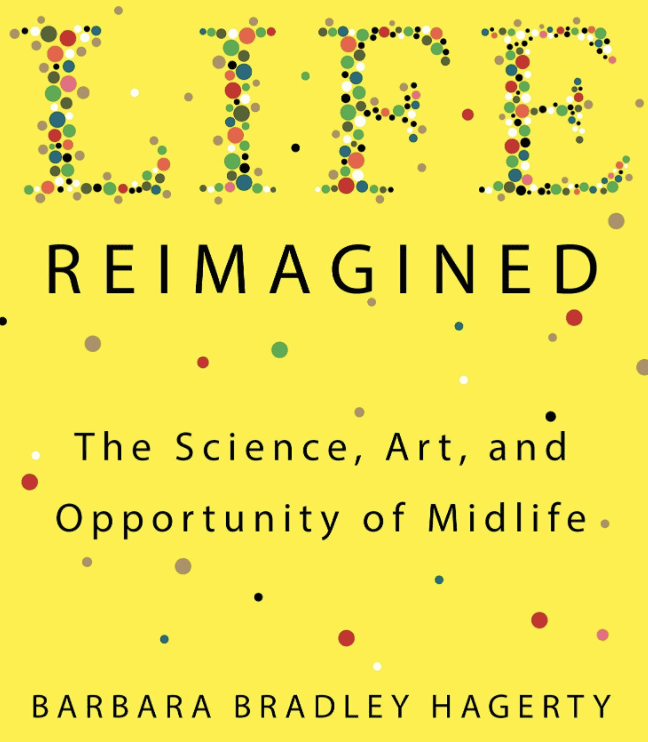 One of the books I have been reading during such a time as this is Life Reimagined: The Science, Art, and Opportunity of Midlife by Barbara Bradley Hagerty. Some of you will recognize that name from hearing her voice over the years on NPR—National Public Radio. Hagerty’s book is about navigating midlife, but there are a surprising number of relevant insights for finding your path through any disorienting event, including a pandemic. So much of the shift to midlife is about being more regularly confronted with the fact that we do not have unlimited time on this earth—and we are all being regularly confronted with that truth these days.
One response might be despair. (And don’t get me wrong: spending some quality time in the fetal position now and then is legit.) Another response could be hedonism: buying that sports car or having an affair. In the words of the prophet Isaiah, “Eat, drink, and be merry for tomorrow we die” (22:14). But both history and psychology tell us that all such attempts at sensual self-indulgence are, at most, fleeting pleasures. So, a third—and potentially much more satisfying response longterm—might be reimagining your life in previously unforeseeable ways. And it is the possibility of such a life reimagined that I would like to invite us to spend a few minutes considering.
If I could ask you to remember only one thing from this post, it would be this: “Choose purpose over happiness.” Choose purpose over happiness—and you may well give yourself the greatest chance of stumbling forward into both (7). If we seek happiness alone, the temptation is to pursue fleeting pleasures that give our brain a temporary dopamine rush: eating junk food, checking to see if someone “liked” something we posted on social media, or other forms of self-medicating. (We each know what our thing is.) The trouble is that a crash inevitably comes on the other side of that dopamine rush, leaving us craving another hit in an endless cycle of unsatisfactoriness.
Again, don’t get me wrong. Binge-watching, binge-eating, binge-whatevering all have their time and place. After all, the calendars of many societies historically have included many feast days (for indulging and celebrating) and fast days (for turning inward and reflecting). So how do we choose purpose over happiness on all those regular days in between the feasts and the fasts—especially when our usual routines have been upended through physical distancing?
So what does that look like for you personally? Although I can’t answer that question for you, I can give you some tools to help. When philosophers talk about the importance of choosing purpose over happiness, part of what they are referring to is an ancient idea that goes back more than two thousand years to Aristotle (384 – 322 BCE) called eudaimonia that is best translated as human flourishing: “Pursuing long-term goals that give meaning to life…. Figuring out your purpose in life given your unique set of talents and capacities” (7).
So how do we do that? Again, I can’t answer that for you, but I can share with you some touchstones that have been helpful to me. Almost two decades ago now, the Lilly Endowment began putting millions of dollars into funding programs across the country related to the theological exploration of vocation. And I had the opportunity to be a counselor at quite a few different camps for young people along those lines at Furman University (my alma mater), as well as at Duke University and Maryville College.
In helping plan and co-lead those programs, part of what I did was collect a long list of quotes related to discerning one’s vocation, one’s purpose or calling in life. For now, I’ll share with you my top three favorites in the hope that one or more of them may be of use to you in the coming days.
The first definition is from the author and minister Frederick Buechner, who begins by saying that, “Neither the hair shirt nor the soft berth will do.” A berth is a nautical term for a location to anchor, where a ship can swing round at the length of her moorings”—as in, “keep a wide berth of.” The problem with a soft berth is that in a storm a shift can flail around, hit something, and end up with a hole in its hull. So—too soft a berth won’t do.
Conversely, being too strict or harsh won’t do either. Buechner’s image here is a hair shirt, which ancient ascetics used to wear underneath their clothes to constantly chafe the skin as a reminder to be penitent.
So what should we do? Buechner concludes, “The place [you are called] to is the place where your deep gladness and the world’s deep hunger meet”—a place neither too strict nor leaving you too much at loose ends. Rather, you are seeking “where your deep gladness and the world’s deep hunger meet” (Wishful Thinking: A Theological ABC).
The second definition is from the African-American author and activist Howard Thurman, who wrote, “Don’t ask yourself what the world needs. Ask yourself what makes you come alive. And then do that. What the world needs is people that have come alive.” I love that. The needs of the world can be overwhelming, but witnessing others living into their joy makes the world a better place for all.
Rounding out my top three favorite definitions of vocation is Tal Ben-Shahar, a positive psychologist and professor at Harvard University who has written that you will find your calling at the “intersection between pleasure and meaning”—where personal satisfaction meets with a larger significance for the world and others.
With each of these three definitions, the first step is to notice the activities that give you joy. What makes you feel alive, connected, and engaged with others and the world around you? What do you love doing that allows you to get into a flow state for hours on end? The second step is to discern how those activities that you love might intersect with the needs of the world for such a time as this. At that intersection of pleasure and meaning, you will find purpose that has a significant chance of giving you longterm satisfaction and flourishing.
And I’m not saying that you need to figure out a grand plan for your life by the end of this week. But you may want to start experimenting with what does or doesn’t work. Let me give you two small examples. Since physical distancing started, I noticed that one thing I really wanted to do was to go running: to get out of my head and in my body. This past week I decided to shift from running random distances a few times a week to following a marathon training plan—which introduces further structure, purpose, and meaning. That’s still a step away from necessarily being connected to the needs of the world, but it’s a start along the path of me finding my way and my equilibrium for such a time as this.
Another example is that my aunt mailed me a beautiful, handmade quilted stole (a type of clergy vestment) that she made during her time of physical distancing. Making a gift for someone else is a way of introducing meaning, purpose, love, and connection into an activity you enjoy doing.
There’s a lot more I could say about vocational discernment, Hagerty’s book, and midlife generally, as a guide for such a time as this, but for now I will share with you two final things that have been on my heart this week.
First, in the spirit of savoring what we do still have—and are still capable of—in the midst of so many limitations and threats these days, I thought of a poem this past week that I haven’t thought about in quite a few years: “Otherwise” by Jane Kenyon (1947-1995). It’s available free online, and I encourage you to read it. In so many ways our lives these days already are otherwise, but we are each still here. So in whatever time that we do have, may we continue to savor all that remains good and true and beautiful in our midst.
The second and final piece I wanted to share with you is from the meditation teacher Jack Kornfield, about a Buddhist response to this pandemic. He is wrestling with what we do when we—and those we care about—are repeatedly impacted by hatred, greed, and delusion from some of the highest seats of power. Kornfield writes:
How will we respond?
With greed, hatred, fear and ignorance?
This only brings more suffering.
Or with generosity, clarity, steadiness and love?
This is the time for love….
Trust your dignity and goodness.
Where others hoard, help.
Where others deceive, stand up for truth.
Where others are overwhelmed or uncaring, be kind and respectful. (“The Bodhisattva Response to Coronavirus”)
May it be so for such a time as this, as we recommit ourselves anew to meaning, purpose, and love.
The Rev. Dr. Carl Gregg is a certified spiritual director, a D.Min. graduate of San Francisco Theological Seminary, and the minister of the Unitarian Universalist Congregation of Frederick, Maryland. Follow him on Facebook (facebook.com/carlgregg) and Twitter (@carlgregg).
Learn more about Unitarian Universalism: http://www.uua.org/beliefs/principles
Next Post

April 17, 2020 What's Next? Bart Ehrman's History of the Afterlife
Browse Our Archives
Select a Category Advent Anti-Racism Archaeology Atheism Baptism Best of the Year List Book Reviews Buddhism Catholicism Christian Education Church and State Church Planting Climate Change Conscientious Objection to War Creation Spirituality Death Penalty Didache Disability Rights Discernment Easter Ecology Emergent Church Movement Empire-Critical Ethics Evolution Feminist Theology Film Reviews Gandhi Gospel of Mark Gun Control Hinduism Immigration Reform Interfaith Islam JFK Judaism Jungian Spirituality Lectionary Commentary Lent Letters to the Editor LGBT Marriage MLK Multiculturalism Mysticism Nonviolent Activism Occupy Paganism (Earth-centered Religions) Parables Paul Pluralism Politics Process Theology Quantum Physics Requiescat In Pace Seminary and Divinity School Sermon Series Retrospective Sermons Spiritual Direction Spiritual Practices Stewardship (Fundraising) The Book of J The Wheel of the Year (Paganism) Theoblogger Challenge Triathlon Uncategorized Unitarian Universalism Worship Resources Youth Ministry
Select a Month July 2026 May 2026 March 2026 November 2025 October 2025 August 2025 February 2025 December 2024 October 2024 March 2024 January 2024 December 2023 November 2023 March 2023 February 2023 January 2023 December 2022 November 2022 August 2022 March 2022 February 2022 January 2022 December 2021 September 2021 August 2021 July 2021 June 2021 May 2021 February 2021 January 2021 December 2020 August 2020 June 2020 May 2020 April 2020 March 2020 February 2020 January 2020 December 2019 November 2019 October 2019 September 2019 July 2019 June 2019 March 2019 February 2019 January 2019 December 2018 November 2018 October 2018 September 2018 June 2018 May 2018 April 2018 March 2018 February 2018 January 2018 December 2017 November 2017 October 2017 September 2017 August 2017 July 2017 June 2017 May 2017 April 2017 March 2017 February 2017 January 2017 December 2016 November 2016 October 2016 September 2016 August 2016 June 2016 May 2016 April 2016 March 2016 February 2016 January 2016 December 2015 November 2015 October 2015 September 2015 August 2015 July 2015 June 2015 May 2015 April 2015 March 2015 February 2015 January 2015 December 2014 November 2014 October 2014 August 2014 July 2014 June 2014 May 2014 April 2014 March 2014 February 2014 January 2014 December 2013 November 2013 October 2013 September 2013 August 2013 July 2013 June 2013 May 2013 April 2013 March 2013 February 2013 January 2013 December 2012 November 2012 October 2012 September 2012 August 2012 July 2012 June 2012 May 2012 April 2012 March 2012 February 2012 January 2012 December 2011 November 2011 October 2011 September 2011 August 2011 July 2011 June 2011 May 2011 April 2011 March 2011 February 2011 January 2011 December 2010 November 2010 October 2010 August 2009 July 2009 May 2009
Follow Us!
TAKE THE
Religious Wisdom Quiz
Who did God give the Ten Commandments to?
Select your answer to see how you score.
Moses Joshua Abraham Noah
Related posts from Carl Gregg

Reading America at 250: A Nation Wrestles With...


Andrew Holocek on the Power of Darkness

The Stories That Shape Us: Myths, Archetypes, &...
TRENDING AT PATHEOS More Voices

Reading America at 250: A Nation Wrestles With...
As part of my own reflection on the 250th anniversary of the...

Whenever I am reading a book or listening to an argument, I...

President Trump Ban Animal Torture Videos on Facebook
Call for Stricter Regulations of Animal Abuse Content on Facebook Although President...

Draft Amendments to Address Ritual Abuse in New...
The proposed changes would make it illegal for individuals in domestic partnerships...

How Bans on LGBTQ+ Student Clubs Threaten Religious...
On June 20, 2025, the State of Texas passed Senate Bill 12....

The Truth About the Gen Z Revival
This past year, there has been a lot of media buzz surrounding...
view all More Voices blogs
Ad-Free & Subscriber Log-In Subscription Support
- About Us
- 2026 Calendar
- Videos
- Podcasts
- Library of World Religions
- Faith In Media Tracker
- Advertise With Us
- Write for Us
- Privacy Policy
- Terms of Service
- Do Not Sell My Data
- Contact Us
- Radiant Digital
- Manage Newsletter Subscriptions
- Unsubscribe From Notifications
- Sitemap
Copyright 2008-2026, Patheos. All rights reserved.
Subscription Support Ad-Free & Subscriber Log-In
Follow Patheos