
BuddhistCatholicContemplativeEvangelicalGeneral ChristianHinduJewishLatter-day SaintMuslimNew VisionsProgressive Christian
Beliefs
- Buddhist
- Catholic
- Contemplative
- Evangelical
- General Christian
- Hindu
- Jewish
- Latter-day Saint
- More Voices
- Muslim
- New Visions
- Pagan
- Progressive Christian
Topics
- Religion News
- Food and Religion
- Sports and Religion
- Religious Art
- Religious Music and Entertainment
- Religious Events
- History and Religion
- Style and Religion
- Politics and Religion
- Women in Religion
- Recreation Outdoors and Religion
- Business Finance and Religion
- Careers Workplace and Religion
- Education and Religion
- Family Parenting and Religion
- Health Fitness and Religion
- Home and Religion
- Relationships and Religion
- Technology and Religion
- Travel and Religion
Columnists
- Buddhist Columnists
- Business Finance and Religion Columnists
- Careers Workplace and Religion Columnists
- Catholic Columnists
- Contemplative Columnists
- Education and Religion Columnists
- Evangelists Columnists
- Family Parenting and Religion Columnists
- General Christian Columnists
- Health Fitness and Religion Columnists
- Hindu Columnists
- History and Religion Columnists
- Home and Religion Columnists
- Jewish Columnists
- More Voices Columnists
- Latter Day Columnists
- Muslim Columnists
- New Visions Columnists
- Nonreligious Columnists
- Pagan Columnists
- Politics and Religion Columnists
- Progressive Columnists
- Recreation Outdoors and Religion Columnists
- Relationships and Religion Columnists
- Religion News Columnists
- Religious Art Columnists
- Religious Events Columnists
- Religious Music and Entertainment Columnists
- Sports and Religion Columnists
- Style and Religion Columnists
- Technology and Religion Columnists
- Travel and Religion Columnists
- Women in Religion Columnists
Resource Library
- 2026 Calendar
- Library of World Religions
- The 100 Most Holy Places on Earth
- Patheos Answers
- Podcasts
- Videos
- Faith Leaders Database
- Anglican Episcopalian
- Bahai
- Baptist
- Buddhism
- Christianity
- Confucianism
- Eastern Orthodoxy
- Hinduism
- Holiness and Pentecostal
- ISKCON
- Islam
- Judaism
- Lutheran
- Methodist
- The Church of Jesus Christ of Latter-day Saints
- New Age
- Paganism
- Presbytarian and Reformed
- Protestantism
- Religion Behind the Scenes
- Roman Catholic
- Scientology
- Shia Islam
- Sikhism
- Sufism
- Sunni Islam
- Taoism
- Zen
- See all religions
Research Tools
 Ad-Free & Subscriber Log-In Subscription Support
Ad-Free & Subscriber Log-In Subscription Support
Follow Patheos 

- Trending:
- Forgiveness
- |
- Marriage
- |
- Consciousness
- |
- Death Penalty
- |
- Election
- |
- Halloween

- Home
- More Voices
- What’s Holding Us Back & How Do We Go from Here?
What’s Holding Us Back & How Do We Go from Here?
Last updated on: November 20, 2019 at 8:41 pm by Carl Gregg
What’s Holding Us Back & How Do We Go from Here? 2019-11-20T20:41:48-05:00 Carl Gregg
Patheos Explore the world's faith through different perspectives on religion and spirituality! Patheos has the views of the prevalent religions and spiritualities of the world.
In early August, the news spread around the world that Toni Morrison (1931-2019) had died. She was eighty-eight years old. To name only a few of her pathbreaking accomplishments, in 1988, she won the Pulitzer Prize for her novel Beloved, arguably her masterpiece. The next year, she joined the faculty at Princeton University, where she taught for more than twenty-five years. And in 1993, she became the first African-American woman to win the Nobel Prize in Literature. Her obituary in The New York Times described her writing as “luminous, incantatory prose resembling that of no other writer in English,” and she was “one of the rare American authors whose books were both critical and commercial successes.”
I was previously most familiar with her fiction, but her death prompted me to read a powerful recent collection of her non-fiction essays, speeches, and meditations titled The Source of Self-Regard. For now, I will limit myself to a tribute she wrote about The Rev. Dr. Martin Luther King, Jr. (1929-1968). She begins with the time Martin Luther King III (1957-), Dr. King’s oldest child, asked her, “If you were having a conversation with my father, what would you like to ask him?” For whatever confluence of reasons, she found herself saying in response, “Oh, I hope he is not disappointed in me.”
Morrison never met Dr. King in person. When he was assassinated in 1968, she was thirty-seven years old and a year into her tenure as the first black woman senior editor in the fiction department at Random House in New York City. “Yet,” she writes,
I felt this personal responsibility to him…. I was responding to his mission. His…audacious faith. His expectation of transforming, appending, cosmic elegy into a psalm of brotherhood. His confidence that we were finer than we thought, that there were moral grounds we would not abandon, lines of civil behavior we simply would not cross. That there were things we would gladly give up for the public good, that a comfortable life, resting on the shoulders of other people’s misery, was an abomination this country, especially among all nations, found offensive. (129-130)
Morrison eventually concluded that even if she could know the answer to whether King would be disappointed in her, that would be less important than periodically resisting the question itself: how are each of us individually and how are we collectively living up to (or falling short of) Dr. King’s dream?
This question reminds me of Dr. King’s fourth and final book published in 1967, the year prior to his assassination, titled: Where Do We Go from Here: Chaos or Community? I do think that King would be disappointed in leaders both in this country and around the world who seem much more committed to chaos than community. Others of us are clear that we want to make the other choice of beloved community, but we’re not always sure how to get there.
Dr. King himself was clear that what most consistently prevents us from building beloved community is what he called the “triple threats” of racism, materialism, and militarism. All three are important. I’ve addressed each before and will do so again in the future. But for now, I would like to invite us to focus on racism, the first of the three, for how it continues to hold us back from building the world we dream about.
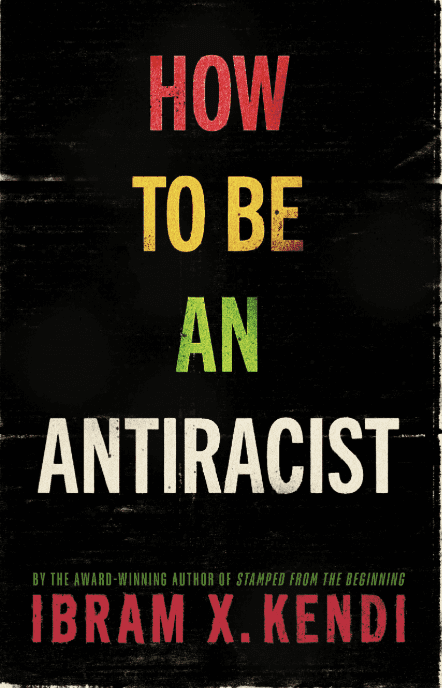 Dr. King’s life and writings remain a vital touchstone, but he was taken away from us more than fifty years ago. For today, one of the best contemporary resources I have found recently is the writing of Ibram Kendi. In 2017, Dr. Kendi became the Founding Director of The Antiracist Research & Policy Center at American University in Washington, DC. A year earlier in 2016, at age thirty-four, he became the youngest-ever winner of the National Book Award for Nonfiction for Stamped from the Beginning: The Definitive History of Racist Ideas in America. He jokes that growing up he dreamed of playing in the NBA (National Basketball Association), and he ended up with a very different NBA (National Book Award). And although that book is excellent, I would recommend beginning with his shorter and more accessible book, released a few months ago, titled How to Be an Antiracist.
So how do we go from here? How do we become more antiracist, more in alignment with a path away from chaos and toward beloved community? For Dr. Kendi, one central touchstone is science. The Human Genomic Project confirmed almost three decades ago in 1990 that, “In genetic terms, all human beings, regardless of race, are more than 99.9 percent the same…” (52). There is only one race—the human race.
Indeed, scientists tell us that,
The human species is so evolutionarily young, and its migratory patterns so wide [and] restless, that it has simply not had a chance to divide itself into separate biological groups or “races’” in any but the most superficial ways…. We all evolved in the last 100,000 years from the same small number of tribes that migrated out of Africa….
Race is not a biological fact; it is a social construction of fairly recent origin. However, because both race and racism are such powerful and influential social constructions, they will require an equally powerful effort and intention to deconstruct.
The fact that we humans are all 99.9% the same genetically clarifies that is it illegitimate—and racist—whenever anyone makes a claim that there is any inherent, biological problem with people of color as a group. Therefore, in Dr. Kendi’s assessment, we should “Admit racial inequity is a problem of bad policy, not bad people.” And our approach should be to keep adjusting our policies until we reach the result of a much more equitable, beloved community (231).
In Kendi’s liberating words, just as is the case among lighter-skinned folks, “Black is beautiful—and ugly, intelligent and unintelligent, law-abiding and law-breaking, industrious and lazy—and it is those imperfections that make Black people human, make Black people equal to all other imperfectly human groups” (2017:504). He continues in the conclusion to his epic, award-winning book Stamped from the Beginning that:
There will come a time when Americans will realize that the only thing wrong with Black people is that [too many Americans] think something is wrong with Black people. There will come a time when racist ideas will no longer obstruct us from seeing the complete and utter abnormality of racial disparities. There will come a time when we will love humanity, when we will gain the courage to fight for an equitable society, for our beloved humanity, knowing intelligently that when we fight for humanity, we are fighting for ourselves. There will come a time. Maybe, just maybe, that time is now. (Kendi 2017: 510)
I love that. There is so much power in focusing on a goal of a more equitable society—and continuing to adjust policies until we reach that goal.
Notice as well his point that too often, “racist ideas obstruct us from seeing the complete and utter abnormality of racial disparities.” We know that we humans are 99.9% the same, but the results of racism’s growth and evolution continue to create devastating inequities:
- “The median wealth of White households is a staggering thirteen times the median wealth of Black households” (Kendi 2017: 1)
- “Black people are five times more likely to be incarcerated than Whites” (Kendi 2017: 1).
- Black infants die at twice the rate of White infants…. And African Americans are 25 percent more likely to die to cancer than Whites.
These inequities must be dismantled if we as a society are to have a future with hope. As Justice Harry Blackmun famously wrote, “In order to get beyond racism, we must first take account of race” (19).
What Kendi does so brilliantly in his book Stamped from the Beginning is trace the “dual and dueling” people and movements in U.S. history who have been supporting racism (helping increase or maintain these inequities) and those who have supported antiracism (trying to decrease or eliminate racial inequities). In school, I learned some—although not nearly enough—about the history of racism:
- In the eighteenth century, our hallowed Constitution was written to count enslaved human beings as “three fifths” of a person.
- In the nineteenth century, a huge number of people were willing to go to war and die to defend the institution of chattel slavery.
- For much of the twentieth century, there were widespread racial segregation laws, lynchings, and more.
And I learned some—though not nearly enough—about the history of what Kendi calls antiracism, especially the abolition of slavery in the nineteenth century and the Civil Rights Movement in the twentieth century.
The way I learned the story of racism, however, was that it ended with the Civil Rights Movement—so antiracism wasn’t needed anymore. The result, in Kendi’s words, is that, “We’ve been using 1960s glasses to see 21st-Century racism”—and it turns out that many of us who are White— need to get our glasses updated?checked.
In contrast with my own early schooling, what Kendi’s book does so well is to trace both racism and antiracism as consistent through-lines that have both continued to grow, adapt, and evolve—starting before the beginning of this country and weaving throughout U.S. history until today. So we can celebrate that the old Jim Crow laws have been outlawed, but we also need to recognize that Jim Crow’s children and grandchildren live on in the New Jim Crow of racially biased mass incarceration, new racially biased voter ID laws, and more (x).
Because racism has continued to grow and evolve, antiracism too must continue to grow and evolve. And here we reach another of Dr. Kendi’s crucial points that can help us get beyond what has been holding us back: “The opposite of ‘racist’ isn’t ‘not racist.” It is ‘antiracist” (9).
I’ve lost count of the number of times I have heard politicians and other public figures defensively insist, “I’m not racist!” Kendi shows that claiming to be “not racist” is a distraction. Trying to carve out a position of “not racist” results in a false neutrality that usually results in the perpetuation of a racist *status quo—*and is therefore still on the side of racism. As the activist historian Howard Zinn used to say, “You can’t stay neutral on a moving train.”
A much more important question than “Are you a racist?” is “How are you being antiracist? Or are you proactively acting to dismantle systemic racism, and to implement politics that will measurably increase equity?” Here’s another way Dr. Kendi puts it: “We know how to be racist. We know how to pretend to be not racist. Now let’s know how to be antiracist” (11).
I particularly appreciate the way this perspective cuts straight through the fog that often develops around the question of whether or not a given person is a racist. So much time, energy, and ink has been spent trying to discern if a given person is racist. Sometimes there is a smoking gun proving racist intent. More often, as any lawyer will tell you, trying to prove intent is often difficult or impossible.
Thus, Dr. Kendi wisely advises us to set aside the question of trying to prove whether someone intended to be racist and ask instead, “Was the impact racist?” As the saying goes, “Even if you didn’t intend to step on my foot, the impact is that my foot hurts!” So Dr. Kendi invites us to ask— regardless of intent—did a given action increase or perpetuate racial hierarchy? If so, it’s racist. Likewise—regardless of intent—did a given action create more racial equity? If so, it’s antiracist (9).
What’s especially useful about this framework is that it can defuse the charge around whether someone “is a racist”—as if any of us had some unchanging racist or antiracist essence at our core. It turns out that we human beings are much messier than that: sometimes we’re racist (contributing to racial inequity), other times we’re antiracist (contributing to racial equity). The same white person can, for example, have a black friend (which is antiracist) and still support systems, policies, and laws that increase or maintain racial inequity (which is racist). Indeed, “Kendi has found the same person saying racist and antiracist things in the same speech.” In his words, “We change, and we’re deeply complex, and our definitions of ‘racist’ and ‘antiracist’ must reflect that” (Montgomery 3).
So with some of these new and improved insights, will we be able to let go of the racist systems holding us back from reaching the beloved community, and commit to a pro-active antiracism? To say more about that, let me share a relevant piece of Dr. Kendi’s powerful life story from his book. In January 2018, he was diagnosed with stage four colon cancer. The good news is that after both surgery and chemotherapy he is currently cancer free. But the result could have been otherwise: “About 88 percent of people diagnosed with stage-4 colon cancer die within five years” (234).
Reflecting on his harrowing experience of surviving cancer against all odds, he began to develop a metaphor for the current state of our body politic. In his words, “My society has racism. The most serious stage. Racism is likely to kill my society. My society can survive racism against all odds” (235). As with cancer, if we remain in denial, the racism will keep spreading. But if we are willing to be honest about our situation and undergo some of the pain that will be required to heal, there are still no guarantees—but there is the possibility of a future with hope.
In Dr. Kendi’s words:
Saturate the body politic with the chemotherapy or immunotherapy of antiracist policies that shrink the tumors of racial inequalities, that kill undetectable cancer cells. Remove any remaining racist politics, the way surgeons remove the tumors. Ensure there are clear margins, meaning no cancer cells of inequity left in the body politic, only the healthy cells of equity…. Detect and treat a recurrence early, before it can grow…. Racism is not even six hundred years old. It’s a cancer that we’ve caught early…. Once we lose hope, we are guaranteed to lose. But if we ignore the odds and fight to create an antiracist world, then we give humanity a chance to one day survive, a chance to live in communion, a chance to be forever free. (237-238)
The Rev. Dr. Carl Gregg is a certified spiritual director, a D.Min. graduate of San Francisco Theological Seminary, and the minister of the Unitarian Universalist Congregation of Frederick, Maryland. Follow him on Facebook (facebook.com/carlgregg) and Twitter (@carlgregg).
Learn more about Unitarian Universalism: http://www.uua.org/beliefs/principles
Next Post

December 28, 2019 Top 10 Best Books Read in 2019
Browse Our Archives
Select a Category Advent Anti-Racism Archaeology Atheism Baptism Best of the Year List Book Reviews Buddhism Catholicism Christian Education Church and State Church Planting Climate Change Conscientious Objection to War Creation Spirituality Death Penalty Didache Disability Rights Discernment Easter Ecology Emergent Church Movement Empire-Critical Ethics Evolution Feminist Theology Film Reviews Gandhi Gospel of Mark Gun Control Hinduism Immigration Reform Interfaith Islam JFK Judaism Jungian Spirituality Lectionary Commentary Lent Letters to the Editor LGBT Marriage MLK Multiculturalism Mysticism Nonviolent Activism Occupy Paganism (Earth-centered Religions) Parables Paul Pluralism Politics Process Theology Quantum Physics Requiescat In Pace Seminary and Divinity School Sermon Series Retrospective Sermons Spiritual Direction Spiritual Practices Stewardship (Fundraising) The Book of J The Wheel of the Year (Paganism) Theoblogger Challenge Triathlon Uncategorized Unitarian Universalism Worship Resources Youth Ministry
Select a Month July 2026 May 2026 March 2026 November 2025 October 2025 August 2025 February 2025 December 2024 October 2024 March 2024 January 2024 December 2023 November 2023 March 2023 February 2023 January 2023 December 2022 November 2022 August 2022 March 2022 February 2022 January 2022 December 2021 September 2021 August 2021 July 2021 June 2021 May 2021 February 2021 January 2021 December 2020 August 2020 June 2020 May 2020 April 2020 March 2020 February 2020 January 2020 December 2019 November 2019 October 2019 September 2019 July 2019 June 2019 March 2019 February 2019 January 2019 December 2018 November 2018 October 2018 September 2018 June 2018 May 2018 April 2018 March 2018 February 2018 January 2018 December 2017 November 2017 October 2017 September 2017 August 2017 July 2017 June 2017 May 2017 April 2017 March 2017 February 2017 January 2017 December 2016 November 2016 October 2016 September 2016 August 2016 June 2016 May 2016 April 2016 March 2016 February 2016 January 2016 December 2015 November 2015 October 2015 September 2015 August 2015 July 2015 June 2015 May 2015 April 2015 March 2015 February 2015 January 2015 December 2014 November 2014 October 2014 August 2014 July 2014 June 2014 May 2014 April 2014 March 2014 February 2014 January 2014 December 2013 November 2013 October 2013 September 2013 August 2013 July 2013 June 2013 May 2013 April 2013 March 2013 February 2013 January 2013 December 2012 November 2012 October 2012 September 2012 August 2012 July 2012 June 2012 May 2012 April 2012 March 2012 February 2012 January 2012 December 2011 November 2011 October 2011 September 2011 August 2011 July 2011 June 2011 May 2011 April 2011 March 2011 February 2011 January 2011 December 2010 November 2010 October 2010 August 2009 July 2009 May 2009
Follow Us!
TAKE THE
Religious Wisdom Quiz
What is the Christian principle about speaking words?
Select your answer to see how you score.
Always be silent Never speak Speak harshly Speak with love and grace
Related posts from Carl Gregg

Reading America at 250: A Nation Wrestles With...


Andrew Holocek on the Power of Darkness

The Stories That Shape Us: Myths, Archetypes, &...
TRENDING AT PATHEOS More Voices

Reading America at 250: A Nation Wrestles With...
As part of my own reflection on the 250th anniversary of the...

Whenever I am reading a book or listening to an argument, I...

President Trump Ban Animal Torture Videos on Facebook
Call for Stricter Regulations of Animal Abuse Content on Facebook Although President...

Draft Amendments to Address Ritual Abuse in New...
The proposed changes would make it illegal for individuals in domestic partnerships...

How Bans on LGBTQ+ Student Clubs Threaten Religious...
On June 20, 2025, the State of Texas passed Senate Bill 12....

The Truth About the Gen Z Revival
This past year, there has been a lot of media buzz surrounding...
view all More Voices blogs
Ad-Free & Subscriber Log-In Subscription Support
- About Us
- 2026 Calendar
- Videos
- Podcasts
- Library of World Religions
- Faith In Media Tracker
- Advertise With Us
- Write for Us
- Privacy Policy
- Terms of Service
- Do Not Sell My Data
- Contact Us
- Radiant Digital
- Manage Newsletter Subscriptions
- Unsubscribe From Notifications
- Sitemap
Copyright 2008-2026, Patheos. All rights reserved.
Subscription Support Ad-Free & Subscriber Log-In
Follow Patheos