
BuddhistCatholicContemplativeEvangelicalGeneral ChristianHinduJewishLatter-day SaintMuslimNew VisionsProgressive Christian
Beliefs
- Buddhist
- Catholic
- Contemplative
- Evangelical
- General Christian
- Hindu
- Jewish
- Latter-day Saint
- More Voices
- Muslim
- New Visions
- Pagan
- Progressive Christian
Topics
- Religion News
- Food and Religion
- Sports and Religion
- Religious Art
- Religious Music and Entertainment
- Religious Events
- History and Religion
- Style and Religion
- Politics and Religion
- Women in Religion
- Recreation Outdoors and Religion
- Business Finance and Religion
- Careers Workplace and Religion
- Education and Religion
- Family Parenting and Religion
- Health Fitness and Religion
- Home and Religion
- Relationships and Religion
- Technology and Religion
- Travel and Religion
Columnists
- Buddhist Columnists
- Business Finance and Religion Columnists
- Careers Workplace and Religion Columnists
- Catholic Columnists
- Contemplative Columnists
- Education and Religion Columnists
- Evangelists Columnists
- Family Parenting and Religion Columnists
- General Christian Columnists
- Health Fitness and Religion Columnists
- Hindu Columnists
- History and Religion Columnists
- Home and Religion Columnists
- Jewish Columnists
- More Voices Columnists
- Latter Day Columnists
- Muslim Columnists
- New Visions Columnists
- Nonreligious Columnists
- Pagan Columnists
- Politics and Religion Columnists
- Progressive Columnists
- Recreation Outdoors and Religion Columnists
- Relationships and Religion Columnists
- Religion News Columnists
- Religious Art Columnists
- Religious Events Columnists
- Religious Music and Entertainment Columnists
- Sports and Religion Columnists
- Style and Religion Columnists
- Technology and Religion Columnists
- Travel and Religion Columnists
- Women in Religion Columnists
Resource Library
- 2026 Calendar
- Library of World Religions
- The 100 Most Holy Places on Earth
- Patheos Answers
- Podcasts
- Videos
- Faith Leaders Database
- Anglican Episcopalian
- Bahai
- Baptist
- Buddhism
- Christianity
- Confucianism
- Eastern Orthodoxy
- Hinduism
- Holiness and Pentecostal
- ISKCON
- Islam
- Judaism
- Lutheran
- Methodist
- The Church of Jesus Christ of Latter-day Saints
- New Age
- Paganism
- Presbytarian and Reformed
- Protestantism
- Religion Behind the Scenes
- Roman Catholic
- Scientology
- Shia Islam
- Sikhism
- Sufism
- Sunni Islam
- Taoism
- Zen
- See all religions
Research Tools
 Ad-Free & Subscriber Log-In Subscription Support
Ad-Free & Subscriber Log-In Subscription Support
Follow Patheos 

- Trending:
- Forgiveness
- |
- Marriage
- |
- Consciousness
- |
- Death Penalty
- |
- Election
- |
- Halloween

- Home
- More Voices
- Defense Against the Dark Arts: Harry Potter for Such a Time as This
Defense Against the Dark Arts: Harry Potter for Such a Time as This
Last updated on: December 23, 2019 at 9:48 am by Carl Gregg
Defense Against the Dark Arts: Harry Potter for Such a Time as This 2019-12-23T09:48:04-05:00 Carl Gregg
Patheos Explore the world's faith through different perspectives on religion and spirituality! Patheos has the views of the prevalent religions and spiritualities of the world.
If you were enrolled at Hogwarts School of Witchcraft and Wizardry, one of your required courses would be Defense Against the Dark Arts. The Hogwarts Professor Severus Snape said of this subject:
The Dark Arts are many, varied, ever-changing and eternal. Fighting them is like fighting a many-headed monster, which, each time a neck is severed, sprouts a head even fiercer and cleverer than before. You are fighting that which is unfixed, mutating, indestructible…. Your defenses must therefore be as flexible and inventive as the Arts you seek to undo. (Half-Blood Prince 169)
Today, many young people who grew up reading Harry Potter have come to find that the forces of greed, hatred, and division are found not only on the pages of children’s books, but also far too often here in the real world. Ironically those same pages of children’s books can sometimes also serve to put us in touch with the creativity and imagination needed to keep our defenses as “flexible and inventive” as the forces we aim to counteract.
So with Halloween approaching, I invite you to spend a little time reflecting with me on a tale of witchcraft and wizardry—and the 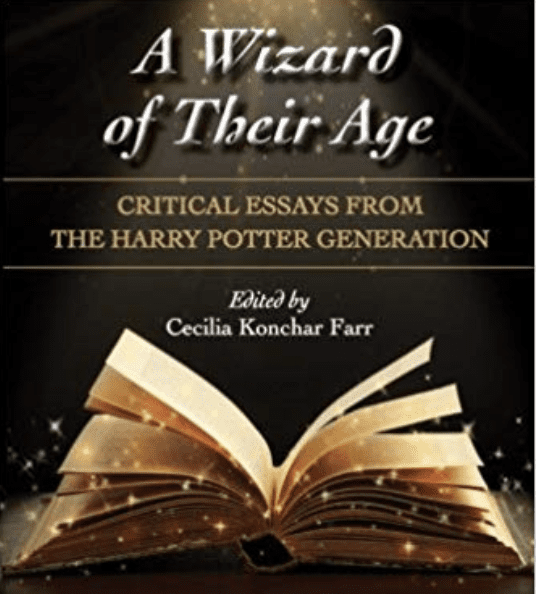 lessons these stories might hold for us in such a time as this. I am by no means arguing that Harry Potter is the first or only set of resources we should reach for. But we are missing a prime opportunity if we neglect the power of a book series that has sold more than 500 million copies in English (Farr 7) and been translated into more than twenty-eighth languages in more than 130 nations (Anatol 2003: xxi).
The Harry Potter books were published over the span of a decade from 1997 to 2007. I first jumped on the bandwagon in the spring of 1999. The third volume was schedule to be published that summer, and the hype made me curious enough to catch up on the first two books. Another year later in the summer of 2000, I remember scheduling my night off from serving as a camp counselor to attend a midnight release of the fourth book. I then stayed up way too late reading, and was exhausted the next day. In retrospect, no regrets—totally worth it. Magin and I even have a dog named Dobby, who, yes, is named after the beloved house elf from the Harry Potter series.
If you begin to read Harry Potter more closely, one aspect that quickly pops out is the etymological resonance of many of its names. For example,
- The first name of the wise and brave Professor McGonagall is appropriately Minerva, the Roman goddess of wisdom and strategic warfare.
- Malfoy, the last name of Harry’s nemesis Draco, who often acts dishonestly, literally translated from the French as “bad faith.”
- The series’s archvillain , who does terrible acts of evil in attempts to avoid his own mortality, is named Voldemort, which in French literally means “theft from death” or “flight from death” (Farr 122).
And while it is certainly fine to simply enjoy the story on a straightforward level, there are many other examples along these lines of the tale’s intricacy and depth that are awaiting the intrepid reader just below the surface of the text.
Or consider what is revealed if we notice the outside cover of the book and pay a little attention to the name of the author. Joanne Kathleen Rowling was told to abbreviate her name to J. K. out of the fear that boys wouldn’t want to buy a book by a female author (Anatol 2003: ix). Half a billion copies later, it seems that all genders like these books just fine.
Along those lines, even though all seven Harry Potter book titles begin with “Harry Potter and the [blank].” the closer you read, the more endearing and centrally important many of the other characters seem. For many readers, this shift in significance is especially apparent in the case of Harry’s best friend Hermione. Consider, for instance, this quite accurate Internet meme that reimagines the titles of the seven books from Hermione’s perspective:
- Hermione Granger and that time I used the power of research and deductive reasoning to make sure Harry didn’t die.
- Hermione Granger and that time I figured [stuff] out and literally ended up petrified for the cause and it took my friends weeks to figure out that I had the research on me.
- Hermione Granger and that time I was a Time Lord.
- Hermione Granger and that time I realized I was hot and smart and saved Harry’s [butt] with research. Again. All the time. Really, he would have died without me.
- Hermione Granger and that time Harry was too emo to actually do [stuff] so I did [stuff] in his name because I am the power behind the throne clearly. Also PS fought evil Death Eaters and won.
- Hermione Granger and that time I told Harry about the dangers of copying off somebody else’s work that wasn’t mine and OH LOOK I WAS RIGHT.
- Hermione Granger and that time I let Harry decide where to go and what to do and we ended up wandering the forests of Dean for like five months before saving his [butt] at Hogwarts.
I love how those titles are both playful and subversive! Remember: when seeking to smash the patriarchy and dismantle a dark art like sexism, “Your defenses must therefore be as flexible and inventive as the Arts you seek to undo.”
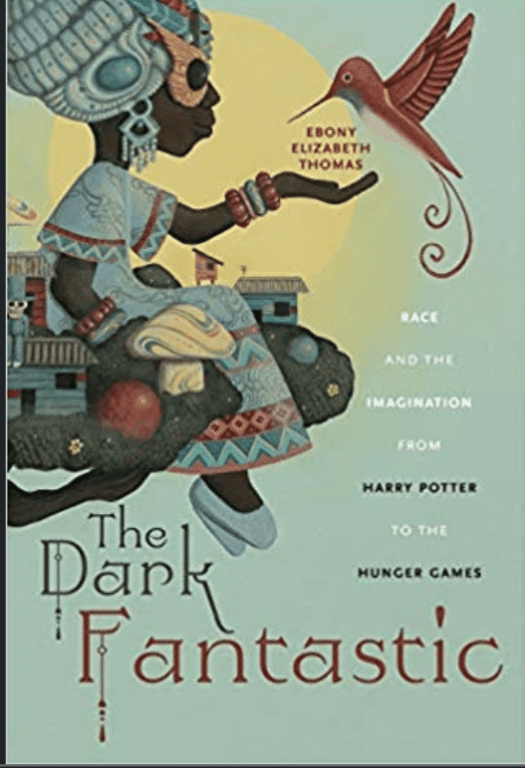 Now, let’s take that act of reading between the lines one level deeper. When a black actress was cast as Hermione in the original stage play of Harry Potter and the Cursed Child, Rowling famously tweeted: “Canon: brown eyes, frizzy hair and very clever. White skin was never specified. Rowling loves black Hermione” (Thomas 196). Now, of course, we live in an age of famously race-bending shows such as Hamilton in which historically white founders of this country are played by actors of various races. But Rowling is doing something different here. She is highlighting that in the absence of a character’s race being explicitly named, many—though not all readers—imagined the character to be white. Texts such as Harry Potter, upon close re-reading, can break open and yield unrealized possibilities.
Another method of engaging a text is to learn more about the historical context in which it was written, particularly the life of the author. And there are some fascinating ways that J. K. Rowling’s real life shows up in her fiction. There’s so many details I’ve love to expand on:
- Just like Harry, Ron, and Hermione, Rowling’s own parents met as two strangers on a train departing from King’s Cross station (Scotsman 1).
- When Professor Trelawney, predicts, “That thing you are dreading—it will happen on Friday the sixteenth of October,” that’s precisely the date of her Rowling’s first wedding, which resulted in a short-lived marriage of 13 months and one day (5). For those in the know, including that date is a little dig at her ex-husband.
I could continue with numerous other examples.
I will, however, say just a little bit more about a more serious example. A mere six months after the idea of Harry Potter sprang suddenly and unexpectedly into Rowling’s mind, her mother died at age 45 after living for decades with Multiple sclerosis (Scotsman 4). Death is a major theme in the Harry Potter books, and Rowling has said that the influence of her mother’s death “is on virtually every other page” (Farr 113). And the willingness of the Harry Potter series to take on serious issues like mortality is one of the reasons for its significant impact—and one of the reasons it has helped prepare its readers, young and old, for a better defense against the dark arts.
In contrast to those who would ban the Harry Potter books, one English professor who has closely studied the series rightly affirmed that, “Children need to see their feelings, particularly the darkest ones, reflected in their stories. Mitigating the darkness in the fairy tales takes away their power to reassure children that they are not alone in their fearful imaginings, that they are shared and can be addressed” (Anatol 2003: xxii). And in powerful ways each of the seven books incrementally grows up with Harry and his friends from age 11 (in book one) to age 18 (in book seven) with the themes becoming more mature and challenging.
Those mature themes include the strong parallels between the characters in the Harry Potter books who fight for Wizard Supremacy and those who fight for White Supremacy in our own world (Deathly Hallows 291). Indeed, there is a classic line from the main villain Voldemort that, “There is no good and evil, only power and those too weak to seek it.” And I suspect many of you can think of people here in the real world using power selfishly, to support White Supremacy, and to commit acts of cruelty toward immigrants, minorities, and other people with marginalized identities.
In contrast, as Former President Barack Obama said in his a eulogy on Friday honoring Representative Elijah Cummings of Maryland:
It has been remarked that Elijah was a kind man…. And I was thinking, I would want my daughters to know…that being a strong man includes being kind.
That there is nothing weak about kindness and compassion.
There is nothing weak about looking out for others. There is nothing weak about being honorable.
You are not a sucker to have integrity and to treat others with respect.
I am grateful for lives such as Representative Cummings’, who lived out that truth every day. And as some of you have heard me say before, in addition to those sometimes rare lived examples, we need to go back to those simple truths that we teach our children, to remind ourselves as adults of the importance of kindness, compassion, and friendship.
Relatedly, there’s a fascinating invention in Rowling’s story called a “horcrux” that helps give lie to Voldemort’s claim that only weakness prevents people from doing evil; that if they were stronger, they too would do evil. Readers of the book will know that a horcrux can only be created through an “act of evil,” and the consequence is that one’s soul is ripped apart” (Half-Blood Prince 465). In the Harry Potter books that soul-ripping is literal. But the larger point is metaphorical: that one’s soul—one’s spirit, one’s conscience—is wrenched whenever you choose cruelty over kindness, greed over generosity, and dishonesty over integrity. As a wise man once said, “For what shall it profit you, to gain the whole world, and lose your own soul” (Mark 8:36)? (Or, as the meditation teacher Jack Kornfield has said, “It’s hard to sit down for a peaceful meditation after a day of stealing, lying, and killing.”)
Our choices matter. As Dumbledore, Harry’s headmaster, famously tells him: “It is our choices, Harry, that show what we truly are, far more than our abilities” (Chamber of Secrets 352). That line is tragically echoed in the fourth book, when one of Harry’s classmates is killed. Dumbledore says:
We are all facing dark and difficult times…. Remember Cedric. Remember, if the time should come when you have to make a choice between what is right, and what is easy, remember what happened to a boy who was good, and kind, and brave, because he strayed across the path of Lord Voldemort. (Goblet of Fire 627-628)
We too are facing dark and difficult times in our country and around the world. It certainly does not have to be Harry Potter that points you back to what is right over what is “easy”—but it can be. Something as simple as a children’s story can call us back to what we know in our hearts is right.
But remember, our challenge is not only choosing what is right and good over what is easy and expedient, but also having the creativity to keep our actions for peace and justice as “flexible and inventive as the Arts we seek to undo.” J. K. Rowling herself emphasized precisely that point when she was invited to deliver the commencement address at Harvard University. Her speech was titled “The Fringe Benefits of Failure, and the Importance of Imagination.” One sentence particularly stands out to me from that speech: “We do not need magic to change the world, we carry all the power we need inside ourselves already: we have the power to imagine better.” There are far too many people in power around the world today who are seeking to imagine a worse world: a more inequitable, divided, and violent world. Again, in Dumbledore’s words, “Lord Voldemort’s gift for spreading discord and enmity is very great. We can fight it only by showing an equally strong bond of friendship and trust” (Goblet of Fire, 627).
Along those lines, when Harry Potter first arrives at Hogwarts, he and the other witches and wizards are sorted into four houses (Gryffindor, Slytherin, Ravenclaw and Hufflepuff), which are often rivals in various competitions. And they typically eat separately in the dining hall around four long parallel tables. But near the end of the series, it is significant that following the fierce, climatic Battle for Hogwarts, the four tables are put back in place, but “nobody was sitting according to house any more: all were huddled together, teachers and pupil, ghosts and parents, centaurs and house-elves…” (Deathly Hallows 597). May we each seek and help create such beloved communities that can support us in the all-too-real defense against the dark arts for such a time as this.
Podcasts for Further Engagement
- Harry Potter and the Sacred Text: Two graduates of Harvard Divinity School ask, “What if we read the books we love as if they were sacred texts? It’s the class you didn’t know you missed and the meaningful conversations you didn’t know you craved.”
- Binge Mode: Harry Potter: “A hilarious and insightful deep dive, covering all the books and movies as well as the extended ‘Potter’ universe.”
- Witch, Please: “About the Harry Potter world by two lady scholars.”
Update
Also see the links available at the bottom of Sorting It Out: J.K. Rowling, transphobia, and what just happened to our community (with Jackson Bird)
The Rev. Dr. Carl Gregg is a certified spiritual director, a D.Min. graduate of San Francisco Theological Seminary, and the minister of the Unitarian Universalist Congregation of Frederick, Maryland. Follow him on Facebook (facebook.com/carlgregg) and Twitter (@carlgregg).
Learn more about Unitarian Universalism: http://www.uua.org/beliefs/principles
Previous Post

October 24, 2019
Earthrise, Big History, & Deep Time
Next Post
November 4, 2019 How Democracies Die & An Education in Hope
Browse Our Archives
Select a Category Advent Anti-Racism Archaeology Atheism Baptism Best of the Year List Book Reviews Buddhism Catholicism Christian Education Church and State Church Planting Climate Change Conscientious Objection to War Creation Spirituality Death Penalty Didache Disability Rights Discernment Easter Ecology Emergent Church Movement Empire-Critical Ethics Evolution Feminist Theology Film Reviews Gandhi Gospel of Mark Gun Control Hinduism Immigration Reform Interfaith Islam JFK Judaism Jungian Spirituality Lectionary Commentary Lent Letters to the Editor LGBT Marriage MLK Multiculturalism Mysticism Nonviolent Activism Occupy Paganism (Earth-centered Religions) Parables Paul Pluralism Politics Process Theology Quantum Physics Requiescat In Pace Seminary and Divinity School Sermon Series Retrospective Sermons Spiritual Direction Spiritual Practices Stewardship (Fundraising) The Book of J The Wheel of the Year (Paganism) Theoblogger Challenge Triathlon Uncategorized Unitarian Universalism Worship Resources Youth Ministry
Select a Month July 2026 May 2026 March 2026 November 2025 October 2025 August 2025 February 2025 December 2024 October 2024 March 2024 January 2024 December 2023 November 2023 March 2023 February 2023 January 2023 December 2022 November 2022 August 2022 March 2022 February 2022 January 2022 December 2021 September 2021 August 2021 July 2021 June 2021 May 2021 February 2021 January 2021 December 2020 August 2020 June 2020 May 2020 April 2020 March 2020 February 2020 January 2020 December 2019 November 2019 October 2019 September 2019 July 2019 June 2019 March 2019 February 2019 January 2019 December 2018 November 2018 October 2018 September 2018 June 2018 May 2018 April 2018 March 2018 February 2018 January 2018 December 2017 November 2017 October 2017 September 2017 August 2017 July 2017 June 2017 May 2017 April 2017 March 2017 February 2017 January 2017 December 2016 November 2016 October 2016 September 2016 August 2016 June 2016 May 2016 April 2016 March 2016 February 2016 January 2016 December 2015 November 2015 October 2015 September 2015 August 2015 July 2015 June 2015 May 2015 April 2015 March 2015 February 2015 January 2015 December 2014 November 2014 October 2014 August 2014 July 2014 June 2014 May 2014 April 2014 March 2014 February 2014 January 2014 December 2013 November 2013 October 2013 September 2013 August 2013 July 2013 June 2013 May 2013 April 2013 March 2013 February 2013 January 2013 December 2012 November 2012 October 2012 September 2012 August 2012 July 2012 June 2012 May 2012 April 2012 March 2012 February 2012 January 2012 December 2011 November 2011 October 2011 September 2011 August 2011 July 2011 June 2011 May 2011 April 2011 March 2011 February 2011 January 2011 December 2010 November 2010 October 2010 August 2009 July 2009 May 2009
Follow Us!
TAKE THE
Religious Wisdom Quiz
What does Jesus say about judging others?
Select your answer to see how you score.
Seek revenge Judge by appearance Judge harshly Do not judge
Related posts from Carl Gregg

Reading America at 250: A Nation Wrestles With...


Andrew Holocek on the Power of Darkness

The Stories That Shape Us: Myths, Archetypes, &...
TRENDING AT PATHEOS More Voices

Reading America at 250: A Nation Wrestles With...
As part of my own reflection on the 250th anniversary of the...

Whenever I am reading a book or listening to an argument, I...

President Trump Ban Animal Torture Videos on Facebook
Call for Stricter Regulations of Animal Abuse Content on Facebook Although President...

Draft Amendments to Address Ritual Abuse in New...
The proposed changes would make it illegal for individuals in domestic partnerships...

How Bans on LGBTQ+ Student Clubs Threaten Religious...
On June 20, 2025, the State of Texas passed Senate Bill 12....

The Truth About the Gen Z Revival
This past year, there has been a lot of media buzz surrounding...
view all More Voices blogs
Ad-Free & Subscriber Log-In Subscription Support
- About Us
- 2026 Calendar
- Videos
- Podcasts
- Library of World Religions
- Faith In Media Tracker
- Advertise With Us
- Write for Us
- Privacy Policy
- Terms of Service
- Do Not Sell My Data
- Contact Us
- Radiant Digital
- Manage Newsletter Subscriptions
- Unsubscribe From Notifications
- Sitemap
Copyright 2008-2026, Patheos. All rights reserved.
Subscription Support Ad-Free & Subscriber Log-In
Follow Patheos