
BuddhistCatholicContemplativeEvangelicalGeneral ChristianHinduJewishLatter-day SaintMuslimNew VisionsProgressive Christian
Beliefs
- Buddhist
- Catholic
- Contemplative
- Evangelical
- General Christian
- Hindu
- Jewish
- Latter-day Saint
- More Voices
- Muslim
- New Visions
- Pagan
- Progressive Christian
Topics
- Religion News
- Food and Religion
- Sports and Religion
- Religious Art
- Religious Music and Entertainment
- Religious Events
- History and Religion
- Style and Religion
- Politics and Religion
- Women in Religion
- Recreation Outdoors and Religion
- Business Finance and Religion
- Careers Workplace and Religion
- Education and Religion
- Family Parenting and Religion
- Health Fitness and Religion
- Home and Religion
- Relationships and Religion
- Technology and Religion
- Travel and Religion
Columnists
- Buddhist Columnists
- Business Finance and Religion Columnists
- Careers Workplace and Religion Columnists
- Catholic Columnists
- Contemplative Columnists
- Education and Religion Columnists
- Evangelists Columnists
- Family Parenting and Religion Columnists
- General Christian Columnists
- Health Fitness and Religion Columnists
- Hindu Columnists
- History and Religion Columnists
- Home and Religion Columnists
- Jewish Columnists
- More Voices Columnists
- Latter Day Columnists
- Muslim Columnists
- New Visions Columnists
- Nonreligious Columnists
- Pagan Columnists
- Politics and Religion Columnists
- Progressive Columnists
- Recreation Outdoors and Religion Columnists
- Relationships and Religion Columnists
- Religion News Columnists
- Religious Art Columnists
- Religious Events Columnists
- Religious Music and Entertainment Columnists
- Sports and Religion Columnists
- Style and Religion Columnists
- Technology and Religion Columnists
- Travel and Religion Columnists
- Women in Religion Columnists
Resource Library
- 2026 Calendar
- Library of World Religions
- The 100 Most Holy Places on Earth
- Patheos Answers
- Podcasts
- Videos
- Faith Leaders Database
- Anglican Episcopalian
- Bahai
- Baptist
- Buddhism
- Christianity
- Confucianism
- Eastern Orthodoxy
- Hinduism
- Holiness and Pentecostal
- ISKCON
- Islam
- Judaism
- Lutheran
- Methodist
- The Church of Jesus Christ of Latter-day Saints
- New Age
- Paganism
- Presbytarian and Reformed
- Protestantism
- Religion Behind the Scenes
- Roman Catholic
- Scientology
- Shia Islam
- Sikhism
- Sufism
- Sunni Islam
- Taoism
- Zen
- See all religions
Research Tools
 Ad-Free & Subscriber Log-In Subscription Support
Ad-Free & Subscriber Log-In Subscription Support
Follow Patheos 

- Trending:
- Forgiveness
- |
- Marriage
- |
- Consciousness
- |
- Death Penalty
- |
- Election
- |
- Halloween

- Home
- More Voices
- What Is Your Most Vulnerable Wish for Someone?: to Bless, to Hope, to Ordain
What Is Your Most Vulnerable Wish for Someone?: to Bless, to Hope, to Ordain
Last updated on: July 1, 2019 at 1:58 pm by Carl Gregg
What Is Your Most Vulnerable Wish for Someone?: to Bless, to Hope, to Ordain 2019-07-01T13:58:24-04:00 Carl Gregg
Patheos Explore the world's faith through different perspectives on religion and spirituality! Patheos has the views of the prevalent religions and spiritualities of the world.
On the occasion of ordaining a new minister in the Unitarian Universalist Living Tradition.
 One of my favorite podcasts is Harry Potter and the Sacred Text. It features two graduates of Harvard Divinity School reading the Harry Potter series with they same attention, care, and interpretive practices often reserved only for traditional sacred texts. The podcast started a little more than three years ago. And at the pace of a chapter per episode, they recently completed book five, The Order of the Phoenix.
One of the most poignant parts of each episode comes at the end when each of the co-hosts selects a character from that week’s chapter to receive a blessing. Vanessa, one of the co-hosts, has said about this practice that, “What I love about blessings is that…when you bless something, you are tapping in to your most vulnerable wish for someone. And that when you bless something, you are admitting that you have no power over something, and yet you are hoping with every fiber of your being.” I love that description of blessing.
The other co-host, Casper, has said, “Blessing is really a lost art these days, and it’s been something that’s so important in so many people’s lives. That’s something we want to retrieve a little bit.” I also appreciate this idea of retrieval: returning to the past to reclaim, recover, and even redeem ancient practices in ways that are relevant for today.
Unitarian Universalists can be a present- and future-oriented people. In the words of one of our classic hymns, we are a people who “revere the past, but trust the dawning future more.” But the tradition of ordination is ancient—and offering a blessing is a key part of this ancient practice. I was ordained on July 6, 2003—sixteen years ago this coming Saturday. That day—that service—was a blessing, as I hope today is for our ordinand. But I also want to let you all in on an open secret: it wasn’t enough. Well, it was for a while. Like any candidate on the verge of being ordained as a UU minister, I had excellent teachers, had read lots of books, had a three-year Master of Divinity degree, had been endorsed by an ordination council. And that was enough for a while. But after about three-years of full-time ministry, I felt a growing sense that I needed more training if I was going to sustain a decades-long ministry.
For me, it meant enrolling in a three-year, low-residency Diploma in the Art of Spiritual Direction program which ended up doubling in length to a total of six years, enabling me to also complete a Doctor of Ministry degree. Today, my continuing educational explorations have taken the form of a serious investment and focus on the practice of meditation.
Along these lines, UU ministry is in the midst of a significant paradigm shift from a “Learned Ministry” to a “Learning Ministry.” Although much is required to reach the point of ordination, it is now further required that all UU ministers engage in ongoing, lifelong, covenanted practices of continuing education. And even as I celebrate this shift to a ministry of lifelong learning, I want to offer one final blessing that can potentially serve as a counterbalance to all this ongoing “doing.”
There are ten thousand things that might fruitfully occupy one’s time and attention in full-time ministry, but none of us can do ten thousand things well. Trust me: I tried a few years ago, and ended up getting sick three times in a matter of months. Historically, I have rarely gotten sick, before or since, and that winter was a red flag that I was pushing through exhaustion too frequently and wearing down my immune system. In the years since, I have tried to set better boundaries and work more pragmatically and strategically.
In that spirit, I offer two quotes that have become touchstones for me in discerning a sustainable path forward. The first quote is from the book “Conjectures of a Guilty Bystander” by the twentieth-century Trappist monk Thomas Merton. He writes:
There is a pervasive form of modern violence to which the idealist…most easily succumbs: activism and over-work. The rush and pressure of modern life are a form, perhaps the most common form, of its innate violence. To allow oneself to be carried away by a multitude of conflicting concerns, to surrender to too many demands, to commit oneself to too many projects, to want to help everyone in everything is to succumb to violence. The frenzy of the activist neutralizes [their] work…. because it kills the root of inner wisdom, which makes work fruitful.” (86)
 Part of what I understand Merton to mean is that just because we are doing a lot of things doesn’t mean we are being effective.
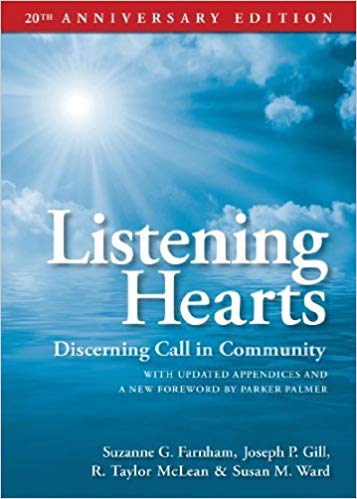
The second quote is from a book titled Listening Hearts: Discerning Call in Community. They write:
Even when a need exists and we are well qualified to meet it, we are not necessarily called to respond to it. Something may seem logical for us to do, but that does not mean that [we are] call[ed] to do it…. Simply because a task or undertaking is good to do, does not mean that we are called to do it or that we should continue doing it?. To be doing good can be the greatest obstacle to doing something even better.
Discernment between good and bad is often fairly simple. A much more complex choice is discerning good from better from best. May you find moments in ministry not only of the good, but also of the best–when you are in deep alignment with your gifts and graces.
Bless you—on this your Ordination Day.
Bless you, and may your ministry be a blessing.
That is my most vulnerable wish for you.
I have no power over it.
And yet I hope for it with every fiber of my being.
Amen. And blessed be.
The Rev. Dr. Carl Gregg is a certified spiritual director, a D.Min. graduate of San Francisco Theological Seminary, and the minister of the Unitarian Universalist Congregation of Frederick, Maryland. Follow him on Facebook (facebook.com/carlgregg) and Twitter (@carlgregg).
Learn more about Unitarian Universalism: http://www.uua.org/beliefs/principles
Next Post

September 11, 2019 Alienated Labor, B.S. Jobs, & the Dream of a 15-Hour Work Week
Browse Our Archives
Select a Category Advent Anti-Racism Archaeology Atheism Baptism Best of the Year List Book Reviews Buddhism Catholicism Christian Education Church and State Church Planting Climate Change Conscientious Objection to War Creation Spirituality Death Penalty Didache Disability Rights Discernment Easter Ecology Emergent Church Movement Empire-Critical Ethics Evolution Feminist Theology Film Reviews Gandhi Gospel of Mark Gun Control Hinduism Immigration Reform Interfaith Islam JFK Judaism Jungian Spirituality Lectionary Commentary Lent Letters to the Editor LGBT Marriage MLK Multiculturalism Mysticism Nonviolent Activism Occupy Paganism (Earth-centered Religions) Parables Paul Pluralism Politics Process Theology Quantum Physics Requiescat In Pace Seminary and Divinity School Sermon Series Retrospective Sermons Spiritual Direction Spiritual Practices Stewardship (Fundraising) The Book of J The Wheel of the Year (Paganism) Theoblogger Challenge Triathlon Uncategorized Unitarian Universalism Worship Resources Youth Ministry
Select a Month July 2026 May 2026 March 2026 November 2025 October 2025 August 2025 February 2025 December 2024 October 2024 March 2024 January 2024 December 2023 November 2023 March 2023 February 2023 January 2023 December 2022 November 2022 August 2022 March 2022 February 2022 January 2022 December 2021 September 2021 August 2021 July 2021 June 2021 May 2021 February 2021 January 2021 December 2020 August 2020 June 2020 May 2020 April 2020 March 2020 February 2020 January 2020 December 2019 November 2019 October 2019 September 2019 July 2019 June 2019 March 2019 February 2019 January 2019 December 2018 November 2018 October 2018 September 2018 June 2018 May 2018 April 2018 March 2018 February 2018 January 2018 December 2017 November 2017 October 2017 September 2017 August 2017 July 2017 June 2017 May 2017 April 2017 March 2017 February 2017 January 2017 December 2016 November 2016 October 2016 September 2016 August 2016 June 2016 May 2016 April 2016 March 2016 February 2016 January 2016 December 2015 November 2015 October 2015 September 2015 August 2015 July 2015 June 2015 May 2015 April 2015 March 2015 February 2015 January 2015 December 2014 November 2014 October 2014 August 2014 July 2014 June 2014 May 2014 April 2014 March 2014 February 2014 January 2014 December 2013 November 2013 October 2013 September 2013 August 2013 July 2013 June 2013 May 2013 April 2013 March 2013 February 2013 January 2013 December 2012 November 2012 October 2012 September 2012 August 2012 July 2012 June 2012 May 2012 April 2012 March 2012 February 2012 January 2012 December 2011 November 2011 October 2011 September 2011 August 2011 July 2011 June 2011 May 2011 April 2011 March 2011 February 2011 January 2011 December 2010 November 2010 October 2010 August 2009 July 2009 May 2009
Follow Us!
TAKE THE
Religious Wisdom Quiz
How did Job's friends initially show their sympathy?
Select your answer to see how you score.
Wept and tore clothes Brought gifts Offered sacrifices Sat in silence seven days
Related posts from Carl Gregg

Reading America at 250: A Nation Wrestles With...


Andrew Holocek on the Power of Darkness

The Stories That Shape Us: Myths, Archetypes, &...
TRENDING AT PATHEOS More Voices

Reading America at 250: A Nation Wrestles With...
As part of my own reflection on the 250th anniversary of the...

Whenever I am reading a book or listening to an argument, I...

President Trump Ban Animal Torture Videos on Facebook
Call for Stricter Regulations of Animal Abuse Content on Facebook Although President...

Draft Amendments to Address Ritual Abuse in New...
The proposed changes would make it illegal for individuals in domestic partnerships...

How Bans on LGBTQ+ Student Clubs Threaten Religious...
On June 20, 2025, the State of Texas passed Senate Bill 12....

The Truth About the Gen Z Revival
This past year, there has been a lot of media buzz surrounding...
view all More Voices blogs
Ad-Free & Subscriber Log-In Subscription Support
- About Us
- 2026 Calendar
- Videos
- Podcasts
- Library of World Religions
- Faith In Media Tracker
- Advertise With Us
- Write for Us
- Privacy Policy
- Terms of Service
- Do Not Sell My Data
- Contact Us
- Radiant Digital
- Manage Newsletter Subscriptions
- Unsubscribe From Notifications
- Sitemap
Copyright 2008-2026, Patheos. All rights reserved.
Subscription Support Ad-Free & Subscriber Log-In
Follow Patheos