
BuddhistCatholicContemplativeEvangelicalGeneral ChristianHinduJewishLatter-day SaintMuslimNew VisionsProgressive Christian
Beliefs
- Buddhist
- Catholic
- Contemplative
- Evangelical
- General Christian
- Hindu
- Jewish
- Latter-day Saint
- More Voices
- Muslim
- New Visions
- Pagan
- Progressive Christian
Topics
- Religion News
- Food and Religion
- Sports and Religion
- Religious Art
- Religious Music and Entertainment
- Religious Events
- History and Religion
- Style and Religion
- Politics and Religion
- Women in Religion
- Recreation Outdoors and Religion
- Business Finance and Religion
- Careers Workplace and Religion
- Education and Religion
- Family Parenting and Religion
- Health Fitness and Religion
- Home and Religion
- Relationships and Religion
- Technology and Religion
- Travel and Religion
Columnists
- Buddhist Columnists
- Business Finance and Religion Columnists
- Careers Workplace and Religion Columnists
- Catholic Columnists
- Contemplative Columnists
- Education and Religion Columnists
- Evangelists Columnists
- Family Parenting and Religion Columnists
- General Christian Columnists
- Health Fitness and Religion Columnists
- Hindu Columnists
- History and Religion Columnists
- Home and Religion Columnists
- Jewish Columnists
- More Voices Columnists
- Latter Day Columnists
- Muslim Columnists
- New Visions Columnists
- Nonreligious Columnists
- Pagan Columnists
- Politics and Religion Columnists
- Progressive Columnists
- Recreation Outdoors and Religion Columnists
- Relationships and Religion Columnists
- Religion News Columnists
- Religious Art Columnists
- Religious Events Columnists
- Religious Music and Entertainment Columnists
- Sports and Religion Columnists
- Style and Religion Columnists
- Technology and Religion Columnists
- Travel and Religion Columnists
- Women in Religion Columnists
Resource Library
- 2026 Calendar
- Library of World Religions
- The 100 Most Holy Places on Earth
- Patheos Answers
- Podcasts
- Videos
- Faith Leaders Database
- Anglican Episcopalian
- Bahai
- Baptist
- Buddhism
- Christianity
- Confucianism
- Eastern Orthodoxy
- Hinduism
- Holiness and Pentecostal
- ISKCON
- Islam
- Judaism
- Lutheran
- Methodist
- The Church of Jesus Christ of Latter-day Saints
- New Age
- Paganism
- Presbytarian and Reformed
- Protestantism
- Religion Behind the Scenes
- Roman Catholic
- Scientology
- Shia Islam
- Sikhism
- Sufism
- Sunni Islam
- Taoism
- Zen
- See all religions
Research Tools
 Ad-Free & Subscriber Log-In Subscription Support
Ad-Free & Subscriber Log-In Subscription Support
Follow Patheos 

- Trending:
- Forgiveness
- |
- Marriage
- |
- Consciousness
- |
- Death Penalty
- |
- Election
- |
- Halloween

- Home
- More Voices
- MLK’s Dreams & Legacies: Who Is Forming You?
MLK’s Dreams & Legacies: Who Is Forming You?
Last updated on: January 21, 2019 at 11:13 am by Carl Gregg
MLK’s Dreams & Legacies: Who Is Forming You? 2019-01-21T11:13:39-05:00 Carl Gregg
Patheos Explore the world's faith through different perspectives on religion and spirituality! Patheos has the views of the prevalent religions and spiritualities of the world.
On this Martin Luther King Jr. Day, I am aware of two significant—though also painful—anniversaries that feel important to name aloud. This year is the 400th anniversary of the first enslaved Africans arriving in Jamestown, Virginia in 1619. This year is also the 100th Anniversary of the Red Summer of 1919, when there was a sharp spike in white people violently targeting African Americans, resulting in hundreds of deaths. I invite us to allow our awareness of these historic reminders to open our hearts and recommit our spirits to turning King’s dreams into deeds.
If King were alive today, he would be celebrating his ninetieth birthday. He was only thirty-nine years old when he was assassinated. For those who know me, that’s one year younger than I am. His prophetic activism to build a global beloved community ended tragically early.
Although the initial focus of Dr. King’s dream was that his children might “one day live in a nation where they will not be judged by the color of their skin but by the content of their character,” he soon began dreaming of a much grander, more inclusive vision of a beloved community: of peace, liberty, and justice—not merely for some—but for all.
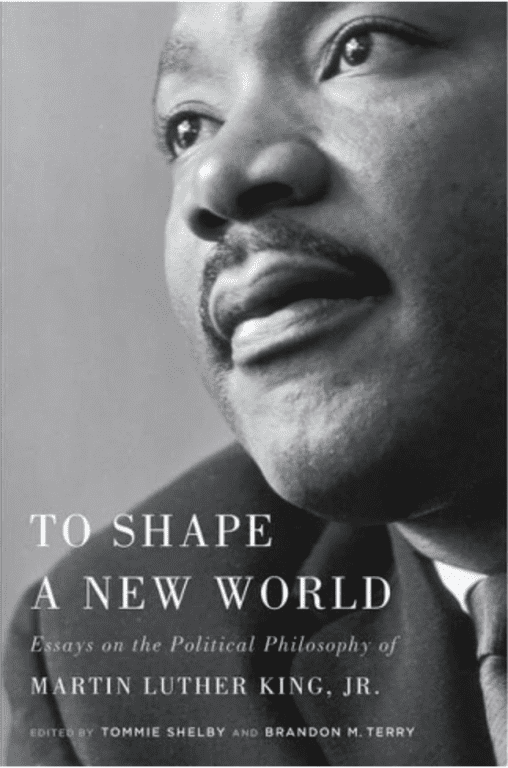 In contrast to Dr. King’s global vision of beloved community, both the story of the Civil Rights Movement and of King’s legacy are often told in an oversimplified way with a “heroic cast of characters, narrow geographic focus, and short time (from 1954 to 1968)” (Shelby and Terry 2). This romantic version of history is too narrow. If racism was a problem only in the South and only in the past, then we are off the hook: we can celebrate people who are no longer alive to point out the problems today that parallel problems back then.
Dr. King preached his “I Have a Dream” speech in 1963 from the steps of the Lincoln Memorial, and too many of us have been taught that his dream was fulfilled by the Civil Rights Act of 1964 and the Voting Rights Act of 1965. Those two legislative victories did mark the end of the decade-long first phase of the Civil Rights Movement, but that is not the end of the story, and MLK Day is about much more than looking back in gratitude for a job well done.
That decade-long span from the Montgomery Bus Boycott of 1955 to the 1965 Voting Rights Act does not represent the beginning and the end, but merely one significant and inspirational chapter. In the wake of the Voting Rights Act, the Watts Riots (or the Watts Uprisings) on August 11, 1965 marked the beginning of a new radical black freedom struggle that was about more than “minimally decent treatment for black Americans.” This new phase aimed for genuine equality (187).
1965 was a major turning point. At the same time, it is important to emphasize the ways that the more radical post-1965 King was a natural outgrowth of King’s previous trajectory. After all, the full name of the event at which King delivered his 1963 “I Have a Dream” speech was the March on Washington for Jobs and Freedom. Economic justice was a longtime emphasis for King. Or as King said near the beginning of his famous 1967 “Beyond Vietnam” sermon against the Military-Industrial Complex: “the path from Dexter Avenue Baptist Church—the church in Montgomery, Alabama, where I began my pastorate—leads clearly to this sanctuary tonight.” What Dr. King called the “triple threats” that most consistently hold us back from building the beloved community (racism, materialism, and militarism) were not new themes he introduced after 1965. They were present all along, but King began to emphasize them more strongly.
And because Dr. King’s “I Have a Dream” is so beloved for a few famous quotes—and so rarely revisited in full—let me say a little more along those lines about that 1963 speech. The original title of the “I Have a Dream” speech was “Normalcy, Never Again,” and did not originally include the now-famous final section about King’s dream. Indeed, Dr. King “had preached the first seventeen minutes about the nightmare that, one hundred years after abolition, [African Americans were] still not free” (Barber 201).
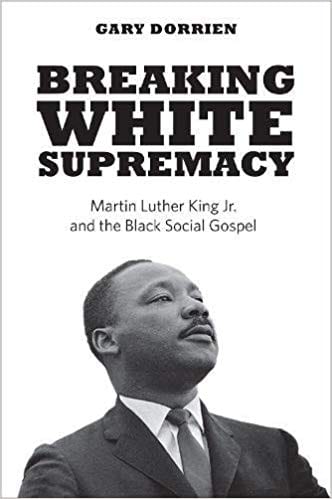 But people who had heard Dr. King speak many times knew that he had various stock sermons that he was constantly “revising and improvising…as the Spirit moved him…. Movement veterans would cheer as soon as he got rolling on one, much like a singer performing a medley of their hits. ‘I Have a Dream’ was one of them three years before the March on Washington” (Dorrien 280-281). And as some of you likely know, it was not an otherworldly spirit, who prompted Dr. King that day—it was the gospel singer Mahalia Jackson (1911-1972), who behind him on stage: “Tell them about the dream, Martin! Tell them about the dream!” Setting aside his notes, he did, and history was made.
And let me add in one more layer to that 1963 day. Looking back today, when a thirty foot tall statue of Dr. King stands on the banks of the Tidal Basin in Washington D.C., it can be difficult to appreciate how radical he was—how much of a threat he was to the unjust status quo—both then and now. And as one commentator has written:
When Dr. Martin Luther King Jr. took the podium on August 28, 1963, the Department of Justice was watching. Fearing that someone might hijack the microphone to make inflammatory statements, the Kennedy Department of Justice came up with a plan to silence the speaker, just in case. In such an eventuality, an official was seated next to the sound system, holding a recording [ironically] of Mahalia Jackson singing “He’s Got the Whole World in His Hands,” which he planned to play to placate the crowd…. Relatively few people know or recall that the Kennedy administration tried to get organizers to call it off; that the FBI tried to dissuade people from coming; that racist senators tried to discredit the leaders; that twice as many Americans had an unfavorable view of the march as a favorable one…. [And that was all the pre-1965 King.] Before his death, King was well on the way to being a pariah. In 1966, twice as many Americans had an unfavorable opinion of him as a favorable one. [In 1967,] Life magazine branded his anti–Vietnam War speech at Riverside Church “demagogic slander” and “a script for Radio Hanoi.
Don’t get me wrong. I’m grateful the MLK Day exists as an institutionalized annual reminder to reflect on King’s legacy. But it is important to remember the fullness of his dream for what this nation might become if we were to truly live into the promise of “life, liberty, and the pursuit of happiness” for all our citizens.
And as we reflect on how King’s dream and legacy can inspire our own work for peace and justice today, it can also be helpful to remember how young King was when he took on the leadership of the Montgomery Bus Boycott in 1955. He was twenty-six years old. “He had been a pastor for slightly more than a year, and his activist record was very recent and extremely short” (Dorrien 255).
It is also significant to remind ourselves on this day before King Day that The Rev. Dr. Martin Luther King, Jr. did not emerge out of nowhere. He was strongly influenced by prophetic black church Christianity, prophetic liberal Christianity, prophetic Gandhian nonviolence, and prophetic American civil religion” (Dorrien 21). In the words of religion scholar Gary Dorrien, “Without the black social gospel, King would not have known what to say when history called on December 3, 1955” (443).
And so the question we must ask ourselves becomes: who influences us? Who do we listen to? Who do we watch? Who do we read? Who is forming us? Who is influencing the ways we are likely to respond when history calls? And be assured that history is calling all of us at this moment.
At its best MLK Day is not about merely remembering honoring King’s work in the past, it is about reflecting on the past, present and future —and most importantly, recommitting to the work King started: to bend the arc of history toward justice. And it is clear that the person most powerfully carrying forward King’s dream today is The Rev. Dr. William Barber. Just as Dr. King first came to prominence through his leadership in the Montgomery Bus Boycott, Barber first became known as the leader of the Moral Mondays movement in North Carolina, seeking to stop those who would roll back the protections of the 1965 Voting Rights Act. And Dr. Barber is now carrying on the nationwide project that King did not live long enough to complete, through a new Poor People’s Campaign.
When considering the relevance of King’s dream today, I also try to keep in mind part of what it means that King was killed in 1968. He died before the Stonewall Uprising in 1969, before the first Earth Day in 1970, and before Second-wave Feminism in the 1970s. And I am encouraged to see the new Poor People’s Campaign accounting for all of those social movements and more. The twenty-first century Poor People’s Campaign is “A National Call for Moral Revival to challenge the evils of systemic racism, poverty, the war economy, ecological devastation and the nation’s distorted morality.” I encourage you to learn more about the Poor People’s Campaign and consider getting involved. And if you are wondering what Dr. King would be saying if he were alive today to celebrate his ninetieth birthday, I encourage you to spend some time listening or watching The Rev. Dr. William Barber’s powerful words. (In the congregation I serve as minister, we are currently in the middle of a yearlong study of an anthology of Dr. King’s writings titled The Radical King, and in a future year we will likely read through a collection of Dr. Barber’s speeches titled Revive Us Again: Vision and Action in Moral Organizing. But my current plan for the next congregational year is to have us read through a classic anthology titled This Bridge Called My Back: Writings by Radical Women of Color.)
For now, on this Martin Luther King Jr. Day, I will give the final words to Dr. Barber in which he points beyond both King and himself to the work we all must do together to build a beloved community. When we remember the Civil Rights Movement, leaders like Dr. King and Rosa Parks help us glimpse the beauty of the beloved community and “their deep commitment to the highest ideals of the American Revolution.” But, in Barber’s words:
Martin and Rosa are not coming back to lead a moral revival. Bayard Rustin, Dorothy Day, Ella Baker, and Cesar Chavez carried the torch in their day, but they are not coming back. It’s our time now. It’s our time…to “make a way out of no way” to lead us to the America that has not yet been. (xix)
The Rev. Dr. Carl Gregg is a certified spiritual director, a D.Min. graduate of San Francisco Theological Seminary, and the minister of the Unitarian Universalist Congregation of Frederick, Maryland. Follow him on Facebook (facebook.com/carlgregg) and Twitter (@carlgregg).
Learn more about Unitarian Universalism: http://www.uua.org/beliefs/principles
Previous Post

December 31, 2018
“The Hidden Life of Trees”
Next Post
January 31, 2019 "We the Corporations?!"
Browse Our Archives
Select a Category Advent Anti-Racism Archaeology Atheism Baptism Best of the Year List Book Reviews Buddhism Catholicism Christian Education Church and State Church Planting Climate Change Conscientious Objection to War Creation Spirituality Death Penalty Didache Disability Rights Discernment Easter Ecology Emergent Church Movement Empire-Critical Ethics Evolution Feminist Theology Film Reviews Gandhi Gospel of Mark Gun Control Hinduism Immigration Reform Interfaith Islam JFK Judaism Jungian Spirituality Lectionary Commentary Lent Letters to the Editor LGBT Marriage MLK Multiculturalism Mysticism Nonviolent Activism Occupy Paganism (Earth-centered Religions) Parables Paul Pluralism Politics Process Theology Quantum Physics Requiescat In Pace Seminary and Divinity School Sermon Series Retrospective Sermons Spiritual Direction Spiritual Practices Stewardship (Fundraising) The Book of J The Wheel of the Year (Paganism) Theoblogger Challenge Triathlon Uncategorized Unitarian Universalism Worship Resources Youth Ministry
Select a Month July 2026 May 2026 March 2026 November 2025 October 2025 August 2025 February 2025 December 2024 October 2024 March 2024 January 2024 December 2023 November 2023 March 2023 February 2023 January 2023 December 2022 November 2022 August 2022 March 2022 February 2022 January 2022 December 2021 September 2021 August 2021 July 2021 June 2021 May 2021 February 2021 January 2021 December 2020 August 2020 June 2020 May 2020 April 2020 March 2020 February 2020 January 2020 December 2019 November 2019 October 2019 September 2019 July 2019 June 2019 March 2019 February 2019 January 2019 December 2018 November 2018 October 2018 September 2018 June 2018 May 2018 April 2018 March 2018 February 2018 January 2018 December 2017 November 2017 October 2017 September 2017 August 2017 July 2017 June 2017 May 2017 April 2017 March 2017 February 2017 January 2017 December 2016 November 2016 October 2016 September 2016 August 2016 June 2016 May 2016 April 2016 March 2016 February 2016 January 2016 December 2015 November 2015 October 2015 September 2015 August 2015 July 2015 June 2015 May 2015 April 2015 March 2015 February 2015 January 2015 December 2014 November 2014 October 2014 August 2014 July 2014 June 2014 May 2014 April 2014 March 2014 February 2014 January 2014 December 2013 November 2013 October 2013 September 2013 August 2013 July 2013 June 2013 May 2013 April 2013 March 2013 February 2013 January 2013 December 2012 November 2012 October 2012 September 2012 August 2012 July 2012 June 2012 May 2012 April 2012 March 2012 February 2012 January 2012 December 2011 November 2011 October 2011 September 2011 August 2011 July 2011 June 2011 May 2011 April 2011 March 2011 February 2011 January 2011 December 2010 November 2010 October 2010 August 2009 July 2009 May 2009
Follow Us!
TAKE THE
Religious Wisdom Quiz
What was the name of the queen who visited Solomon?
Select your answer to see how you score.
Queen Vashti The Queen of Sheba Queen Esther Queen Jezebel
Related posts from Carl Gregg

Reading America at 250: A Nation Wrestles With...


Andrew Holocek on the Power of Darkness

The Stories That Shape Us: Myths, Archetypes, &...
TRENDING AT PATHEOS More Voices

Reading America at 250: A Nation Wrestles With...
As part of my own reflection on the 250th anniversary of the...

Whenever I am reading a book or listening to an argument, I...

President Trump Ban Animal Torture Videos on Facebook
Call for Stricter Regulations of Animal Abuse Content on Facebook Although President...

Draft Amendments to Address Ritual Abuse in New...
The proposed changes would make it illegal for individuals in domestic partnerships...

How Bans on LGBTQ+ Student Clubs Threaten Religious...
On June 20, 2025, the State of Texas passed Senate Bill 12....

The Truth About the Gen Z Revival
This past year, there has been a lot of media buzz surrounding...
view all More Voices blogs
Ad-Free & Subscriber Log-In Subscription Support
- About Us
- 2026 Calendar
- Videos
- Podcasts
- Library of World Religions
- Faith In Media Tracker
- Advertise With Us
- Write for Us
- Privacy Policy
- Terms of Service
- Do Not Sell My Data
- Contact Us
- Radiant Digital
- Manage Newsletter Subscriptions
- Unsubscribe From Notifications
- Sitemap
Copyright 2008-2026, Patheos. All rights reserved.
Subscription Support Ad-Free & Subscriber Log-In
Follow Patheos