
BuddhistCatholicContemplativeEvangelicalGeneral ChristianHinduJewishLatter-day SaintMuslimNew VisionsProgressive Christian
Beliefs
- Buddhist
- Catholic
- Contemplative
- Evangelical
- General Christian
- Hindu
- Jewish
- Latter-day Saint
- More Voices
- Muslim
- New Visions
- Pagan
- Progressive Christian
Topics
- Religion News
- Food and Religion
- Sports and Religion
- Religious Art
- Religious Music and Entertainment
- Religious Events
- History and Religion
- Style and Religion
- Politics and Religion
- Women in Religion
- Recreation Outdoors and Religion
- Business Finance and Religion
- Careers Workplace and Religion
- Education and Religion
- Family Parenting and Religion
- Health Fitness and Religion
- Home and Religion
- Relationships and Religion
- Technology and Religion
- Travel and Religion
Columnists
- Buddhist Columnists
- Business Finance and Religion Columnists
- Careers Workplace and Religion Columnists
- Catholic Columnists
- Contemplative Columnists
- Education and Religion Columnists
- Evangelists Columnists
- Family Parenting and Religion Columnists
- General Christian Columnists
- Health Fitness and Religion Columnists
- Hindu Columnists
- History and Religion Columnists
- Home and Religion Columnists
- Jewish Columnists
- More Voices Columnists
- Latter Day Columnists
- Muslim Columnists
- New Visions Columnists
- Nonreligious Columnists
- Pagan Columnists
- Politics and Religion Columnists
- Progressive Columnists
- Recreation Outdoors and Religion Columnists
- Relationships and Religion Columnists
- Religion News Columnists
- Religious Art Columnists
- Religious Events Columnists
- Religious Music and Entertainment Columnists
- Sports and Religion Columnists
- Style and Religion Columnists
- Technology and Religion Columnists
- Travel and Religion Columnists
- Women in Religion Columnists
Resource Library
- 2026 Calendar
- Library of World Religions
- The 100 Most Holy Places on Earth
- Patheos Answers
- Podcasts
- Videos
- Faith Leaders Database
- Anglican Episcopalian
- Bahai
- Baptist
- Buddhism
- Christianity
- Confucianism
- Eastern Orthodoxy
- Hinduism
- Holiness and Pentecostal
- ISKCON
- Islam
- Judaism
- Lutheran
- Methodist
- The Church of Jesus Christ of Latter-day Saints
- New Age
- Paganism
- Presbytarian and Reformed
- Protestantism
- Religion Behind the Scenes
- Roman Catholic
- Scientology
- Shia Islam
- Sikhism
- Sufism
- Sunni Islam
- Taoism
- Zen
- See all religions
Research Tools
 Ad-Free & Subscriber Log-In Subscription Support
Ad-Free & Subscriber Log-In Subscription Support
Follow Patheos 

- Trending:
- Forgiveness
- |
- Marriage
- |
- Consciousness
- |
- Death Penalty
- |
- Election
- |
- Halloween

- Home
- More Voices
- “History Teaches Us To Resist”
“History Teaches Us To Resist”
Last updated on: November 16, 2018 at 2:13 pm by Carl Gregg
“History Teaches Us To Resist” 2018-11-16T14:13:25-05:00 Carl Gregg
Patheos Explore the world's faith through different perspectives on religion and spirituality! Patheos has the views of the prevalent religions and spiritualities of the world.
On the other side of Election Day, many systems of oppression remain in place, but there are also signs of movement and progress:
- “At least 100 women won House races, with 35 women newly elected to the House and 65 female incumbents. That bests the previous record of 85 representatives….”
- “Sharice Davids and Deb Haaland will become the first Native American women elected to Congress.”
- “Rashida Tlaib and Ilhan Omar will become the first Muslim women in Congress.”
- “Colorado’s Jared Polis will become the first openly gay man elected governor.”
These a few of the many signs of hope and change this election season.
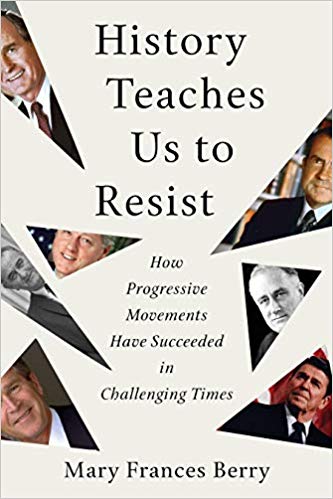 As part of my own processing, one of the books I have been reading is History Teaches Us to Resist: How Progressive Movements Have Succeeded in Challenging Times by Dr. Mary Frances Berry (Beacon Press, 2018). Dr. Berry is an African-American activist and historian, who currently serves as a professor of American Social Thought, History, and Africana Studies at the University of Pennsylvania, and one of the core themes in her work is that, “Each generation has the responsibility to make a dent in the wall of injustice.”
She emphasizes that from a historical perspective it is clear that no matter which politicians win a given election, there always remains work to be done (2). If your candidate loses, of course, the lesson that there remains work to be done is painfully clear. But even if your favorite candidate wins—the one who feels most in line with your values—history shows us such elected representatives need continuing advocacy and support to get actual legislation passed. Dr. Berry’s book traces movements for social progress over the past century through both conservative and liberal administrations. I will share a few examples in the hope that they can inspire our ongoing work for peace and justice.
First, as we progressive politicians talk about the need for a “New New Deal” or a “Green New Deal,” it may be instructive to look back on some of the lessons from the original New Deal under Franklin Delano Roosevelt (1882 – 1945). Note that from Berry’s perspective, we could make almost all the same points I am about to make with FDR in regard to, for instance, President Obama and the Dakota Access Pipeline. But looking back to FDR can help us take the long view—and to keep in mind that, “History doesn’t exactly repeat itself, but it does tend to rhyme.”
And so we remember that FDR was sworn in as the 32nd President of the United States in 1933, and he was in office more than a decade until his death in 1945, just 11 weeks into his fourth term as president. It is significant to note that FDR is the only U.S. President to serve for more than two terms. For anyone feeling alarmed, don’t worry: you can’t do that anymore! A few years after FDR’s death, we ratified the 22nd Amendment, which set a two-term limit on U.S. presidents. Prior to FDR, there had merely been a convention set by George Washington’s example that a president would not run for a third term. So perhaps our first takeaway is a reminder is that when presidents transgress important historic conventions, it is time to pass laws or amendments that prevent future such instances.
But I bring up FDR primarily because he is remembered as both a great president in general and as a progressive president in particular. Yet, history shows us that creating social change required more than merely electing a progressive politician. To consider the specific angle of racial justice, there were, on one hand, ways in which FDR was an ally: “After his 1936 reelection, FDR named the first black federal judge…. The president also officially denounced lynching and appeared publicly as comfortable with [everyone irrespective of race]”—which was significant at a time three decades before the end of Jim Crow Laws (7). On the other hand, one big ask from racial justice advocates at that time was for FDR “to issue an order ending defense-industry employment exclusion” (8).
Behind this demand for change was the African-American labor organizer A. Philip Randolph (1889 – 1979). After meeting in person with FDR in late September 1940, Randolph and his delegation were hopeful that FDR would be supportive of their request to desegregate the military. But although the president was sympathetic to their position, he was also courting the votes of white segregationists to support his election in November for a third term. And in October, the White House issued a statement reinforcing the standing policy of racial segregation in the military (11).
FDR was a progressive president but Randolph was nevertheless left to discern what to do next to force the president’s hand. And even though more people associate the March on Washington with The Rev. Dr. Martin Luther King, Jr.’s 1963 “I Have a Dream” speech, that protest owed its origins to an earlier March on Washington Movement that A. Philip Randolph coordinated two decades earlier. In late January 1941 he announced his intention to organize ten thousand African Americans which in his words “would wake up and shock official Washington as it had never been shocked before” (12).
It turns out, Randolph was right. A march was planned for July, but even the possibility of such a march was enough to spur FDR into action: an executive order was signed, and the march was canceled (16). Progress was made toward decreasing racial discrimination in Federal hiring practices, although it was not until Truman was president and the Korean War that enforcement of desegregation in the military finally began (17, 22).
There are quite a few different lessons here. One lesson is that although progress occasionally comes quickly, it more often arrives in fits and starts from activism over the course of many years. Another lesson is the need to vary our strategies. Randolph’s idea of a massive, one-day non-violent protest in D.C. was so innovative at the time that even the threat of doing it was enough to accomplish their stated goal. Sadly, politicians have become increasingly inoculated against massive protests, reminding us to continue to bring imagination and creativity to our actions for peace and justice.
To shift our focus forward a few decades, there is an enormous amount to say about social protest movements around the Vietnam War, but I will draw our attention to one story from my own tradition of Unitarian Universalism that has another significant lesson for us today. It can be easy to feel overwhelmed by politics, and when I feel that way, I try to keep in mind the wise advice of my seminary ethics professor who used to always ask us, “What is the next right thing to do within your spheres of influence?” It can be easy to think you don’t have much you can do, but if you pause to reflect, you can usually think of one next step to take: one person you can talk to, one letter you can write, or one action you can take. After that you make the next right move, and the next—and often unforeseen possibilities eventually present themselves.
The particular story I have in mind from the Vietnam Era is related to the event depicted in last year’s film The Post, starting Meryl Streep and Tom Hanks, about how The Washington Post published excerpts of the Pentagon Papers which contained classified details about the U.S. role in the Vietnam War. When no publisher could be found to publish the full text of the Pentagon Papers, Senator Mike Gravel, one of two Unitarian Universalists in the Senate at the time, asked the Unitarian Universalist Association’s own Beacon Press to take on this risk. They bravely did. Beacon Press couldn’t singlehandedly end the Vietnam War, but they did what they could within their sphere of influence by publishing the full Pentagon Papers.
It was the right thing to do. But there were serious consequences, as there were for many individual protesters and draft card burners during the war. In this case: “President Nixon personally attacked Beacon Press…and J. Edgar Hoover approved an FBI subpoena of the entire denomination’s bank records. Beacon Press and Senator Gravel lost their Supreme Court case, leaving the press vulnerable to persecution.” Ultimately, the Watergate break-in in June 1972 vindicated Beacon Press’s position, and the government harassment ended (26).
There are so many more examples from history to share, but I hope my basic point is clear that from FDR to Nixon—and every point beyond and in between—no matter what politicians win in a given election, we must continue to act individually and collectively to turn our dreams into deeds.
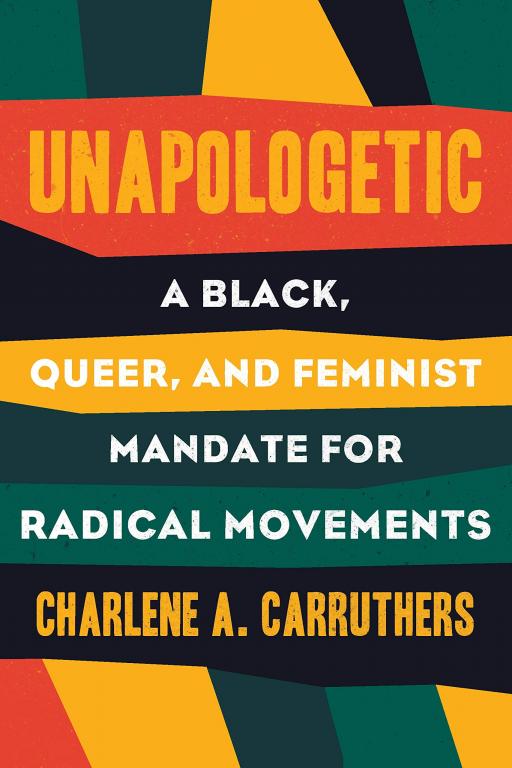 As I move toward my conclusion, I will also share with you that in the wake of the election, I have been reading one other book also published this year by Beacon Press titled Unapologetic: A Black, Queer, and Feminist Mandate for Radical Movements by the community organizer Charlene Carruthers. What interests me most about her work is her call—again, regardless of which politicians win any given election—to dream bigger about what it really means to work for collective liberation—“in which everyone gets free.”
What might it mean, for instance, to take seriously the insights of MLK and other peace activists that, “The ultimate weakness of violence is that it is a descending spiral begetting the very thing it seeks to destroy, instead of diminishing evil, it multiplies it.… Returning violence for violence multiplies violence, adding deeper darkness to a night already devoid of stars. Darkness cannot drive out darkness; only light can do that. Hate cannot drive out hate; only love can do that.” What, then, might it mean to try to find a better way that does not rely on violence?
Along those lines, Carruthers is one among many twenty-first century activists seeking alternatives to violence that offer us “safety and accountability without relying on alienation, punishment, or state or systematic violence, including incarceration or policing” (xi). No one is saying that the journey toward such a future will be easy or simple. But something like what Carruthers has in mind is implied by our UU 6th Principle of “The goal of world community with peace, liberty, and justice for all.” And a small but significant step toward such a future was taken on Tuesday, when “Florida voters approved an amendment to restore the right to vote for felons who have served their time.”
As my colleague The Rev. Elizabeth Stevens wrote in a powerful “post-election poem,” Collective liberation does not come as a “once-and-done, a single push—as an earthquake or tidal wave…. Justice does not emerge fully grown. But we are chipping away the mountains of injustice.” We will keep on moving forward, and I am grateful to be on that journey will so many of you.
The Rev. Dr. Carl Gregg is a certified spiritual director, a D.Min. graduate of San Francisco Theological Seminary, and the minister of the Unitarian Universalist Congregation of Frederick, Maryland. Follow him on Facebook (facebook.com/carlgregg) and Twitter (@carlgregg).
Learn more about Unitarian Universalism: http://www.uua.org/beliefs/principles
Previous Post

November 5, 2018
“The People vs. Democracy”
Next Post
November 30, 2018 “Privacy, Social Justice, & Survival in a Hyper-connected World"
Browse Our Archives
Select a Category Advent Anti-Racism Archaeology Atheism Baptism Best of the Year List Book Reviews Buddhism Catholicism Christian Education Church and State Church Planting Climate Change Conscientious Objection to War Creation Spirituality Death Penalty Didache Disability Rights Discernment Easter Ecology Emergent Church Movement Empire-Critical Ethics Evolution Feminist Theology Film Reviews Gandhi Gospel of Mark Gun Control Hinduism Immigration Reform Interfaith Islam JFK Judaism Jungian Spirituality Lectionary Commentary Lent Letters to the Editor LGBT Marriage MLK Multiculturalism Mysticism Nonviolent Activism Occupy Paganism (Earth-centered Religions) Parables Paul Pluralism Politics Process Theology Quantum Physics Requiescat In Pace Seminary and Divinity School Sermon Series Retrospective Sermons Spiritual Direction Spiritual Practices Stewardship (Fundraising) The Book of J The Wheel of the Year (Paganism) Theoblogger Challenge Triathlon Uncategorized Unitarian Universalism Worship Resources Youth Ministry
Select a Month July 2026 May 2026 March 2026 November 2025 October 2025 August 2025 February 2025 December 2024 October 2024 March 2024 January 2024 December 2023 November 2023 March 2023 February 2023 January 2023 December 2022 November 2022 August 2022 March 2022 February 2022 January 2022 December 2021 September 2021 August 2021 July 2021 June 2021 May 2021 February 2021 January 2021 December 2020 August 2020 June 2020 May 2020 April 2020 March 2020 February 2020 January 2020 December 2019 November 2019 October 2019 September 2019 July 2019 June 2019 March 2019 February 2019 January 2019 December 2018 November 2018 October 2018 September 2018 June 2018 May 2018 April 2018 March 2018 February 2018 January 2018 December 2017 November 2017 October 2017 September 2017 August 2017 July 2017 June 2017 May 2017 April 2017 March 2017 February 2017 January 2017 December 2016 November 2016 October 2016 September 2016 August 2016 June 2016 May 2016 April 2016 March 2016 February 2016 January 2016 December 2015 November 2015 October 2015 September 2015 August 2015 July 2015 June 2015 May 2015 April 2015 March 2015 February 2015 January 2015 December 2014 November 2014 October 2014 August 2014 July 2014 June 2014 May 2014 April 2014 March 2014 February 2014 January 2014 December 2013 November 2013 October 2013 September 2013 August 2013 July 2013 June 2013 May 2013 April 2013 March 2013 February 2013 January 2013 December 2012 November 2012 October 2012 September 2012 August 2012 July 2012 June 2012 May 2012 April 2012 March 2012 February 2012 January 2012 December 2011 November 2011 October 2011 September 2011 August 2011 July 2011 June 2011 May 2011 April 2011 March 2011 February 2011 January 2011 December 2010 November 2010 October 2010 August 2009 July 2009 May 2009
Follow Us!
TAKE THE
Religious Wisdom Quiz
What British monarch is also Supreme Governor of the Church of England?
Select your answer to see how you score.
Prime Minister The King/Queen of England Archbishop of Canterbury Pope
Related posts from Carl Gregg

Reading America at 250: A Nation Wrestles With...


Andrew Holocek on the Power of Darkness

The Stories That Shape Us: Myths, Archetypes, &...
TRENDING AT PATHEOS More Voices

Reading America at 250: A Nation Wrestles With...
As part of my own reflection on the 250th anniversary of the...

Whenever I am reading a book or listening to an argument, I...

President Trump Ban Animal Torture Videos on Facebook
Call for Stricter Regulations of Animal Abuse Content on Facebook Although President...

Draft Amendments to Address Ritual Abuse in New...
The proposed changes would make it illegal for individuals in domestic partnerships...

How Bans on LGBTQ+ Student Clubs Threaten Religious...
On June 20, 2025, the State of Texas passed Senate Bill 12....

The Truth About the Gen Z Revival
This past year, there has been a lot of media buzz surrounding...
view all More Voices blogs
Ad-Free & Subscriber Log-In Subscription Support
- About Us
- 2026 Calendar
- Videos
- Podcasts
- Library of World Religions
- Faith In Media Tracker
- Advertise With Us
- Write for Us
- Privacy Policy
- Terms of Service
- Do Not Sell My Data
- Contact Us
- Radiant Digital
- Manage Newsletter Subscriptions
- Unsubscribe From Notifications
- Sitemap
Copyright 2008-2026, Patheos. All rights reserved.
Subscription Support Ad-Free & Subscriber Log-In
Follow Patheos