
BuddhistCatholicContemplativeEvangelicalGeneral ChristianHinduJewishLatter-day SaintMuslimNew VisionsProgressive Christian
Beliefs
- Buddhist
- Catholic
- Contemplative
- Evangelical
- General Christian
- Hindu
- Jewish
- Latter-day Saint
- More Voices
- Muslim
- New Visions
- Pagan
- Progressive Christian
Topics
- Religion News
- Food and Religion
- Sports and Religion
- Religious Art
- Religious Music and Entertainment
- Religious Events
- History and Religion
- Style and Religion
- Politics and Religion
- Women in Religion
- Recreation Outdoors and Religion
- Business Finance and Religion
- Careers Workplace and Religion
- Education and Religion
- Family Parenting and Religion
- Health Fitness and Religion
- Home and Religion
- Relationships and Religion
- Technology and Religion
- Travel and Religion
Columnists
- Buddhist Columnists
- Business Finance and Religion Columnists
- Careers Workplace and Religion Columnists
- Catholic Columnists
- Contemplative Columnists
- Education and Religion Columnists
- Evangelists Columnists
- Family Parenting and Religion Columnists
- General Christian Columnists
- Health Fitness and Religion Columnists
- Hindu Columnists
- History and Religion Columnists
- Home and Religion Columnists
- Jewish Columnists
- More Voices Columnists
- Latter Day Columnists
- Muslim Columnists
- New Visions Columnists
- Nonreligious Columnists
- Pagan Columnists
- Politics and Religion Columnists
- Progressive Columnists
- Recreation Outdoors and Religion Columnists
- Relationships and Religion Columnists
- Religion News Columnists
- Religious Art Columnists
- Religious Events Columnists
- Religious Music and Entertainment Columnists
- Sports and Religion Columnists
- Style and Religion Columnists
- Technology and Religion Columnists
- Travel and Religion Columnists
- Women in Religion Columnists
Resource Library
- 2026 Calendar
- Library of World Religions
- The 100 Most Holy Places on Earth
- Patheos Answers
- Podcasts
- Videos
- Faith Leaders Database
- Anglican Episcopalian
- Bahai
- Baptist
- Buddhism
- Christianity
- Confucianism
- Eastern Orthodoxy
- Hinduism
- Holiness and Pentecostal
- ISKCON
- Islam
- Judaism
- Lutheran
- Methodist
- The Church of Jesus Christ of Latter-day Saints
- New Age
- Paganism
- Presbytarian and Reformed
- Protestantism
- Religion Behind the Scenes
- Roman Catholic
- Scientology
- Shia Islam
- Sikhism
- Sufism
- Sunni Islam
- Taoism
- Zen
- See all religions
Research Tools
 Ad-Free & Subscriber Log-In Subscription Support
Ad-Free & Subscriber Log-In Subscription Support
Follow Patheos 

- Trending:
- Forgiveness
- |
- Marriage
- |
- Consciousness
- |
- Death Penalty
- |
- Election
- |
- Halloween

- Home
- More Voices
- What Liberal Fundamentalism Is— and What It Isn’t
What Liberal Fundamentalism Is— and What It Isn’t
Last updated on: November 1, 2018 at 4:20 pm by Carl Gregg
What Liberal Fundamentalism Is— and What It Isn’t 2018-11-01T16:20:26-04:00 Carl Gregg
Patheos Explore the world's faith through different perspectives on religion and spirituality! Patheos has the views of the prevalent religions and spiritualities of the world.
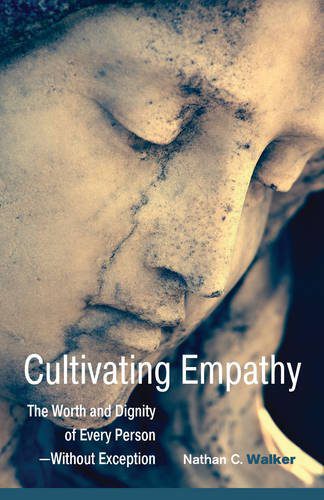 Nathan Walker’s fascinating and provocative book Cultivating Empathy: The Worth and Dignity of Every Person — Without Exception defines Liberal Fundamentalism as “when we who take pride in being open-minded close our minds—when we become what we set out against” (84). The classical liberal tradition does treasure open-mindedness, but at an even more foundational level, classical liberalism is from the Latin root liber, meaning “free.” Liberals tend to have a gut-level inclination toward freedom, toward liberty, toward saying to each individual “You do you.” We are a big tent with room for lots of individual differences.
My chosen tradition of Unitarian Universalism, although known as a theologically liberal tradition, has had big enough tent historically—and it remains big enough today when we are at our best—to include those who are conservative in the best sense of the word: caring about conservation of nature, upholding the beauty of traditions and rituals that have accrued deep meaning through the test of time, reminding us of the importance of community, authority, sanctity, and loyalty. And we do risk becoming Liberal Fundamentalists—becoming narrow-minded and bigoted—if we succumb to the temptation to pre-judge others based on stereotypes.
That being said, as we prepare to reflect on the dynamics of Liberal Fundamentalism, it is vital to be clear that there are important limits. Some beliefs and actions are beyond the pale. And drawing healthy boundaries does not make us Liberal Fundamentalists; it merely means being clear about the lines that we cannot cross without sacrificing our core values. Along those lines, one classically liberal way of drawing such boundaries is summarized in the quote that, “Your right to swing your fist ends where my nose begins.” I affirm your freedom to swing your fist to your heart’s content, but I affirm my right not to have that freedom end in assaulting me or another person!
But whenever liberals start to draw healthy boundaries, someone will often accuse liberals of being hypocrites—or Liberal Fundamentalists—for being “tolerant of everything except intolerance.” The best touchstone I have found for articulating why that is not the case is from the late philosopher, Karl Popper (1902 – 1994). In 1945, the year World War II ended, Popper wrote an important book called The Open Society and Its Enemies. One of the most significant parts of that book is a passage about what he called the “paradox of tolerance.” This paragraph has deep echoes to our own time, especially after this past week:
If we extend unlimited tolerance even to those who are intolerant, if we are not prepared to defend a tolerant society against the onslaught of the intolerant, then the tolerant will be destroyed, and tolerance with them. In this formulation, I do not imply, for instance, that we should always suppress the utterance of intolerant philosophies; as long as we can counter them by rational argument and keep them in check by public opinion, suppression would certainly be unwise. But we should claim the right to suppress them if necessary even by force; for it may easily turn out that they are not prepared to meet us on the level of rational argument, but begin by denouncing all argument; they may forbid their followers to listen to rational argument, because it is deceptive, and teach them to answer arguments by the use of their fists or pistols. We should therefore claim, in the name of tolerance, the right not to tolerate the intolerant. We should claim that any movement preaching intolerance places itself outside the law, and we should consider incitement to intolerance and persecution as criminal, in the same way as we should consider incitement to murder, or to kidnapping, or to the revival of the slave trade, as criminal. (Vol. 1, Notes to the Chapters: Ch. 7, Note 4)
Taking into account Popper’s perspective, I am, on one hand, eager to support non-violent activism that tries to accomplish these goals. On the other hand, it is vital to reject false equivalencies that seek to call liberals hypocrites or “liberal fundamentalists” when they are simply defending the minimal boundaries needed to maintain an open, civil society.
In reflecting on the topic of “Liberal Fundamentalism,” I was also reminded of a story published a few years ago in The Washington Post about Derek Black. Black is the only child of the founder of the Internet’s largest racist hate group site and the godson of David Duke, a former KKK grand wizard (Saslow 1). In theory, one could make a good case in advance that, given his background, Derek Black was destined to be a hopeless racist the rest of his life and was not worth anyone’s time. But in studying the story of his conversion to a more open-minded worldview, it’s clear that at least two major dynamics—forces both of exclusion and inclusion—caused him to change his mind.
Part of what caused him to consider changing was the cost of being excluded. The racist views he had learned at home resulted in a social ostracism in college. So exclusion was an important factor; but if he had only experienced exclusion, he likely would have become even more entrenched in his bigotry. However, college also presented him with important tastes of inclusion that gave him a glimpse of a different way of being in the world. He experienced firsthand that the racial minorities he had been taught to hate were in person nothing like what he had been told growing up. In particular (and this part is especially devastating and difficult after the recent mass shooting at the Tree of Life Synagogue) his heart was opened by Jewish students at his college inviting him—a famous White Supremacist—to join them at Shabbat dinners (Saslow 210). Importantly they were only willing to risk that invitation once they had seen that as repugnant as Black’s racist views were that he did not have any record or inclination of physical violence. This story reminds me of the four practices we learned from Dr. Brené Brown a few posts ago: “(1) People are hard to hate close up. Move in. (2) Speak truth to bullshit. Be civil. (3) Hold Hands. With strangers. (4) Strong back. Soft front. Wild heart.”
For now, I will conclude by inviting you to read one of my favorite poems that always challenges me to open back up and search for creative possibilities if I find myself hardening into a position of rigid fundamentalism: “The Place Where We Are Right“ by Yehuda Amichai (1924-2000). Amichai is widely considered Israel’s greatest modern poet, and this poem is written out of the ongoing Israeli-Palestinian conflict.
The Rev. Dr. Carl Gregg is a certified spiritual director, a D.Min. graduate of San Francisco Theological Seminary, and the minister of the Unitarian Universalist Congregation of Frederick, Maryland. Follow him on Facebook (facebook.com/carlgregg) and Twitter (@carlgregg).
Learn more about Unitarian Universalism: http://www.uua.org/beliefs/principles
Previous Post

October 11, 2018
The Greatest Showman: “P. T. Barnum: The Legend & the Man”
Next Post
November 5, 2018 “The People vs. Democracy”
Browse Our Archives
Select a Category Advent Anti-Racism Archaeology Atheism Baptism Best of the Year List Book Reviews Buddhism Catholicism Christian Education Church and State Church Planting Climate Change Conscientious Objection to War Creation Spirituality Death Penalty Didache Disability Rights Discernment Easter Ecology Emergent Church Movement Empire-Critical Ethics Evolution Feminist Theology Film Reviews Gandhi Gospel of Mark Gun Control Hinduism Immigration Reform Interfaith Islam JFK Judaism Jungian Spirituality Lectionary Commentary Lent Letters to the Editor LGBT Marriage MLK Multiculturalism Mysticism Nonviolent Activism Occupy Paganism (Earth-centered Religions) Parables Paul Pluralism Politics Process Theology Quantum Physics Requiescat In Pace Seminary and Divinity School Sermon Series Retrospective Sermons Spiritual Direction Spiritual Practices Stewardship (Fundraising) The Book of J The Wheel of the Year (Paganism) Theoblogger Challenge Triathlon Uncategorized Unitarian Universalism Worship Resources Youth Ministry
Select a Month July 2026 May 2026 March 2026 November 2025 October 2025 August 2025 February 2025 December 2024 October 2024 March 2024 January 2024 December 2023 November 2023 March 2023 February 2023 January 2023 December 2022 November 2022 August 2022 March 2022 February 2022 January 2022 December 2021 September 2021 August 2021 July 2021 June 2021 May 2021 February 2021 January 2021 December 2020 August 2020 June 2020 May 2020 April 2020 March 2020 February 2020 January 2020 December 2019 November 2019 October 2019 September 2019 July 2019 June 2019 March 2019 February 2019 January 2019 December 2018 November 2018 October 2018 September 2018 June 2018 May 2018 April 2018 March 2018 February 2018 January 2018 December 2017 November 2017 October 2017 September 2017 August 2017 July 2017 June 2017 May 2017 April 2017 March 2017 February 2017 January 2017 December 2016 November 2016 October 2016 September 2016 August 2016 June 2016 May 2016 April 2016 March 2016 February 2016 January 2016 December 2015 November 2015 October 2015 September 2015 August 2015 July 2015 June 2015 May 2015 April 2015 March 2015 February 2015 January 2015 December 2014 November 2014 October 2014 August 2014 July 2014 June 2014 May 2014 April 2014 March 2014 February 2014 January 2014 December 2013 November 2013 October 2013 September 2013 August 2013 July 2013 June 2013 May 2013 April 2013 March 2013 February 2013 January 2013 December 2012 November 2012 October 2012 September 2012 August 2012 July 2012 June 2012 May 2012 April 2012 March 2012 February 2012 January 2012 December 2011 November 2011 October 2011 September 2011 August 2011 July 2011 June 2011 May 2011 April 2011 March 2011 February 2011 January 2011 December 2010 November 2010 October 2010 August 2009 July 2009 May 2009
Follow Us!
TAKE THE
Religious Wisdom Quiz
How did Moses' mother save him as a baby?
Select your answer to see how you score.
Placed him in a basket on the river Sent him to another city Hid him in a cave Dressed him as a girl
Related posts from Carl Gregg

Reading America at 250: A Nation Wrestles With...


Andrew Holocek on the Power of Darkness

The Stories That Shape Us: Myths, Archetypes, &...
TRENDING AT PATHEOS More Voices

Reading America at 250: A Nation Wrestles With...
As part of my own reflection on the 250th anniversary of the...

Whenever I am reading a book or listening to an argument, I...

President Trump Ban Animal Torture Videos on Facebook
Call for Stricter Regulations of Animal Abuse Content on Facebook Although President...

Draft Amendments to Address Ritual Abuse in New...
The proposed changes would make it illegal for individuals in domestic partnerships...

How Bans on LGBTQ+ Student Clubs Threaten Religious...
On June 20, 2025, the State of Texas passed Senate Bill 12....

The Truth About the Gen Z Revival
This past year, there has been a lot of media buzz surrounding...
view all More Voices blogs
Ad-Free & Subscriber Log-In Subscription Support
- About Us
- 2026 Calendar
- Videos
- Podcasts
- Library of World Religions
- Faith In Media Tracker
- Advertise With Us
- Write for Us
- Privacy Policy
- Terms of Service
- Do Not Sell My Data
- Contact Us
- Radiant Digital
- Manage Newsletter Subscriptions
- Unsubscribe From Notifications
- Sitemap
Copyright 2008-2026, Patheos. All rights reserved.
Subscription Support Ad-Free & Subscriber Log-In
Follow Patheos