
BuddhistCatholicContemplativeEvangelicalGeneral ChristianHinduJewishLatter-day SaintMuslimNew VisionsProgressive Christian
Beliefs
- Buddhist
- Catholic
- Contemplative
- Evangelical
- General Christian
- Hindu
- Jewish
- Latter-day Saint
- More Voices
- Muslim
- New Visions
- Pagan
- Progressive Christian
Topics
- Religion News
- Food and Religion
- Sports and Religion
- Religious Art
- Religious Music and Entertainment
- Religious Events
- History and Religion
- Style and Religion
- Politics and Religion
- Women in Religion
- Recreation Outdoors and Religion
- Business Finance and Religion
- Careers Workplace and Religion
- Education and Religion
- Family Parenting and Religion
- Health Fitness and Religion
- Home and Religion
- Relationships and Religion
- Technology and Religion
- Travel and Religion
Columnists
- Buddhist Columnists
- Business Finance and Religion Columnists
- Careers Workplace and Religion Columnists
- Catholic Columnists
- Contemplative Columnists
- Education and Religion Columnists
- Evangelists Columnists
- Family Parenting and Religion Columnists
- General Christian Columnists
- Health Fitness and Religion Columnists
- Hindu Columnists
- History and Religion Columnists
- Home and Religion Columnists
- Jewish Columnists
- More Voices Columnists
- Latter Day Columnists
- Muslim Columnists
- New Visions Columnists
- Nonreligious Columnists
- Pagan Columnists
- Politics and Religion Columnists
- Progressive Columnists
- Recreation Outdoors and Religion Columnists
- Relationships and Religion Columnists
- Religion News Columnists
- Religious Art Columnists
- Religious Events Columnists
- Religious Music and Entertainment Columnists
- Sports and Religion Columnists
- Style and Religion Columnists
- Technology and Religion Columnists
- Travel and Religion Columnists
- Women in Religion Columnists
Resource Library
- 2026 Calendar
- Library of World Religions
- The 100 Most Holy Places on Earth
- Patheos Answers
- Podcasts
- Videos
- Faith Leaders Database
- Anglican Episcopalian
- Bahai
- Baptist
- Buddhism
- Christianity
- Confucianism
- Eastern Orthodoxy
- Hinduism
- Holiness and Pentecostal
- ISKCON
- Islam
- Judaism
- Lutheran
- Methodist
- The Church of Jesus Christ of Latter-day Saints
- New Age
- Paganism
- Presbytarian and Reformed
- Protestantism
- Religion Behind the Scenes
- Roman Catholic
- Scientology
- Shia Islam
- Sikhism
- Sufism
- Sunni Islam
- Taoism
- Zen
- See all religions
Research Tools
 Ad-Free & Subscriber Log-In Subscription Support
Ad-Free & Subscriber Log-In Subscription Support
Follow Patheos 

- Trending:
- Forgiveness
- |
- Marriage
- |
- Consciousness
- |
- Death Penalty
- |
- Election
- |
- Halloween

- Home
- More Voices
- The Greatest Showman: “P. T. Barnum: The Legend & the Man”
The Greatest Showman: “P. T. Barnum: The Legend & the Man”
Last updated on: October 11, 2018 at 8:57 pm by Carl Gregg
The Greatest Showman: “P. T. Barnum: The Legend & the Man” 2018-10-11T20:57:21-04:00 Carl Gregg
Patheos Explore the world's faith through different perspectives on religion and spirituality! Patheos has the views of the prevalent religions and spiritualities of the world.
Have you seen the film The Greatest Showman? The movie is quite good in many ways–especially the soundtrack–although it is not particularly historically accurate. Since it stars Hugh Jackson and Zac Efron, I like to think of it as “What if Wolverine and that kid from High School Musical started a circus!” One of the reasons I was interested in seeing the film is that it is inspired by the life of P. T. Barnum (1810-1891), who was a prominent Universalist. Indeed, I discovered that fact when I first took a graduate class in the history of Unitarian Universalism, and one of the required readings was Barnum’s pamphlet “Why I Am a Universalist,” which he published in 1890, the year before he died. “It sold 100,000 copies in its first three years, and continued circulating well into the twentieth century.”
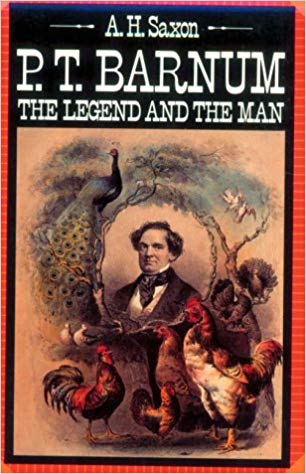 Barnum’s Universalism, however, was not how I first heard about him. As is the case with many other people, my earliest association with P. T. Barnum was as the founder of what came to be known as Ringling Bros. and Barnum & Bailey Circus. Although that traveling big top circus closed its doors for the last time last year in May 2017, the so-called “Greatest Show on Earth,” founded in 1871, did have an impressive run of 146 years. And as explored in A. H. Saxon’s book P. T. Barnum: The Legend and the Man (Columbia University Press, 1990), numerous legends have grown up around Barnum—some at his own encouragement. But historians have worked to separate myth from reality through studying his private letters, surviving diaries of people close to him, and his own personal records (7).
To begin to tell you some of his story, Phineas Taylor Barnum’s life spanned most of the nineteenth century. He was born in 1810 in Bethel, Connecticut, and died in 1891 in Bridgeport, Connecticut at the age of 80. He was named after his maternal grandfather, but to avoid confusion between him and his grandfather, he was never called by his biblical first name of Phineas. Instead, they used his middle name Taylor. This choice led his closest childhood friends to call him by the nickname “Tale,” which seems quite prescient given his lifelong love of tall tales (26).
I should hasten to add that he inherited this tale-telling habit from his family of origin. Some of you may also come from a family of pranksters, but P. T. Barnum’s family practiced some “next level,” hardcore practical jokes. I’ll give you one early example from his childhood. When he was born, his grandfather “Phin,” after whom he was named, gave him a welcome-to-the-world present: the deed to “Ivy Island” on the edge of Bethel, Connecticut.
From as young an age as he could remember not only members of his family, but also everyone who knew him in Bethel, would regularly tell him that he was “the richest child in town, because he owned all of ‘Ivy Island,’ the most valuable farm in Connecticut.” When he was twelve, he finally set out to visit this fabled place. To his shock he discovered that, “Ivy Island” was both almost inaccessible, and all-but-barren, and he didn’t actually own all of it—just some of it. “And having spent some eight years preparing this joke, the good folk of Bethel then spent the next five years laughing over it” (29). I should hasten to emphasize that this was not a one-time occurrence. By the age of twelve, “Barnum had already been witness to, and either the butt of or an eager participant in hundreds of other practical jokes” in and around his family (30). From this childhood heritage, Barnum gained much experience at observing and staging elaborate hoaxes designed to create confusion and suspense, hoaxes which fooled audiences, and led to surprising, entertaining, often funny final reactions and impacts.
Fast forward two decades, and Barnum—now married with young children and in search of a way to support his family—had an idea for how to revitalize New York City’s American Museum. The good news is that the museum was for sale. The bad news is that the asking price was $15,000 and he was almost broke. Nevertheless, he impressed the museum’s owner with his sales pitch. And the owner replied, “If you only had a piece of unencumbered real estate that you could offer as additional security, I think I might venture to negotiate with you.” As you can guess, a particular piece of legendary real estate sprung readily to mind: the deed to Ivy Island. The quick summary of what happened next is that Barnum paid off his mortgage for the museum in less than two years, and “within a few more years, thanks to this purchase made possible by Ivy Island, had become one of America’s richest and most celebrated showmen” (31).
And that is typically how the story is told. But there are a few more important details that usually get left out. It turns out that when Barnum offered Ivy Island as collateral, he didn’t even still own his original part of the island, having sold it a few years earlier for $60 to his half-brother. Fortunately, he was able to buy it back quickly for the same price. Moreover, in addition to the deed to Ivy Island, he also sweetened the pot with two other pieces of land, including his own home. “The combined value of this property was appraised at $2,000—not such bad collateral after all when one considers that the [museum’s owner] retained title to the Museum’s collections until Barnum had repaid the money advanced on his behalf” (31-32).
Fortunately, a gift for practical jokes was not the only thing Barnum inherited from his family. Although Barnum’s earliest religious experiences were of strict conservative Christianity that taught the “total depravity” of human beings, a fatalistic predestination, and a general hellfire and brimstone worldview (47), his grandfather—the same one who gifted him part of Ivy Island—introduced him to the theologically liberal tradition of Universalism (49).
Now, it is important to be honest that converting to Universalism did not instantly turn young Barnum into a paragon of virtue. In the ensuing decades, he went on to engage in a significant number of acts that nowadays are seen ranging from morally questionable to morally reprehensible:
- His treatment of animals at times included behavior that was increasingly decried as inhumane and cruel.
- He increasingly became infamous for his exploitation of physically-atypical human beings such as the dwarf Charles Stratton, whom Barnum marketed as “General Tom Thumb.”
- He knowingly misled audiences about his exhibits, from the so-called “Feejee Mermaid” to the African American woman Joice Heth, whom he exhibited as the alleged 161-year-old “nurse” of George Washington (10).
- And prior to the Civil War, when slavery was still legal in the South, for a time owned an enslaved man who served as his valet (84).
These are merely a few of many more examples.
And while he has been falsely accused of coining the phrase, “There’s a sucker born every minute.” He never said that. He justified his behavior to himself with his belief that his customers always got “at least their money’s worth” (335). He believed that even if they were deceived, at least they were entertained. And the greatest support for that contention is that even though people often realized mid-way through one of Barnum’s exhibits that they had been deceived on one or more levels, they nevertheless kept coming back to future shows (12). And all the related controversies mostly cause more people to come and see for themselves what all the fuss was about (11). Frankly, it’s all quite a bit too similar to our Reality TV show culture and Reality TV show president for my comfort. But it does invite us to confront some troubling aspects of human nature (74).
For me, the takeaway from studying Barnum’s life is to consider how much worse his life would have been without the influence of Universalism. One of the most central—and the most difficult—aspects of the Universalist side of Unitarian Universalism is literally the “Universal” part: that everyone—universally, without exception—has inherent worth and dignity. When we mess up, there are consequences. But the Universalist perspective is that no one is ever beyond the chance of redemption.
In the case of Barnum, although he did many despicable things, his legacy is more complicated than simply being a villain. Without the influence of Universalism, he may well have remained an unapologetic capitalist, content with making as much money as possible through whatever means necessary. But through his long involvement with Universalism, he grew increasingly compassionate. One example is that at the far-too-young-age of seven, he was taken with his family to witness a public execution. He did not have the capacity at the time to fully comprehend what he was seeing. But over time, the memory began to haunt him. Many Universalists have historically advocated against the death penalty, and in Barnum’s case, “in later life, while serving in the Connecticut legislature, he was a staunch opponent of capital punishment” (32).
Another example is that despite being very much a product of his time in regard to African-American rights prior to the Civil War, the abolitionist movement increasingly called on his conscience. And in the late 1850s, Barnum’s political allegiances began to shift, crystallizing in his support for Abraham Lincoln in the 1860 presidential election (216). Indeed, before the end of the Civil War, he ran for office so that he might personally vote “for the then proposed amendment to the Constitution of the United States to abolish slavery.” And as best we can tell, this choice was not mere political opportunism: “Barnum proved himself an astute, hardworking member of the legislature” (218).
Regarding women’s suffrage, he was never as fervent a supporter as he was for the abolition of slavery (37). But notably for six years, “from 1869 to 1875, his pastor at Bridgeport’s First Universalist Society was the Rev. Olympia Brown…the first woman in America to be ordained by full denominational authority.” Regarding her experience of Barnum, Rev. Brown wrote in her autobiography that he “often made some complimentary remark as I came down from my pulpit” (60). In turn, “It was said of her that when the church was in need of additional money, she was not above asking that the rich be more generous in their contributions, and she would say, ‘Mr. Barnum, I mean you.’ …Mr. Barnum never failed to oblige her.”
But when her ministry was threatened over a controversy related to her allegedly spending too much time advocating for women’s rights and not enough time focused on the congregation itself, Barnum did not come to her defense. He didn’t want to get pulled in to church politics. Although he and Brown remained on friendly terms throughout the controversy, sadly she was eventually forced out, and moved to another congregation in Racine, Wisconsin, a congregation now known as “Olympia Brown Unitarian Universalist Church” (61-62).
There is so much more to say about P. T. Barnum, but I hope I have given you a sense of the complexity of his life, as well as the ways that Universalism influenced him for the better. In return,
At his death Barnum left the Bridgeport Universalist society a legacy of $15,000. He was just as generous a supporter of causes endorsed by the national Universalist movement. He gave its newly founded institution of higher education, Tufts College, $50,000 to establish a Museum of Natural History; and later he gave Tufts another $100,000 to build two wings to the museum.… He did not neglect other Universalist educational projects either such as St. Lawrence University and Lombard College. When he died his will stipulated $7,000 for the Universalist Publishing House, $5,000 for the Connecticut Universalist Convention, $1,000 for the Chapin Home, and $500 for the Woman’s Centenary Association.
Keep in mind that all those numbers are from the late nineteenth-century. One dollar back then was worth thirty times today’s dollar in purchasing power.
But regardless of whether you came away loving, hating, or having mixed emotions toward P. T. Barnum, the story does not end there. In the same way that Universalism challenged P. T. Barnum to open his heart and mind to the needs of others, I invite you to consider the ways that religious communities have challenged you in the past–or might challenge you anew today–to open your heart, mind, and spirit wider than might be possible on a journey through this world alone. We are stronger together.
The Rev. Dr. Carl Gregg is a certified spiritual director, a D.Min. graduate of San Francisco Theological Seminary, and the minister of the Unitarian Universalist Congregation of Frederick, Maryland. Follow him on Facebook (facebook.com/carlgregg) and Twitter (@carlgregg).
Learn more about Unitarian Universalism: http://www.uua.org/beliefs/principles
Previous Post

October 3, 2018
“Being Gendered in the 21st Century”
Next Post
October 31, 2018 What Liberal Fundamentalism Is— and What It Isn't
Browse Our Archives
Select a Category Advent Anti-Racism Archaeology Atheism Baptism Best of the Year List Book Reviews Buddhism Catholicism Christian Education Church and State Church Planting Climate Change Conscientious Objection to War Creation Spirituality Death Penalty Didache Disability Rights Discernment Easter Ecology Emergent Church Movement Empire-Critical Ethics Evolution Feminist Theology Film Reviews Gandhi Gospel of Mark Gun Control Hinduism Immigration Reform Interfaith Islam JFK Judaism Jungian Spirituality Lectionary Commentary Lent Letters to the Editor LGBT Marriage MLK Multiculturalism Mysticism Nonviolent Activism Occupy Paganism (Earth-centered Religions) Parables Paul Pluralism Politics Process Theology Quantum Physics Requiescat In Pace Seminary and Divinity School Sermon Series Retrospective Sermons Spiritual Direction Spiritual Practices Stewardship (Fundraising) The Book of J The Wheel of the Year (Paganism) Theoblogger Challenge Triathlon Uncategorized Unitarian Universalism Worship Resources Youth Ministry
Select a Month July 2026 May 2026 March 2026 November 2025 October 2025 August 2025 February 2025 December 2024 October 2024 March 2024 January 2024 December 2023 November 2023 March 2023 February 2023 January 2023 December 2022 November 2022 August 2022 March 2022 February 2022 January 2022 December 2021 September 2021 August 2021 July 2021 June 2021 May 2021 February 2021 January 2021 December 2020 August 2020 June 2020 May 2020 April 2020 March 2020 February 2020 January 2020 December 2019 November 2019 October 2019 September 2019 July 2019 June 2019 March 2019 February 2019 January 2019 December 2018 November 2018 October 2018 September 2018 June 2018 May 2018 April 2018 March 2018 February 2018 January 2018 December 2017 November 2017 October 2017 September 2017 August 2017 July 2017 June 2017 May 2017 April 2017 March 2017 February 2017 January 2017 December 2016 November 2016 October 2016 September 2016 August 2016 June 2016 May 2016 April 2016 March 2016 February 2016 January 2016 December 2015 November 2015 October 2015 September 2015 August 2015 July 2015 June 2015 May 2015 April 2015 March 2015 February 2015 January 2015 December 2014 November 2014 October 2014 August 2014 July 2014 June 2014 May 2014 April 2014 March 2014 February 2014 January 2014 December 2013 November 2013 October 2013 September 2013 August 2013 July 2013 June 2013 May 2013 April 2013 March 2013 February 2013 January 2013 December 2012 November 2012 October 2012 September 2012 August 2012 July 2012 June 2012 May 2012 April 2012 March 2012 February 2012 January 2012 December 2011 November 2011 October 2011 September 2011 August 2011 July 2011 June 2011 May 2011 April 2011 March 2011 February 2011 January 2011 December 2010 November 2010 October 2010 August 2009 July 2009 May 2009
Follow Us!
TAKE THE
Religious Wisdom Quiz
Which prophet lamented over Israel's oppression of the poor?
Select your answer to see how you score.
Joel Obadiah Amos Hosea
Related posts from Carl Gregg

Reading America at 250: A Nation Wrestles With...


Andrew Holocek on the Power of Darkness

The Stories That Shape Us: Myths, Archetypes, &...
TRENDING AT PATHEOS More Voices

Reading America at 250: A Nation Wrestles With...
As part of my own reflection on the 250th anniversary of the...

Whenever I am reading a book or listening to an argument, I...

President Trump Ban Animal Torture Videos on Facebook
Call for Stricter Regulations of Animal Abuse Content on Facebook Although President...

Draft Amendments to Address Ritual Abuse in New...
The proposed changes would make it illegal for individuals in domestic partnerships...

How Bans on LGBTQ+ Student Clubs Threaten Religious...
On June 20, 2025, the State of Texas passed Senate Bill 12....

The Truth About the Gen Z Revival
This past year, there has been a lot of media buzz surrounding...
view all More Voices blogs
Ad-Free & Subscriber Log-In Subscription Support
- About Us
- 2026 Calendar
- Videos
- Podcasts
- Library of World Religions
- Faith In Media Tracker
- Advertise With Us
- Write for Us
- Privacy Policy
- Terms of Service
- Do Not Sell My Data
- Contact Us
- Radiant Digital
- Manage Newsletter Subscriptions
- Unsubscribe From Notifications
- Sitemap
Copyright 2008-2026, Patheos. All rights reserved.
Subscription Support Ad-Free & Subscriber Log-In
Follow Patheos