
BuddhistCatholicContemplativeEvangelicalGeneral ChristianHinduJewishLatter-day SaintMuslimNew VisionsProgressive Christian
Beliefs
- Buddhist
- Catholic
- Contemplative
- Evangelical
- General Christian
- Hindu
- Jewish
- Latter-day Saint
- More Voices
- Muslim
- New Visions
- Pagan
- Progressive Christian
Topics
- Religion News
- Food and Religion
- Sports and Religion
- Religious Art
- Religious Music and Entertainment
- Religious Events
- History and Religion
- Style and Religion
- Politics and Religion
- Women in Religion
- Recreation Outdoors and Religion
- Business Finance and Religion
- Careers Workplace and Religion
- Education and Religion
- Family Parenting and Religion
- Health Fitness and Religion
- Home and Religion
- Relationships and Religion
- Technology and Religion
- Travel and Religion
Columnists
- Buddhist Columnists
- Business Finance and Religion Columnists
- Careers Workplace and Religion Columnists
- Catholic Columnists
- Contemplative Columnists
- Education and Religion Columnists
- Evangelists Columnists
- Family Parenting and Religion Columnists
- General Christian Columnists
- Health Fitness and Religion Columnists
- Hindu Columnists
- History and Religion Columnists
- Home and Religion Columnists
- Jewish Columnists
- More Voices Columnists
- Latter Day Columnists
- Muslim Columnists
- New Visions Columnists
- Nonreligious Columnists
- Pagan Columnists
- Politics and Religion Columnists
- Progressive Columnists
- Recreation Outdoors and Religion Columnists
- Relationships and Religion Columnists
- Religion News Columnists
- Religious Art Columnists
- Religious Events Columnists
- Religious Music and Entertainment Columnists
- Sports and Religion Columnists
- Style and Religion Columnists
- Technology and Religion Columnists
- Travel and Religion Columnists
- Women in Religion Columnists
Resource Library
- 2026 Calendar
- Library of World Religions
- The 100 Most Holy Places on Earth
- Patheos Answers
- Podcasts
- Videos
- Faith Leaders Database
- Anglican Episcopalian
- Bahai
- Baptist
- Buddhism
- Christianity
- Confucianism
- Eastern Orthodoxy
- Hinduism
- Holiness and Pentecostal
- ISKCON
- Islam
- Judaism
- Lutheran
- Methodist
- The Church of Jesus Christ of Latter-day Saints
- New Age
- Paganism
- Presbytarian and Reformed
- Protestantism
- Religion Behind the Scenes
- Roman Catholic
- Scientology
- Shia Islam
- Sikhism
- Sufism
- Sunni Islam
- Taoism
- Zen
- See all religions
Research Tools
 Ad-Free & Subscriber Log-In Subscription Support
Ad-Free & Subscriber Log-In Subscription Support
Follow Patheos 

- Trending:
- Forgiveness
- |
- Marriage
- |
- Consciousness
- |
- Death Penalty
- |
- Election
- |
- Halloween

- Home
- More Voices
- “Being Gendered in the 21st Century”
“Being Gendered in the 21st Century”
Last updated on: October 3, 2018 at 3:37 pm by Carl Gregg
“Being Gendered in the 21st Century” 2018-10-03T15:37:24-04:00 Carl Gregg
Patheos Explore the world's faith through different perspectives on religion and spirituality! Patheos has the views of the prevalent religions and spiritualities of the world.
The Genderbread Person is a playful but serious graphic attempt to visualize the four broad spectrums of gender identity, gender expression, biological sex, and sexual attraction. One of the most important aspects of this chart is that the four different attributes are on non-intersecting lines. In other words, where an individual identifies on one line does not tell you how they identify on another line. That also means that people express gender and sexuality through many different possible combinations.
To offer a brief overview, starting at the top of the chart:
- Gender Identity is in your mind: internally, do you think of yourself as more of a “woman,” a “man,” or somewhere in between? The key caveat here is that our notions of what words like “women” and “men” mean depend on the culture in which we were raised.
- Gender Expression is the dotted line: externally in your clothes and behavior, do you present yourself to others as “masculine,” “feminine,” androgynous, or gender fluid? Again, keep in mind that our perceptions of categories like “masculine” and “feminine” are socially constructed.
- Attraction: in your heart, are you are sexually (and/or romantically) attracted to men/males/masculinity, women/females/femininity, both, or neither?
- Biological Sex is more complicated than whether your chromosomes are XY-male or XX-female. For instance, “If you ask experts at medical centers how often a child is born so noticeably atypical in terms of genitalia that a specialist in sex differentiation is called in, the number comes out to about 1-in-1500 to 1-in-2000 births. But a lot more people than that are born with subtler forms of sex anatomy variations, some of which won’t show up until later in life” (Davis 33).
I encourage you to spend a few minutes studying The Genderbread Person chart. It’s both fascinating and illuminating.
More broadly, what does all this mean for being gendered in the twenty-first century? Part of what it means is that although many official forms limit individuals to checking the boxes of either of two genders (male or female), increasing numbers of people identify outside a simple gender binary:
- More than four years ago, Facebook began offering more than fifty custom gender options for describing one’s gender presentation.
- The dating app Tinder lists thirty-seven gender options.
- Oregon, Maine, and Washington, D.C. already allow a third gender category on driver’s licenses” (Meadow 5), and
- “At least 10 countries — Australia, Bangladesh, Canada, Denmark, Germany, India, Malta, Nepal, New Zealand and Pakistan — offer gender-neutral options on passports or national identity cards.”
More options along these lines are appearing frequently.
I first began to reflect on these issues critically through reading the philosopher Judith Butler’s (1956 – ) writing about “gender performativity.” Similar to the Genderbread Person, Butler highlights that there is not a direct correlation between knowing someone’s biological sex and knowing their gender (Meadow 26).
But long before an individual can choose for themselves, there are many cultural forces in our society dedicated to encouraging biological girls to wear pink frilly dresses, play with dolls and toy kitchens, and express all their emotions except anger. Likewise, similar social constructs encourage biological boys to wear pants and the color blue, to play with cars and tools, to be tough, and to control their emotions except anger, of course, which we saw disturbingly demonstrated the recent Supreme Court confirmation hearings.
The good news is that there is a growing conversation about alternative paths forward. About two weeks ago, for instance, there was an article in The Washington Post titled “Was their child a boy or a girl? Naya’s parents wanted to let Naya decide.” Naya’s parents chose not to publicly share the sex listed on their child’s birth certificate. One could make the argument that, if you think about it, it is kind of odd that people are so interested in knowing the details of a newborn’s below-the-belt anatomy. But Naya’s parents would instead respectfully request, “If you interact with our kid, please make an effort to use Naya’s name, rather than a gendered pronoun.” And they gave Naya clothes and toys from both sides of the gender-segregated aisles at most stores.
Around age three, Naya was playing with a gender non-specific stuffed animal and unexpectedly told one of her parents that, “Doggy is a boy — “a he” — and he should be called that.” Sensing that this conversation was about more than a toy, her father gently prompted, “What do you want me to call you?” Naya replied nonchalantly, “She and her and a girl.” Even after that conversation, Naya’s parents still don’t talk about what’s on the birth certificate. Their hope is to continue to give Naya the freedom to explore and discover who she is. And they are open to more conversations in the future. (There was a related article in The New York Times a few days ago on “Male, Female or ‘X’: The Push for a Third Choice on Official Forms” that mentioned a gender-open playgroup in Brooklyn that includes at least four ‘theybies’”—babies who parents refer to them using the pronoun they.)
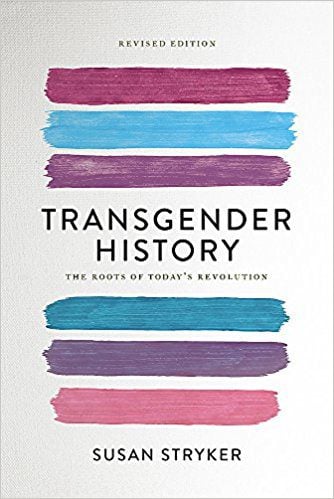 And as excited as I am to see these signs of a more gender-liberated future, there are times that discussions around transgender awareness give the misleading impression that these issues are new, which is very much not the case. Drawing from the excellent overview Transgender History: The Roots of Today’s Revolution by Susan Stryker (Seal Press, 2nd edition, 2017), I will limit myself to three quick jumps through history,
- In the late seventeenth century, we have records of the colony of Massachusetts passing laws against cross-dressing. In general, it is strong evidence that something is happening if people are passing laws to stop it. (46).
- Skipping to the nineteenth century one major theme in First Wave Feminism was asserting the rights of women to wear pants. Many suffragettes argued that, “long skirts and cumbersome undergarments were a form of bondage” holding women back from reaching their potential (50).
- Or looking to the twentieth century, long before Caitlyn Jenner, some of you will remember that on December 1, 1952, Christine Jorgensen “made international headlines with news of her successful genital transformation surgery in Copenhagen…. In a year when hydrogen bombs were being tested in the Pacific, war was raging in Korea, England had crowned a new queen, and Jonas Salk was working on the polio vaccine, Jorgensen was the most written-about topic in the media in 1953” (65).
The movement for gender liberation has a long and fascinating history.
Looking to our own time, it is significant to note that:
- In 2010 the U.S. Department of State issued a new passport policy, in effect allowing parents to change the legal gender of their minor children. Because passports are so-called “breeder documents,” they can be used to change state identification, school records, health records, and more….
- Endocrinologists now widely recommend the use of puberty-inhibiting hormone therapies for transgender adolescents;
- Medicare lifted its ban on coverage for transgender health care;
- In 2013, the 5th edition of the Diagnostic and Statistical Manual debuted a new version of its clinical diagnostic criteria for “gender dysphoria,” which limited the diagnosis to individuals experiencing “clinically significant distress” about their gender (rather than applying the diagnosis only to transpeople) and separated gender into a category wholly apart from sexuality; and
- As of last year, thirteen states had enacted laws prohibiting discrimination based on gender identity or expression in schools…and hundreds of school districts around the country have instituted similar policies on a local level. (Meadow 3-4)
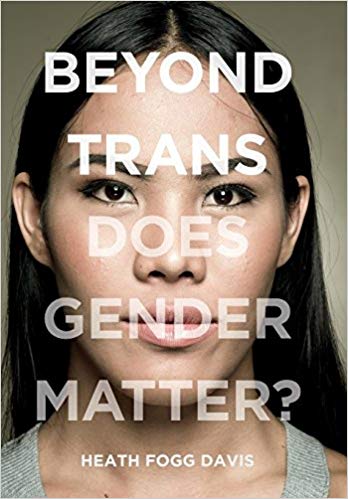 Looking to the future, four promising areas of potential change related to the gender liberation movement include bathrooms, identity documents, same-sex colleges, and athletics. All are explored in Heath Fogg Davis’s fascinating book Beyond Trans: Does Gender Matter? (NYU Press, 2017).
- Bathrooms: I suspect many of you have noticed a growing number of gender-neutral bathrooms. This trend may lead a paradigm shift toward “universal design” in bathrooms in public spaces, which increasingly will be bathrooms any human being could use. For such “universal designs,” the walls of individual stalls would be extended “all the way, or closer, to the floor” (Davis 80-83). One of the obvious advantages of having universally-accessible public restroom would be ending the disparity of long lines to the women’s room and short lines to the men’s room.
- Identity documents: Many cisgendered folk (those whose gender identity corresponds to their biological sex) are unfamiliar with the history of authorities harassing and abusing people who do not appear to conform to the gender listed on their identity documents (Meadow 142). For anyone with libertarian instincts, it can be fairly easy to get support for the argument that what’s below your belt is not any of the government’s business. Moreover, there is already a precedent for eliminating gender-markers on identity documents: the Civil Rights movement blazed a similar path in lobbying to remove race-markers from birth certificates and driver’s licenses (Davis 37).
- Same-sex colleges – In a more gender-liberated world, one way forward would be to rename same-sex colleges as “historically men’s colleges” or “historically women’s colleges.” To honor that historic identity at a historically women’s college, for instance, prospective students, regardless of sex identity, might be accorded preferential acceptance consideration based on their “personal commitments to an institutional value of feminism” (143).
- Athletics – While professional athletics might continue to be primarily gender segregated, it would be fairly easy to move toward less competitive play and gender-inclusive teams for younger athletes.
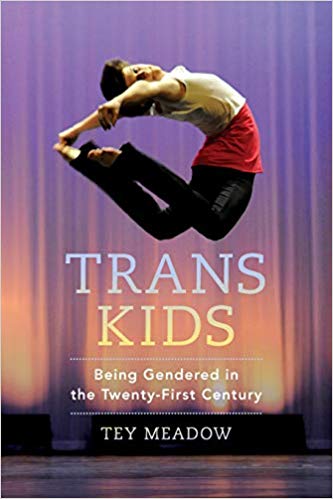 Regardless of how we decide to collectively move forward, I don’t want us to miss the heart of the matter. In my research, two of the books I read had strikingly similar dedications. In the first one, the author’s dedication read, “For my kids.” In the other book, it said, “To all the kids who are different and the adults who ease their way.” As Tey Meadow details in her important book Trans Kids: Being Gendered in the Twenty-First Century (University of California Press, 2018), when the history of the gender liberation movement in our time is written, I hope to be among those unnamed people who helped ease the way for other human beings seeking nothing more than the freedom to discover and explore their authentic self (175).
The Rev. Dr. Carl Gregg is a certified spiritual director, a D.Min. graduate of San Francisco Theological Seminary, and the minister of the Unitarian Universalist Congregation of Frederick, Maryland. Follow him on Facebook (facebook.com/carlgregg) and Twitter (@carlgregg).
Learn more about Unitarian Universalism: http://www.uua.org/beliefs/principles
Previous Post

September 25, 2018
Brené Brown, True Belonging, & the Courage to Stand Alone
Next Post
October 11, 2018 The Greatest Showman: “P. T. Barnum: The Legend & the Man”
Browse Our Archives
Select a Category Advent Anti-Racism Archaeology Atheism Baptism Best of the Year List Book Reviews Buddhism Catholicism Christian Education Church and State Church Planting Climate Change Conscientious Objection to War Creation Spirituality Death Penalty Didache Disability Rights Discernment Easter Ecology Emergent Church Movement Empire-Critical Ethics Evolution Feminist Theology Film Reviews Gandhi Gospel of Mark Gun Control Hinduism Immigration Reform Interfaith Islam JFK Judaism Jungian Spirituality Lectionary Commentary Lent Letters to the Editor LGBT Marriage MLK Multiculturalism Mysticism Nonviolent Activism Occupy Paganism (Earth-centered Religions) Parables Paul Pluralism Politics Process Theology Quantum Physics Requiescat In Pace Seminary and Divinity School Sermon Series Retrospective Sermons Spiritual Direction Spiritual Practices Stewardship (Fundraising) The Book of J The Wheel of the Year (Paganism) Theoblogger Challenge Triathlon Uncategorized Unitarian Universalism Worship Resources Youth Ministry
Select a Month July 2026 May 2026 March 2026 November 2025 October 2025 August 2025 February 2025 December 2024 October 2024 March 2024 January 2024 December 2023 November 2023 March 2023 February 2023 January 2023 December 2022 November 2022 August 2022 March 2022 February 2022 January 2022 December 2021 September 2021 August 2021 July 2021 June 2021 May 2021 February 2021 January 2021 December 2020 August 2020 June 2020 May 2020 April 2020 March 2020 February 2020 January 2020 December 2019 November 2019 October 2019 September 2019 July 2019 June 2019 March 2019 February 2019 January 2019 December 2018 November 2018 October 2018 September 2018 June 2018 May 2018 April 2018 March 2018 February 2018 January 2018 December 2017 November 2017 October 2017 September 2017 August 2017 July 2017 June 2017 May 2017 April 2017 March 2017 February 2017 January 2017 December 2016 November 2016 October 2016 September 2016 August 2016 June 2016 May 2016 April 2016 March 2016 February 2016 January 2016 December 2015 November 2015 October 2015 September 2015 August 2015 July 2015 June 2015 May 2015 April 2015 March 2015 February 2015 January 2015 December 2014 November 2014 October 2014 August 2014 July 2014 June 2014 May 2014 April 2014 March 2014 February 2014 January 2014 December 2013 November 2013 October 2013 September 2013 August 2013 July 2013 June 2013 May 2013 April 2013 March 2013 February 2013 January 2013 December 2012 November 2012 October 2012 September 2012 August 2012 July 2012 June 2012 May 2012 April 2012 March 2012 February 2012 January 2012 December 2011 November 2011 October 2011 September 2011 August 2011 July 2011 June 2011 May 2011 April 2011 March 2011 February 2011 January 2011 December 2010 November 2010 October 2010 August 2009 July 2009 May 2009
Follow Us!
TAKE THE
Religious Wisdom Quiz
Proverbs 24:27 advises to "put your outdoor work in order" before what?
Select your answer to see how you score.
Building a house Going to war Getting married Seeking a teacher
Related posts from Carl Gregg

Reading America at 250: A Nation Wrestles With...


Andrew Holocek on the Power of Darkness

The Stories That Shape Us: Myths, Archetypes, &...
TRENDING AT PATHEOS More Voices

Reading America at 250: A Nation Wrestles With...
As part of my own reflection on the 250th anniversary of the...

Whenever I am reading a book or listening to an argument, I...

President Trump Ban Animal Torture Videos on Facebook
Call for Stricter Regulations of Animal Abuse Content on Facebook Although President...

Draft Amendments to Address Ritual Abuse in New...
The proposed changes would make it illegal for individuals in domestic partnerships...

How Bans on LGBTQ+ Student Clubs Threaten Religious...
On June 20, 2025, the State of Texas passed Senate Bill 12....

The Truth About the Gen Z Revival
This past year, there has been a lot of media buzz surrounding...
view all More Voices blogs
Ad-Free & Subscriber Log-In Subscription Support
- About Us
- 2026 Calendar
- Videos
- Podcasts
- Library of World Religions
- Faith In Media Tracker
- Advertise With Us
- Write for Us
- Privacy Policy
- Terms of Service
- Do Not Sell My Data
- Contact Us
- Radiant Digital
- Manage Newsletter Subscriptions
- Unsubscribe From Notifications
- Sitemap
Copyright 2008-2026, Patheos. All rights reserved.
Subscription Support Ad-Free & Subscriber Log-In
Follow Patheos