
BuddhistCatholicContemplativeEvangelicalGeneral ChristianHinduJewishLatter-day SaintMuslimNew VisionsProgressive Christian
Beliefs
- Buddhist
- Catholic
- Contemplative
- Evangelical
- General Christian
- Hindu
- Jewish
- Latter-day Saint
- More Voices
- Muslim
- New Visions
- Pagan
- Progressive Christian
Topics
- Religion News
- Food and Religion
- Sports and Religion
- Religious Art
- Religious Music and Entertainment
- Religious Events
- History and Religion
- Style and Religion
- Politics and Religion
- Women in Religion
- Recreation Outdoors and Religion
- Business Finance and Religion
- Careers Workplace and Religion
- Education and Religion
- Family Parenting and Religion
- Health Fitness and Religion
- Home and Religion
- Relationships and Religion
- Technology and Religion
- Travel and Religion
Columnists
- Buddhist Columnists
- Business Finance and Religion Columnists
- Careers Workplace and Religion Columnists
- Catholic Columnists
- Contemplative Columnists
- Education and Religion Columnists
- Evangelists Columnists
- Family Parenting and Religion Columnists
- General Christian Columnists
- Health Fitness and Religion Columnists
- Hindu Columnists
- History and Religion Columnists
- Home and Religion Columnists
- Jewish Columnists
- More Voices Columnists
- Latter Day Columnists
- Muslim Columnists
- New Visions Columnists
- Nonreligious Columnists
- Pagan Columnists
- Politics and Religion Columnists
- Progressive Columnists
- Recreation Outdoors and Religion Columnists
- Relationships and Religion Columnists
- Religion News Columnists
- Religious Art Columnists
- Religious Events Columnists
- Religious Music and Entertainment Columnists
- Sports and Religion Columnists
- Style and Religion Columnists
- Technology and Religion Columnists
- Travel and Religion Columnists
- Women in Religion Columnists
Resource Library
- 2026 Calendar
- Library of World Religions
- The 100 Most Holy Places on Earth
- Patheos Answers
- Podcasts
- Videos
- Faith Leaders Database
- Anglican Episcopalian
- Bahai
- Baptist
- Buddhism
- Christianity
- Confucianism
- Eastern Orthodoxy
- Hinduism
- Holiness and Pentecostal
- ISKCON
- Islam
- Judaism
- Lutheran
- Methodist
- The Church of Jesus Christ of Latter-day Saints
- New Age
- Paganism
- Presbytarian and Reformed
- Protestantism
- Religion Behind the Scenes
- Roman Catholic
- Scientology
- Shia Islam
- Sikhism
- Sufism
- Sunni Islam
- Taoism
- Zen
- See all religions
Research Tools
 Ad-Free & Subscriber Log-In Subscription Support
Ad-Free & Subscriber Log-In Subscription Support
Follow Patheos 

- Trending:
- Forgiveness
- |
- Marriage
- |
- Consciousness
- |
- Death Penalty
- |
- Election
- |
- Halloween

- Home
- More Voices
- The Mysteries of the Kabbalah for Today: How to Move Deeper into the Life You Already Have
The Mysteries of the Kabbalah for Today: How to Move Deeper into the Life You Already Have
Last updated on: September 20, 2018 at 4:34 pm by Carl Gregg
The Mysteries of the Kabbalah for Today: How to Move Deeper into the Life You Already Have 2018-09-20T16:34:36-04:00 Carl Gregg
Patheos Explore the world's faith through different perspectives on religion and spirituality! Patheos has the views of the prevalent religions and spiritualities of the world.
In response to the word Kabbalah, many people have a vague notion that it relates to a mysterious branch of the Jewish tradition. Others may add that it involves reading arcane texts. If you dig deeper, three additional themes include:
- That what we humans sometimes refer to with the letters G-d is infinite—and the Kabbalah concerns our finite attempts to perceive aspects of what is ultimately beyond us.
- In the often male-dominated world of religion, Kabbalah also famously includes the Shekhinah, the feminine half of the divine.
- Many social justice advocates are interested in the Kabbalistic emphasis on tikkun olam, the role we humans have in “repairing the world.”
But these themes are broad strokes, and the Kabbalah is often much more about the details.
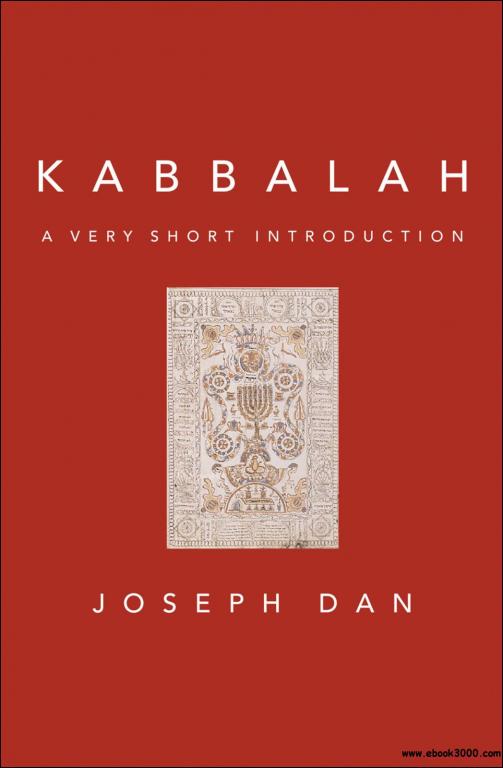 Indeed, for those of us who spend most of our time in the English-speaking world, the Kabbalah can seem like a rarified, esoteric tradition. And in one sense, it is. But if you were to travel to Israel and pay close attention, you would begin to encounter the word Kabbalah with surprising frequently. As Joseph Dan traces in his excellent book Kabbalah: A Very Short Introduction (Oxford University Press, 2006), at its root, the word Kabbalah means “to receive”:
- If you are checking in to a hotel in Israel, you would go to a desk with a large sign reading, Kabbalah, meaning that it is the “reception” desk, where new guests are received.
- If you buy anything in Israel you will receive a slip of paper with the word Kabbalah at the top, indicating that it is your “receipt” for the goods or services you have received.
- During your travels through Israel, if you attend a reception, you might notice people referring to the event as a kabbalat panim (literally “receiving the face”)—so a reception is kabbalistic because it is a place where your face is received.
- If you need to visit a bank or government office, “the hours in which clerks receive the public” are the kabalat kahal.
- Similarly, if you were to enroll in a class, a professor’s “office hours,” the time during which students are received, is known as the sheat kabbalah.
Here’s the twist: most Hebrew-speaking Israelis don’t pay any more attention to the many references to kabbalah all around them than tourists do. The word is so common that it is treated as unremarkable (3).
And with that insight, we can begin to get to the heart of the matter. Esoteric traditions are often about training yourself to notice the sacred depths that are already around us. I’ll give you a few quick examples:
- My meditation teacher often says, one of the most helpful practices from the Buddhist tradition is, “Noticing what you are noticing while you are noticing it.” It’s harder than it sounds. Typically our “monkey minds” want to do many other things than simply noticing what is actually happening in each present moment.
- Or there’s an adage from the Hindu tradition that, “When the student is ready, the teacher will appear.” Part of the implication is that the teacher (in various different forms) has always been around, but the missing ingredient is our readiness to notice.
- Along those lines, you may know the saying from many spiritual teachers that, “We don’t perceive the world merely as it is; we perceive the world as we are.”
So, on a surface level, a receipt is just a receipt, a reception is just a reception, and office hours are just office hours. On a deeper level, the Kabbalistic tradition—which at its root means “to receive”—invites us to notice the surprising aspects we might be capable of receiving from even the most mundane circumstances if we open our heart, mind, and spirit.
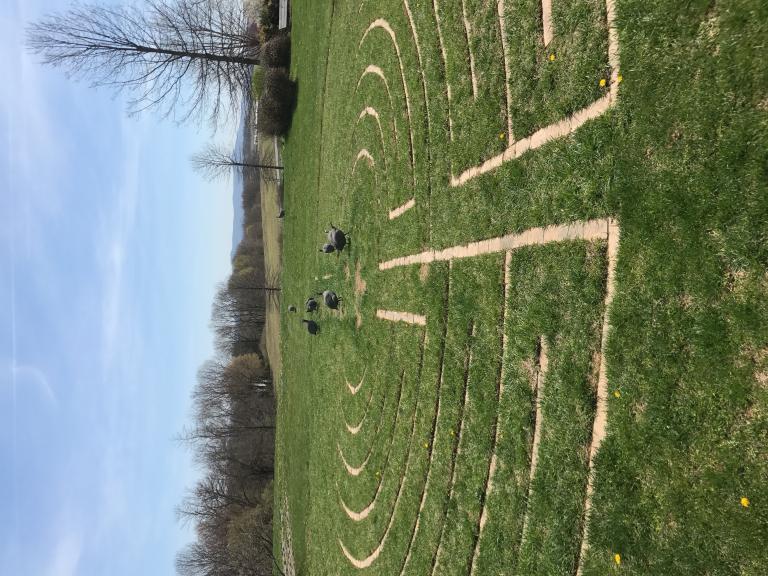 One of the most powerful archetypal symbols for the shift I’m talking about is cut into the ground in the courtyard between the sanctuary and the chapel of the congregation where I serve as minister. Our labyrinth is a unicursal pattern: there is only one way in and one way out. You are never lost, even if it might feel that way sometimes along the journey.
The labyrinth can serve as a corrective for one of the biggest misperceptions about spiritual growth: that it is primarily about getting somewhere else—often to some allegedly perfect place, where the grass is supposedly greener. (Don’t get me wrong: sometimes the grass really is toxic where you are—and you need to go some place else. More often, it’s not the grass that needs to change, it’s us. As the proverb says, “Wherever you go, there you are.”) So a labyrinth, as symbol of the spiritual journey, invites us to move deeper into the life we already have, to more fully notice the sacredness of everyday life—to more deeply perceive the potential for connection and transformation in acts as simple as receiving a receipt for someone’s time and effort, receiving hospitality at a reception, or receiving someone’s attention during office hours.
The Jewish Kabbalistic tradition has sought to achieve this shift in awareness most frequently through a close reading of texts that might seem mundane until their deeper meaning emerges through careful study. And regarding the texts typically associated with the Kabbalah, I should add a few cautions. If you were to find yourself discussing the origins of the Kabbalah with a traditional orthodox Jew, they would likely tell you that 4,000 years ago on Mount Sinai, the prophet Moses ‘received’ (Kabbalah!) directly from G-d, not only the “Written Torah” (which, according to tradition, was written down as the first five books of the Bible), but also the “Oral Torah,” which was “secretly transmitted from generation to generation”: first from Moses to Joshua, then to the Elders, then to “the judges, the prophets, and the early sages of the Talmud”—all the way down to the Middle Ages when some of the classic Kabbalistic texts were first written down (4-5).
That is a beautiful story, but historians of religion tell the story differently—just as they would tell us that Moses did not author the Torah. The Kabbalah is not pure unbroken tradition from Moses to today. Instead, scholars have shown that the Kabbalah is an innovative spin on tradition “which first appeared in southern Europe in the last decades of the twelfth century” (6). The Kabbalists in the Middle Ages were neither copying ancient manuscripts nor writing down oral tradition, but instead composing new ideas in creative response to the tradition that preceded them (32-33).
To be clear about where I’m coming from, as a Unitarian Universalist, my inclination is to say, “Not that there’s anything wrong with that.” To me, the Kabbalah is no less interesting as a source of spiritual wisdom because it is 800 years old instead of 4,000 years old. As a pragmatist, I’m interested in “what works” to help us live meaningful and ethical lives—whether the source of wisdom is millennia old or five minutes old.
Noting the relatively recent origins of the Kabbalah is also not new. There have been Jewish thinkers who have estimated the likely medieval origins of the Kabbalah since at least the late sixteenth century, around the time of the Protestant Reformation. That being said, if you find yourself discussing the Kabbalah with an orthodox Jew, be forewarned that this area can be a minefield. For orthodox Jews, the discovery by historians that, for example, the Zohar (a classic Kabbalistic text) was written not in the second century, but more than a millennia later at the end of the thirteen century is “regarded as the beginning of heresy” (31). But, again from a UU perspective, we religious liberals tend to be many things, but orthodox is rarely one of them. And heresy simply means to choose for yourself.
Having spent some time exploring the Kabbalah, I also wanted to be sure to spend a little time on the life and legacy of Gershom Scholem. He is the primary reason we know as much as we do about the Kabbalah today from a modern perspective. “He made research into Kabbalah a truly scientific field of Jewish studies…. He created the tools and he did most of the work, baking the bricks and building the entire building” that new generations of scholars now inhabit” (Zadoff 2018: 222).
However, in looking back at his life, I find it fascinating that it was far from evident at early points in his life that Scholem would soar to such heights. To give you a brief overview, he was born in 1897 in Berlin, Germany to a middle-class Jewish family (Engel 2017: 3). But for someone whose name has become synonymous with the study of Jewish mysticism, his childhood was decidedly secular. Although his family maintained some Jewish rituals, they also had a Christmas tree each year. And his father would routinely mock the weekly ritual of kindling Shabbat candles by lighting his cigar in their flames and chanting—not “blessed be the one who brings forth bread from the earth or the fruit of the vine”—but Brei pri tobacco, “Blessed is the fruit of tobacco” (Prochnik 2017: 28). At age 14, Scholem had what he called a “Jewish awakening” of a sudden interest in his Jewish heritage, but ultimately never felt like he fully fit in either orthodox or liberal Jewish circles (26, 34).
Seeking to find his place in the world, in 1923, while in his mid-twenties, he emigrated to Palestine (Engel 4). He did not know how he would make a living—and his father was extremely discouraging of his choices:
He was disappointed to hear that his twenty-six-year-old son, who had just received his Ph.D. in Semitic culture form Munich University, had turned down a research position at Berlin University in order to travel to Palestine [where] Gershom had no real prospect of employment. He left Germany with nothing but a handful of contacts and the hope that his German state certification in mathematics would enable him to obtain a teaching position. (99)
Fortunately, within a week of being in Jerusalem he received two job offers: math teacher or librarian. Although the salary was lower, he chose librarian because it offered more freedom to be self-directed. Four years later, he transitioned to being a full-time lecturer in Kabbalah at the then-new Hebrew University in Jerusalem, where he remained the rest of his career (Zadoff 4).
We know now that he was to attain world renown as a scholar, but in these early days he forged ahead despite the risk of failure and the major discouragement of his father, who wrote the following to him about his appointment: “Three cheers for Hebraica and Judaica, but not as a career! You will suffer a bad shipwreck and who knows if it will prove too difficult for you to reach safe shores, since you are all too lacking in strong arms” (Biale 2018: 79). His father did not live long enough for his son to demonstrate how wrong his judgements were. Today, almost four decades after Scholem’s death in 1982, his work in scholarship in the Kabbalah continues to be widely read and his influence lives on.
I don’t know if Scholem ever fully forgave his father for his repeatedly harsh words over the years. But I suspect some of you can identify with harsh words being said to you by someone in your life. And one of the reasons I chose to focus on Gershom Scholem and the Kabbalah is that we have recently passed through the Jewish High Holy Days, which stretch from Rosh Hashanah (the Jewish New Year) to Yom Kippur (the Day of Atonement). The ten days in total are also known collectively as the Days of Repentance or the Days of Awe. One of the invitations of this time of year in the Jewish tradition is to practice forgiveness, the cultivating of atonement (“at-one-ment”). We are also a nearing the fall equinox, marking the first day of autumn. This coming time of falling leaves is also an auspicious time for experimenting with letting go.
That being said, it is important to be honest about what authentic forgiveness is and isn’t. I’m not talking about cheap forgiveness that makes us into someone’s doormat for repeated abuse. Forgiveness is a practice—not that different from other practices like playing the piano, shooting free throws in basketball, or going to the gym. If we consistently practice forgiveness, we can get better at it over time.
The same is true of “un-forgiveness.” We can also get better at holding a grudge over time if that’s what we choose to practice. But as the proverb says, refusing to forgive someone over a long period of time is like “drinking poison yourself and wishing your enemy would die.”
Relatedly, one of the most helpful touchstones I have found about forgiveness is from Archbishop Desmond Tutu—that the final step of forgiveness is not necessarily the renewing of a relationship. Instead it may mean the releasing of a relationship. In that spirit, I invite you to notice if, perhaps in surprising ways, you are feeling led to experiment with forgiveness. As you think about the practice of forgiveness, what name is on the tip of your tongue? Whose face flashes through your mind? You may not yet be able to fully forgive the person, but in the words of the Buddhist teacher Noah Levine, perhaps you can open yourself to experiment with the intention of “I forgive you as much as I can in this moment.”
The Rev. Dr. Carl Gregg is a certified spiritual director, a D.Min. graduate of San Francisco Theological Seminary, and the minister of the Unitarian Universalist Congregation of Frederick, Maryland. Follow him on Facebook (facebook.com/carlgregg) and Twitter (@carlgregg).
Learn more about Unitarian Universalism: http://www.uua.org/beliefs/principles
Next Post

September 25, 2018 Brené Brown, True Belonging, & the Courage to Stand Alone
Browse Our Archives
Select a Category Advent Anti-Racism Archaeology Atheism Baptism Best of the Year List Book Reviews Buddhism Catholicism Christian Education Church and State Church Planting Climate Change Conscientious Objection to War Creation Spirituality Death Penalty Didache Disability Rights Discernment Easter Ecology Emergent Church Movement Empire-Critical Ethics Evolution Feminist Theology Film Reviews Gandhi Gospel of Mark Gun Control Hinduism Immigration Reform Interfaith Islam JFK Judaism Jungian Spirituality Lectionary Commentary Lent Letters to the Editor LGBT Marriage MLK Multiculturalism Mysticism Nonviolent Activism Occupy Paganism (Earth-centered Religions) Parables Paul Pluralism Politics Process Theology Quantum Physics Requiescat In Pace Seminary and Divinity School Sermon Series Retrospective Sermons Spiritual Direction Spiritual Practices Stewardship (Fundraising) The Book of J The Wheel of the Year (Paganism) Theoblogger Challenge Triathlon Uncategorized Unitarian Universalism Worship Resources Youth Ministry
Select a Month July 2026 May 2026 March 2026 November 2025 October 2025 August 2025 February 2025 December 2024 October 2024 March 2024 January 2024 December 2023 November 2023 March 2023 February 2023 January 2023 December 2022 November 2022 August 2022 March 2022 February 2022 January 2022 December 2021 September 2021 August 2021 July 2021 June 2021 May 2021 February 2021 January 2021 December 2020 August 2020 June 2020 May 2020 April 2020 March 2020 February 2020 January 2020 December 2019 November 2019 October 2019 September 2019 July 2019 June 2019 March 2019 February 2019 January 2019 December 2018 November 2018 October 2018 September 2018 June 2018 May 2018 April 2018 March 2018 February 2018 January 2018 December 2017 November 2017 October 2017 September 2017 August 2017 July 2017 June 2017 May 2017 April 2017 March 2017 February 2017 January 2017 December 2016 November 2016 October 2016 September 2016 August 2016 June 2016 May 2016 April 2016 March 2016 February 2016 January 2016 December 2015 November 2015 October 2015 September 2015 August 2015 July 2015 June 2015 May 2015 April 2015 March 2015 February 2015 January 2015 December 2014 November 2014 October 2014 August 2014 July 2014 June 2014 May 2014 April 2014 March 2014 February 2014 January 2014 December 2013 November 2013 October 2013 September 2013 August 2013 July 2013 June 2013 May 2013 April 2013 March 2013 February 2013 January 2013 December 2012 November 2012 October 2012 September 2012 August 2012 July 2012 June 2012 May 2012 April 2012 March 2012 February 2012 January 2012 December 2011 November 2011 October 2011 September 2011 August 2011 July 2011 June 2011 May 2011 April 2011 March 2011 February 2011 January 2011 December 2010 November 2010 October 2010 August 2009 July 2009 May 2009
Follow Us!
TAKE THE
Religious Wisdom Quiz
What does "Eli" mean in Hebrew?
Select your answer to see how you score.
Strength in God My God Holy one The Lord saves
Related posts from Carl Gregg

Reading America at 250: A Nation Wrestles With...


Andrew Holocek on the Power of Darkness

The Stories That Shape Us: Myths, Archetypes, &...
TRENDING AT PATHEOS More Voices

Reading America at 250: A Nation Wrestles With...
As part of my own reflection on the 250th anniversary of the...

Whenever I am reading a book or listening to an argument, I...

President Trump Ban Animal Torture Videos on Facebook
Call for Stricter Regulations of Animal Abuse Content on Facebook Although President...

Draft Amendments to Address Ritual Abuse in New...
The proposed changes would make it illegal for individuals in domestic partnerships...

How Bans on LGBTQ+ Student Clubs Threaten Religious...
On June 20, 2025, the State of Texas passed Senate Bill 12....

The Truth About the Gen Z Revival
This past year, there has been a lot of media buzz surrounding...
view all More Voices blogs
Ad-Free & Subscriber Log-In Subscription Support
- About Us
- 2026 Calendar
- Videos
- Podcasts
- Library of World Religions
- Faith In Media Tracker
- Advertise With Us
- Write for Us
- Privacy Policy
- Terms of Service
- Do Not Sell My Data
- Contact Us
- Radiant Digital
- Manage Newsletter Subscriptions
- Unsubscribe From Notifications
- Sitemap
Copyright 2008-2026, Patheos. All rights reserved.
Subscription Support Ad-Free & Subscriber Log-In
Follow Patheos