
BuddhistCatholicContemplativeEvangelicalGeneral ChristianHinduJewishLatter-day SaintMuslimNew VisionsProgressive Christian
Beliefs
- Buddhist
- Catholic
- Contemplative
- Evangelical
- General Christian
- Hindu
- Jewish
- Latter-day Saint
- More Voices
- Muslim
- New Visions
- Pagan
- Progressive Christian
Topics
- Religion News
- Food and Religion
- Sports and Religion
- Religious Art
- Religious Music and Entertainment
- Religious Events
- History and Religion
- Style and Religion
- Politics and Religion
- Women in Religion
- Recreation Outdoors and Religion
- Business Finance and Religion
- Careers Workplace and Religion
- Education and Religion
- Family Parenting and Religion
- Health Fitness and Religion
- Home and Religion
- Relationships and Religion
- Technology and Religion
- Travel and Religion
Columnists
- Buddhist Columnists
- Business Finance and Religion Columnists
- Careers Workplace and Religion Columnists
- Catholic Columnists
- Contemplative Columnists
- Education and Religion Columnists
- Evangelists Columnists
- Family Parenting and Religion Columnists
- General Christian Columnists
- Health Fitness and Religion Columnists
- Hindu Columnists
- History and Religion Columnists
- Home and Religion Columnists
- Jewish Columnists
- More Voices Columnists
- Latter Day Columnists
- Muslim Columnists
- New Visions Columnists
- Nonreligious Columnists
- Pagan Columnists
- Politics and Religion Columnists
- Progressive Columnists
- Recreation Outdoors and Religion Columnists
- Relationships and Religion Columnists
- Religion News Columnists
- Religious Art Columnists
- Religious Events Columnists
- Religious Music and Entertainment Columnists
- Sports and Religion Columnists
- Style and Religion Columnists
- Technology and Religion Columnists
- Travel and Religion Columnists
- Women in Religion Columnists
Resource Library
- 2026 Calendar
- Library of World Religions
- The 100 Most Holy Places on Earth
- Patheos Answers
- Podcasts
- Videos
- Faith Leaders Database
- Anglican Episcopalian
- Bahai
- Baptist
- Buddhism
- Christianity
- Confucianism
- Eastern Orthodoxy
- Hinduism
- Holiness and Pentecostal
- ISKCON
- Islam
- Judaism
- Lutheran
- Methodist
- The Church of Jesus Christ of Latter-day Saints
- New Age
- Paganism
- Presbytarian and Reformed
- Protestantism
- Religion Behind the Scenes
- Roman Catholic
- Scientology
- Shia Islam
- Sikhism
- Sufism
- Sunni Islam
- Taoism
- Zen
- See all religions
Research Tools
 Ad-Free & Subscriber Log-In Subscription Support
Ad-Free & Subscriber Log-In Subscription Support
Follow Patheos 

- Trending:
- Forgiveness
- |
- Marriage
- |
- Consciousness
- |
- Death Penalty
- |
- Election
- |
- Halloween

- Home
- More Voices
- Brené Brown, True Belonging, & the Courage to Stand Alone
Brené Brown, True Belonging, & the Courage to Stand Alone
Last updated on: September 25, 2018 at 2:07 pm by Carl Gregg
Brené Brown, True Belonging, & the Courage to Stand Alone 2018-09-25T14:07:33-04:00 Carl Gregg
Patheos Explore the world's faith through different perspectives on religion and spirituality! Patheos has the views of the prevalent religions and spiritualities of the world.
Dr. Brené Brown is a research professor at the University of Houston, who has spent nearly two decades studying courage, vulnerability, shame, and empathy. If you are looking for a quick introduction, her two TED Talks are amazing. Over the past few years, she has written three bestselling books: The Gifts of Imperfection, Daring Greatly, and Rising Strong. She has distilled the core themes to the following:
- Be you. All of you.
- Be all in.
- Fall. Get up. Try again. (2016: xix)
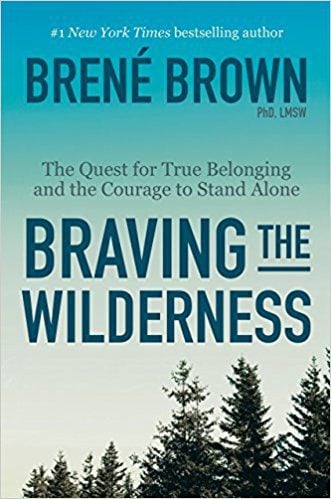 Her latest book is Braving the Wilderness: The Quest for True Belonging and the Courage to Stand Alone. She additionally has a fifth book scheduled for publication next month, but I’ll save that for the future. For now, I would like to invite us to reflect on her ideas about “True Belonging and the Courage to Stand Alone.”
On this topic, it is important to name that we are living in the midst of a case study on the “Courage to Stand Alone” in the person of Dr. Christine Blasey Ford, who has bravely offered to share her story about why she believes Supreme Court nominee Brett Kavanaugh should not be confirmed.
This moment is also an auspicious time to revisit Anita Hill’s 1998 book, Speaking Truth to Power. The updated blurb for that book reads, “Twenty-six years before the #MeToo movement, Anita Hill sparked a national conversation about sexual harassment in the workplace.” Regardless of what happens in the case of Judge Kavanaugh, this story is yet one more reminder of the culture of toxic masculinity that we are all called to be a part of dismantling. And Dr. Brown’s work around courage, vulnerability, shame, and empathy is one of many related potential paths toward a better, healthier, and more equitable future.
Brown writes that for many of us, we only take the risk of leaving home to find out if we fit in someplace new because we have a “desire to be part of something larger than ourselves” (31). But there’s an important additional insight that Brown’s work highlights: “Because true belonging only happens when we present out authentic, imperfect selves to the world, our sense of belonging can never be greater than our level of self-acceptance” (32). Those words are challenging, but what I appreciate most about this perspective is that it turns the focus away from what we have little control over (what other people say and do) and turns the focus toward what we have at least somewhat more control over: our own self-acceptance. Don’t get me wrong: self-compassion is much easier to talk about than to practice, but I appreciate the encouragement to start there.
But before I go too quickly into the details of true belonging and the courage to stand alone, allow me to spend a little time on some counter-examples. After all, it’s important to be honest that, for many of us, what finally gives us the courage to brave the wilderness is that our current situation has gotten bad enough that we are ready to risk trying something different.
Specifically, Brown’s research has found that when we feel like we don’t belong in enough aspects of our lives, we tend to respond in one of three ways:
- We live in constant pain and seek relief by numbing it and/or inflicting it on others.
- We deny our pain, and our denial ensures that we pass it on to those around us….
- We find the courage to own the pain and develop a level of empathy and compassion for ourselves and others…. (14)
In a lot of ways, it’s a fairly Buddhist worldview. Remember the First Noble Truth, that being alive means you will experience suffering and unsatisfactoriness. The first two strategies of numbing or repressing do not tend to work out well long term. As the writer Anne Lamott has said about her attempts to numb her suffering, “By the end I was deteriorating faster than I could lower my standards” (17). At such points, when you are nearing bottom, it’s more important than ever to practice self-compassion, and to seek a community larger than yourself in which other people are also seeking to bring their authentic, imperfect selves.
It is also clear that Dr. Brown’s latest book, which was published last year, in 2017, is explicitly written at multiple points in response to the 2016 Presidential Election. She knows it is no small thing, in such a time as this, to challenge oneself—and challenge us—to practice courage, vulnerability, self-compassion, and empathy. But I think she’s right that such practices can begin to change us and the world.
So for such a time as this—when our county is deeply divided in many ways—Brown has tried to distill the lessons of her research into four specific practices:
- People are hard to hate close up. Move in.
- Speak truth to bullshit. Be civil.
- Hold Hands. With strangers.
- Strong back. Soft front. Wild heart. (36)
I’ll say a few words about each of these practices in turn. As I share about each of them in more detail, I would encourage you not to feel overwhelmed, as if you need to try all four at once. Notice if one or more resonates with you in particular for this season of your life.
First, Dr. Brown’s research has shown that, “People are hard to hate close up. Move in.” There’s a lot to explore here, and since we have limited time, I’ll go straight to the top of quite a few people’s lists. Speaking for myself personally, I have found it unhelpful to hate President Trump. And if I try move closer—metaphorically speaking, of course—I have found that I can feel compassion for him. Remember what Brown said about the two common responses to feeling like you don’t belong: (1) “seek relief by numbing it and/or inflicting it in others” or (2) “deny your pain, and your denial ensures that you pass it on to those around you.” Well, from what I can tell, Trump had a toxic childhood that he is, in turn, inflicting on his children, a series of wives, and now the whole world. And although he is a teetotaler in regard to alcohol, one of his unhealthy coping mechanisms appears to be trying to constantly binge-watch television news all day and late into the night—and multi-tasking by tweeting about it.
Here’s the important caveat: feeling compassion for someone does not entail thinking that person should remain in a position of power. But whereas hating someone eventually feels poisonous to my system, feeling compassion allows me to advocate for social change from a place that feels less constricted, more free, and more aligned with the Unitarian Universalist First Principle of “The inherent worth and dignity of every person” (75).
For a more commonplace practice, I appreciate this line from Dr. Brown. She says that if you find yourself suddenly in the middle of a difficult and uncomfortable conversation, the most courageous thing to say is “Tell me more” (83). That’s the best way she’s found to experiment with the truth that, “People are hard to hate close up. Move in.” Get curious about the stories and experiences behind why some others think differently than you do, which might open up space for you to share your stories and experiences of why you experience the world differently.
The second of Dr. Brown’s four practices for such a time as this is also transparently born out of current events: “Speak truth to bullshit. Be civil.” Along those lines, have any of you ever read the little book by the philosopher Harry Frankfurt titled On Bullshit? It really is a tiny little book, weighing in at 67 pages, and it makes important distinctions between merely lying and spinning a web of bullshit.
For instance, some of you may be familiar with Alberto Brandolini’s Bullshit Asymmetry Principle also known as Brondolini’s law: “The amount of energy needed to refute bullshit is an order of magnitude bigger than to produce it” (94). And while that is true, Dr. Brown’s research maintains the wisdom of speaking truth and remaining civil. It’s not easy to do. But adding yet more bullshit into the fray will never build the world we dream about. And authentic, vulnerable people remain deeply compelling, which is one reason there is so much fear in certain quarters about the potential testimony of Dr. Christine Ford.
Brown’s third practice is “Hold hands. With strangers” (117). In a time when it can be easy to feel broken, fractured, and disconnected, our approach to other people, ourselves, and the world can be transformed if we shift from a starting point of isolation to a starting point of *interdependence—*a deeply felt sense of connection. The good news is that even when we feel alone, the deeper truth is that we are always already connected. In Dr. King’s words, “We are caught in an inescapable network of mutuality, tied in a single garment of destiny. Whatever affects one directly, affects all indirectly. I can never be what I ought to be until you are what you ought to be, and you can never be what you ought to be until I am what I ought to be.”
Finally, Brown’s fourth practice is “Strong back. Soft front. Wild heart.” This mantra is inspired by the Buddhist teacher Joan Halifax, who writes that:
All too often our so-called strength comes from fear, not love; instead of having a strong back, many of us have a defended front shielding a weak spine. In other words, we [move through the world] brittle and defensive, trying to conceal our lack of confidence. If we strengthen our backs, metaphorically speaking, and develop a spine that’s flexible but sturdy, then we can risk having a front that’s soft and open…. How can we give and accept care with strong-back, soft-front compassion, moving past fear into a place of genuine tenderness? I believe it comes about when we can be truly transparent, seeing the world clearly—and letting the world see us.
That final piece of the mantra of “wild heart” is about what can happen when we move from fear to love. Surprising transformations can happen if we open ourselves to the fullness what is really happening in ourselves and others around us in each present moment.
So, for such a time as this in our world—and in this season of your life—I invite you to consider if one or more of Brown’s four practices particularly resonate with you:
- People are hard to hate close up. Move in.
- Speak truth to bullshit Be civil.
- Hold Hands. With strangers.
- Strong back. Soft front. Wild heart.
The promise of these and other related practices is to help us experience a deeper sense of true belonging, such that we might then be ready to act with courage whenever the wilderness presents itself.
For now, I will leave you to consider this quote from Dr. Brené Brown:
Stop [moving] through the world looking for confirmation that you don’t belong. You will always find it because you’ve made that your mission. Stop scouring people’s faces for evidence that you’re not enough. You will always find it because you’ve made that your goal. True belonging and self-worth are not goods. We don’t negotiate their value with the world. The truth about who we are lives in our hearts. Our call to courage is to protect our wild heart against constant evaluation, especially our own. No one belongs here more than you. (158)
Another way of phrasing this insight is question “Are you identifying in? Or are you identifying out?” Whether in relationships at home, relationships at work, or elsewhere, do you tend to look for all the ways you are different or all the ways you are the same? Both tendencies have value and are important to honor, but at least for this moment, Dr. Brown invites us to consider this wisdom: “Our call to courage is to protect our wild heart against constant evaluation, especially our own. No one belongs here more than you.” That also means, of course, that no one belongs here less than you.
But the core question remains. Remember the proverb that says, “Wherever you go, there you are?” Well, what might change for you and for your relationships with others if, wherever you are, you start from a conviction that, “No one belongs here more than you?”
The Rev. Dr. Carl Gregg is a certified spiritual director, a D.Min. graduate of San Francisco Theological Seminary, and the minister of the Unitarian Universalist Congregation of Frederick, Maryland. Follow him on Facebook (facebook.com/carlgregg) and Twitter (@carlgregg).
Learn more about Unitarian Universalism: http://www.uua.org/beliefs/principles
Next Post

October 3, 2018 “Being Gendered in the 21st Century”
Browse Our Archives
Select a Category Advent Anti-Racism Archaeology Atheism Baptism Best of the Year List Book Reviews Buddhism Catholicism Christian Education Church and State Church Planting Climate Change Conscientious Objection to War Creation Spirituality Death Penalty Didache Disability Rights Discernment Easter Ecology Emergent Church Movement Empire-Critical Ethics Evolution Feminist Theology Film Reviews Gandhi Gospel of Mark Gun Control Hinduism Immigration Reform Interfaith Islam JFK Judaism Jungian Spirituality Lectionary Commentary Lent Letters to the Editor LGBT Marriage MLK Multiculturalism Mysticism Nonviolent Activism Occupy Paganism (Earth-centered Religions) Parables Paul Pluralism Politics Process Theology Quantum Physics Requiescat In Pace Seminary and Divinity School Sermon Series Retrospective Sermons Spiritual Direction Spiritual Practices Stewardship (Fundraising) The Book of J The Wheel of the Year (Paganism) Theoblogger Challenge Triathlon Uncategorized Unitarian Universalism Worship Resources Youth Ministry
Select a Month July 2026 May 2026 March 2026 November 2025 October 2025 August 2025 February 2025 December 2024 October 2024 March 2024 January 2024 December 2023 November 2023 March 2023 February 2023 January 2023 December 2022 November 2022 August 2022 March 2022 February 2022 January 2022 December 2021 September 2021 August 2021 July 2021 June 2021 May 2021 February 2021 January 2021 December 2020 August 2020 June 2020 May 2020 April 2020 March 2020 February 2020 January 2020 December 2019 November 2019 October 2019 September 2019 July 2019 June 2019 March 2019 February 2019 January 2019 December 2018 November 2018 October 2018 September 2018 June 2018 May 2018 April 2018 March 2018 February 2018 January 2018 December 2017 November 2017 October 2017 September 2017 August 2017 July 2017 June 2017 May 2017 April 2017 March 2017 February 2017 January 2017 December 2016 November 2016 October 2016 September 2016 August 2016 June 2016 May 2016 April 2016 March 2016 February 2016 January 2016 December 2015 November 2015 October 2015 September 2015 August 2015 July 2015 June 2015 May 2015 April 2015 March 2015 February 2015 January 2015 December 2014 November 2014 October 2014 August 2014 July 2014 June 2014 May 2014 April 2014 March 2014 February 2014 January 2014 December 2013 November 2013 October 2013 September 2013 August 2013 July 2013 June 2013 May 2013 April 2013 March 2013 February 2013 January 2013 December 2012 November 2012 October 2012 September 2012 August 2012 July 2012 June 2012 May 2012 April 2012 March 2012 February 2012 January 2012 December 2011 November 2011 October 2011 September 2011 August 2011 July 2011 June 2011 May 2011 April 2011 March 2011 February 2011 January 2011 December 2010 November 2010 October 2010 August 2009 July 2009 May 2009
Follow Us!
TAKE THE
Religious Wisdom Quiz
What language was most of the Old Testament originally written in?
Select your answer to see how you score.
Hebrew Aramaic Greek Latin
Related posts from Carl Gregg

Reading America at 250: A Nation Wrestles With...


Andrew Holocek on the Power of Darkness

The Stories That Shape Us: Myths, Archetypes, &...
TRENDING AT PATHEOS More Voices

Reading America at 250: A Nation Wrestles With...
As part of my own reflection on the 250th anniversary of the...

Whenever I am reading a book or listening to an argument, I...

President Trump Ban Animal Torture Videos on Facebook
Call for Stricter Regulations of Animal Abuse Content on Facebook Although President...

Draft Amendments to Address Ritual Abuse in New...
The proposed changes would make it illegal for individuals in domestic partnerships...

How Bans on LGBTQ+ Student Clubs Threaten Religious...
On June 20, 2025, the State of Texas passed Senate Bill 12....

The Truth About the Gen Z Revival
This past year, there has been a lot of media buzz surrounding...
view all More Voices blogs
Ad-Free & Subscriber Log-In Subscription Support
- About Us
- 2026 Calendar
- Videos
- Podcasts
- Library of World Religions
- Faith In Media Tracker
- Advertise With Us
- Write for Us
- Privacy Policy
- Terms of Service
- Do Not Sell My Data
- Contact Us
- Radiant Digital
- Manage Newsletter Subscriptions
- Unsubscribe From Notifications
- Sitemap
Copyright 2008-2026, Patheos. All rights reserved.
Subscription Support Ad-Free & Subscriber Log-In
Follow Patheos