
BuddhistCatholicContemplativeEvangelicalGeneral ChristianHinduJewishLatter-day SaintMuslimNew VisionsProgressive Christian
Beliefs
- Buddhist
- Catholic
- Contemplative
- Evangelical
- General Christian
- Hindu
- Jewish
- Latter-day Saint
- More Voices
- Muslim
- New Visions
- Pagan
- Progressive Christian
Topics
- Religion News
- Food and Religion
- Sports and Religion
- Religious Art
- Religious Music and Entertainment
- Religious Events
- History and Religion
- Style and Religion
- Politics and Religion
- Women in Religion
- Recreation Outdoors and Religion
- Business Finance and Religion
- Careers Workplace and Religion
- Education and Religion
- Family Parenting and Religion
- Health Fitness and Religion
- Home and Religion
- Relationships and Religion
- Technology and Religion
- Travel and Religion
Columnists
- Buddhist Columnists
- Business Finance and Religion Columnists
- Careers Workplace and Religion Columnists
- Catholic Columnists
- Contemplative Columnists
- Education and Religion Columnists
- Evangelists Columnists
- Family Parenting and Religion Columnists
- General Christian Columnists
- Health Fitness and Religion Columnists
- Hindu Columnists
- History and Religion Columnists
- Home and Religion Columnists
- Jewish Columnists
- More Voices Columnists
- Latter Day Columnists
- Muslim Columnists
- New Visions Columnists
- Nonreligious Columnists
- Pagan Columnists
- Politics and Religion Columnists
- Progressive Columnists
- Recreation Outdoors and Religion Columnists
- Relationships and Religion Columnists
- Religion News Columnists
- Religious Art Columnists
- Religious Events Columnists
- Religious Music and Entertainment Columnists
- Sports and Religion Columnists
- Style and Religion Columnists
- Technology and Religion Columnists
- Travel and Religion Columnists
- Women in Religion Columnists
Resource Library
- 2026 Calendar
- Library of World Religions
- The 100 Most Holy Places on Earth
- Patheos Answers
- Podcasts
- Videos
- Faith Leaders Database
- Anglican Episcopalian
- Bahai
- Baptist
- Buddhism
- Christianity
- Confucianism
- Eastern Orthodoxy
- Hinduism
- Holiness and Pentecostal
- ISKCON
- Islam
- Judaism
- Lutheran
- Methodist
- The Church of Jesus Christ of Latter-day Saints
- New Age
- Paganism
- Presbytarian and Reformed
- Protestantism
- Religion Behind the Scenes
- Roman Catholic
- Scientology
- Shia Islam
- Sikhism
- Sufism
- Sunni Islam
- Taoism
- Zen
- See all religions
Research Tools
 Ad-Free & Subscriber Log-In Subscription Support
Ad-Free & Subscriber Log-In Subscription Support
Follow Patheos 

- Trending:
- Forgiveness
- |
- Marriage
- |
- Consciousness
- |
- Death Penalty
- |
- Election
- |
- Halloween

- Home
- More Voices
- The Story Behind Little Women: Louisa May Alcott, Transcendentalism, & Unexpected Success
The Story Behind Little Women: Louisa May Alcott, Transcendentalism, & Unexpected Success
Last updated on: May 17, 2018 at 8:27 am by Carl Gregg
The Story Behind Little Women: Louisa May Alcott, Transcendentalism, & Unexpected Success 2018-05-17T08:27:37-04:00 Carl Gregg
Patheos Explore the world's faith through different perspectives on religion and spirituality! Patheos has the views of the prevalent religions and spiritualities of the world.
Louisa May Alcott (1832-1888) is best known as the author of the 1868 novel Little Women. The second of four daughters born to Abigail and Bronson Alcott, she was born on November 29, 1832, which also happened to be her father’s 33rd birthday. Bronson was a brilliant and innovative educational reformer—although he had a tragic flaw of being financially irresponsible. Louisa’s story has often been told in a way that links her success to his influence.
However, in recent years, as scholars have explored Abigail’s previously neglected letters and journals, it has become clear that:
Abigail was a vibrant writer, brilliant teacher, and passionate reformer, who spent decades working to abolish slavery, ameliorate urban poverty, and allow women to be educated, vote, and engage in public life. She nurtured and fostered Louisa’s career as a writer…encouraging her daughter, rejection after rejection, to persist. Louisa in turn dedicated all her early work, starting with her first novel at age sixteen to her mother.
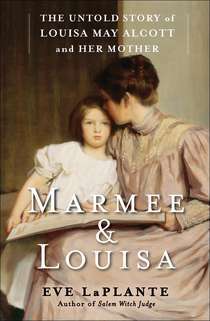 As Eve LaPlante has detailed in her important book Marmee & Louisa: The Untold Story of Louisa May Alcott and Her Mother (Simon & Schuster, 2013), the evidence now seems clear that her mother’s influence was equal to or greater than her father’s (LaPlante 2-3).
On the one hand, it is the case that Louisa, “was taught by her father and also introduced to men of great influence, including Ralph Waldo Emerson, Nathaniel Hawthorne, and Henry David Thoreau.” On the other hand, it is also the case that Louisa, “was taught by her mother and also introduced to women of great influence, include Elizabeth Palmer Peabody, Lydia Maria Child, and Margaret Fuller” (3-4). And on this point, her famous novel is a fascinating case study.
Little Women, although fictional, draws from Louisa’s personal experience. The most obvious parallel is that the March family in Little Women includes four sisters—precisely the situation of the Alcott family. And in the book, the fictional mother Marmee (clearly based on Louisa’s actual mother), plays a major role (2). In contrast, the fictional father is mostly absent. Indeed, the text itself subtly comments on this absence: “When Mr. March at last makes his grand entrance in Chapter 22 of the novel, almost the first words devoted to him are, ‘Mr. March became invisible…” (7). The absentee nature of the fictional father is related to the fact that her real father was often either physically or emotionally distant as he repeatedly tried (and usually failed) with some new utopian scheme, leaving his wife and children at home to make do with little money (104).
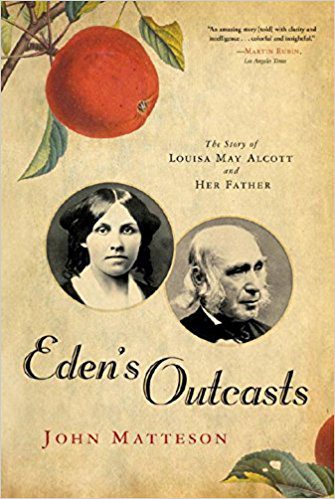 As John Matteson explores in Eden’s Outcasts: The Story of Louisa May Alcott and Her Father (W. W. Norton, 2008), due to the variety of Bronson’s experimental schemes, during the first twenty-five years of Louisa’s life, “the Alcott family changed residence an average of more than once every two years” (Matteson 232). Indeed, there were points at which they moved so often that the sisters wouldn’t bother to unpack their trunks (LaPlante 152). And although this itinerant lifestyle was destabilizing in many ways, there were also ways that it forced Louisa to be self-reliant, resourceful, and resilient (84-85).
Louisa was too young to attend the Temple School, her father’s most famous experiment in education (Matteson 10). But there are some fascinating stories of Abigail and Bronson’s parenting choices. Two of the most unforgettable, to me, include allowing:
three-year-old Louisa and four-year-old Anna to wander freely in Boston, as only boys could do a generation before…. One night after dark Louisa, the little explorer, unable to find her way home, sobbed herself to sleep on a doorstep on Boston’s Bedford Street. The town crier found her there with her head ‘pillowed on a big Newfoundland dog, who was with difficulty persuaded to release’ Louisa…. Also, at age three, before she could swim, Louisa wandered into the common and fell into the pond.” An African-American boy saw her struggling in the water, jumped in, and rescued her…. Her mother often said to her, “You were an abolitionist at the age of three.” (LaPlante 75)
In the spirit of full disclosure, I think that generally the shift from extreme “helicopter parenting” toward “free-range parenting” is a good thing. But at least from my point of view, age three seems on the young side for wandering unsupervised in a large city, even if it was mid-nineteenth century Boston. But what do I know? She not only survived, but also grew up to be brave and adventurous. It was said that Louisa could “run like a gazelle…and that she could leap a fence or climb a tree as well as any boy” (133).
And while she was not old enough to attend her father’s famous (but short lived) academy at the Temple School, she was old enough at age ten to live at Fruitlands, her father’s ill-fated attempt to create a “back-to-the-land” utopian community along with a few other families. There were around 16 members total (Matteson 126). Although Bronson’s intentions were noble, he did not have the necessary pragmatic follow-through skills. In the words of one critic: the prospects are not good for “The farmer who spends the spring months discussing philosophy in fashionable people’s parlors” (117).
Bronson hoped his family would find the austere lifestyle of Fruitlands ennobling. But that was often not Louisa’s experience. To give just one example:
Louisa heard her father arguing with serene confidence for the rights of all living beings, but when worm-eaten apples arrived at the dinner table or the autumn wind blew through her linen tunic, this generosity on all sides did not appear generous to her. Inevitably, she wondered whether earthly comforts were so terrible as her father made them out to be. (148)
At that time, she privately wrote in her diary, “I wish I was rich, I wish I was good, and we were all a happy family to this day” (154). Such childhood experiences later became fodder for her fiction writing, such as this passage from Chapter 14 of her novel Little Men: “Money is the root of all evil, and yet it is such a useful root that we cannot get on without it any more than we can without potatoes” (196).
I would be remiss, however, if I were to give you the impression that young Louisa’s life was all hardship and toil. It was more complicated than that. There were years in which:
A typical day for Louisa began with a trip to Emerson’s house [where she had free access to his library] and might continue with a nature walk with Thoreau, only to end with a homeward trudge to a cottage where there was sometimes insufficient food, where her father wore the mantle of a social outcast, and where her mother tried to bear up under the weight of mounting debt and disappointments. Louisa’s life was in one sense lavishly wealthy. In another, it was perilously poor. (90, 181)
As is often the case with life, the reality of it was messy and complex.
And although there is much more to say about the life and legacy of Louisa May Alcott—as well as about her mother and father—I would be remiss if I didn’t take at least a few moments to tell the story of how a moderately successful writer stumbled into writing one of the most beloved novels of all time.
The initial idea for the book was not Louisa’s. Her editor was interested in the potential new market from increasing numbers of women being taught to read, and he offered to pay Louisa “to write a girls’ book” (LePlante 223). Louisa was neither particularly excited about the idea, nor was she confident that she was the best candidate for the job. She always preferred hanging out with boys more than girls. She wasn’t sure she knew much about what girls generally were like, and felt she only really knew the experience of her three sisters and herself (LePlante 224). So she trusted that old adage, “Write what you know!” Still, the sour mood she was in about this book project is reflected in the opening line of the novel: “‘Christmas won’t be Christmas without any presents,’ grumbled Jo, lying on the rug.” Jo, of course, was the character Louisa styled after herself (Matteson 332-333).
Despite her skepticism, Louisa worked hard on the book, writing 402 pages in a mere nine weeks. And when she delivered it to the publisher, she made perhaps the most impactful decision of entire life. Her editor offered either “an advance of $1,000 and no royalties; or a smaller advance of $300 and royalties on each copy sold.” She asked his advice, and although there is no way of knowing the counterfactual of what would have happened if he had recommended a different choice, we do know that “Years later she credited the ‘honest publisher’ for suggesting she take royalties which ‘made her fortune’” (LaPlante 228).
The success of Little Women was astounding:
At her death she was the country’s most popular author, and had earned more from writing than any male author of her time. In the decade after Little Women was published, she sold more than half a million books in America alone. Ten years later, her publisher had printed nearly two million copies of her books. By the mid-twentieth century, more than two million copies of Little Women alone were in print, and the most circulated books at the New York City Public Library were Little Women and Anne Frank’s diary. Louisa’s novel has been translated into scores of languages, including Flemish, Arabic, Portuguese, Urdu, Persian, and Japanese. (278)
Quite impressive for a book she wrote begrudgingly and skeptically.
And although in the last two decades of her life she did get to live our her childhood dream of being rich, there were still struggles. In particular, she suffered debilitating symptoms from an auto-immune disorder, which twenty-first century physicians speculate was likely lupus (273). And while she used her wealth to support both people in need and social justice causes, there were many ways in which her health prevented her from being as much of an activist as she would have liked otherwise (271-272). But she remained a lifelong advocate for, in particular, racial justice and gender equality.
Typically, I would leave the last word to Louisa, but in this week after Mother’s Day, I will leave the final words to the influence Louisa’s mother had on all four of her daughters:
A woman can accomplish as much as a man, Abigail had told her daughters so often they came to believe her. Educate yourself up to your senses. Be something in yourself. Let the world know you are alive. Push boldly off. Wait for no man. Have heads full of new and larger ideas. And proceed to the great work [given] humanity. (282)
Related Posts
- Margaret Fuller (1810-1850), who along with Emerson and Thoreau is one of the “Big Three Transcendentalists.” Her 1845 pamphlet Women in the Nineteenth Century was “the first significant work to take the liberal side in the question of Women’s Rights since Mary Wollstonecraft,” who wrote A Vindication of the Rights of Woman fifty years earlier.
- The three Peabody Sisters: Mary Peabody (1806 – 1887), an important educator who married the politician and educational reformer Horace Mann; Sophia Peabody (1809-1871), a talented painter who married Nathaniel Hawthorne, the novelist whose best-known work is The Scarlet Letter; and Elizabeth Peabody (1804 – 1894), the author or translator of a half-dozen books, who also became the publisher of many Transcendentalists under her own imprint. She was also the celebrated founder of kindergartens in America.
- Julia Ward Howe (1819-1910) about whom it is said that she “had six children, learned six languages, and published six books.” She was most famous for writing the lyrics to the “Battle Hymn of the Republic.” She was also President of the New England Woman Suffrage Association, and helped found Mother’s Day itself through her famous Mother’s Day Proclamation for Peace.
- Mary Moody Emerson (1774-1863), Ralph Waldo Emerson’s aunt, whom he called his “earliest and best teacher.”
The Rev. Dr. Carl Gregg is a certified spiritual director, a D.Min. graduate of San Francisco Theological Seminary, and the minister of the Unitarian Universalist Congregation of Frederick, Maryland. Follow him on Facebook (facebook.com/carlgregg) and Twitter (@carlgregg).
Learn more about Unitarian Universalism: http://www.uua.org/beliefs/principles
Previous Post

May 1, 2018
How Many Earths Would It Take For Everyone To Live Your Lifestyle?
Next Post
June 8, 2018 ”We Are Already Saved from Perfection”
Browse Our Archives
Select a Category Advent Anti-Racism Archaeology Atheism Baptism Best of the Year List Book Reviews Buddhism Catholicism Christian Education Church and State Church Planting Climate Change Conscientious Objection to War Creation Spirituality Death Penalty Didache Disability Rights Discernment Easter Ecology Emergent Church Movement Empire-Critical Ethics Evolution Feminist Theology Film Reviews Gandhi Gospel of Mark Gun Control Hinduism Immigration Reform Interfaith Islam JFK Judaism Jungian Spirituality Lectionary Commentary Lent Letters to the Editor LGBT Marriage MLK Multiculturalism Mysticism Nonviolent Activism Occupy Paganism (Earth-centered Religions) Parables Paul Pluralism Politics Process Theology Quantum Physics Requiescat In Pace Seminary and Divinity School Sermon Series Retrospective Sermons Spiritual Direction Spiritual Practices Stewardship (Fundraising) The Book of J The Wheel of the Year (Paganism) Theoblogger Challenge Triathlon Uncategorized Unitarian Universalism Worship Resources Youth Ministry
Select a Month July 2026 May 2026 March 2026 November 2025 October 2025 August 2025 February 2025 December 2024 October 2024 March 2024 January 2024 December 2023 November 2023 March 2023 February 2023 January 2023 December 2022 November 2022 August 2022 March 2022 February 2022 January 2022 December 2021 September 2021 August 2021 July 2021 June 2021 May 2021 February 2021 January 2021 December 2020 August 2020 June 2020 May 2020 April 2020 March 2020 February 2020 January 2020 December 2019 November 2019 October 2019 September 2019 July 2019 June 2019 March 2019 February 2019 January 2019 December 2018 November 2018 October 2018 September 2018 June 2018 May 2018 April 2018 March 2018 February 2018 January 2018 December 2017 November 2017 October 2017 September 2017 August 2017 July 2017 June 2017 May 2017 April 2017 March 2017 February 2017 January 2017 December 2016 November 2016 October 2016 September 2016 August 2016 June 2016 May 2016 April 2016 March 2016 February 2016 January 2016 December 2015 November 2015 October 2015 September 2015 August 2015 July 2015 June 2015 May 2015 April 2015 March 2015 February 2015 January 2015 December 2014 November 2014 October 2014 August 2014 July 2014 June 2014 May 2014 April 2014 March 2014 February 2014 January 2014 December 2013 November 2013 October 2013 September 2013 August 2013 July 2013 June 2013 May 2013 April 2013 March 2013 February 2013 January 2013 December 2012 November 2012 October 2012 September 2012 August 2012 July 2012 June 2012 May 2012 April 2012 March 2012 February 2012 January 2012 December 2011 November 2011 October 2011 September 2011 August 2011 July 2011 June 2011 May 2011 April 2011 March 2011 February 2011 January 2011 December 2010 November 2010 October 2010 August 2009 July 2009 May 2009
Follow Us!
TAKE THE
Religious Wisdom Quiz
What is the primary language of the Eastern Orthodox liturgy in Greece?
Select your answer to see how you score.
English Russian Latin Greek
Related posts from Carl Gregg

Reading America at 250: A Nation Wrestles With...


Andrew Holocek on the Power of Darkness

The Stories That Shape Us: Myths, Archetypes, &...
TRENDING AT PATHEOS More Voices

Reading America at 250: A Nation Wrestles With...
As part of my own reflection on the 250th anniversary of the...

Whenever I am reading a book or listening to an argument, I...

President Trump Ban Animal Torture Videos on Facebook
Call for Stricter Regulations of Animal Abuse Content on Facebook Although President...

Draft Amendments to Address Ritual Abuse in New...
The proposed changes would make it illegal for individuals in domestic partnerships...

How Bans on LGBTQ+ Student Clubs Threaten Religious...
On June 20, 2025, the State of Texas passed Senate Bill 12....

The Truth About the Gen Z Revival
This past year, there has been a lot of media buzz surrounding...
view all More Voices blogs
Ad-Free & Subscriber Log-In Subscription Support
- About Us
- 2026 Calendar
- Videos
- Podcasts
- Library of World Religions
- Faith In Media Tracker
- Advertise With Us
- Write for Us
- Privacy Policy
- Terms of Service
- Do Not Sell My Data
- Contact Us
- Radiant Digital
- Manage Newsletter Subscriptions
- Unsubscribe From Notifications
- Sitemap
Copyright 2008-2026, Patheos. All rights reserved.
Subscription Support Ad-Free & Subscriber Log-In
Follow Patheos