
BuddhistCatholicContemplativeEvangelicalGeneral ChristianHinduJewishLatter-day SaintMuslimNew VisionsProgressive Christian
Beliefs
- Buddhist
- Catholic
- Contemplative
- Evangelical
- General Christian
- Hindu
- Jewish
- Latter-day Saint
- More Voices
- Muslim
- New Visions
- Pagan
- Progressive Christian
Topics
- Religion News
- Food and Religion
- Sports and Religion
- Religious Art
- Religious Music and Entertainment
- Religious Events
- History and Religion
- Style and Religion
- Politics and Religion
- Women in Religion
- Recreation Outdoors and Religion
- Business Finance and Religion
- Careers Workplace and Religion
- Education and Religion
- Family Parenting and Religion
- Health Fitness and Religion
- Home and Religion
- Relationships and Religion
- Technology and Religion
- Travel and Religion
Columnists
- Buddhist Columnists
- Business Finance and Religion Columnists
- Careers Workplace and Religion Columnists
- Catholic Columnists
- Contemplative Columnists
- Education and Religion Columnists
- Evangelists Columnists
- Family Parenting and Religion Columnists
- General Christian Columnists
- Health Fitness and Religion Columnists
- Hindu Columnists
- History and Religion Columnists
- Home and Religion Columnists
- Jewish Columnists
- More Voices Columnists
- Latter Day Columnists
- Muslim Columnists
- New Visions Columnists
- Nonreligious Columnists
- Pagan Columnists
- Politics and Religion Columnists
- Progressive Columnists
- Recreation Outdoors and Religion Columnists
- Relationships and Religion Columnists
- Religion News Columnists
- Religious Art Columnists
- Religious Events Columnists
- Religious Music and Entertainment Columnists
- Sports and Religion Columnists
- Style and Religion Columnists
- Technology and Religion Columnists
- Travel and Religion Columnists
- Women in Religion Columnists
Resource Library
- 2026 Calendar
- Library of World Religions
- The 100 Most Holy Places on Earth
- Patheos Answers
- Podcasts
- Videos
- Faith Leaders Database
- Anglican Episcopalian
- Bahai
- Baptist
- Buddhism
- Christianity
- Confucianism
- Eastern Orthodoxy
- Hinduism
- Holiness and Pentecostal
- ISKCON
- Islam
- Judaism
- Lutheran
- Methodist
- The Church of Jesus Christ of Latter-day Saints
- New Age
- Paganism
- Presbytarian and Reformed
- Protestantism
- Religion Behind the Scenes
- Roman Catholic
- Scientology
- Shia Islam
- Sikhism
- Sufism
- Sunni Islam
- Taoism
- Zen
- See all religions
Research Tools
 Ad-Free & Subscriber Log-In Subscription Support
Ad-Free & Subscriber Log-In Subscription Support
Follow Patheos 

- Trending:
- Forgiveness
- |
- Marriage
- |
- Consciousness
- |
- Death Penalty
- |
- Election
- |
- Halloween

- Home
- More Voices
- “Live Your Life as a Work of Art”: The Spiritual Practice of Creativity
“Live Your Life as a Work of Art”: The Spiritual Practice of Creativity
Last updated on: February 16, 2018 at 10:09 am by Carl Gregg
“Live Your Life as a Work of Art”: The Spiritual Practice of Creativity 2018-02-16T10:09:10-05:00 Carl Gregg
Patheos Explore the world's faith through different perspectives on religion and spirituality! Patheos has the views of the prevalent religions and spiritualities of the world.
Dar Williams is one of my favorite singer-songwriters. And one of her many memorable songs is titled “I Won’t Be Your Yoko Ono.” As a feminist, she questions the often one-sided criticism that Yoko Ono (1933 – ) should be blamed for distracting John Lennon (1940-1980) from his career as a musician:
I wonder if Yoko Ono
Ever thought of staying solo …
If she doubted John Lennon
Worrying that he’d distract her art
In the background of this song is Williams’s experience as a student at Wesleyan University.
During her time at that historic liberal arts college in Connecticut, she experienced a huge amount of peer pressure — to be avant-garde! Instead of feeling pressured to do things in a traditional way, she says, “We felt like we had to be as postmodern as we could in everything we did.” That meant constantly experimenting with radical ideas, new ways of dressing, and unorthodox ways of being in the world.
Williams says that she can remember walking down a set of stairs and realizing she should be doing something unconventional—so she walked on the outside of the stairs. And that if someone found a piece of pipe, they would say, “That’s not a pipe; it’s a musical instrument!” Or, “That’s not a bag; it’s a shirt!” And as fascinating as that sort of creative atmosphere could be, she confesses that it could also be relentless. There was a constant pressure to innovate.
Around that time, she and her friends saw Yoko Ono perform an interactive piece of conceptual art in which members of the audience were invited to cut off pieces of her clothes. They were all enraptured. They thought: “Brilliant! Brilliant!”
That piece inspired one of her friends to experiment with an outdoor piece of performance art in which he said that he wasn’t sure what was supposed to happen, but they should all show up wearing yellow. So they did, and as they were gathering, a yellow school bus passed by—and they all said “Oh! Brilliant! Brilliant! Who am I? What is Art?”
Williams is, of course, only gently satirizing this worldview. After all, she has grown-up to be a professional artist, who makes her living creating and performing new songs. And her questions are good ones: “Who am I? What is art?”
Reflecting on those questions, I’m reminded of the most astounding piece of art I have ever seen. Almost twenty years ago, I had the opportunity to spend two weeks in Rome. Among the many amazing sites that we saw, by far the most impressive was the Sistine Chapel ceiling, painted over four years in the early sixteenth-century by Michelangelo. I have seen many pictures of the Sistine Chapel over the years before and since, but those representations in books were nothing compared to the majestic scale of seeing it in person. Beyond brilliant, it was breathtaking and sublime.
The Sistine Chapel ceiling is one of the peaks of High Renaissance Art. And its grandeur is a magnificent achievement. But from another perspective, one could criticize its content as not particularly innovative in the grand scheme of things. It can be seen as an especially fine example—among many other great examples—of religious art during the Renaissance. That being said, don’t get me wrong: it’s a spectacular achievement. By all means, see it in person if you have the chance.
On the other end of the spectrum, I have also never forgotten the first time, I saw Marcel Duchamp’s (1887 – 1968) Fountain. Many people first associate the word fountain with sculptures and majestic steams of water. Well, in 1917, Duchamp famously subverted the traditional artistic concept of what counts as a fountain. He took a porcelain urinal, signed it “R. Mutt” with a marker, and submitted it to an art show. And although I found Duchamp’s Fountain to be, shall we say, less sublime than the Sistine Chapel, both pieces of art blew me away when I first saw them.
In Duchamp’s day there were, of course, many urinals in the museum’s men’s room that no one was arguing were works of art. So did that particular urinal become art through the act of an artist placing it on a gallery wall? According to some, it was a radical act of creativity. (“That’s not a pipe; it’s a musical instrument!” “That’s not a bag; it’s a shirt!” That’s not a urinal, it’s a sculpture, a piece of found art.) According to others, it was not a paradigm-shifting democratization of art, but offensive tacky kitsch. Duchamp is one of the classic examples of wrestling with the ways that what we do and don’t categorize as art is less predetermined and more socially constructed.
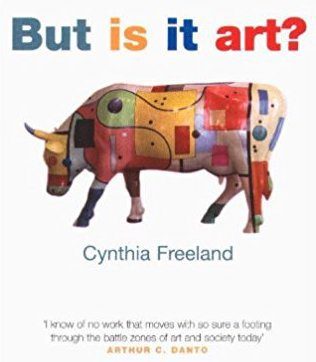 Now, there is much more to say about both the history of art and the philosophy of aesthetics. And if you are curious to learn more, one of my favorite introductions to this subject is a short, accessible book titled But Is It Art? by the philosophy professor Cynthia Freeland. (Oxford University Press, 2002). (This same book has also been repackaged in another format titled Art Theory: A Very Short Introduction.) And while I do not want to turn UUCF into a pressure cooker in which we all feel a relentless compulsion to be creative (like Dar Williams felt at Wesleyan) I also do want to say a few words about how each of us can experiment with the spiritual practice of creativity.
And this is an auspicious time of year for such an experiment. We are more than a week past Groundhog’s Day, which the Pagan tradition calls Imbolc, the cross-quarter day precisely between Winter Solstice (the darkest day of the year) and Spring Equinox (when there will be equal parts daylight and darkness). We have passed the tipping point toward spring. And even though ice remains on the ground, we will soon see nature bursting forth into bloom, which can serve as an invitation to experiment with our own creativity.
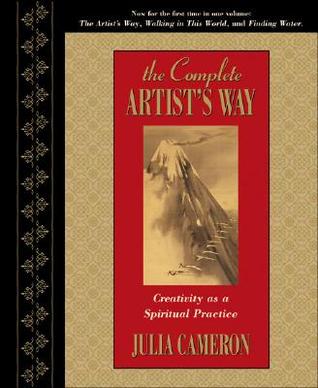 Along those lines, if you are feeling particularly drawn to experiment with your creative side in this season of your life, I highly recommend the book The Complete Artist’s Way by Julia Cameron. To give you a taste of Cameron’s method, she recommends a weekly practice of taking yourself on an Artist’s Date. If any of the following ideas particularly resonate with you, I invite you to add one or more of them to your calendar for some time in the coming weeks or months:
-
Take a long, leisurely walk around your neighborhood, and really notice everything around you.
-
Spend a few hours in a bookstore. Use it as your own, personal, book museum.
-
Pull out your old school yearbooks, and remember what you and your friends were like. Remember things that pleased you as a child or teenager and pick one to do again.
-
Play with Play-Doh or get some chalk and draw all over the sidewalk.
-
Visit a flea market, thrift store, craft store, or garage sale. Notice which items resonate with you and do something playful or creative?
Those are only a few among many possible Artist’s Dates.
For now, regarding the profound connection between art and religion—between making art and making meaning—I will close by inviting you to consider Rabbi Abraham Joshua Heschel’s (1907 – 1972) response to an interviewer who asked him what message he would say to young people if he only had one minute. As you listen to Rabbi Heschel’s words, I invite you to keep in mind the ways that creativity can manifest in all of us—at any age. He said:
I would say let them remember that
there is a meaning beyond absurdity.
Let them be sure that
every little deed counts, that
every word has power, and that
we [must] do…our share to redeem the world,
in spite of
all absurdities, and
all the frustrations, and
all the disappointment.
And above all, remember that
the meaning of life is to
live life
as if it were a work of art.
The Rev. Dr. Carl Gregg is a certified spiritual director, a D.Min. graduate of San Francisco Theological Seminary, and the minister of the Unitarian Universalist Congregation of Frederick, Maryland. Follow him on Facebook (facebook.com/carlgregg) and Twitter (@carlgregg).
Learn more about Unitarian Universalism: http://www.uua.org/beliefs/principles
Previous Post

January 31, 2018
“The Dharma of 'The Princess Bride'”
Browse Our Archives
Select a Category Advent Anti-Racism Archaeology Atheism Baptism Best of the Year List Book Reviews Buddhism Catholicism Christian Education Church and State Church Planting Climate Change Conscientious Objection to War Creation Spirituality Death Penalty Didache Disability Rights Discernment Easter Ecology Emergent Church Movement Empire-Critical Ethics Evolution Feminist Theology Film Reviews Gandhi Gospel of Mark Gun Control Hinduism Immigration Reform Interfaith Islam JFK Judaism Jungian Spirituality Lectionary Commentary Lent Letters to the Editor LGBT Marriage MLK Multiculturalism Mysticism Nonviolent Activism Occupy Paganism (Earth-centered Religions) Parables Paul Pluralism Politics Process Theology Quantum Physics Requiescat In Pace Seminary and Divinity School Sermon Series Retrospective Sermons Spiritual Direction Spiritual Practices Stewardship (Fundraising) The Book of J The Wheel of the Year (Paganism) Theoblogger Challenge Triathlon Uncategorized Unitarian Universalism Worship Resources Youth Ministry
Select a Month July 2026 May 2026 March 2026 November 2025 October 2025 August 2025 February 2025 December 2024 October 2024 March 2024 January 2024 December 2023 November 2023 March 2023 February 2023 January 2023 December 2022 November 2022 August 2022 March 2022 February 2022 January 2022 December 2021 September 2021 August 2021 July 2021 June 2021 May 2021 February 2021 January 2021 December 2020 August 2020 June 2020 May 2020 April 2020 March 2020 February 2020 January 2020 December 2019 November 2019 October 2019 September 2019 July 2019 June 2019 March 2019 February 2019 January 2019 December 2018 November 2018 October 2018 September 2018 June 2018 May 2018 April 2018 March 2018 February 2018 January 2018 December 2017 November 2017 October 2017 September 2017 August 2017 July 2017 June 2017 May 2017 April 2017 March 2017 February 2017 January 2017 December 2016 November 2016 October 2016 September 2016 August 2016 June 2016 May 2016 April 2016 March 2016 February 2016 January 2016 December 2015 November 2015 October 2015 September 2015 August 2015 July 2015 June 2015 May 2015 April 2015 March 2015 February 2015 January 2015 December 2014 November 2014 October 2014 August 2014 July 2014 June 2014 May 2014 April 2014 March 2014 February 2014 January 2014 December 2013 November 2013 October 2013 September 2013 August 2013 July 2013 June 2013 May 2013 April 2013 March 2013 February 2013 January 2013 December 2012 November 2012 October 2012 September 2012 August 2012 July 2012 June 2012 May 2012 April 2012 March 2012 February 2012 January 2012 December 2011 November 2011 October 2011 September 2011 August 2011 July 2011 June 2011 May 2011 April 2011 March 2011 February 2011 January 2011 December 2010 November 2010 October 2010 August 2009 July 2009 May 2009
Follow Us!
TAKE THE
Religious Wisdom Quiz
What British monarch is also Supreme Governor of the Church of England?
Select your answer to see how you score.
Prime Minister The King/Queen of England Archbishop of Canterbury Pope
Related posts from Carl Gregg

Reading America at 250: A Nation Wrestles With...


Andrew Holocek on the Power of Darkness

The Stories That Shape Us: Myths, Archetypes, &...
TRENDING AT PATHEOS More Voices

Reading America at 250: A Nation Wrestles With...
As part of my own reflection on the 250th anniversary of the...

Whenever I am reading a book or listening to an argument, I...

President Trump Ban Animal Torture Videos on Facebook
Call for Stricter Regulations of Animal Abuse Content on Facebook Although President...

Draft Amendments to Address Ritual Abuse in New...
The proposed changes would make it illegal for individuals in domestic partnerships...

How Bans on LGBTQ+ Student Clubs Threaten Religious...
On June 20, 2025, the State of Texas passed Senate Bill 12....

The Truth About the Gen Z Revival
This past year, there has been a lot of media buzz surrounding...
view all More Voices blogs
Ad-Free & Subscriber Log-In Subscription Support
- About Us
- 2026 Calendar
- Videos
- Podcasts
- Library of World Religions
- Faith In Media Tracker
- Advertise With Us
- Write for Us
- Privacy Policy
- Terms of Service
- Do Not Sell My Data
- Contact Us
- Radiant Digital
- Manage Newsletter Subscriptions
- Unsubscribe From Notifications
- Sitemap
Copyright 2008-2026, Patheos. All rights reserved.
Subscription Support Ad-Free & Subscriber Log-In
Follow Patheos