
BuddhistCatholicContemplativeEvangelicalGeneral ChristianHinduJewishLatter-day SaintMuslimNew VisionsProgressive Christian
Beliefs
- Buddhist
- Catholic
- Contemplative
- Evangelical
- General Christian
- Hindu
- Jewish
- Latter-day Saint
- More Voices
- Muslim
- New Visions
- Pagan
- Progressive Christian
Topics
- Religion News
- Food and Religion
- Sports and Religion
- Religious Art
- Religious Music and Entertainment
- Religious Events
- History and Religion
- Style and Religion
- Politics and Religion
- Women in Religion
- Recreation Outdoors and Religion
- Business Finance and Religion
- Careers Workplace and Religion
- Education and Religion
- Family Parenting and Religion
- Health Fitness and Religion
- Home and Religion
- Relationships and Religion
- Technology and Religion
- Travel and Religion
Columnists
- Buddhist Columnists
- Business Finance and Religion Columnists
- Careers Workplace and Religion Columnists
- Catholic Columnists
- Contemplative Columnists
- Education and Religion Columnists
- Evangelists Columnists
- Family Parenting and Religion Columnists
- General Christian Columnists
- Health Fitness and Religion Columnists
- Hindu Columnists
- History and Religion Columnists
- Home and Religion Columnists
- Jewish Columnists
- More Voices Columnists
- Latter Day Columnists
- Muslim Columnists
- New Visions Columnists
- Nonreligious Columnists
- Pagan Columnists
- Politics and Religion Columnists
- Progressive Columnists
- Recreation Outdoors and Religion Columnists
- Relationships and Religion Columnists
- Religion News Columnists
- Religious Art Columnists
- Religious Events Columnists
- Religious Music and Entertainment Columnists
- Sports and Religion Columnists
- Style and Religion Columnists
- Technology and Religion Columnists
- Travel and Religion Columnists
- Women in Religion Columnists
Resource Library
- 2026 Calendar
- Library of World Religions
- The 100 Most Holy Places on Earth
- Patheos Answers
- Podcasts
- Videos
- Faith Leaders Database
- Anglican Episcopalian
- Bahai
- Baptist
- Buddhism
- Christianity
- Confucianism
- Eastern Orthodoxy
- Hinduism
- Holiness and Pentecostal
- ISKCON
- Islam
- Judaism
- Lutheran
- Methodist
- The Church of Jesus Christ of Latter-day Saints
- New Age
- Paganism
- Presbytarian and Reformed
- Protestantism
- Religion Behind the Scenes
- Roman Catholic
- Scientology
- Shia Islam
- Sikhism
- Sufism
- Sunni Islam
- Taoism
- Zen
- See all religions
Research Tools
 Ad-Free & Subscriber Log-In Subscription Support
Ad-Free & Subscriber Log-In Subscription Support
Follow Patheos 

- Trending:
- Forgiveness
- |
- Marriage
- |
- Consciousness
- |
- Death Penalty
- |
- Election
- |
- Halloween

- Home
- More Voices
- What Do Star Wars & Impeachment Have in Common? Or: Jediism, Invented Religions, & the Spirituality of the Force
What Do Star Wars & Impeachment Have in Common? Or: Jediism, Invented Religions, & the Spirituality of the Force
Last updated on: December 19, 2017 at 8:58 am by Carl Gregg
What Do Star Wars & Impeachment Have in Common? Or: Jediism, Invented Religions, & the Spirituality of the Force 2017-12-19T08:58:11-05:00 Carl Gregg
Patheos Explore the world's faith through different perspectives on religion and spirituality! Patheos has the views of the prevalent religions and spiritualities of the world.
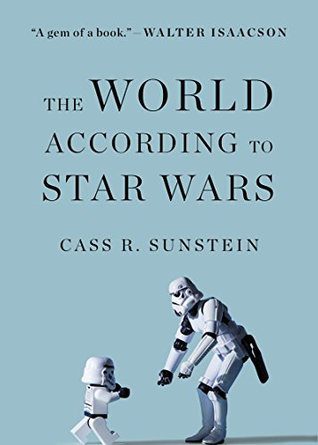 Cass Sunstein is a Harvard Professor who also happens to be the most frequently-cited legal scholar in America by a wide margin. I first learned about him in 2008 through his bestselling book Nudge, which he co-authored with Richard Thaler, who recently won the Nobel Prize for economics. It’s a fascinating study of how we can tweak systems in our world to—you guessed it—nudge people toward making better decisions.
I bring up Sunstein because last year I was delighted to see this world-class scholar make a fun and serious foray into pop culture with his book The World According to Star Wars. Reading that book, coupled with the theatrical release of The Last Jedi, inspired me to reflect some about the influence of Star Wars on our culture generally, and religion in particular.
I should also note that a few weeks ago Sunstein published his most recent book which is titled Impeachment: A Citizen’s Guide. And I invite you to consider that these two books The World According to Star Wars and Impeachment: A Citizen’s Guide may have more in common than one might initially assume. (Keep that connection in mind. We’ll come back to it.)
Now, I don’t presume that everyone is a Star Wars fanatics. Indeed, Sunstein is married to the equally impressive Samantha Power, who is also a Harvard professor, as well as a former U.S. Ambassador to the United Nations. She won a Pulitzer Prize back in 2003 for her powerful book A Problem from Hell: America and the Age of Genocide. But sometime during the writing process of Sunstein’s Star Wars book, she confessed to him, “Cass, I just don’t love Star Wars” (xi)! So if you don’t love Star Wars, you are in good company.
For anyone reading this post not overly familiar with Star Wars, I promise not to geek out too much, but it is also clear that Star Wars is much more than an obscure cult classic. Ever since the immense success of the first Star Wars movie in 1977, it has been a global phenomenon to the tune of more than $30 billion and rising steadily—especially now that Disney owns the franchise and plans to release new films regularly for the foreseeable future (1).
And I invite you to consider that the billions of dollars we human beings have spent on Star Wars is not merely about entertainment. I don’t think I’m going too far in saying that for many Star Wars fans, there is something religious going on.
When I use that word “religious,” part of what I mean is:
- something “mysterious and awe-inspiring,”
- something that “binds us together,”
- something operating on the level of our “ultimate concerns,”
- something that speaks to humanity’s ongoing experiences of “the anomalous, the powerful, the really, really weird stuff that does not fit in, that does not make sense,”
- something set apart and “holy.”
For the initiated among us, this sense of Star Wars as being in some sense sacred is why Jar Jar Binks, Midichlorians, and “Greedo shooting first” felt like heretical betrayals. (For the uninitiated, don’t worry, those last allusions are about as “insider baseball” as I’m going to get.)
This religious impact was not accidental. Star Wars director George Lucas intentionally structured Star Wars around what psychologist Carl Jung called archetypes: ideas, patterns, and images that seem to be fairly universally resonant with the human condition on both the conscious and unconscious level. In particular, Lucas was influenced by Joseph Campbell’s work on comparative mythology and comparative religion, especially his 1949 book The Hero with a Thousand Faces about the archetypal hero’s journey (5).
Sure, there are ways in which Campbell’s work is too simplistic; however, there are also ways that both Campbell and Lucas employ archetypes to tap deeply into the core existential questions of the human condition. And for many of us, as we watch Star Wars, we can feel those universal questions being explored and triggered: “Who am I? Have I fulfilled my potential,? And if not, is there still time” (105-106)?
The mythic resonance begins with the film’s opening line: “A long time ago in a galaxy far, far away….” (Sounds a lot like the beginning of a classic fairy tale or myth.) And intersecting cross-cultural mythologies are woven throughout the saga. To name a few of the most prominent strands, there are strong Christian themes: parallels to the life of Jesus; motifs of “sacrifice, love, and redemption”; and major figures dying only to be “resurrected” in new forms. As Obi-Wan tells Darth Vader: “If you strike me down, I shall become more powerful than you can possibly imagine” (66-67).
There are equally strong Buddhist and Daoist themes: Yoda’s caution that “Fear leads to anger, anger leads to hate, hate leads to suffering” (101). Obi-Wan urges Luke to “let go” of his conscious, thinking, calculating mind and “use the Force.” And Yoda’s response to how Luke can discern the good side of the Force from the bad side: You will know, when you are calm. At peace. Passive. ” (Sounds like something meditation can help with!)
The films are also strongly Freudian and Jungian. Most obviously, when Luke is challenged to enter a dark cave (a clear parallel for going within ourselves to explore our repressed, unconscious “shadow”), he is shocked to stumble upon a vision of his nemesis Darth Vader. Luke kills him only to horrifyingly see his own face under Vader’s mask. Futhermore, when it turns out that Vader is Luke’s father, the deep Oedipal echoes are ever more resounding. In Freudian terms, at the archetypal level, growing up means becoming conscious of the tendency to want to, in a sense, “kill your father and marry your mother”—and/or mix that around depending on your gender and orientation (67-68).
Now, I’ve been told that Lucas denies that the name Darth Vader is a play on “Dark Father” (from the German Vater meaning “father”), but I don’t believe that’s a coincidence (16). Maybe Lucas was not consciously aware of that connection, but on the unconscious archetypal level, the connection seems undeniable—especially since Lucas has a famously-conflicted relationship with his own father, who was devastated when George refused to go into the family stationery business. Once you are aware of that detail, it is even more clear that many aspects of the Star Wars films are, at least on one level, Lucas working out his father issues on screen (95).
There’s so much more I’d like to tell you about the many fascinating stories behind how Star Wars was created, but I want to make sure I more fully address the religious angle. In the original trilogy, the protagonist Luke Skywalker is a disaffected farm boy from a seemingly boring desert planet. But everything changes when he encounters a wisdom teacher named Obi-Wan Kenobi who opens his mind to mysteries beyond what can be measured by rational science alone, as powerful as those tools are. Obi-Wan tells Luke about the Force. He says, “The Force is what gives a Jedi his power. It’s an energy field created by all living things. It surrounds us and penetrates us; it binds the galaxy together.” In my own traditino of Unitarian Universalism (UU), that sounds a little bit like our Seventh Principle of the “Interdependent web of all existence.” It also sounds a lot like the Buddhist teaching of “dependent co-arising.”
Now, no one is saying that you can become a Jedi and have real-life powers exactly like the special effects on-screen. But there are parallels between aspects of the Force and what’s known as Qi in Chinese religion, prana in the Hindu tradition, ruach in Judaism, pneuma in ancient Greece, and spiritus in Christianity. In the words of Jedi master Yoda, “Luminous beings are we, not this crude matter. You must feel the Force around you; here, between you, me, the tree, the rock, everywhere.” And even if we can’t actually become blue-glowing Force ghosts, there is a level on which we are less isolated individuals and more interdependently related. In the words of The Rev. Dr. Martin Luther King, Jr.: “We are tied together in the single garment of destiny, caught in an inescapable network of mutuality. And whatever affects one directly affects all indirectly. For some strange reason, I can never be what I ought to be until you are what you ought to be. And you can never be what you ought to be until I am what I ought to be.”

Of course, not everyone is convinced. Harrison Ford’s character in the films is an infamous skeptic about the Force, saying, “I’ve flown from one side of this galaxy to the other. I’ve seen a lot of strange stuff, but I’ve never seen anything to make me believe there’s one all-powerful Force controlling everything. There’s no mystical energy field that controls my destiny. Anyway, it’s all a lot of simple tricks and nonsense.” It’s no coincidence that Ford’s character is named Han Solo—because he believes himself to be a “solo” isolated individual with no mystical connection to others (85).
But in that uncanny way that life sometimes imitates art, there is a great story about the way that Ford was cast to play this skeptical “solo” role. Lucas had vowed not to cast anyone from his previous film American Graffiti, but separate from the Star Wars casting process, Ford had been hired to do some carpentry work at the film studio 20th-century Fox, and Lucas just happened to see him during the audition process for Star Wars (139). Was that just a coincidence, or was there something more at play, what Jung called a synchronicity, a “meaningful coincidence”?
Although the 1960s counter-culture had already been a major force in introducing Eastern traditions to the West, the Star Wars films were another major catalyst in raising interest in mysticism. To the generations who have grown up watching these films over and over, it would be difficult to overestimate the influence of Star Wars on many people’s worldviews. Indeed, in a 2001 official government census, people listing their religion as “Jedi” included 70,000 Australians, 53,000 New Zealanders (1.5% of the population), 405,179 in the United Kingdom, and 20,000 in Canada (Cusak 124-125). In the spirit of full disclosure, there was an email campaign to make that happen, and the numbers of Jedi adherents declined in the 2006 census. But there are other examples I could give. For example, here “in the United States, the Temple of the Jedi Order in Texas is registered as a non-profit organization and has promulgated a code, ‘The 16 Teachings of the Jedi’” (127).
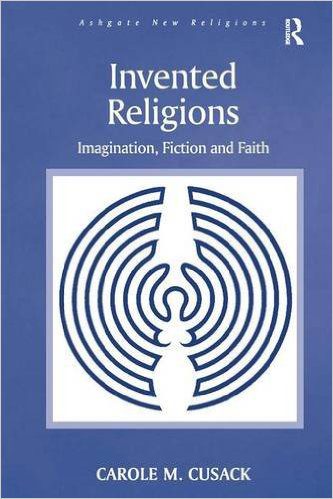 Of course, one could object, “Jediism isn’t real; it’s an invented religion.” For what it’s worth, I’ll let you in on an open secret: they’re all invented religions (Cusak 1). (It would be too much of a rabbit trail to pause and unpack that claim, but I have addressed this topic previously.) In the case of Star Wars, adherents of Jediism are not espousing “literal belief” in the obviously fictional events or characters on screen. Rather, the appeal “lies primarily in the adherence to the ideals espoused”—about honor, resisting evil, and an openness to spirituality, energy work, empathy, intuition, and more (Cusak 126).
I also have not forgotten to get back to what I said earlier about the potential connection between Cass Sunstein’s two recent books, The World According to Star Wars and Impeachment: A Citizen’s Guide. The original title of the first Star Wars film was A New Hope—something this country desperately needed in 1977. Oil prices were through the roof, and only a few years prior, Richard Nixon had resigned the presidency in disgrace (61). Evidence emerged that the Nixon administration “was willing (eager!) to punish political adversaries by abusing the tax system, to create an ‘enemies list,’ to bribe and to threaten, even to wiretap” their rival political party” (104). This realization forced us as a country to look in the mirror and see our own capacity for evil—not unlike Luke’s experience in the cave of seeing his own face behind the mask of his greatest enemy.
One of our foundational myths as a nation is of ourselves as the Rebel Alliance, fighting the “evil” (British) empire in the Revolutionary War. But Nixon, Vietnam, Iraq, Afghanistan, and other related far-flung military actions challenge us to reflect on the ways we have some “Evil Galactic Empire” in us, too. And this is another instance where Star Wars sowed some fascinating seeds still awaiting fruition. From the Nazi-like uniforms of the Imperial force to literally using the term, Stormtroopers, the symbolism of the films is clear. The Empire represents fascism, totalitarianism, and dictatorship, and the Rebel Alliance is a coalition of those who long for democratic governance and oppose the rising tide of authoritarianism. Moreover, the Jedi Knights are explicitly called “the guardians of peace and justice in the galaxy.” The clear implication is that any true Star Wars fan is on the side of rebelling against authoritarianism and acting for peace and justice.
Indeed, playing the mythos of Star Wars, activist Chris Crass has said, may we not be “unconscious stormtroopers of death culture,” helping Imperial forces perpetuate systems of oppression—racism, sexism, homophobia, ableism, and others. Instead, our calling is to continually discern the ways we can “join the rebel alliance”—that is, join forces with those in whatever time and place are working to build a future of Collective Liberation with racial, economic, and gender justice for all.
Both opening ourselves to spiritual growth and participating in the ongoing progressive movement are about being part of something much bigger than ourselves. As Luke said after one of his first experiments with the Force: “You know, I did feel something. I could almost see the remote.” Obi-Wan replies: “That’s good. You’ve taken your first step into a larger world.” The hour is late, but there is still time to live into our individual and collective potential. Together, may we fulfill our destiny and become the guardians of peace and justice in the galaxy.
Bonus
If you haven’t seen the Star Wars films either recently, or ever, I recommend watching them in what is known as “Machete order”:
- IV. Star Wars (1977)
- V. The Empire Strikes Back (1980)
- II. Attack of the Clones (2002)
- III. Revenge of the Sith (2005)
- VI. Return of the Jedi (1983)
- VII. The Force Awakens (2015)
- VIII. The Last Jedi (2017)
- IX. (Forthcoming 2019)
Note that the above order intentionally recommends skipping the first prequel, The Phantom Menace (1999), and perhaps returning to it only after watching all the other Star Wars films if you are curious to fill in a few more pieces of backstory.
The Rev. Dr. Carl Gregg is a certified spiritual director, a D.Min. graduate of San Francisco Theological Seminary, and the minister of the Unitarian Universalist Congregation of Frederick, Maryland. Follow him on Facebook (facebook.com/carlgregg) and Twitter (@carlgregg).
Learn more about Unitarian Universalism: http://www.uua.org/beliefs/principles
Previous Post

December 14, 2017
Contemplative-Curious: What Happens on an 8-Day Meditation Retreat?
Next Post
December 27, 2017 The 50th Anniversary of MLK’s “Christmas Sermon on Peace”
Browse Our Archives
Select a Category Advent Anti-Racism Archaeology Atheism Baptism Best of the Year List Book Reviews Buddhism Catholicism Christian Education Church and State Church Planting Climate Change Conscientious Objection to War Creation Spirituality Death Penalty Didache Disability Rights Discernment Easter Ecology Emergent Church Movement Empire-Critical Ethics Evolution Feminist Theology Film Reviews Gandhi Gospel of Mark Gun Control Hinduism Immigration Reform Interfaith Islam JFK Judaism Jungian Spirituality Lectionary Commentary Lent Letters to the Editor LGBT Marriage MLK Multiculturalism Mysticism Nonviolent Activism Occupy Paganism (Earth-centered Religions) Parables Paul Pluralism Politics Process Theology Quantum Physics Requiescat In Pace Seminary and Divinity School Sermon Series Retrospective Sermons Spiritual Direction Spiritual Practices Stewardship (Fundraising) The Book of J The Wheel of the Year (Paganism) Theoblogger Challenge Triathlon Uncategorized Unitarian Universalism Worship Resources Youth Ministry
Select a Month July 2026 May 2026 March 2026 November 2025 October 2025 August 2025 February 2025 December 2024 October 2024 March 2024 January 2024 December 2023 November 2023 March 2023 February 2023 January 2023 December 2022 November 2022 August 2022 March 2022 February 2022 January 2022 December 2021 September 2021 August 2021 July 2021 June 2021 May 2021 February 2021 January 2021 December 2020 August 2020 June 2020 May 2020 April 2020 March 2020 February 2020 January 2020 December 2019 November 2019 October 2019 September 2019 July 2019 June 2019 March 2019 February 2019 January 2019 December 2018 November 2018 October 2018 September 2018 June 2018 May 2018 April 2018 March 2018 February 2018 January 2018 December 2017 November 2017 October 2017 September 2017 August 2017 July 2017 June 2017 May 2017 April 2017 March 2017 February 2017 January 2017 December 2016 November 2016 October 2016 September 2016 August 2016 June 2016 May 2016 April 2016 March 2016 February 2016 January 2016 December 2015 November 2015 October 2015 September 2015 August 2015 July 2015 June 2015 May 2015 April 2015 March 2015 February 2015 January 2015 December 2014 November 2014 October 2014 August 2014 July 2014 June 2014 May 2014 April 2014 March 2014 February 2014 January 2014 December 2013 November 2013 October 2013 September 2013 August 2013 July 2013 June 2013 May 2013 April 2013 March 2013 February 2013 January 2013 December 2012 November 2012 October 2012 September 2012 August 2012 July 2012 June 2012 May 2012 April 2012 March 2012 February 2012 January 2012 December 2011 November 2011 October 2011 September 2011 August 2011 July 2011 June 2011 May 2011 April 2011 March 2011 February 2011 January 2011 December 2010 November 2010 October 2010 August 2009 July 2009 May 2009
Follow Us!
TAKE THE
Religious Wisdom Quiz
Who did God give the Ten Commandments to?
Select your answer to see how you score.
Moses Joshua Abraham Noah
Related posts from Carl Gregg

Reading America at 250: A Nation Wrestles With...


Andrew Holocek on the Power of Darkness

The Stories That Shape Us: Myths, Archetypes, &...
TRENDING AT PATHEOS More Voices

Reading America at 250: A Nation Wrestles With...
As part of my own reflection on the 250th anniversary of the...

Whenever I am reading a book or listening to an argument, I...

President Trump Ban Animal Torture Videos on Facebook
Call for Stricter Regulations of Animal Abuse Content on Facebook Although President...

Draft Amendments to Address Ritual Abuse in New...
The proposed changes would make it illegal for individuals in domestic partnerships...

How Bans on LGBTQ+ Student Clubs Threaten Religious...
On June 20, 2025, the State of Texas passed Senate Bill 12....

The Truth About the Gen Z Revival
This past year, there has been a lot of media buzz surrounding...
view all More Voices blogs
Ad-Free & Subscriber Log-In Subscription Support
- About Us
- 2026 Calendar
- Videos
- Podcasts
- Library of World Religions
- Faith In Media Tracker
- Advertise With Us
- Write for Us
- Privacy Policy
- Terms of Service
- Do Not Sell My Data
- Contact Us
- Radiant Digital
- Manage Newsletter Subscriptions
- Unsubscribe From Notifications
- Sitemap
Copyright 2008-2026, Patheos. All rights reserved.
Subscription Support Ad-Free & Subscriber Log-In
Follow Patheos