
BuddhistCatholicContemplativeEvangelicalGeneral ChristianHinduJewishLatter-day SaintMuslimNew VisionsProgressive Christian
Beliefs
- Buddhist
- Catholic
- Contemplative
- Evangelical
- General Christian
- Hindu
- Jewish
- Latter-day Saint
- More Voices
- Muslim
- New Visions
- Pagan
- Progressive Christian
Topics
- Religion News
- Food and Religion
- Sports and Religion
- Religious Art
- Religious Music and Entertainment
- Religious Events
- History and Religion
- Style and Religion
- Politics and Religion
- Women in Religion
- Recreation Outdoors and Religion
- Business Finance and Religion
- Careers Workplace and Religion
- Education and Religion
- Family Parenting and Religion
- Health Fitness and Religion
- Home and Religion
- Relationships and Religion
- Technology and Religion
- Travel and Religion
Columnists
- Buddhist Columnists
- Business Finance and Religion Columnists
- Careers Workplace and Religion Columnists
- Catholic Columnists
- Contemplative Columnists
- Education and Religion Columnists
- Evangelists Columnists
- Family Parenting and Religion Columnists
- General Christian Columnists
- Health Fitness and Religion Columnists
- Hindu Columnists
- History and Religion Columnists
- Home and Religion Columnists
- Jewish Columnists
- More Voices Columnists
- Latter Day Columnists
- Muslim Columnists
- New Visions Columnists
- Nonreligious Columnists
- Pagan Columnists
- Politics and Religion Columnists
- Progressive Columnists
- Recreation Outdoors and Religion Columnists
- Relationships and Religion Columnists
- Religion News Columnists
- Religious Art Columnists
- Religious Events Columnists
- Religious Music and Entertainment Columnists
- Sports and Religion Columnists
- Style and Religion Columnists
- Technology and Religion Columnists
- Travel and Religion Columnists
- Women in Religion Columnists
Resource Library
- 2026 Calendar
- Library of World Religions
- The 100 Most Holy Places on Earth
- Patheos Answers
- Podcasts
- Videos
- Faith Leaders Database
- Anglican Episcopalian
- Bahai
- Baptist
- Buddhism
- Christianity
- Confucianism
- Eastern Orthodoxy
- Hinduism
- Holiness and Pentecostal
- ISKCON
- Islam
- Judaism
- Lutheran
- Methodist
- The Church of Jesus Christ of Latter-day Saints
- New Age
- Paganism
- Presbytarian and Reformed
- Protestantism
- Religion Behind the Scenes
- Roman Catholic
- Scientology
- Shia Islam
- Sikhism
- Sufism
- Sunni Islam
- Taoism
- Zen
- See all religions
Research Tools
 Ad-Free & Subscriber Log-In Subscription Support
Ad-Free & Subscriber Log-In Subscription Support
Follow Patheos 

- Trending:
- Forgiveness
- |
- Marriage
- |
- Consciousness
- |
- Death Penalty
- |
- Election
- |
- Halloween

- Home
- More Voices
- Where Does Creativity Come From? David Lynch, Twin Peaks, & Transcendental Meditation
Where Does Creativity Come From? David Lynch, Twin Peaks, & Transcendental Meditation
Last updated on: November 27, 2017 at 10:52 am by Carl Gregg
Where Does Creativity Come From? David Lynch, Twin Peaks, & Transcendental Meditation 2017-11-27T10:52:57-05:00 Carl Gregg
Patheos Explore the world's faith through different perspectives on religion and spirituality! Patheos has the views of the prevalent religions and spiritualities of the world.
Have you ever wondered where creativity comes from? And why do some people seems to have so many original ideas? The best book I have read about how each of us is much more creative than we have sometimes been taught is The Artist’s Way by Julia Cameron.
Relatedly, one of my favorite quotes about why each of us should explore our creative side is from the modern dancer and choreographer Martha Graham (1894-1991) who said:
There is a vitality, a life force, a quickening that is translated through you into action, and because there is only one of you in all time, this expression is unique. If you block it, it will never exist through any other medium and be lost. The world will not have it. It is not your business to determine how good it is; nor how valuable it is; nor how it compares with other expressions. It is your business to keep it yours, clearly and directly, to keep the channel open.
In that spirit, I would like to invite us to spend some time reflecting on what insights there might be for us from reflecting on the work of David Lynch (1946 – ), one among many contemporary artists who have kept their creativity channel open for a lifetime.
I spent some time this summer revisiting David Lynch’s life and work, inspired by the surprising release of Twin Peaks: Season Three, twenty-five years after the end of season two. And even though HBO’s Game of Thrones was the “biggest” TV show of the summer, weighing in at 16 million viewers, I would agree with many critics that Showtime’s Twin Peaks: Season Three, with it’s much more modest two million viewers, was the “best” show of the summer and arguably David Lynch’s masterpiece.
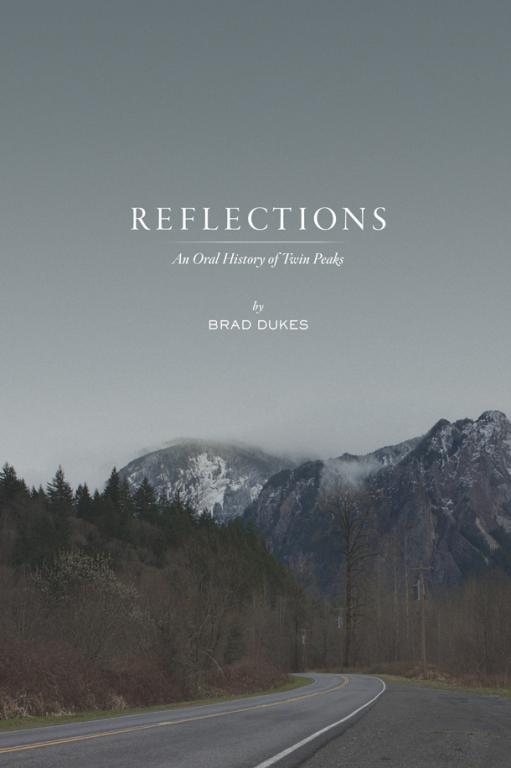 That being said, my goal is not to persuade you to watch Twin Peaks. David Lynch is not everyone’s jam. But even without watching a minute of his work, there are some potential insights from his life about each of us embracing our own unique creativity. The story of my experience with Lynch’s work begins on April 8, 1990. I was twelve years old, and along with 35 million other Americans, I tuned in to watch the two-hour pilot of Twin Peaks (Dukes 1). (As a point of comparison, 35 million viewers is more than twice as many people as watched Game of Thrones this summer.) The surreal, dream-like, uncanny nature of the show was unlike anything I had seen. I wasn’t alone in my fascination. The show was a hit, and “Who killed Laura Palmer?” became a national conversation.
Media critics have long said that “Twin Peaks changed television.” Part of what they mean is that the co-creators David Lynch and Mark Frost brought a level of sophistication and a willingness to experiment with the unconventional that was sometimes seen on film, but rarely on popular television. Cinema-level quality is not unusual today in our era of “prestige tv,” but it was unusual in the early nineties. Similar to that Martha Graham quote from earlier, Lynch’s willingness to experiment with creating this quirky, strange, and unsettling show gave future generations permission to do the same. Part of how Twin Peaks changed TV is that the creators of such shows as The X-Files, Breaking Bad, The Sopranos, and Lost all cite Twin Peaks as a major influence.
And as excited as I was to return to Twin Peaks twenty-five years later, I haven’t been a diehard fan over the years. After watching the first two seasons of Twin Peaks in the early nineties—and finding the episodes both riveting and perplexing—I really didn’t think much about the show again until almost a decade later when I was in college and took my first Film Studies course. One of our assignments was Blue Velvet. I found that film from 1986 both gripping and disturbing.
In researching the film for a paper, my mind was way blown when I discovered that Blue Velvet was by the same director as Twin Peaks. I suddenly connected that Blue Velvet had made me feel those same uncanny, surreal, dream-like qualities that I had first felt in response to some of the most powerful scenes of Twin Peaks.
The late American critic Pauline Kael (1919-2001) famously wrote in the New Yorker that, as she was leaving the theater after seeing Blue Velvet, the person in front of her said, “Maybe I’m sick, but I want to see that again.” Riffing on that line, the writer David Foster Wallace (1962 – 2008) said,
If the word sick seems excessive to you, simply substitute the word creepy…. Lynch seems to be one of these people with unusual access to their own unconscious…. Lynch’s movies seem to be experiences of…parts of the director’s psyche, expressions presented with very little inhibition…. It’s the psychic intimacy of the work that makes it hard to sort out what you are feeling about one of David Lynch’s movies and what you are feeling about David Lynch. The ad hominem impression one tends to carry away from a Blue Velvet or Fire Walk with Me [the prequel to Twin Peaks] is that they’re really powerful movies but that David Lynch is the sort of person you really hope you don’t get stuck next to on a long flight.… (166-167)
 Except here’s the thing. In contrast to his art, in person, Lynch presents much more like his background—an Eagle Scout from Missoula, Montana who wears his shirts buttoned all the way to the top. Referencing a classic, strait-laced, down-to-earth actor, David Lynch has been called “Jimmy Stewart from Mars” (Lim 10- 11).
Lynch was raised in a fairly idyllic 1950s white-picket-fences neighborhood, but from an early age he sensed that there was a deeper, disturbing truth lurking underneath the surface. And, of course, he was right. The early 1950s were the time right before the Civil Rights Movement when much of America was repressing the everyday realities of racial injustice—a trend that continues today in even more insidious ways. But for Lynch, the even deeper truth was also about nature itself. For instance, he remembers a memory of a cherry tree in his childhood backyard in Spokane, Washington that was lovely from a distance. However, if you got closer, there was “pitch oozing out, some of it black, some of it yellow, and there were millions of red ants racing all over the sticky pitch… There’s this beautiful world, and you just look a little bit closer, and it’s all red ants” (Lim 23).
Similar scenes from Lynch’s work remind me of a lesson I learned many years ago in my spiritual direction training. Our assignment was to go into nature and bring back pictures of images that resonated with us. After watching a slide show of all the photographs we had taken, the instructor asked, “What’s missing?” Eventually we realized that what she meant was that all of our images were beautiful. She challenged us to wrestle with the truth that authentic spirituality is about opening our hearts and minds to the full messy reality that is our life—not only the beautiful, but also the awkward, the repulsive, even the grotesque (Lynch 121).
Relatedly, one historical weakness of theologically liberal religious traditions such as Unitarian Universalism has been a naïve optimism. In rejecting the extreme pessimism of many orthodox religious traditions (that we human beings are born tainted with “Original Sin,” that human nature is characterized by “total depravity,” and that this world is inherently corrupt), many progressives overestimated the perfectibility of human nature, the possibility of building utopian societies, and the inevitability of progress “onward and upward forever.” So, whereas many orthodox religious traditions have overestimated “evil” as literally real, liberal religious traditions have underestimated “evil” as something that can be overcome through human reason.
In contrast, a willingness to explore the shadow side of human nature is another aspect that I appreciate about Lynch, even if it is also disturbing. David Foster Wallace writes that Lynch is “not interested in moral judgments of characters. Rather he’s interested in the psychic spaces in which people are capable of evil…. Lynch’s movies are not about monsters (people whose intrinsic natures are evil), but about hauntings, about evil as environment, possibility, force” (Wallace 203-204).
What’s clear to me now, in a way that was over my head at age twelve when I first encountered Lynch’s work, is that he’s deeply influenced by Expressionism. As opposed to realists (who seek to objectively replicate the world in their art, similar to what a simple point-and-click photograph would do), expressionists present their art from “a subjective perspective, distorting it for emotional effect in order to evoke moods or ideas…to express the meaning of emotional experience rather than physical reality.”
Let me say more about that from a different angle. When I was younger, I remember initially dismissing modern art with that classic, uninformed 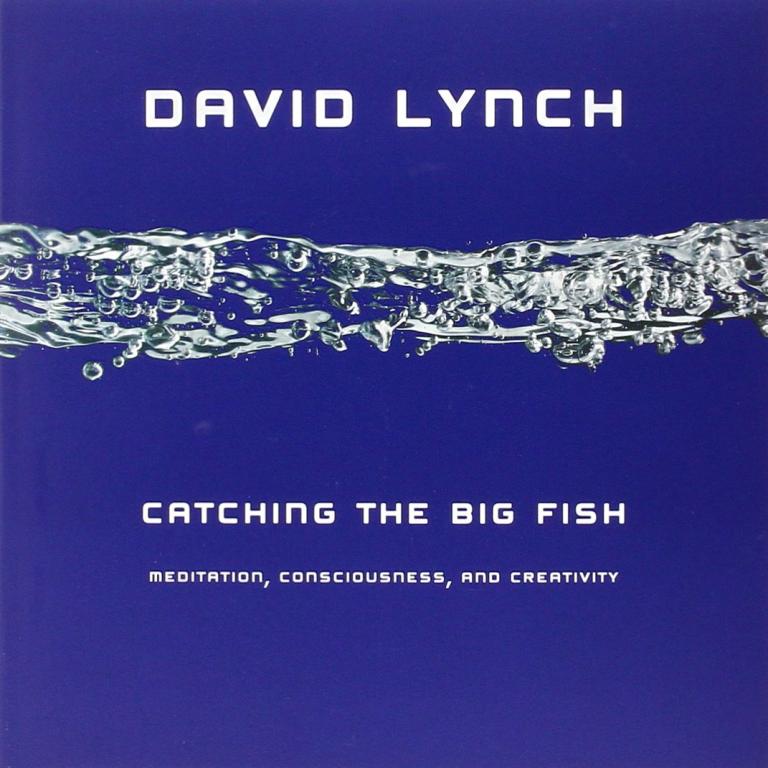 criticism—that it looks like a kindergartener could have painted it. But as I learned more about art history, I finally got it. The analogy that helped me most was to music. Visual art, like music, doesn’t have to be “about” something out in the world. (Lynch 20). It can just be what it is on the surface (experimenting with color and line)—just as music can be about nothing more than experimenting with sound. Or, like music, visual art can be an abstract expression of a subjective, inner emotional state—evoking a particular mood.
Lynch’s films—including Season Three of Twin Peaks—are deeply expressionistic: they are less secret codes to be solved and more mysteries to be explored. They are intentionally subjective—and more to be “experienced than explained” (Wallace 170). And they operate on an emotional, unconscious archetypal level. For instance, watching his work almost always triggers me to remember my dreams the next morning more sharply and vividly than I might otherwise.
So what parts of these musings might we apply for ourselves? Regarding his creative process, Lynch has written that,
Ideas are like fish. If you want to catch little fish, you can stay in the shallow water. But if you want to catch the big fish, you’ve got to go deeper. Down deep, the fish are most powerful and more pure. They’re huge and abstract. And they’ve very beautiful. I look for a certain kind of fish that is important to me, one that can translate to cinema. But there are all kinds of fish swimming down there. There are fish for business, fish for sports. There are fish for everyone. (Lynch 1)
I have a sense of what he means. There are many times when I am working on a sermon—or trying to come up with a new program idea or a creative solution to a problem or conflict—and I’ll feel stuck. But if I carve out some open time and space—take the dogs for a walk, take a drive, or exercise—often I’ll unexpectedly “catch a fish” of an idea.
But note the caveat that, “Down deep, the fish are most powerful and more pure.” That’s an invitation to slow down even more and create the space to give myself a chance to catch bigger fish, which is easier said than done. Along those lines, one of the mottos of my spiritual direction program is that, “As contemplatives, we start slowly, so that later we can slow down.” (Full disclosure: I’m still a work in progress.)
Part of how Lynch has cultivated space to “fish for ideas” is through a decades long practice of Transcendental Meditation (Dukes 76). Lynch says that he has practiced Transcendental Meditation for the recommended twenty minute twice a day since 1973, which is more than four decades (Lynch 2).
Since Lynch continues to be a major advocate for Transcendental Meditation or (TM), I’ll say a little more about it. TM came to America through the late Maharishi Mahesh Yogi (1918 – 2008), who attracted many celebrities as students, including the Beatles, the Rolling Stones, Jefferson Airplane, the Beach Boys, the Grateful Dead, and the Doors (Weber 1). The movement’s peak was in the 1970s (Weber 17).
In 1977, the movement “jumped the shark” by overpromising the results of a new TM-Siddhi program related to the historic claims in some Buddhist traditions that deep meditation can cultivate “psychic powers.” I’m not totally discounting the Buddhist siddhi tradition, but I am saying that TM vastly oversimplified and overpromised in brochures that said faithful adherents could cultivate “Yogic Flying,” the ability to “hover above the ground…. Devotees would have the ability to know the past and future, knowledge of other minds, the ability to become invisible, and passage through the sky…but the grandiose claims were never demonstrated” (Weber 23). And many adherents became deeply disillusioned.
Nevertheless, it remains true that many people have benefited from spending twenty-minutes twice a day practicing Transcendental Meditation. From a twenty-first century perspective, I would add that there are also many other beneficial meditation techniques. And scientific studies are increasingly showing that different meditation practices produce different results.
Transcendental Meditation, for example, is a mantra-based practice. But there are many other types of meditation practices including concentration, mindfulness, inquiry, heartfulness, embodiment, and more. And similar to the benefits of cross-training for physical fitness, there is wisdom in cross-training in spiritual practice as well.
Science is also showing us that we get stronger and better at what we practice. We get better at concentration by concentrating, better at compassion by being compassionate, better at being non-judgmental by being less judgmental. Likewise, we get more creative by practicing creativity.
In the days to come, where might you carve out some margin in your life? Where might you find some time and space to do a little fishing in your unconscious? Perhaps in the shallow waters at first, but then maybe taking some more time to experiment with casting your line “down deep,” where in Lynch’s words “the fish are most powerful and more pure.” What ideas might be waiting for us to make the time and space for them to emerge?
For Further Study
- Blue Rose Magazine: A Twin Peaks Journal
- Brad Dukes, Reflections: An Oral History of Twin Peaks
- Dennis Lim, David Lynch: The Man from Another Place
- David Lynch, Catching the Big Fish: Meditation, Consciousness, and Creativity
- John Thorne, The Essential Wrapped In Plastic: Pathways to Twin Peaks by
- I also do not recommend skipping straight to Twin Peaks: Season Three. At minimum, I would recommend watching at least the full first season, which is only eight episodes. (Watching the pilot episode is a great sample to see if Lynch’s work interests you.) The second season (especially the episodes directed by Lynch) is worth watching in many parts, although there are some uneven episodes, especially later in the Second Season when Lynch and Frost were increasingly distracted with other projects. Lynch’s feature film Fire Walk with Me is also crucial for appreciating season three, and should ideally be watched after season two.
- After finishing Season Three, an important supplement to read is Twin Peaks: The Final Dossier by Mark Frost.
- To experience what it was like to listen week-by-week without the option of binging the entire third season, listen to one of the many great podcasts such as A Twin Peaks Podcast. (To get a sense for the huge number of podcasts about the third season check out the impressive summaries in the “Last Week in Podcasts” column.)
The Rev. Dr. Carl Gregg is a certified spiritual director, a D.Min. graduate of San Francisco Theological Seminary, and the minister of the Unitarian Universalist Congregation of Frederick, Maryland. Follow him on Facebook (facebook.com/carlgregg) and Twitter (@carlgregg).
Learn more about Unitarian Universalism: http://www.uua.org/beliefs/principles
Previous Post

November 7, 2017
“Daring Democracy”
Browse Our Archives
Select a Category Advent Anti-Racism Archaeology Atheism Baptism Best of the Year List Book Reviews Buddhism Catholicism Christian Education Church and State Church Planting Climate Change Conscientious Objection to War Creation Spirituality Death Penalty Didache Disability Rights Discernment Easter Ecology Emergent Church Movement Empire-Critical Ethics Evolution Feminist Theology Film Reviews Gandhi Gospel of Mark Gun Control Hinduism Immigration Reform Interfaith Islam JFK Judaism Jungian Spirituality Lectionary Commentary Lent Letters to the Editor LGBT Marriage MLK Multiculturalism Mysticism Nonviolent Activism Occupy Paganism (Earth-centered Religions) Parables Paul Pluralism Politics Process Theology Quantum Physics Requiescat In Pace Seminary and Divinity School Sermon Series Retrospective Sermons Spiritual Direction Spiritual Practices Stewardship (Fundraising) The Book of J The Wheel of the Year (Paganism) Theoblogger Challenge Triathlon Uncategorized Unitarian Universalism Worship Resources Youth Ministry
Select a Month July 2026 May 2026 March 2026 November 2025 October 2025 August 2025 February 2025 December 2024 October 2024 March 2024 January 2024 December 2023 November 2023 March 2023 February 2023 January 2023 December 2022 November 2022 August 2022 March 2022 February 2022 January 2022 December 2021 September 2021 August 2021 July 2021 June 2021 May 2021 February 2021 January 2021 December 2020 August 2020 June 2020 May 2020 April 2020 March 2020 February 2020 January 2020 December 2019 November 2019 October 2019 September 2019 July 2019 June 2019 March 2019 February 2019 January 2019 December 2018 November 2018 October 2018 September 2018 June 2018 May 2018 April 2018 March 2018 February 2018 January 2018 December 2017 November 2017 October 2017 September 2017 August 2017 July 2017 June 2017 May 2017 April 2017 March 2017 February 2017 January 2017 December 2016 November 2016 October 2016 September 2016 August 2016 June 2016 May 2016 April 2016 March 2016 February 2016 January 2016 December 2015 November 2015 October 2015 September 2015 August 2015 July 2015 June 2015 May 2015 April 2015 March 2015 February 2015 January 2015 December 2014 November 2014 October 2014 August 2014 July 2014 June 2014 May 2014 April 2014 March 2014 February 2014 January 2014 December 2013 November 2013 October 2013 September 2013 August 2013 July 2013 June 2013 May 2013 April 2013 March 2013 February 2013 January 2013 December 2012 November 2012 October 2012 September 2012 August 2012 July 2012 June 2012 May 2012 April 2012 March 2012 February 2012 January 2012 December 2011 November 2011 October 2011 September 2011 August 2011 July 2011 June 2011 May 2011 April 2011 March 2011 February 2011 January 2011 December 2010 November 2010 October 2010 August 2009 July 2009 May 2009
Follow Us!
TAKE THE
Religious Wisdom Quiz
Which prophet had a vision of God standing beside a destroyed altar?
Select your answer to see how you score.
Joel Micah Ezekiel Amos
Related posts from Carl Gregg

Reading America at 250: A Nation Wrestles With...


Andrew Holocek on the Power of Darkness

The Stories That Shape Us: Myths, Archetypes, &...
TRENDING AT PATHEOS More Voices

Reading America at 250: A Nation Wrestles With...
As part of my own reflection on the 250th anniversary of the...

Whenever I am reading a book or listening to an argument, I...

President Trump Ban Animal Torture Videos on Facebook
Call for Stricter Regulations of Animal Abuse Content on Facebook Although President...

Draft Amendments to Address Ritual Abuse in New...
The proposed changes would make it illegal for individuals in domestic partnerships...

How Bans on LGBTQ+ Student Clubs Threaten Religious...
On June 20, 2025, the State of Texas passed Senate Bill 12....

The Truth About the Gen Z Revival
This past year, there has been a lot of media buzz surrounding...
view all More Voices blogs
Ad-Free & Subscriber Log-In Subscription Support
- About Us
- 2026 Calendar
- Videos
- Podcasts
- Library of World Religions
- Faith In Media Tracker
- Advertise With Us
- Write for Us
- Privacy Policy
- Terms of Service
- Do Not Sell My Data
- Contact Us
- Radiant Digital
- Manage Newsletter Subscriptions
- Unsubscribe From Notifications
- Sitemap
Copyright 2008-2026, Patheos. All rights reserved.
Subscription Support Ad-Free & Subscriber Log-In
Follow Patheos